To reach Mentha, you’ll drive 14 miles northwest of Kalamazoo into Van Buren County’s Pine Grove Township, taking 18th Avenue to 23rd Street and turning north along rural roads that once served Albert M. Todd’s mint empire. This ghost town produced 90% of the world’s mint oil before verticillium wilt devastated the crops by the 1970s. The former railroad now operates as the Kal Haven Trail, offering access to where 300 seasonal workers once distilled over 100 pounds of oil daily across 10,000 acres.
Key Takeaways
- Mentha is located 14 miles northwest of Kalamazoo in Van Buren County’s Pine Grove Township, 3 miles east of Kendall.
- Access the ghost town via rural roads: take 18th Avenue to 23rd Street and turn north.
- Visit the Kal Haven Trail, a converted railroad route that once served the historic peppermint industry.
- Explore the former site of Albert M. Todd’s mint empire, which produced 90% of the world’s mint oil.
- The town declined after Verticillium wilt disease destroyed peppermint crops, ending commercial cultivation by the 1970s.
Getting to Mentha: Directions and Trail Access
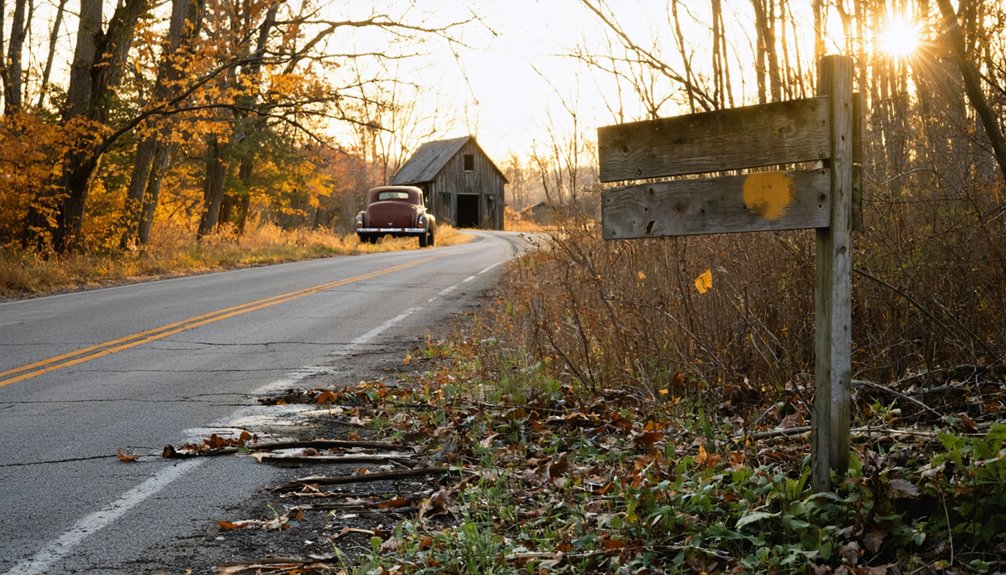
Nestled in Van Buren County’s Pine Grove Township, Mentha sits 14 miles northwest of Kalamazoo and three miles east of Kendall, accessible via a straightforward network of rural roads that once served Michigan’s thriving peppermint industry. You’ll reach the settlement by taking 18th Avenue to 23rd Street, then turning north—this route delivers you directly to the remaining structures without complications. The regional road network maintains standard vehicle clearance, requiring no specialized transportation or permissions to explore what’s left of this 1870 settlement.
The single main road cuts through former peppermint fields where businesses and houses once clustered around the Kalamazoo & South Haven Railroad station. Rural road accessibility remains unobstructed, though you’ll find minimal infrastructure beyond scattered residences. The old railroad tracks have been ripped up and transformed into the Kal Haven Trail, offering an alternative route for walking or biking through Mentha’s historical landscape. The surrounding landscape hosts Bidens frondosa specimens, documented in herbaria records that track the area’s botanical history alongside its industrial past. Your freedom to explore hinges on respecting private property boundaries while traversing publicly accessible routes.
From Peppermint Capital to Forgotten Village: The Story of Mentha
You’ll discover that Albert M. Todd transformed drained swampland into a mint empire that produced 90% of the world’s mint oil by the early 1900s, earning him the title “Spearmint King” and employing 300 workers in his company town.
His operation expanded within a 90-mile radius of Kalamazoo, developing hybrid plants and advanced cultivation techniques that made Mentha synonymous with high-quality peppermint. Todd moved the entire mint operation to Kalamazoo in 1891, though he retained a commercial farm in Mentha for continued hybrid development.
The empire’s collapse began when verticillium wilt disease ravaged the crops by the 1970s, ending mint cultivation entirely and scattering workers who attempted to salvage their livelihoods with alternative crops like onions and radishes. Today, the railroad tracks have been removed and converted into the Kal Haven Trail, where visitors can walk or bike through the former town.
Albert Todd’s Mint Empire
In 1901, Albert Todd transformed 2,000 acres of Van Buren County marshland into what would become the world’s largest mint plantation. The “Peppermint King of Kalamazoo” had already earned a gold medal at Philadelphia’s 1876 Exposition for his “Crystal White Oil of Peppermint.”
His mint company leadership revolutionized American agriculture by draining the land with 15 miles of ditches and planting imported English Black Mitcham peppermint.
The Todd family impact reshaped global commerce—by 1920, Mentha produced 98% of U.S. mint oil. Todd’s operations stretched across 10,000 acres between Mentha and Campaignia plantations, employing 300 seasonal workers. An estimated 90% of world’s peppermint supply was grown within 75 miles of Kalamazoo, cementing the region’s dominance in the global mint trade.
His steam distilleries produced over 100 pounds of oil daily, meeting demand from America’s booming toothpaste and chewing gum industries. The company boardinghouse sheltered seasonal workers who arrived by train from Chicago to harvest, dry, and distill the mint.
Disease and Decline
Todd’s mint empire reached its zenith in 1920, but just four years later, disaster arrived in the form of a microscopic killer. Verticillium wilt struck Mentha’s peppermint fields in 1924, likely spreading through infected rhizomes.
The fungus dwarfed plants, twisted leaves, and created root cankers that destroyed winter survival rates. Its fungal persistence proved devastating—once established in soil, it remained indefinitely with no chemical control available.
The disease had already begun forcing Michigan’s mint industry westward, as production shifted to Pacific Northwest states where fresh, uncontaminated soil offered temporary refuge from the relentless pathogen. By the early 1970s, the blight had effectively killed the mint industry that once made Mentha supply ninety percent of the world’s mint.
Albert M. Todd and the Mint Oil Empire
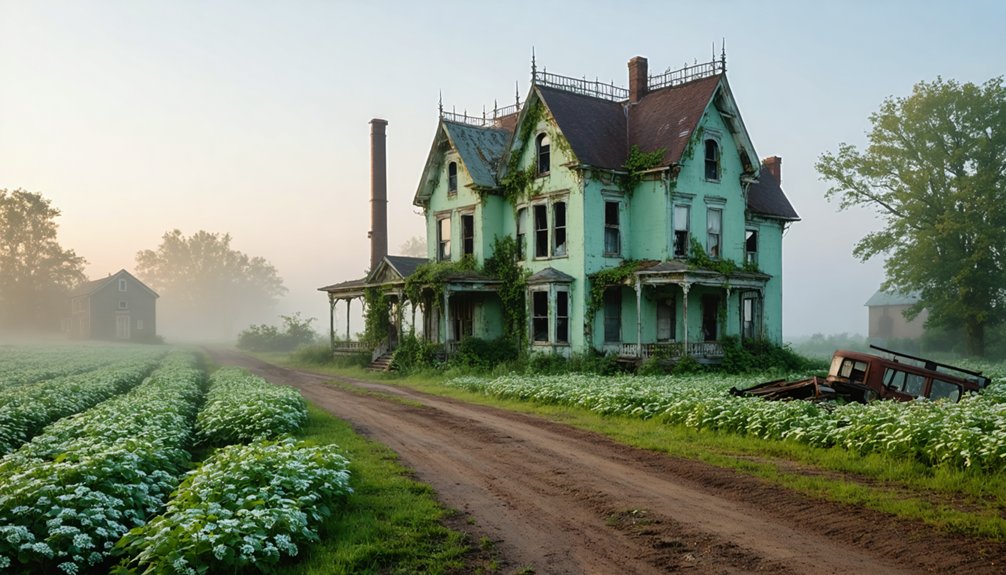
As you explore Mentha’s remnants, you’ll discover it was the brainchild of Albert M. Todd, who began distilling mint oils as a teenager in 1869 and built an empire that controlled 95% of the world’s mint and essential oils by 1902. His patented Crystal White distilling process and scientific grading methods revolutionized the industry, earning gold medals at major expositions and establishing the Kalamazoo region as the world’s peppermint capital.
Born in 1850 as the youngest of 10 children in Nottawa, Michigan, Todd was exposed to peppermint farming from an early age before launching his business career.
Beyond his mint monopoly, Todd served in the U.S. House of Representatives from 1897 to 1899 and left a remarkable collection of 600 antiquities to the Kalamazoo museum upon his death in 1931. After Todd’s retirement in 1928, the A. M. Todd Company continued to dominate the essential oil market.
Todd’s Early Mint Experiments
Born June 3, 1850, in Nottowa, Michigan, Albert M. Todd launched his mint processing equipment ventures in his late teens around 1869. You’ll find his oil extraction experiments revolutionized an industry through sheer determination and scientific curiosity. At just 19, he established the A.M. Todd Company, focusing on extracting flavorings and essential oils from mint.
His bold trip to New York’s essential oil dealers proved successful—he sold 1,000 pounds of peppermint oil plus spearmint reserves. When the 1870s recession hit, Todd diversified into icehouses and dry goods rather than abandon his vision. His early persistence laid groundwork for what’d become a mint empire, demonstrating how entrepreneurial freedom and innovation could transform Michigan’s marshlands into profitable enterprise.
Political Career and Legacy
Why would a successful mint oil magnate abandon the Republican establishment? Todd’s principles demanded it. He championed the Prohibition Party for nearly two decades, running for Michigan governor in 1894. His reform vision extended beyond temperance to encompass public utilities advocacy—he believed government should operate railroads and essential services directly.
In 1896, Todd secured a rare three-party fusion, winning Michigan’s 3rd Congressional District by just 425 votes. Though formally elected as a Democrat, he caucused with the People’s Party, advancing their agenda during the 55th Congress. Republican opposition crushed fusion candidacies and defeated his 1898 re-election.
Undeterred, Todd founded national political organizations promoting public ownership principles. He established the Public Ownership League of America, serving as president through at least 1919, maintaining Washington offices to influence utility policy nationwide.
The Rise and Fall of America’s Peppermint Industry
The story of American peppermint begins in the English countryside of Surrey, where farmers in the 1750s cultivated Black Mitcham and White Mitcham varieties—sterile hybrids that could only reproduce through root cuttings. These plants arrived in Ashfield, Massachusetts, that same decade, spreading through essence peddlers across New England.
American peppermint’s English origins trace to Surrey’s sterile Mitcham hybrids, propagated solely through root cuttings before crossing the Atlantic.
By the mid-1850s, Wayne County, New York, dominated production along the Erie Canal’s commercial routes.
Michigan entered the industry around 1835, where Albert May Todd revolutionized cultivation. His Crystal White Oil won gold at Philadelphia’s 1876 Exposition. Todd established the world’s largest mint farm in Mentha, draining 2,000 marshland acres. By 1920, this region produced 98% of American mint oil—90% globally.
Verticillium wilt devastated operations after 1924. Declining production techniques and the rise of alternate mint varieties couldn’t save Michigan’s dominance. Production shifted westward to Idaho, Oregon, and Washington.
What Remains: Exploring the Ghost Town Today
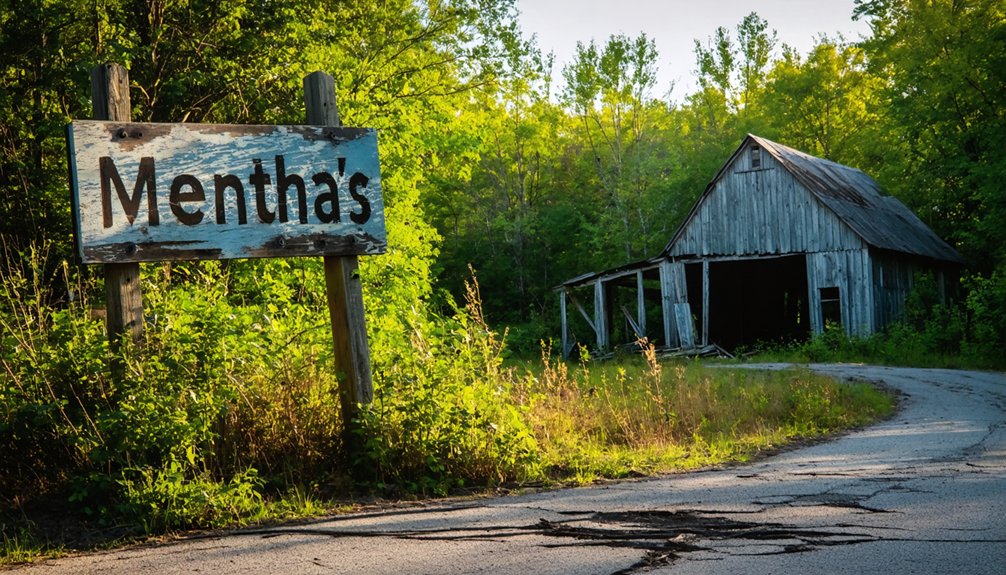
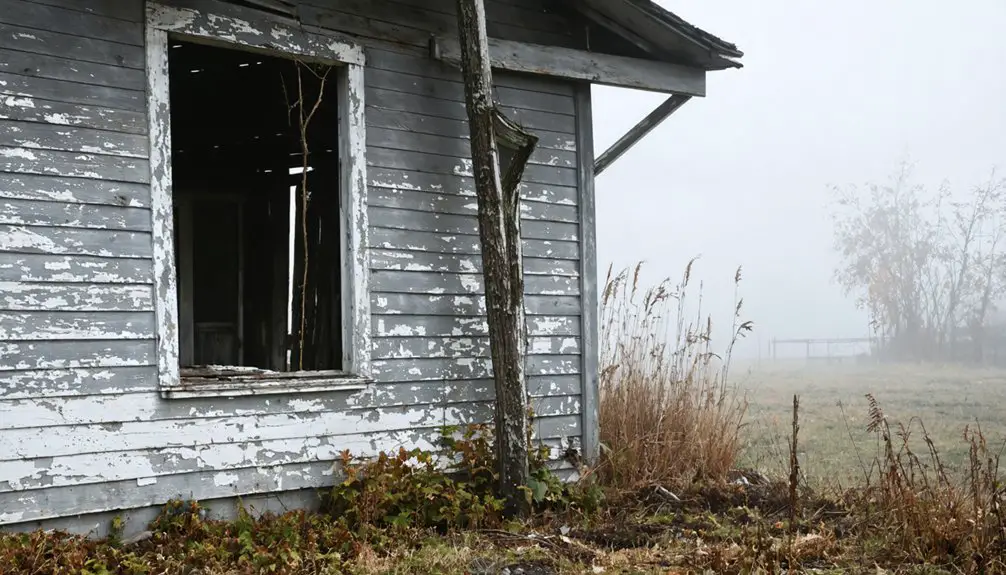
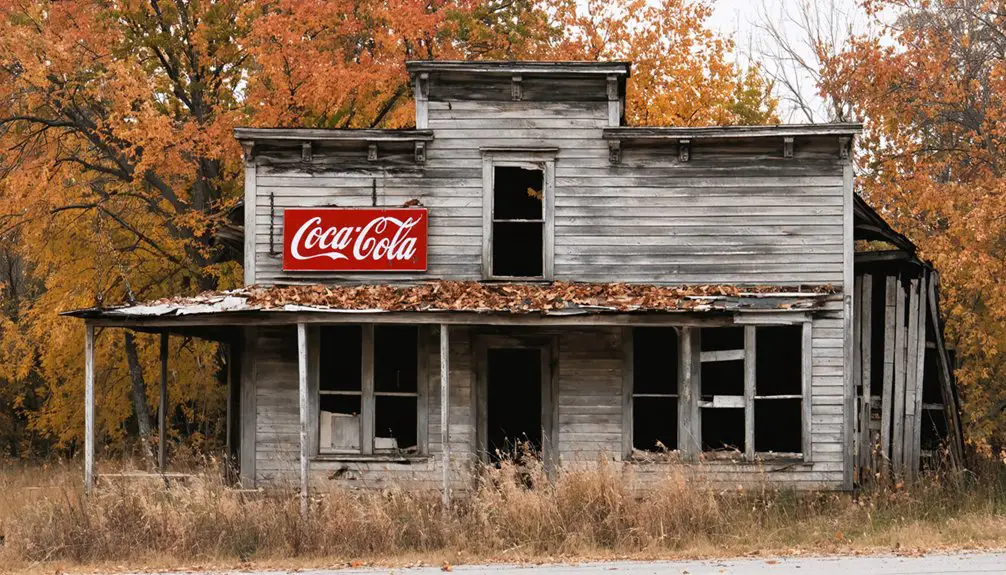
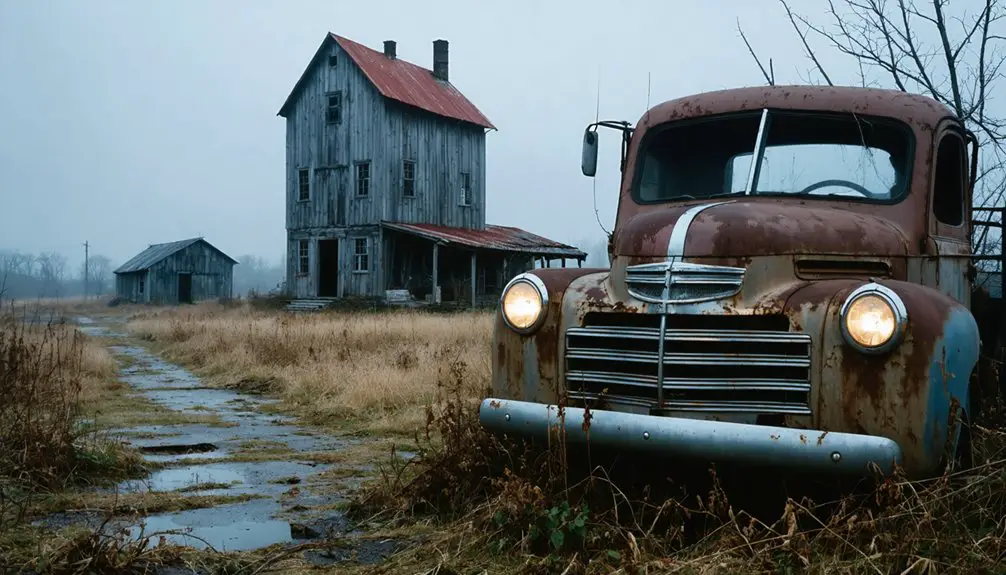
Little remains of Mentha’s industrial heyday when you visit the ghost town site in Pine Grove Township today. You’ll find only a handful of structures still standing—a few old houses, the owner’s residence, and the reportedly haunted hotel that fuels persistent haunted rumors among local explorers. The main plantation house, barns, railroad depot, warehouse, greenhouse, company stores, post office, and school have all disappeared through recent demolitions.
You can access these photogenic ruins via the Kal Haven Trail, which follows the former railroad bed, or drive along 18th Avenue to 23rd Street heading north. The site sits isolated amid spearmint fields that replaced the original mint crops. You’ll need permission before entering any abandoned structures, though you’re free to photograph the leaning buildings from public areas.
Best Ways to Experience Mentha on Your Visit
Planning your exploration of Mentha requires traversing rural Van Buren County roads to reach this isolated site 14 miles northwest of Kalamazoo and 3 miles east of Kendall. You’ll drive 18th Avenue to 23rd Street, turning north before parking and hiking the former railroad grade approximately one mile to the distillery ruins.
The converted Kal Haven Trail offers non-motorized passage through the ghost town area, where you can walk or bike past fields now growing onions and radishes on former mint land. A handful of original structures persist amid this middle-of-nowhere setting, wrapped in poison ivy and decay. You’ll discover forgotten town history through these decrepit reminders, photographing deserted houses while imagining vintage agricultural equipment once processing 90% of the world’s mint oil.
Responsible Exploration Tips for Historic Sites
Your responsible approach includes:
Preserve history through mindful exploration—leave only footprints, take only photographs, and respect the legacy of those who came before.
- Remove all trash and pack out waste to maintain pristine conditions
- Wear sturdy footwear and carry water for remote terrain navigation
- Document photographically without touching fragile structures
- Avoid collecting artifacts, rocks, or plants from the site
- Engage with Van Buren County historical societies for guided insights
Report any vandalism to local authorities immediately.
Frequently Asked Questions
Are There Any Nearby Accommodations or Camping Options for Overnight Visitors?
You won’t find accommodations in Mentha itself—it’s off the beaten path. Nearby bed and breakfasts exist in South Haven, twenty miles west. Local campgrounds for RVs operate within fifteen miles in Kalamazoo County, offering independent travelers affordable overnight options.
What Is the Best Season to Visit Mentha Ghost Town?
Fall offers the best visit with 40-60°F temperatures perfect for exploring unique architecture of abandoned buildings amid vibrant foliage. Spring provides interesting off-season activities like wildflower photography along trails, with fewer crowds ensuring your independent exploration of historical sites.
Are Guided Tours of Mentha Available for History Enthusiasts?
You’ll find no privately operated tours waiting at Mentha’s doorstep—independent exploration reigns here. Self-guided walking tours along the Kal-Haven Trail let you discover remaining structures at your own pace, respecting private property boundaries throughout your adventure.
Can You Still See Mint Plants Growing Wild in the Area?
Wild mint isn’t documented growing around Mentha’s abandoned mint processing facilities today. While spearmint cultivation continues regionally, you won’t find wild mint variety identification opportunities at this ghost town site based on available historical records.
Are There Other Ghost Towns Near Mentha Worth Visiting?
Like scattered puzzle pieces across southwest Michigan’s countryside, you’ll find Meredith and Mottville nearby—both offering remnants of past industries and historical landmarks from abandoned eras. They’re accessible via rural roads for adventurous exploration beyond Mentha.
References
- https://99wfmk.com/menthamichigan/
- https://wkfr.com/just-west-of-kalamazoo-was-once-the-mint-capital-of-the-world/
- https://iwr.msu.edu/kht/TrailSites/8b_Mentha.html
- https://wmmq.com/mentha-michigan-2020/
- https://www.youtube.com/watch?v=pKt_hppXARI
- https://99wfmk.com/mentha-michigan-ghost-town/
- https://www.cfm.va.gov/environmental/IndiantownDraftSupplementalEnvironmentalAssessment-AppendixA.pdf
- https://www.pnwherbaria.org/data/results.php?DisplayAs=WebPage&ExcludeCultivated=Y&GroupBy=ungrouped&SortBy=Year&SortOrder=DESC&SearchAllHerbaria=Y&QueryCount=1&IncludeSynonyms1=Y&SciName1=Bidens+frondosa
- https://www.petersonschriever.spaceforce.mil/Portals/15/NBSFS_Final_INRMP_20260115r.pdf
- https://www.usbr.gov/gp/nepa/LaPreleDam_EA.pdf