You’re heading to a place where nearly 900 people once lived, worked, and built a town from scratch — and where, just a decade later, almost all of them were gone. Mildred, Kansas sits quietly along US Highway 59, its scattered foundations and overgrown lots whispering stories of cement-plant ambition and sudden collapse. Only 25 residents remain today. Wear sturdy boots, bring water, and pack your curiosity — there’s far more to this ghost town than the roadside markers let on.
Key Takeaways
- Mildred, Kansas, sits on US Highway 59, conveniently located 7 miles north of Moran and 4 miles south of Kincaid.
- Remnants of hotels, railway depots, and scattered foundations mark the original townsite of this once-thriving cement industry community.
- Nearby ghost towns Bassett and Carlyle offer additional exploration opportunities along the same highway corridor.
- Pack sturdy footwear, gloves, water, a camera, notebook, and topographic map for a safe and rewarding visit.
- Mildred’s cement contributed to Kansas City’s Liberty Memorial, adding meaningful historical context to your road trip stop.
How a Cement Plant Built: and Buried: Mildred, Kansas
When Sam Dermott staked out 40 acres of Kansas prairie in 1907 for the Great Western Cement Company, he wasn’t just building a factory — he was conjuring an entire town from scratch.
Cement production drew 375 workers to Allen County, and town development followed fast. Within months, Mildred had hotels, restaurants, retail stores, a movie theater, and a railway depot connecting it to the wider world.
Population swelled to nearly 900 around World War I. The plant even shipped cement to Kansas City’s Liberty Memorial.
Then, in 1917, the plant closed — and Mildred’s pulse flatlined almost overnight. What ambition built in a decade, silence reclaimed in less.
Today, only 25 people remain.
What’s Left to See at the Mildred Townsite Today
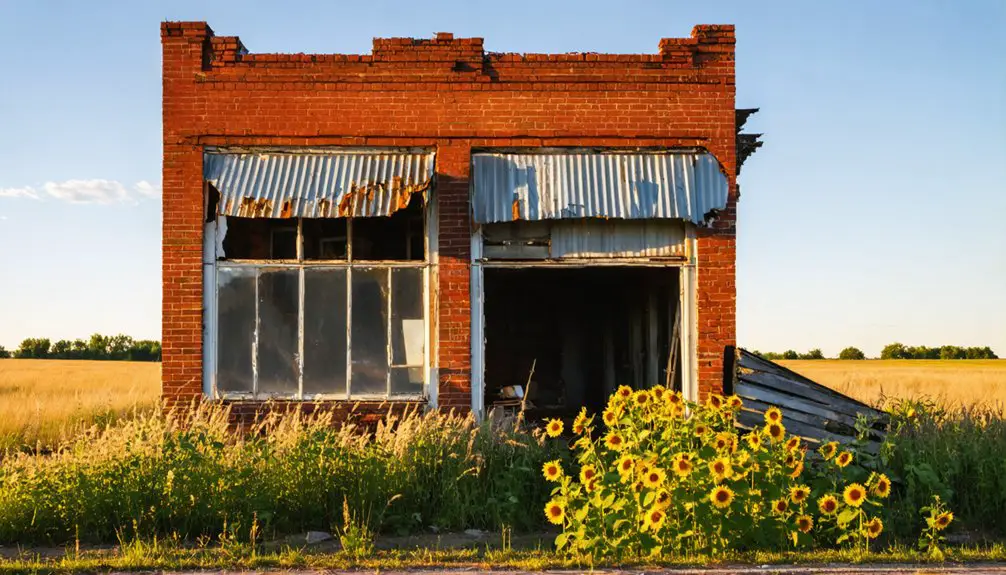
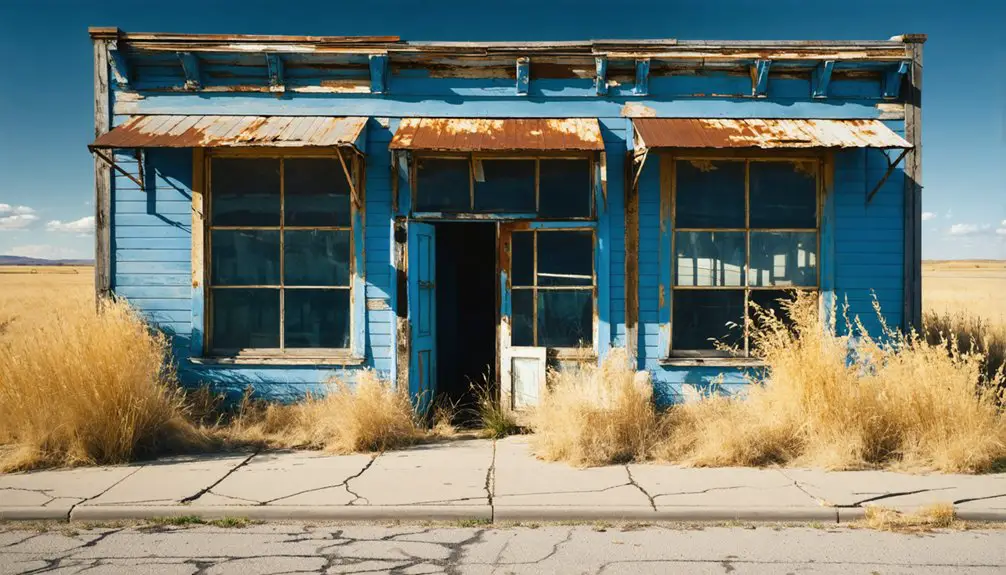
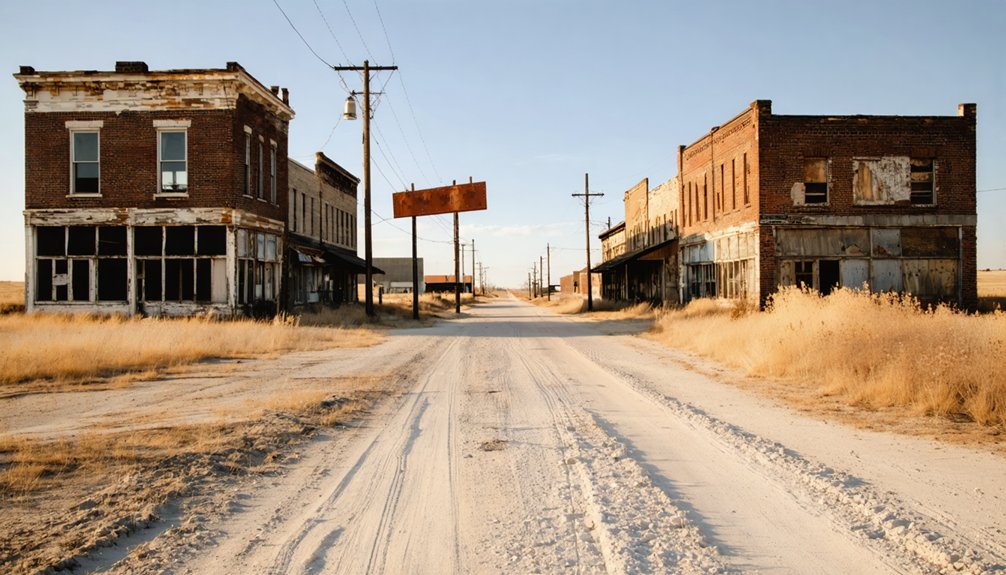
Nothing prepares you for how ordinary Mildred looks now. You’ll drive along US Highway 59 and almost miss it entirely. The town remnants are subtle — scattered foundations, overgrown lots, and the quiet geography of a place that once hummed with 900 souls and a cement plant running full throttle.
Stand near the original townsite and let the historical significance sink in. Cement mixed here helped build the Liberty Memorial in Kansas City. Two hotels once stood somewhere beneath your feet. A railway depot connected workers to the wider world.
Beneath your feet: two hotels, a railway depot, cement that built the Liberty Memorial.
Today, 25 people call this area home. The Coal Creek dam site and old quarry areas reward curious explorers willing to look closely.
Mildred doesn’t announce itself — you have to seek it out.
How to Reach Mildred, Kansas on US Highway 59
Reaching Mildred takes only a straight shot down US Highway 59, positioned 7 miles north of Moran and 4 miles south of Kincaid — the same corridor that once carried cement workers, railway passengers, and commercial traffic through a town that briefly rivaled any industrial settlement in Allen County.
Navigation tips are simple: drive freely, watch for the subtle roadside markers, and let the open Kansas landscape guide you. The scenic views along this stretch reward unhurried travelers — rolling terrain, creek bottomlands, and remnants of quarry-scarred earth that hint at Mildred’s industrial past.
No complex detours, no congested routes. You’re moving through countryside that remembers when 900 people called this corridor home, when limestone became cement, and when Mildred briefly mattered to the wider world.
Nearby Allen County Ghost Towns Worth the Detour
Mildred doesn’t have to be your only stop — Allen County scattered its ghost towns generously across the landscape, and the same highway corridor that brought you here puts several within easy striking distance.
Swing toward Bassett and Carlyle, two communities that share Mildred’s story of industrial promise and quiet disappearance. You’ll find abandoned structures that still whisper their histories if you’re willing to listen closely enough.
These historical landmarks reward the curious traveler who values wandering on their own terms, free from curated tourist trails. Each town adds another layer to Allen County’s broader narrative of boom, bust, and stubborn resilience.
String them together into a single afternoon loop, and you’ll leave with a far richer understanding of what this corner of Kansas once dared to become.
What to Bring for Visiting Mildred and Its Cement Plant Ruins
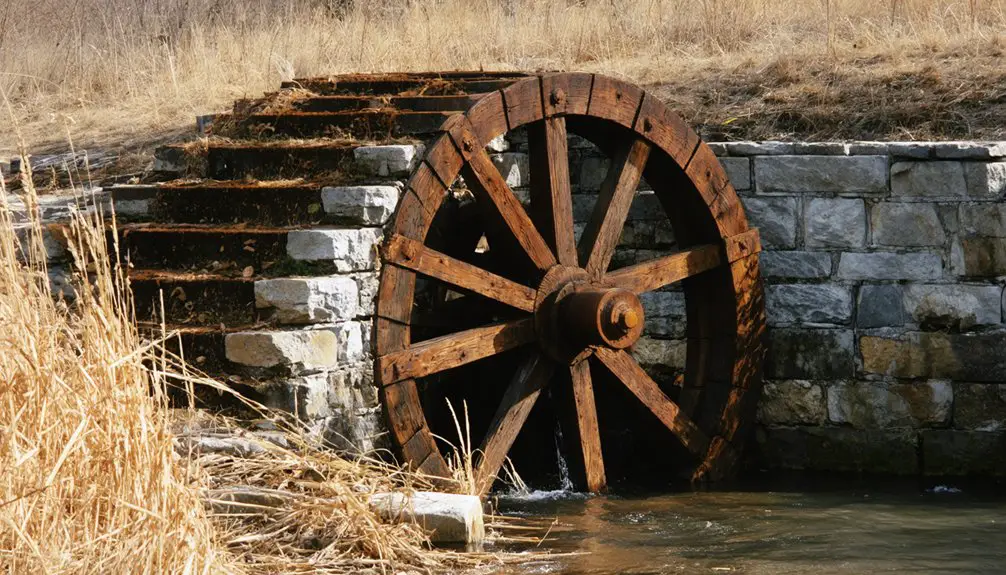
A good pair of boots will carry you farther than enthusiasm alone when you’re picking through the remnants of what was once a bustling cement operation. Sturdy footwear protects against uneven ground where limestone quarries once fed the Great Western Portland Cement Plant.
When exploring history this raw, you’ll want gloves for handling weathered surfaces and layers appropriate for Kansas weather shifts.
Pack water, since Coal Creek’s dam site won’t quench your thirst. Bring a camera, notebook, and topographic map — the original 40-acre townsite rewards careful navigation.
A field guide helps identify local wildlife that’s quietly reclaimed these grounds since 1917. Keep your phone charged for coordinates, but don’t depend on signal.
Respect the land, leave nothing behind, and carry everything you need for genuine freedom out here.
Frequently Asked Questions
Was Mildred, Kansas Ever Officially Incorporated as a City?
Yes, you’ll find that Mildred history confirms it was officially incorporated as a city. Town incorporation gave this once-thriving Kansas community its identity, though it sadly lost that status through disincorporation in 2016.
Who Was Mildred Wagner and Why Was the Town Named After Her?
Mildred Wagner was J.W. Wagner’s daughter, and you’ll find her Mildred’s legacy etched in the town’s very name. The company president’s historical significance shaped a community that once thrived with freedom and possibility.
Did the Great Western Cement Plant Ship Products Outside the United States?
Yes, Great Western’s cement products transcended borders through international trade, leaving an industrial impact felt worldwide. You’d be amazed knowing that humble Kansas limestone helped build structures across the globe, connecting this small town to distant lands.
How Long Did Mildred’s Post Office Remain Open After the Plant Closed?
After the plant closed in 1917, you’d find Mildred’s post office remarkably endured 56 more years, finally shuttering in 1973. Its postal history reflects the community impact of residents who refused to let their town’s spirit vanish completely.
What Railway Line Originally Served the Town of Mildred, Kansas?
The Missouri, Kansas & Texas Railway once served Mildred, weaving railway history into the town’s significance. You’d have found a passenger depot and spur lines connecting this thriving cement hub to a world that’s now beautifully, hauntingly forgotten.
References
- https://www.hhhistory.com/2019/05/ghost-towns-of-kansas.html
- https://legendsofkansas.com/mildred-kansas/
- https://legendsofkansas.com/allen-county-extinct-towns/
- https://kids.kiddle.co/Mildred
- https://en.wikipedia.org/wiki/Mildred
- https://www.youtube.com/watch?v=8dtIPX7pIqI
- https://live-fts.flickr.com/photos/jimsawthat/6335921069/
- https://abandonedkansas.wordpress.com/2018/03/26/mildred-kansas/