Planning a ghost town road trip to the Salton Sea means heading roughly 150 miles southeast of Los Angeles into California’s desert, where a once-glamorous Hollywood hotspot collapsed into salt, silence, and toxic dust. You’ll explore abandoned marinas, crumbling resort towns like Salton City and Bombay Beach, and shorelines built for crowds that never came. Visit between October and March to dodge dangerous 110°F summers. There’s far more to this haunting landscape than first meets the eye.
Key Takeaways
- The Salton Sea, located approximately 150 miles from Los Angeles, is a two-hour drive via I-10 East toward Indio, then south on Highway 86.
- Visit between October and March when temperatures range in the 60s and 70s, avoiding dangerous summer heat exceeding 110°F.
- Pack N95 respirator masks, goggles, sturdy boots, layered clothing, and extra water, as toxic dust and remote conditions pose serious health risks.
- Key ghost towns include Salton City, Bombay Beach, and abandoned marinas featuring crumbling infrastructure, rusting trailers, and skeletal docks along a retreating shoreline.
- No guided tours are required, giving visitors unrestricted access to haunting remnants of failed developments, including 12,000 platted lots that were never built.
How the Salton Sea Went From Hollywood Hotspot to Ghost Town
Before it became a cautionary tale of environmental collapse, the Salton Sea was California’s crown jewel of recreation.
Frank Sinatra, Sammy Davis Jr., and the entire Rat Pack soaked up Hollywood nostalgia along its shores during the 1950s and 1960s, when over a million tourists visited annually.
Then the environmental impact hit hard. Agricultural runoff flooded the sea with pesticides and fertilizers, while rising salinity killed off fish populations.
Bird die-offs followed. The exposed, toxic lakebed began releasing contaminated dust across surrounding communities, creating serious air quality hazards.
What once drew Hollywood’s elite now drives away permanent residents. The resort marinas sit abandoned, the yacht clubs rust quietly, and the shoreline communities transformed into haunting reminders of California’s most spectacular boom-and-bust story.
What Created the Salton Sea in the First Place?
The Salton Sea‘s existence traces back to a spectacular engineering blunder in 1905, when the Colorado River broke through an irrigation canal and poured unchecked into the Salton Basin for two straight years.
Workers finally sealed the breach in 1907, but by then, a 15-by-35-mile shallow saline lake had permanently claimed the desert floor.
Here’s what shaped this accidental inland sea:
- The California Development Company’s Imperial Valley irrigation project triggered the catastrophic flood
- The basin, previously a dry salt-mining site since 1815, transformed into California’s largest lake
- With no outflow, the Salton Sea relies solely on evaporation, pushing salinity beyond Pacific Ocean levels
That engineering failure accidentally created one of California’s most fascinating — and now haunting — landscapes you can explore today.
The Best Time of Year to Visit Salton City
If you’re planning a ghost town road trip to Salton City, timing your visit for late fall through early spring — roughly October through March — gives you the most comfortable conditions in this harsh Imperial Valley desert.
Summer temperatures routinely exceed 110°F, turning the already desolate landscape into a punishing environment where cracked pavement, toxic dust, and relentless sun make exploration genuinely dangerous.
You’ll find mild, dry weather in the cooler months ideal for wandering the empty streets, poking around abandoned infrastructure, and watching migratory birds that still stop along the Pacific Flyway.
Ideal Visiting Seasons
Winter and early spring are hands-down the best times to visit Salton City, when mild temperatures in the 60s and 70s make exploring its eerie, sun-bleached streets far more bearable than the scorching summers that regularly push past 110°F.
You’ll also witness the ecological impact of this haunting landscape most vividly during cooler months, when migratory birds still trace the Pacific Flyway overhead. The historical significance of this failed resort community hits differently against crisp desert air.
Plan your visit around these seasonal advantages:
- November through February offers the coolest temperatures for walking abandoned lots
- March and April bring wildflowers contrasting sharply against crumbling infrastructure
- Early mornings reduce exposure to toxic dust drifting off the shrunken sea floor
Weather Conditions To Expect
Salton City’s desert climate swings between two dramatic extremes, so knowing what you’re walking into can make or break your trip. Weather patterns here aren’t subtle — summers regularly push past 115°F, turning the cracked lakebeds and abandoned streets into a genuine furnace. You’ll want to avoid those brutal months entirely.
Seasonal changes shift dramatically once October arrives. Fall through early spring delivers mild temperatures between 60°F and 80°F, clear skies, and manageable winds — perfect conditions for exploring rusting ruins and walking abandoned marina docks.
Winter nights can drop near freezing, so layer up.
Spring brings occasional strong desert winds that kick toxic dust off the exposed sea floor. Always check air quality indexes before heading out, and pack a quality respirator mask regardless.
Avoiding Extreme Heat
Smart hydration tips and timing make the difference:
- Carry at least one gallon of water per person — desert heat depletes you faster than you’ll expect.
- Arrive early morning to explore before midday sun transforms asphalt streets into radiating heat traps.
- Avoid July through September entirely — triple-digit temperatures make outdoor exploration genuinely dangerous.
You’re chasing abandoned history, not heatstroke.
Plan smart, and Salton City rewards you completely.
How Far Is Salton City From Los Angeles?
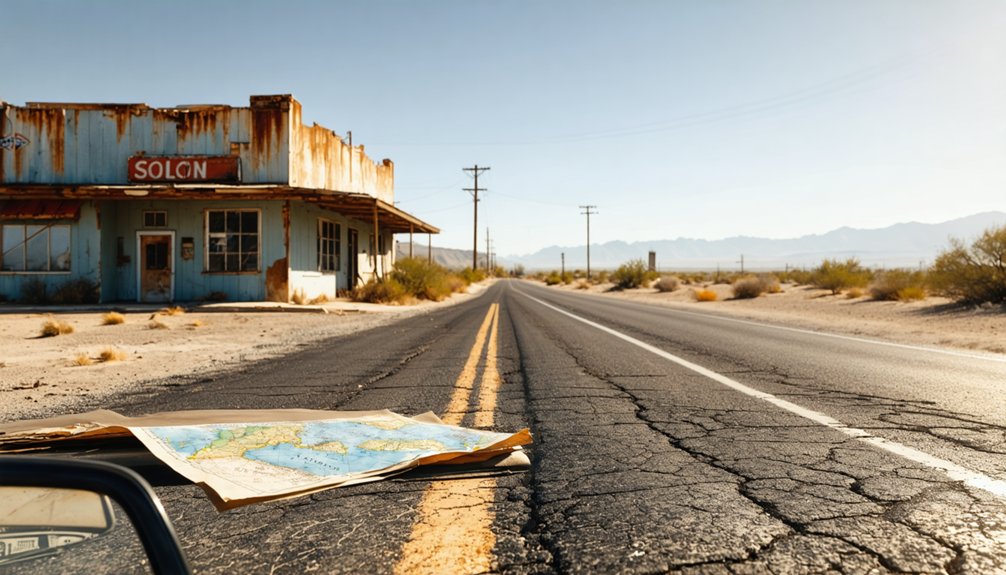
You’ll cover roughly 150 miles from Los Angeles to Salton City, making it an easy two-hour drive that fits perfectly into a day trip or weekend getaway.
Your best route takes you east on I-10 toward Indio, then south on Highway 86 along the western shore of the Salton Sea straight into town.
If you’re craving more desert scenery, you can swing through Palm Springs and cut south on Highway 111 for a slightly longer but more scenic alternative.
Drive Time From LA
How far is Salton City from Los Angeles? You’re looking at roughly a 2-hour drive, about 150 miles southeast through California’s desert corridor.
Road conditions are generally smooth along major routes, giving you plenty of freedom to cruise at your own pace.
Here’s what to expect along the way:
- Route options include I-10 East through Palm Springs, dropping south toward the Salton Sea’s western shore.
- Scenic viewpoints appear as desert mountains give way to the surreal, shimmering lakebed stretching across the valley floor.
- Timing matters — early morning departures beat heat and traffic, letting you explore ruins comfortably.
Pack water, check your fuel, and embrace the open road. This hauntingly beautiful ghost town rewards every mile you put behind you.
Best Route Options
Whether you’re chasing desert scenery or the fastest path south, two solid routes connect Los Angeles to Salton City.
Take Interstate 10 east through the San Bernardino Valley, then drop south on Highway 86 toward Imperial County. This path cuts through Coachella Valley farmland, passing historical landmarks like the old agricultural communities that shaped this desert region.
Prefer the best scenic routes? Head south on Interstate 15, connecting to the Anza-Borrego Desert corridor before swinging east toward the Salton Sea’s western shore. You’ll trade speed for stunning desert vistas and raw Sonoran landscapes.
Both options deliver you to Salton City’s grid of empty streets within roughly two hours.
Pack water, fuel up before leaving Palm Springs, and prepare for genuinely remote desert conditions awaiting you.
Why the Salton Sea Is More Dangerous Than It Looks
The Salton Sea looks hauntingly beautiful from a distance, but it’s hiding serious dangers beneath its glassy surface and along its crumbling shores.
Its salinity levels now exceed the Pacific Ocean, making it inhospitable and deeply unsettling up close. The environmental hazards here aren’t just ecological—they’re personal.
Watch out for these real risks before you step out of your vehicle:
Before you even open the car door, the Salton Sea is already working against you.
- Toxic dust from the exposed lakebed carries arsenic and selenium, threatening your lungs instantly
- Unstable shorelines of decomposed fish bones and crystallized salt can shift beneath your feet
- Air quality warnings spike frequently, especially during windy desert conditions
Respect the Sea’s eerie allure, but don’t let its strange beauty fool you into carelessness.
What to Pack for the Salton Sea’s Toxic Desert Conditions
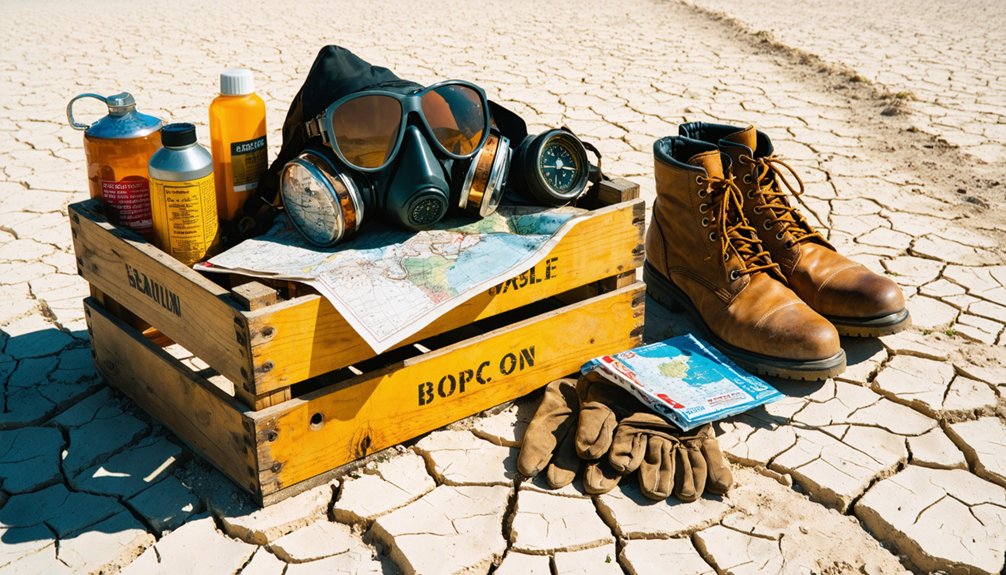
Surviving a visit to the Salton Sea means packing smarter than you’d for a typical desert road trip. The toxic conditions here aren’t ordinary desert hazards — exposed lakebed releases contaminated dust carrying serious health hazards into the air you’re breathing.
Pack an N95 respirator mask, not just a bandana. The environmental impact of decades of agricultural runoff means you’ll want goggles too.
Bring layered clothing for dramatic temperature swings and sturdy boots for exploring ghost town ruins and abandoned tourist attractions.
Carry more water than you think you’ll need — this remote desert offers nothing once you leave civilization behind.
Keep binoculars handy for desert wildlife and migratory birds, because despite its troubled history, the Salton Sea’s historical significance still draws remarkable natural beauty worth witnessing firsthand.
The Best Ghost Town Stops Along the Salton Sea
Gear packed and respirator ready, you’re set to explore what remains of one of California’s most surreal failed experiments. The Salton Sea‘s shoreline holds ghost town stops that’ll leave you speechless.
- Salton City: Hundreds of miles of paved roads lead nowhere, flanked by crumbling infrastructure built for 40,000 residents who never arrived.
- Bombay Beach: Rusting trailers, abandoned homes, and a silted marina sit frozen in time where the Rat Pack once partied.
- Abandoned Marinas: Skeletal boat docks stretch toward a retreating shoreline, their gangways dangling above cracked, exposed lakebed.
Each stop delivers raw, unfiltered history without ropes or tour guides. You move at your own pace, answering only to the desert wind.
What’s Left of Salton City’s Abandoned Resort Today
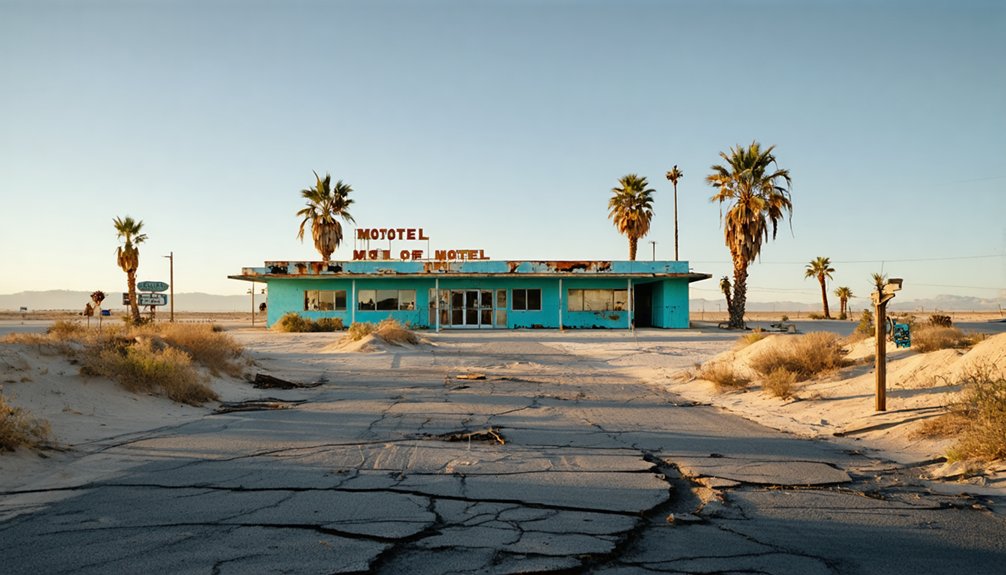
What remains of Salton City reads like a blueprint for a city that never happened. Hundreds of miles of cracked, empty streets stretch across the desert, leading nowhere.
You’ll find abandoned structures frozen mid-decay — a yacht club stripped bare, rusting signage, skeletal buildings swallowed by sand and silence.
The environmental impact here is impossible to ignore. Toxic dust from the Salton Sea’s shrinking shoreline drifts through the air, coating everything in a ghostly film.
The water that once drew Hollywood’s elite now carries agricultural runoff and dangerous chemicals.
Yet there’s something undeniably freeing about standing in a place where ambition collided with reality.
There is strange peace in the ruins of ambition — where grand dreams dissolved quietly into desert dust.
You’re walking through 12,000 platted lots, most never built on, reclaimed quietly by the desert.
Frequently Asked Questions
Can You Swim in the Salton Sea Today?
With salinity exceeding the Pacific Ocean, you technically can swim in the Salton Sea, but safety concerns make it inadvisable. You’ll encounter toxic agricultural runoff, fish die-offs, and harmful airborne dust that threaten your health.
Are There Any Working Restaurants or Gas Stations Near Salton City?
You’ll find limited local dining and fuel options near Salton City, but don’t worry! Nearby Desert Shores and Westmorland offer working gas stations and small restaurants, keeping your adventurous ghost town exploration fueled and free-spirited.
Is It Legal to Take Souvenirs From Salton City’s Abandoned Properties?
Before you “liberate” forgotten relics, understand that souvenir legality matters here — property rights still apply to Salton City’s abandoned lots. You’re technically trespassing and stealing, so admire the haunting beauty but leave everything untouched.
What Wildlife Can Still Be Spotted Around the Salton Sea?
You’ll spot incredible wildlife here! Despite its decline, the Salton Sea offers amazing birdwatching opportunities, hosting millions of migratory birds. These unique ecosystems still shelter pelicans, herons, and sandpipers traversing the Pacific Flyway freely.
Are There Any Guided Tours Available for Exploring Salton City?
Like a treasure map to forgotten dreams, guided exploration options are limited, but you’ll find local history tours occasionally offered through Imperial County resources, letting you roam Salton City’s haunting, abandoned streets on your own adventurous terms.
References
- https://www.thetravel.com/visit-salton-city-abandoned-ghost-town-palm-springs/
- https://www.themodernpostcard.com/the-salton-sea-a-ghost-of-former-glory-in-the-california-desert/
- https://www.youtube.com/watch?v=gVxf4G4LLn4
- https://www.youtube.com/watch?v=42kzy9PxHXc
- https://www.legendsofamerica.com/ca-saltonsea/
- https://podcasts.apple.com/cl/podcast/ghost-towns-in-the-american-west-with-aubrey-carter/id1456966267?i=1000757513684&l=en-GB