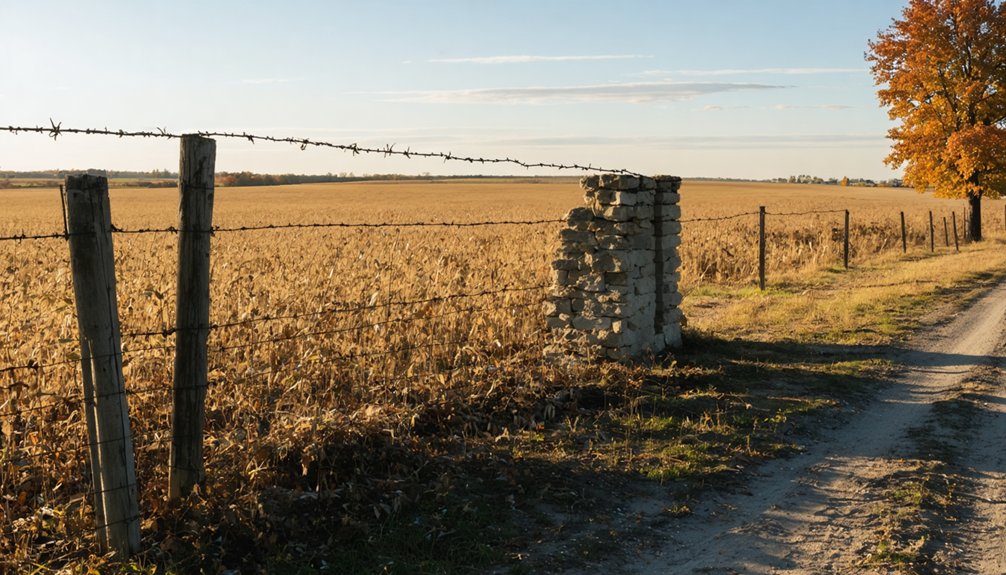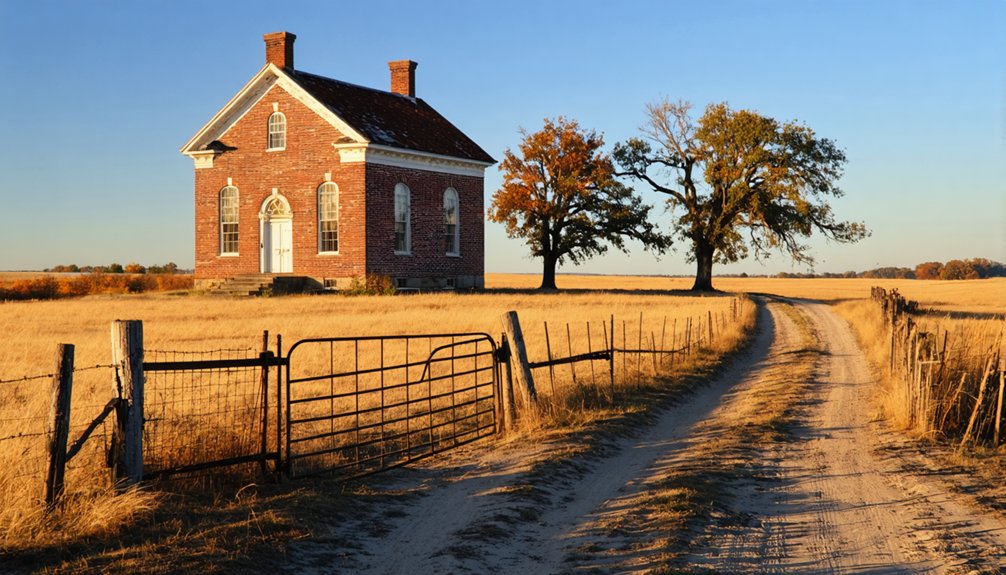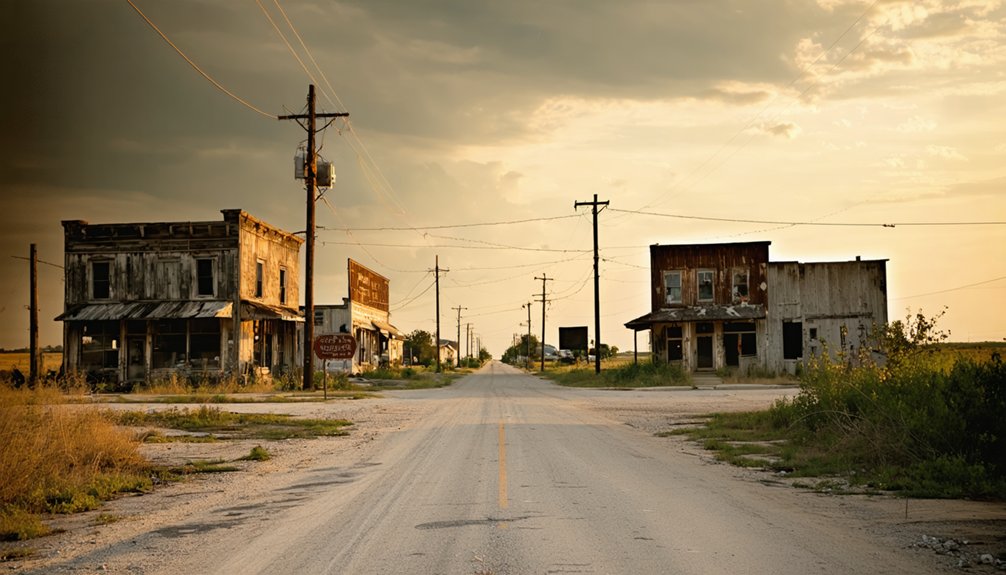
Planning a ghost town road trip to Millville, Illinois means visiting a place that’s been completely erased from the earth. Established in 1835, Millville thrived until the railroad bypassed it in the 1850s, and a catastrophic 1892 flood wiped away every last structure. Today, it exists entirely underground within Apple River Canyon State Park in Jo Daviess County. There’s no town left to see — only trails, history, and buried secrets waiting to be uncovered.
Key Takeaways
- Millville, established in 1835, was destroyed by an 1892 flood and now exists entirely underground within Apple River Canyon State Park.
- Start your trip from Galena using Route 20 West to Stockton or Illinois Route 78 North, finishing along Apple River Canyon Road.
- Allocate 2–3 hours to explore trails, using 1872 maps to mentally reconstruct Millville’s layout at the Apple River confluence.
- Pack sturdy hiking boots, water, snacks, layered clothing, a trail map, and a portable battery pack for the journey.
- Nearby ghost towns Ostend, Progress, and Coltonville offer additional stops, while Galena provides a preserved historic contrast.
What Made Millville, Illinois a Ghost Town?
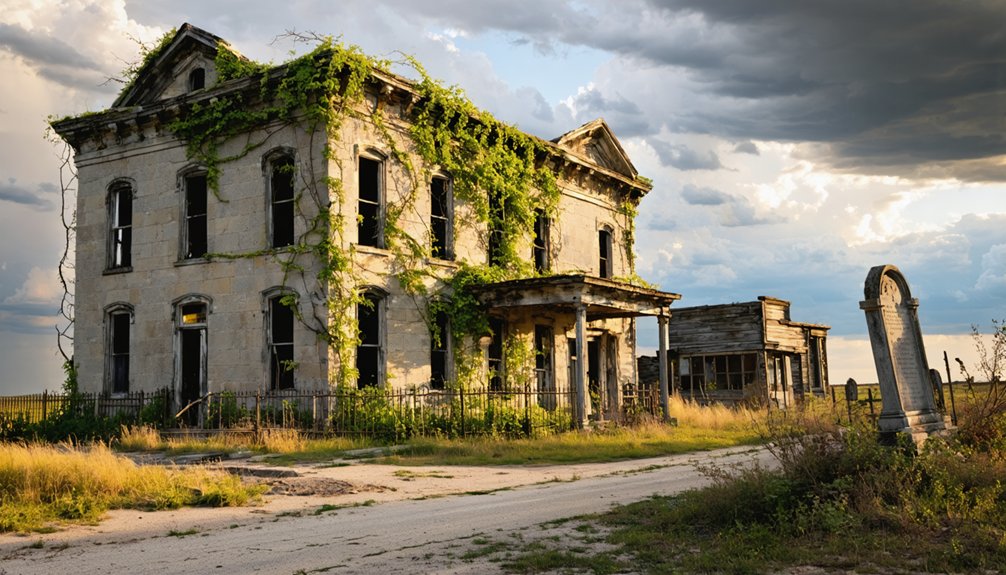
Once a bustling frontier settlement, Millville met its end through a one-two punch of economic abandonment and natural disaster. Understanding Millville history means tracing two fatal blows.
First, when the Illinois Central Railroad bypassed the town in 1853–1854, commerce dried up fast. Settlers moved toward rail access, and Millville’s growth stalled permanently.
The ghost town origins sealed themselves in June 1892. Heavy rains swelled Cox Mill pond, just a quarter mile away, bursting the mill dam. Floodwaters tore through Clear Creek into the South Fork Apple River, sweeping every remaining building away without a trace.
What railroads couldn’t finish, nature did. Today, you won’t find a single standing structure — just open ground inside Apple River Canyon State Park marking where a real community once thrived.
Where Is the Millville Town Site Located?
Now that you know what erased Millville from the map, finding where it once stood gives the story a physical anchor.
You’ll discover the Millville town site tucked inside Apple River Canyon State Park in Jo Daviess County, Illinois, where the Apple River meets the South Fork Apple River. This 25-acre confluence area within Rush Township holds all the Millville history beneath your feet, even though no structures remain visible today.
The site earned a spot on the U.S. National Register of Historic Places in 2003 as the Millville Town Site, validating its significance among Illinois ghost town stories.
Illinois acquired the surrounding parkland in 1932, preserving the landscape where settlers, millers, and blacksmiths once built their lives before the flood erased everything.
The 1892 Flood That Made Millville a Ghost Town
When you picture Millville’s end, imagine a single catastrophic night in June 1892 when heavy rains swelled Cox Mill pond, just a quarter mile away, until its dam burst under the pressure.
The released waters tore down Clear Creek into the South Fork Apple River, sending a violent wall of water straight through the remaining buildings.
Dam Burst Triggers Disaster
Heavy rains in June 1892 set off a chain of events that would erase Millville from the map entirely.
Cox Mill pond, just a quarter mile away, swelled beyond its limits, exposing every dam safety failure imaginable. The mill dam burst, releasing a violent torrent down Clear Creek into the South Fork Apple River.
Here’s what that catastrophic rush of water did:
- Swept every remaining building completely away
- Left absolutely no structural trace behind
- Exposed the town’s total vulnerability to flood prevention failures
- Delivered a final, irreversible end to Millville’s story
You’re standing where an entire community once thrived, now reclaimed by nature.
That 1892 flood didn’t just destroy buildings — it permanently erased every physical reminder that Millville ever existed.
Town Wiped Out Overnight
Before the sun rose on Millville that June morning in 1892, the town was already gone. The floodwaters didn’t linger — they struck, swallowed, and vanished, leaving nothing behind.
Every building that had survived decades of slow decline disappeared in hours, making Millville’s overnight transformation one of Illinois’ most dramatic ghost town legends.
You’re not just visiting a forgotten settlement when you walk this ground — you’re standing where an entire community ceased to exist between dusk and dawn.
No crumbling walls, no foundations, no markers survived the surge. The Apple River reclaimed everything.
That total erasure is precisely what makes Millville hauntingly compelling. Nature didn’t slowly consume this town. It erased it completely, decisively, and without negotiation, leaving only the land and the story.
Why There’s Nothing Left to See at Millville Town Site
June 1892 dealt Millville its death blow. When Cox Mill pond’s dam burst, floodwaters erased every remaining structure overnight, leaving zero trace of this town’s ghost town origins or historical significance.
In June 1892, Cox Mill pond’s dam burst, and Millville vanished overnight — erased completely by unstoppable floodwaters.
You won’t find crumbling foundations or weathered walls here — nature reclaimed everything completely.
Here’s what wiped the slate clean:
- The dam burst sent violent waters tearing down Clear Creek
- Floodwaters swept through the South Fork Apple River confluence
- Every standing building vanished in a single destructive surge
- No debris, no remnants, nothing survived the deluge
Today, you’re walking through Apple River Canyon State Park on ground where settlers once milled lumber and grain.
Archaeological testing in 2001 confirmed the site’s integrity exists below the surface — Millville lives underground now, invisible but historically undeniable.
How to Reach the Millville Town Site in Apple River Canyon

If you’re starting your ghost town road trip from Galena, head northwest along U.S. Route 20 before turning north into Jo Daviess County’s winding back roads toward Stockton, where signs will guide you closer to Apple River Canyon State Park.
You’ll navigate a mix of state and county routes through rolling Illinois hill country, so keep a detailed map handy since rural signage can be sparse.
Once you reach the park entrance, pay the state entry fee, check current trail conditions for flood-prone paths, and set out on foot toward the confluence where the Apple River meets the South Fork—the heart of the old Millville Town Site.
Driving Routes From Galena
There are two main routes worth knowing before you head out from Galena toward the Millville Town Site in Apple River Canyon State Park.
Both scenic routes wind through Jo Daviess County’s rolling hills, putting you close to sites of historical significance across northwest Illinois.
- Route 20 West to Stockton: Take US-20 west, then cut north toward Apple River village.
- Illinois Route 78 North: A more direct scenic corridor through rural countryside.
- Apple River Canyon Road: Final stretch into the state park from the village.
- Seasonal Check: Flood-prone trails may affect access, so verify conditions before departing.
Either way, you’re looking at roughly 20–30 minutes of driving before you’re walking ground where Millville once stood.
Navigating Jo Daviess County Roads
Once you’ve left Galena behind, the county roads threading through Jo Daviess County become your guide toward Apple River Canyon State Park and the buried history of Millville.
These scenic routes wind through rolling hills and farmland, rewarding travelers who embrace the slower pace of northwest Illinois driving. Head toward Stockton first, then follow state and county roads northwest into the canyon corridor.
Watch for local attractions along the way, including riverside overlooks and small-town stops that add texture to your journey.
The park entrance puts you within reach of the Millville Town Site, listed on the National Register of Historic Places since 2003.
Trail maps help you locate the confluence where the Apple River meets South Fork, marking ground where an entire town once stood.
Entering Apple River Canyon Park
Pulling into Apple River Canyon State Park, you’ll find the trailheads and park grounds that bring you within reach of the Millville Town Site, tucked at the confluence of the Apple River and South Fork Apple River.
Follow the park’s trails to explore where a thriving 19th-century town once stood before the 1892 flood erased every structure.
Park activities complement your ghost town mission beautifully:
- Hike riverside trails hugging the Apple River’s scenic canyon walls
- Locate the confluence where Millville’s mills once operated
- Reference 1872 maps to visualize the blacksmith shop and eight original buildings
- Combine archaeological site exploration with canyon viewpoints
Check seasonal hours before arriving, as flood-prone trail conditions can affect access.
State park entry fees apply, so plan accordingly.
Is the Millville Town Site Worth Visiting With No Structures Left?
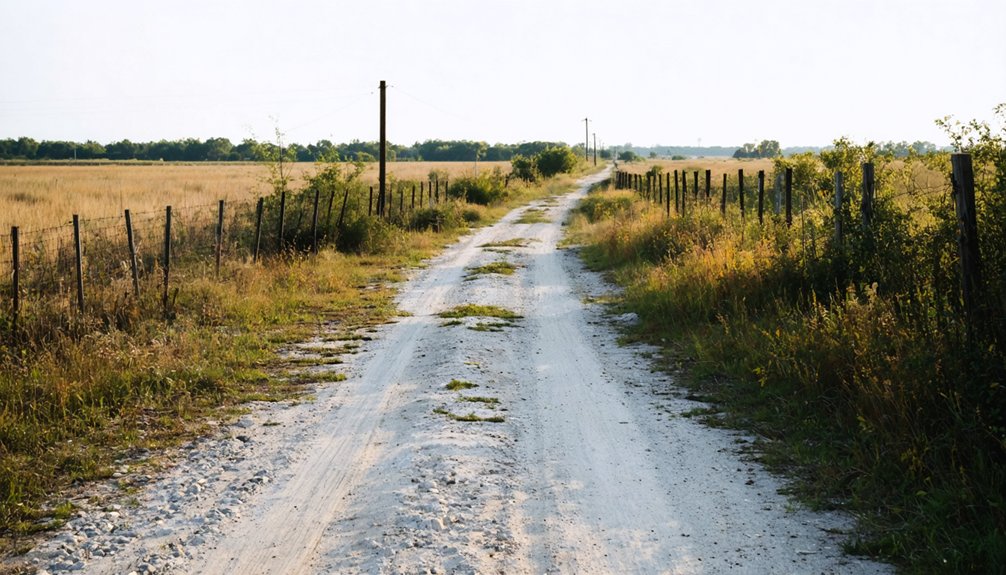
How much does a place need to show you before it’s worth your time? Millville answers that question honestly — nothing stands here, yet the historical significance runs deep.
You’re walking ground where settlers built an entire community from scratch in 1835, only to watch it vanish beneath floodwaters in 1892. That story lives in the land itself.
Archaeological findings from Fever River Research’s 2001 testing confirmed the site’s integrity, meaning what happened here is real and traceable beneath your feet.
The National Register listing in 2003 recognizes that. You don’t need standing walls to feel the weight of a place. You need curiosity and a willingness to look past the surface.
Millville rewards exactly that kind of traveler.
How Long Should You Spend at the Millville Town Site?
Plan on spending about two to three hours exploring the Millville Town Site, giving yourself enough time to walk the Apple River Canyon State Park trails, locate the historic confluence area, and study any archaeological markers near where the town once stood.
You’ll move at a relaxed pace since there are no standing structures demanding lengthy inspection, but the scenic canyon views and river setting reward a slow, thoughtful visit.
If you’re building a full ghost town road trip, pair Millville with nearby forgotten settlements like Ostend, Progress, or Coltonville to stretch your northwest Illinois itinerary into a genuinely rewarding day-long drive through Jo Daviess County.
Exploring The Historic Site
Allocating 2 to 3 hours gives you enough time to walk the trails, absorb the confluence where Apple River meets South Fork Apple River, and mentally reconstruct a town that a single 1892 flood erased overnight.
The site’s historic significance deepens when you realize archaeological discoveries from 2001 confirmed what’s invisible to the naked eye.
Use your time wisely by:
- Overlaying 1872 maps to locate where eight buildings once stood
- Tracing the flood path that Cox Mill dam’s collapse carved through Clear Creek
- Identifying the former mill and blacksmith shop footprints
- Photographing the confluence that defined Millville’s founding geography
You won’t find standing structures, but that absence tells the story.
The land itself becomes your exhibit, rewarding curiosity with context that no museum could replicate.
Trail Time Estimates
Most visitors find that 2 to 3 hours strikes the right balance between thorough exploration and trail fatigue at the Millville Town Site. You’ll want enough time to walk the Apple River Canyon trails, study the confluence where the town once stood, and mentally reconstruct Millville using historical maps as your guide.
Trail conditions vary seasonally, so check current reports before you go. Spring flooding and muddy paths can slow your pace considerably. Pack solid hiking gear — sturdy boots especially — since uneven terrain and wet ground are common near the riverbanks.
If you’re weaving Millville into a broader Jo Daviess County ghost town itinerary, budget extra drive time between sites. Arriving early keeps your options open and lets you explore at your own unhurried pace.
Pairing Nearby Ghost Towns
Once you’ve mapped out your time at the Millville Town Site, it’s worth looking beyond the park’s boundaries to nearby ghost towns that round out the story of northwestern Illinois’s faded settlements.
Each destination adds a distinct layer to the region’s ghost town history, giving you a fuller picture of why communities rose and collapsed here.
Consider adding these stops to your route:
- Ostend – a quietly vanished settlement with intriguing ghost town history
- Progress – ironic in name, revealing abandoned structures and broken promises
- Coltonville – another forgotten pocket of Jo Daviess County’s past
- Galena – a living anchor town providing historical contrast
Pairing these stops creates a cohesive road trip narrative, connecting scattered abandoned structures into one compelling drive through Illinois’s overlooked past.
What to Bring for a Ghost Town Day Trip to Millville
Since Millville’s historic site within Apple River Canyon State Park offers no standing structures or visitor facilities, you’ll want to pack thoughtfully before heading out. Your packing essentials should include sturdy hiking boots, water, snacks, and a trail map, since flood-prone paths can turn unpredictable.
Dress in layers for northwest Illinois weather shifts.
For photography tips, bring a wide-angle lens to capture the Apple River confluence where Millville once stood. Download 1872 historical maps onto your phone beforehand, allowing you to frame shots that contrast the town’s former layout against today’s wooded landscape.
A portable battery pack keeps your devices charged throughout the exploration.
Check seasonal park hours and trail conditions before arriving, and carry cash for state park entry fees.
Other Ghost Towns Worth Visiting Near Millville
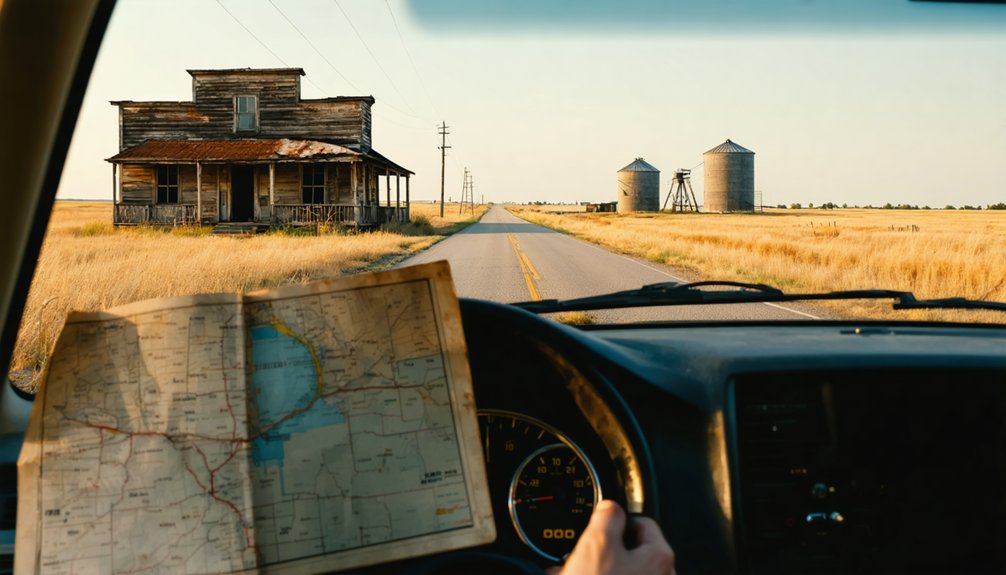
Why stop at Millville when Jo Daviess County and the surrounding northwest Illinois region hold several other forgotten settlements worth tracking down?
Pair your visit with these nearby historic sites and ghost town attractions to build a fuller road trip itinerary:
- Ostend – A vanished rural community tucked into Jo Daviess County’s rolling terrain
- Progress – Once a hopeful settlement, now reclaimed by the Illinois countryside
- Coltonville – Another forgotten stop reflecting 19th-century frontier ambition
- Galena – Not a ghost town, but a preserved historic hub perfect for anchoring your route
Each destination adds depth to your journey through northwest Illinois.
Each stop layers meaning onto the last, turning a simple drive into a slow discovery of northwest Illinois.
You’ll connect scattered chapters of regional history while roaming freely on your own terms, uncovering stories the main roads never tell.
When Is the Best Time to Visit Apple River Canyon?
When you visit Apple River Canyon State Park, shapes the entire character of your experience. Late spring through early fall offers the best seasons for exploring Millville’s ghost town site, with May and September delivering mild temperatures and manageable trail conditions.
Summer brings lush canyon views but also higher humidity and occasional heavy rains that can flood low-lying trails near the Apple River confluence.
Weather considerations matter most in spring, when snowmelt swells the river dramatically, echoing the destructive 1892 flood that erased Millville entirely.
Winter closes some park areas and makes archaeological markers harder to locate.
Fall rewards patient travelers with stunning foliage framing the canyon walls and quieter trails.
Always check current park hours and trail advisories before heading out.
Frequently Asked Questions
What Was Millville’s Reputation Like Among Early Illinois Settlers?
Millville earned a rough reputation among early settlers! You’d find ghost town legends rooted in gritty early settlers’ experiences at this 1835 founded settlement, where a sawmill and frontier spirit defined its famously rowdy, untamed character.
Who Originally Founded Millville and Built Its First Structures?
You’ll discover the Burbridges and John R. Smith as Millville’s Founding Families, erecting its first Historical Structures in 1835 — a house and sawmill that sparked this rugged Illinois settlement’s adventurous, freedom-filled frontier beginnings.
Was Millville Ever Officially Incorporated as an Illinois Municipality?
The available records don’t confirm Millville’s official incorporation as an Illinois municipality. You’re exploring ghost town history where abandoned settlements often grew organically, platted in 1846, yet never formally incorporated before the 1892 flood erased every trace.
How Large Was Millville’s Population at Its Peak Years?
The knowledge base doesn’t specify Millville’s peak population, but its 1872 map shows just eight buildings — a telling sign of population decline. You’ll appreciate this site’s historical significance as a rare, flood-erased Illinois frontier community.
Are Guided Tours of the Millville Town Site Available Today?
No formal guided tours exist, but you’ll embrace guided exploration independently through Apple River Canyon State Park’s trails. The site’s historical significance invites you to roam freely, uncovering Millville’s storied past at your own adventurous pace.
References
- https://en.wikipedia.org/wiki/Millville
- https://kids.kiddle.co/Millville
- https://www.youtube.com/watch?v=pLnLSAREPA0
- https://www.youtube.com/watch?v=BXYgW_veeVo
- http://livinghistoryofillinois.com/pdf_files/Town of Millville
- https://northwestchicagoland.northwestquarterly.com/2023/09/27/ghost-towns-of-the-old-northwest/
- https://drloihjournal.blogspot.com/p/lost-towns-of-illinois-series.html
- https://dnr.illinois.gov/content/dam/soi/en/web/dnr/naturalresources/cultural/documents/millville.pdf
- https://www.youtube.com/watch?v=fy3yJDBA5nI
- http://genealogytrails.com/ill/jefferson/ghostowns.html