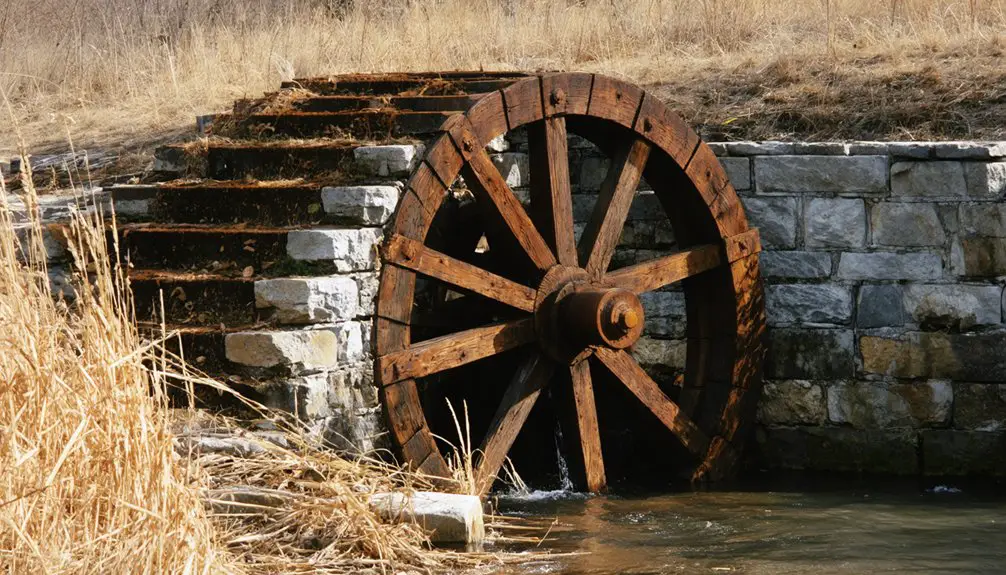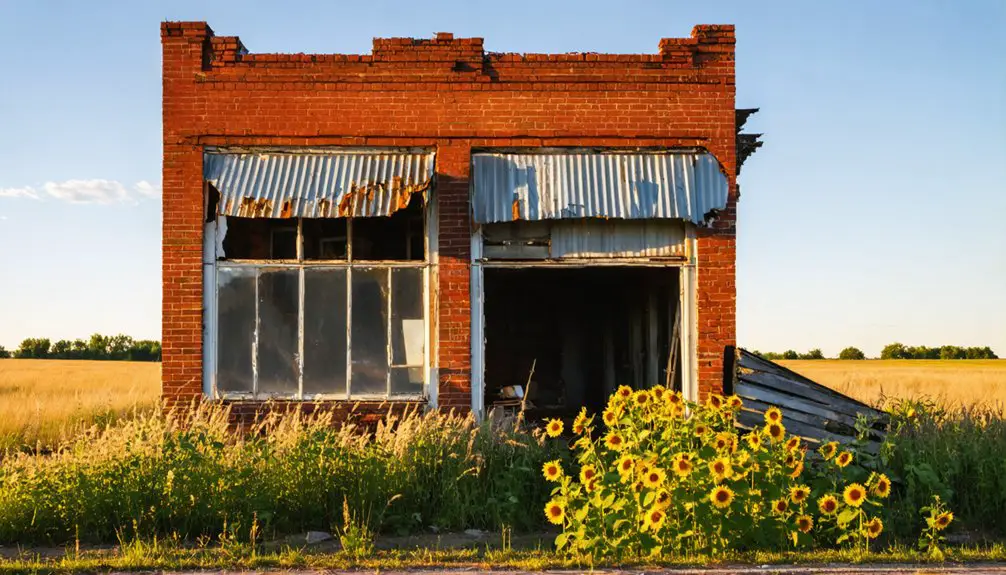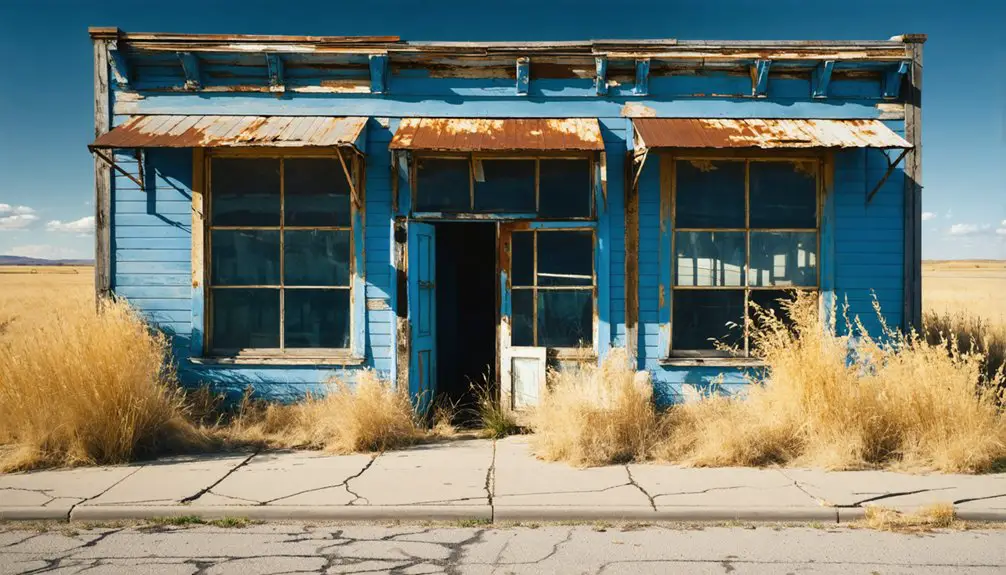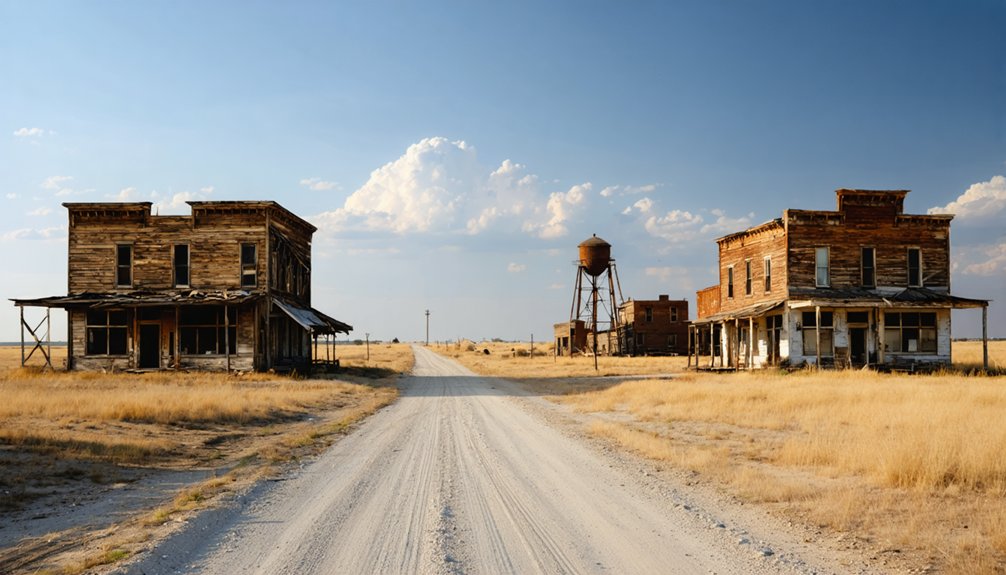
Planning a ghost town road trip to Mingo, Kansas puts you face-to-face with the raw, unfiltered story of a forgotten frontier settlement. You’ll find scattered foundations, towering grain elevators, and original dirt road grids that whisper decades of history. Start your drive from Colby via KS-25 N, roughly 13 miles away. Visit in late spring or early fall to avoid brutal summer heat and icy winter roads. There’s far more to this haunting landscape than you’d expect.
Key Takeaways
- Reach Mingo by traveling 13 miles from Colby via KS-25 N/S Range Ave, making Colby a practical base for your trip.
- Visit during late spring or early fall to avoid summer heat exceeding 100°F and hazardous winter road conditions.
- Explore remnants like grain elevators, scattered foundations, and original dirt road grids that reveal Mingo’s forgotten history.
- Combine your visit with nearby ghost towns Rexford, Levant, and Brewster for a fuller High Plains road trip experience.
- Stop at Colby’s historical museum beforehand to gain valuable context about the region’s ghost towns and westward expansion history.
Why Is Mingo, Kansas Considered a Ghost Town?
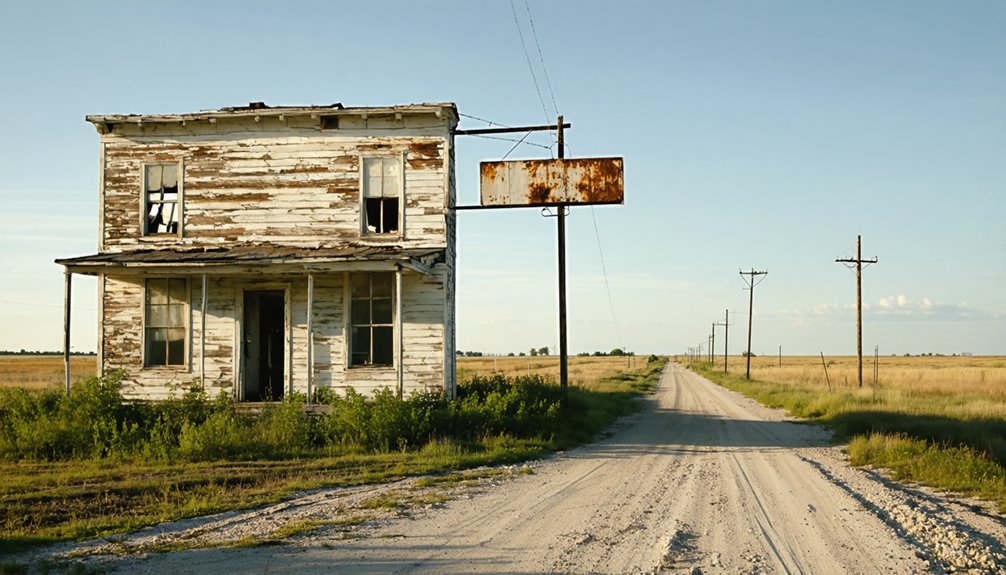
When a town loses its post office, it’s fundamentally lost its heartbeat — and that’s exactly what happened to Mingo, Kansas. Understanding Mingo history means recognizing how this small Thomas County settlement evolved from an active unincorporated community into one of Kansas’s quietly forgotten places.
Mingo, Kansas lost more than mail service when its post office closed — it lost its soul.
Ghost town characteristics typically include abandoned commerce, population decline, and lost civic infrastructure — Mingo checks every box. Business closures drove residents toward larger towns, economic activity dried up, and the post office eventually shuttered for good.
With roughly 25 remaining residents and no active commercial center, Mingo exists today as a shell of its former self.
If you’re drawn to places where history whispers through empty streets, Mingo delivers that raw, unfiltered experience of American westward expansion left behind.
Why Did Mingo’s Economy Collapse?
When you look into Mingo’s collapse, you’ll find that shifting transportation networks dealt the first blow, pulling commerce away from small communities like this one and redirecting it toward larger towns with better highway and railroad access.
As businesses lost customers, they shuttered one by one, leaving residents with fewer reasons to stay.
You can see how that cycle fed itself — fewer businesses meant fewer neighbors, and fewer neighbors meant even less economic activity to sustain the town.
Transportation Networks Redirected Commerce
As railroads carved new routes across the Great Plains, towns like Mingo lost their economic footing almost overnight.
Transportation evolution reshaped everything, pulling commerce shifts away from established communities toward newly connected railroad hubs.
Here’s how transportation dismantled small-town economies:
- Trails dried up — Oregon and Santa Fe Trail traffic once fueled local businesses before railroads redirected movement entirely.
- Railroads chose winners — Towns positioned along new tracks thrived while others withered without access.
- Highways accelerated decline — Major interstates pulled customers toward larger commercial centers.
- Businesses followed people — Once residents chased opportunity elsewhere, remaining shops couldn’t survive.
You’re fundamentally witnessing history’s brutal efficiency when you visit Mingo — transportation didn’t just move goods, it decided which communities lived and which ones vanished.
Business Closures Drove Population Out
Once transportation networks gutted Mingo’s commercial lifelines, businesses couldn’t survive the customer drought. When shops shuttered their doors, residents faced a harsh reality — staying meant accepting an existence without vital services or economic sustainability.
You can imagine the difficult choice families confronted: remain in a shrinking community or chase opportunity elsewhere.
That population migration wasn’t random. It followed a predictable pattern where each business closure triggered another family’s departure, creating a devastating cycle.
Fewer residents meant less local spending, which pushed remaining businesses toward inevitable collapse. The community fundamentally consumed itself through economic attrition.
What you’re visiting today reflects that cascading failure. Mingo didn’t disappear overnight — it gradually emptied as pragmatic people chose survival over sentiment, leaving behind nothing but quiet plains and fading memories.
What’s Still Standing in Mingo Today?
Few remnants survive in Mingo today, but what’s left still tells a quiet story of the town’s past.
When you roll through, you’ll notice the landscape holds onto its historical remnants with quiet dignity. The abandoned structures and open plains speak louder than any museum exhibit ever could.
The land here doesn’t need a plaque — the silence and ruins say everything history forgot to write down.
Here’s what you can still observe on your visit:
- Grain elevators — towering landmarks that once drove the local economy
- Dirt road grids — original town layout still visible from older settlement patterns
- Scattered foundations — remnants of homes and businesses long since vacated
- Open farmland — stretching endlessly, unchanged by decades of decline
You’re free to explore at your own pace — Mingo doesn’t charge admission.
How Do You Get to Mingo From Colby, Kansas?
Now that you know what’s waiting for you in Mingo, getting there from Colby is straightforward. Follow these Mingo directions to make the most of your Colby route and hit the open road with confidence.
From Colby, head south on KS-25 N/S Range Ave. You’ll drive approximately 8.2 miles before reaching your next turn.
Then, turn right onto W 3rd St, which takes you directly into the heart of what remains of Mingo. Alternatively, you can take Thomas County Rd K south for five miles to connect with the area.
The drive itself reflects everything Mingo represents — flat, expansive High Plains terrain stretching endlessly under a wide Kansas sky.
It’s roughly 13 miles southeast of Colby, making it an easy half-day adventure.
When Is the Best Time to Visit Mingo, Kansas?
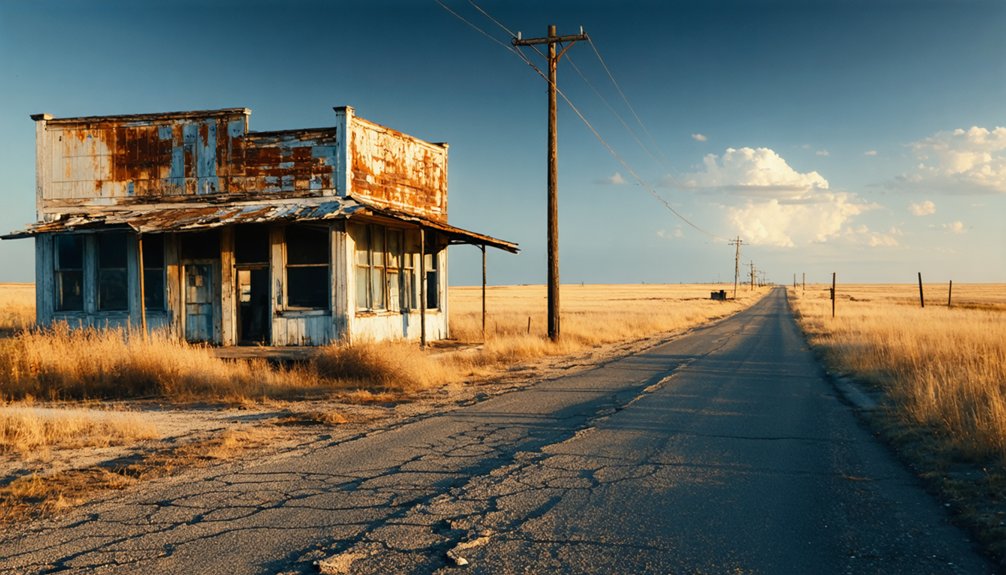
You’ll find that late spring and early fall offer the most comfortable conditions for exploring Mingo, with mild temperatures and minimal precipitation keeping the dirt roads accessible.
Summer visits can turn brutal under the High Plains sun, where open terrain offers zero shade and heat indexes climb fast.
If you’re planning a winter trip, pack layers and watch for icy stretches on rural roads like Range Ave, where wind chills can make even a short walk feel punishing.
Ideal Visiting Seasons
When planning your ghost town road trip to Mingo, Kansas, timing can make or break the experience. The High Plains region offers distinct seasonal shifts that’ll affect your journey considerably. For ideal weather and meaningful seasonal activities, consider these prime visiting windows:
- Spring (April–May): Mild temperatures and wildflowers create stunning backdrops across the flat terrain.
- Early Summer (June): Long daylight hours maximize your exploration time before intense heat settles in.
- Fall (September–October): Crisp air and golden grain fields deliver breathtaking, wide-open landscapes.
- Winter (December–February): Stark, quiet scenery intensifies the ghost town atmosphere for adventurous visitors.
Avoid midsummer heat, which can exceed 100°F, making outdoor exploration uncomfortable.
Whatever season you choose, Mingo’s raw, untamed landscape rewards those willing to seek it out.
Weather Considerations for Travel
Mingo’s High Plains climate swings hard between extremes, so picking the right travel window matters more than you might expect.
Weather patterns here shift dramatically with seasonal changes, and each shift affects your road trip experience differently.
Summers bring scorching heat, often pushing past 100°F, while winters deliver brutal winds, ice, and occasional blizzards that can shut down rural roads entirely.
Spring offers mild temperatures but carries tornado and severe storm risks across the open plains.
Fall is your strongest option — cooler air, clearer skies, and minimal precipitation make exploring the flatlands far more comfortable.
Whatever season you choose, check forecasts before heading out.
Cell service is sparse, roads are isolated, and the nearest town is Colby, 13 miles away.
Plan smart and you’ll travel free.
Which Ghost Towns Near Mingo Are Worth the Drive?
Scattered across the High Plains of northwest Kansas, several ghost towns near Mingo are worth adding to your road trip itinerary. Each site offers unique ghost town history and serves as compelling nearby attractions for explorers craving open roads and forgotten stories.
The High Plains of northwest Kansas hide ghost towns worth chasing — haunted by history, wide skies, and forgotten roads.
- Rexford – A faded railroad town with remnants of its agricultural past still visible.
- Levant – Once a thriving settlement, now a quiet reminder of westward expansion’s fleeting promises.
- Brewster – Small, windswept, and hauntingly preserved along the High Plains corridor.
- Colby – Not extinct, but its historical museum contextualizes every ghost town you’ll visit nearby.
String these stops together, and you’ll experience northwest Kansas the way few travelers ever do — unfiltered and unforgettable.
Frequently Asked Questions
What School District Serves the Children Living Near Mingo, Kansas?
Colby USD 315 champions school funding and education quality for your little ones near Mingo! You’ll find this dedicated district nurturing young minds, ensuring they’re well-equipped for tomorrow’s adventures, even in Kansas’s quieter corners.
How Many Residents Still Live in the Mingo, Kansas Area Today?
You’ll find only about 25 residents still calling Mingo home today. Despite its dwindling population trends, this ghost town carries remarkable historical significance, offering you a glimpse into Kansas’s fascinating, freedom-filled westward expansion era.
Which Township Does the Ghost Town of Mingo Fall Under?
You’ll find that Mingo History places this ghost town within Summers Township! As you explore Mingo Landmarks, you’re uncovering a fascinating past rooted in Thomas County, Kansas, where freedom-seekers once carved out their westward dreams.
What County Administers the Unincorporated Community of Mingo, Kansas?
Like a forgotten homestead reclaimed by the prairie wind, Thomas County administers Mingo. When you explore this ghost town’s Mingo history, you’ll discover that unincorporated ghost towns like this answer to county-level governance alone.
What Geographic Region of the Great Plains Does Mingo Occupy?
You’ll find Mingo occupying the High Plains region of the Great Plains, where its Geographic Features include elevated terrain and expansive, flat landscapes that stretch endlessly, giving you that raw, wide-open sense of true freedom.
References
- https://www.youtube.com/watch?v=LNAm0sZuNyw
- https://www.youtube.com/watch?v=_DLl0NgdIPo
- https://www.youtube.com/watch?v=KBXINX0xqnU
- https://www.onlyinyourstate.com/trip-ideas/kansas/haunted-kansas-road-trip
- https://www.travelks.com/kansas-magazine/articles/post/exploring-kansas-forgotten-roads/
- https://www.onlyinyourstate.com/kansas/abandoned-kansas-road-trip/
- https://www.legendsofamerica.com/ks-ghosttowns/
- https://www.reddit.com/r/kansas/comments/1oedkex/any_abandoned_places_to_explore_ghost_towns/
- https://www.travelks.com/blog/stories/post/haunted-kansas-road-trip-13-spooky-locations-to-make-your-blood-run-cold/
- https://www.onlyinyourstate.com/kansas/kansas-ghost-town-road-trip/