Planning a ghost town road trip to Neuchatel, Kansas means heading to Nemaha County in the state’s northeastern corner, where crumbling foundations, a preserved church, and an 1860s cemetery quietly mark what was once a 150-person community. You’ll want a high-clearance vehicle, offline maps, and plenty of water since roads are rough and GPS signals unreliable. Visit in late spring or early fall for the best conditions. There’s far more to this forgotten settlement than first meets the eye.
Key Takeaways
- Neuchatel, Kansas, in Nemaha County, is a true ghost town with a preserved church, schoolhouse, and cemetery dating back to the 1860s.
- Use high-clearance vehicles, offline maps, and printed navigation tools, as roads are poorly maintained and GPS signals are unreliable.
- Visit in late spring or early fall for mild temperatures, better road conditions, and optimal photography lighting opportunities.
- Respect restored structures by staying on visible pathways, avoiding physical contact, and packing out everything you bring in.
- Nearby sites like Pawnee Rock and Old Abilene Town complement the trip, enriching the historical context of your itinerary.
What Makes Neuchatel, Kansas a True Ghost Town?
Once a thriving settlement of roughly 150 residents in the 1870s, Neuchatel, Kansas now stands completely empty — its post office closed in 1901, its businesses shuttered, and its population reduced to zero by the 2020 census.
That’s what makes it a true ghost town: not just abandonment, but the complete collapse of every community function that once held it together.
You’ll find no maintained roads or tourist infrastructure here, just raw historical significance embedded in crumbling foundations, a preserved church with its original bell tower, and a cemetery holding 112 souls.
Unlike sites commercialized around ghost stories, Neuchatel offers something rarer — unfiltered stillness. It’s a place where you can move freely through actual history, untouched and unapologetically forgotten by the modern world.
The Rise and Fall of Neuchatel’s 150-Person Community
That emptiness didn’t happen overnight. German immigrants built Neuchatel from the ground up in the mid-1800s, drawn by fertile land and the promise of independence along the Oregon and Santa Fe Trails.
By the 1870s, community dynamics were thriving with roughly 150 residents calling this place home.
At its peak, Neuchatel hummed with life — 150 souls shaping a community worth calling home.
Then the railroad arrived — and bypassed them entirely. Trade shifted, travelers disappeared, and local businesses couldn’t survive.
Migration patterns reversed as economic depressions, natural disasters, and agricultural mechanization stripped away every reason to stay.
By 1900, only 24 residents remained. The post office closed in 1901, and the community’s pulse flatlined.
What you’re visiting today isn’t just an abandoned town — it’s a timeline of how quickly freedom-seekers can build something, and how ruthlessly circumstance can dismantle it.
What’s Left to See at the Neuchatel Site Today?
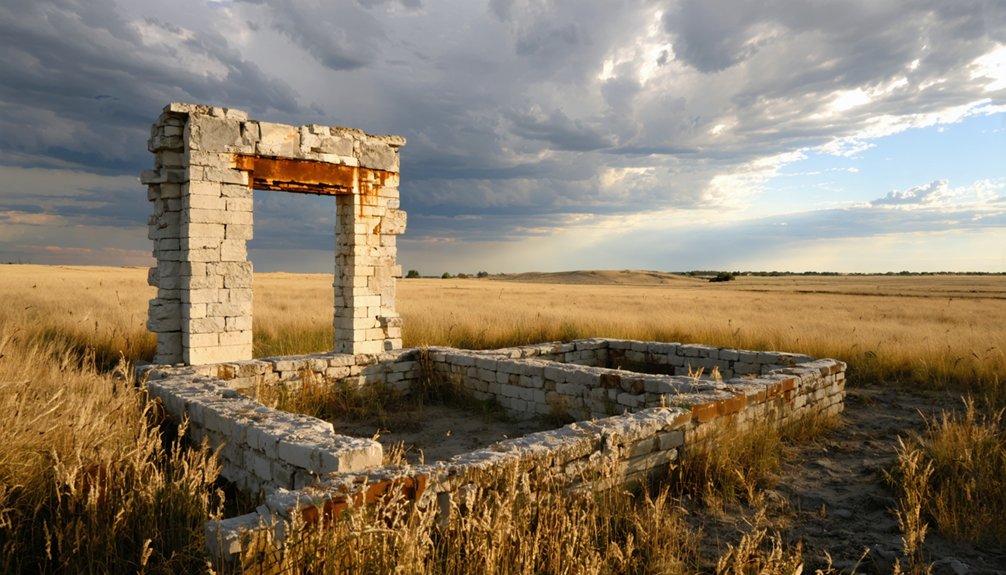
What remains at Neuchatel isn’t rubble — it’s a curated window into the 19th century. You’ll find genuine architectural preservation throughout the site, where each structure tells its own story.
Here’s what you can expect to explore:
- The schoolhouse — original 19th-century construction elements remain intact, letting you step directly into frontier-era education.
- The church — its preserved bell tower and restored interior woodwork carry serious historical significance for anyone who appreciates craftsmanship from that period.
- The cemetery — stone markers dating from the 1860s through early 1900s stand alongside visible foundation fragments near the entrance gate.
Keep in mind that the site isn’t maintained for regular tourism, so you’ll want to plan accordingly.
Bring your own supplies and respect the preserved structures you encounter.
How to Get to Neuchatel, Kansas
To reach Neuchatel, you’ll head to Nemaha County in northeastern Kansas, where rural back roads wind through farmland toward the ghost town‘s remote location.
You should plan your route carefully before leaving, since GPS systems often struggle with the area’s unmarked and poorly maintained roads.
Keep in mind that the site isn’t set up for regular tourism, so you’ll want to confirm local access conditions before making the drive.
Driving Routes To Neuchatel
Getting to Neuchatel, Kansas requires a bit of planning since the ghost town sits off the beaten path in Nemaha County. You’ll want to map your scenic routes ahead of time and embrace the open-road freedom this journey offers.
These travel tips will help you navigate confidently:
- From Seneca, Kansas – Head southeast along Highway 36, then turn onto county roads leading through rolling farmland directly into Nemaha County’s quieter back roads.
- From Topeka, Kansas – Drive northwest on US-75, shifting onto smaller highways as the landscape changes from city sprawl to wide prairie views.
- From Omaha, Nebraska – Cross south into Kansas via US-75, following signs through rural townships until Nemaha County roads guide you toward the site.
Always download offline maps before departing.
Navigating Limited Road Access
Once you’ve mapped your route into Nemaha County, you’ll quickly discover that reaching Neuchatel demands more than a standard GPS signal and a full tank of gas.
Road conditions along the rural stretches leading to this ghost town can shift dramatically with seasonal weather, leaving unpaved paths muddy, rutted, or completely impassable after heavy rain.
You’ll want to drive a high-clearance vehicle and check local county road reports before departure. The area isn’t maintained for regular tourism, so don’t expect signage guiding your way. Instead, rely on detailed topographic maps and coordinates pulled from historical records that document the site’s historical significance within Nemaha County.
Pack supplies, tell someone your plans, and embrace the rawness of the journey. That independence is exactly what makes reaching Neuchatel genuinely rewarding.
What to Bring When Visiting Neuchatel Ghost Town
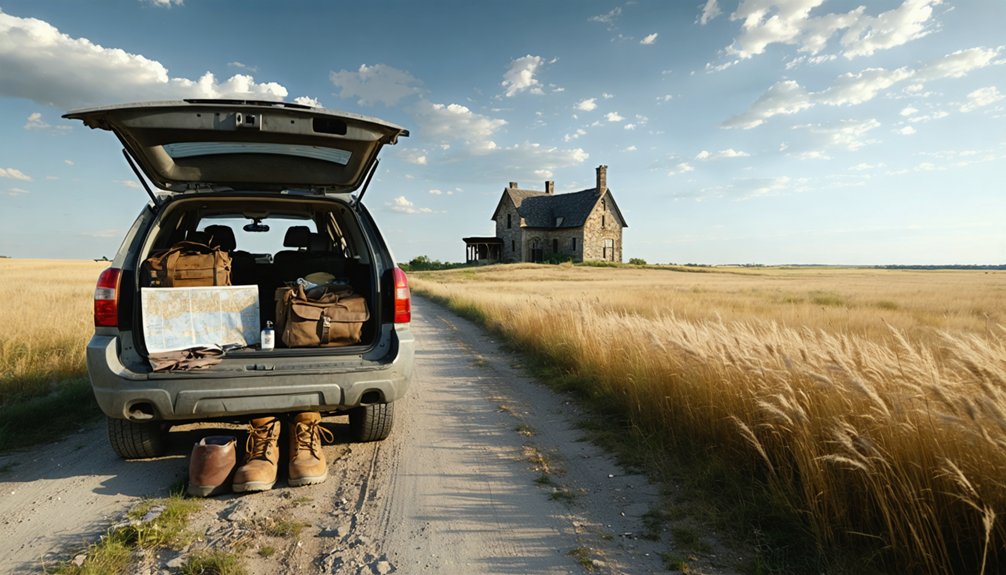
Since Neuchatel’s remote location offers limited accessibility and no maintained facilities, you’ll want to pack carefully before making the trip. These ghost town essentials and visiting tips will keep your adventure comfortable and memorable.
Neuchatel’s remote location and lack of facilities make thoughtful packing essential for a comfortable visit.
- Navigation tools – Carry printed maps and a GPS device, since cell service drops unpredictably across Nemaha County’s rural roads.
- Water and snacks – Pack at least two liters per person, as no vendors or facilities exist anywhere near the site.
- Camera and journal – Capture the preserved bell tower, cemetery stone markers, and crumbling residential foundations before fading daylight closes your window.
Wear sturdy boots, bring insect repellent, and respect the boundaries around restored structures. Freedom tastes better when you’re prepared.
How to Visit Neuchatel Without Causing Damage
When you explore Neuchatel, you’ll want to stay within marked boundaries and avoid climbing on or touching the restored structures, as even minor contact can accelerate deterioration of 19th-century materials.
You’re responsible for leaving the site exactly as you found it, so pack out everything you bring in and resist the urge to pocket stones, fragments, or any other remnants.
Remember that Neuchatel isn’t maintained for regular tourism, so treating it with extra care guarantees future visitors can experience the same unaltered piece of Kansas history that you did.
Respecting Historical Site Boundaries
Visiting a ghost town like Neuchatel carries a quiet responsibility — the site’s fragile ruins and restored structures aren’t built to withstand careless foot traffic or hands-on exploration.
Historical preservation depends on every visitor practicing proper site etiquette.
Follow these boundaries to protect what remains:
- Stay on visible pathways around the schoolhouse and church bell tower — stepping onto crumbling foundations risks irreversible structural collapse.
- Never touch or remove stone cemetery markers, even ones that appear loose or forgotten beneath overgrown grass.
- Keep a respectful distance from restored interior woodwork inside the church — oils from your hands accelerate decay.
You’re walking through someone’s former home, community, and burial ground. Treat every cracked wall and weathered marker like the irreplaceable historical artifact it genuinely is.
Leave No Trace Practices
Neuchatel’s fragile ruins can’t repair themselves once damaged, so every choice you make on-site carries lasting consequences.
Sustainable tourism starts with you leaving everything exactly as you found it — don’t pocket stone fragments, disturb cemetery markers, or carve into weathered wood surfaces.
Stay on visible pathways to avoid collapsing underground residential foundations beneath the soil. Pack out everything you bring in, including food wrappers and cigarette butts.
Avoid leaning against the restored church walls or bell tower, since structural integrity remains compromised throughout aging sections.
Historical preservation depends on collective restraint, not just rules. Photograph freely, but touch nothing.
If you notice vandalism or structural deterioration, document it and report it to Nemaha County preservation groups. Your disciplined visit protects Neuchatel’s story for every traveler who follows you.
Kansas Historical Sites Near Neuchatel Worth a Stop
While you’re exploring the ghost town of Neuchatel, several nearby Kansas historical sites are well worth adding to your itinerary.
- Stull Cemetery (Lecompton, KS) – Rooted in ghost town legends and paranormal folklore, this eerie landmark delivers an atmosphere that’ll stay with you long after you leave.
- Pawnee Rock (Pawnee Rock, KS) – This iconic trail landmark carries deep historical significance as a waypoint for Oregon and Santa Fe Trail travelers. It’s accessible year-round from dawn to dusk.
- Old Abilene Town (Abilene, KS) – Step into a recreated frontier settlement featuring authentic historical exhibits open from Memorial Weekend through Labor Day.
Each stop adds a richer layer to your road trip, connecting Neuchatel’s story to Kansas’s broader, fascinating past.
Best Times to Visit Neuchatel, Kansas
When you plan your visit to Neuchatel matters more than you might think. The best season to explore this ghost town is late spring or early fall, when mild temperatures make walking the grounds comfortable and natural lighting enhances the atmosphere.
Summer heat can be brutal on Kansas plains, and winter conditions make the unpaved access routes difficult to navigate. Spring wildflowers framing the restored church and cemetery create stunning compositions for photography tips worth remembering — shoot during golden hour for dramatic shadows across the stone foundations.
Avoid visiting after heavy rainfall since the terrain becomes muddy and unstable near the abandoned residential areas.
Weekdays offer quieter exploration with fewer interruptions. Always check local weather forecasts before heading out, since Kansas conditions can shift unexpectedly fast.
Frequently Asked Questions
Who Were the Original German Immigrant Founders of Neuchatel, Kansas?
The records don’t name specific founders, but you’ll feel German heritage deeply rooted here. Immigration impact shaped Neuchatel when mid-1800s German settlers carved their agricultural dreams into Kansas soil, building something truly remarkable.
How Many Individuals Are Buried in the Neuchatel Cemetery?
You’ll find 112 individuals buried in Neuchatel’s cemetery, with burial practices spanning from 1864 to 1901. This rich cemetery history connects you directly to the German immigrant founders who shaped this fascinating frontier community.
Did Any Natural Disasters Directly Contribute to Neuchatel’s Permanent Population Loss?
Yes, natural disasters directly fueled Neuchatel’s population decline! Tornadoes and floods ravaged the town’s infrastructure, leaving residents no choice but to abandon their homes, accelerating the community’s tragic transformation into the hauntingly desolate ghost town you’ll explore today.
Are There Paranormal or Ghost Sighting Reports Associated With Neuchatel’s Cemetery?
Ironically, Neuchatel’s cemetery doesn’t boast documented ghostly encounters or cemetery legends—yet you’ll find those thrilling stories just nearby at Stull Cemetery and Lorenz Schlicter Memorial Cemetery, where paranormal reports await your adventurous, freedom-seeking exploration.
What Primary Industries Supported Neuchatel Residents Before the Town’s Economic Collapse?
You’ll find that mining and agricultural practices once fueled Neuchatel’s economy. Residents farmed fertile lands and extracted resources, but economic decline swept through when transportation shifts and depressions stripped away these crucial, community-sustaining industries.
References
- https://www.youtube.com/watch?v=LNAm0sZuNyw
- https://urbexunderground.com/ghost-towns-in-kansas/
- https://a-z-animals.com/blog/deserted-and-forgotten-towns-in-kansas/
- https://www.youtube.com/watch?v=_DLl0NgdIPo
- https://www.travelks.com/kansas-magazine/articles/post/exploring-kansas-forgotten-roads/
- https://www.youtube.com/watch?v=KBXINX0xqnU
- https://legendsofkansas.com/kansas-ghost-town-list/
- https://www.youtube.com/watch?v=8imf9ZEYVSA
- https://www.onlyinyourstate.com/kansas/kansas-ghost-town-road-trip/
- https://www.youtube.com/watch?v=czwsA2_TAuU