You’ll find Mobeetie along Texas State Highway 152 in the windswept Panhandle, about 30 miles east of Pampa. This nearly abandoned frontier town, where Bat Masterson survived his legendary shootout at the Lady Gay Saloon, offers an authentic glimpse into 1880s Texas through its preserved 1886 stone jail, original barbershop, and weathered structures. With 264 sunny days annually and spring temperatures hovering around 65-73°F, you’ll have plenty of opportunities to explore this remarkable piece of Old West history that most travelers never discover.
Key Takeaways
- Mobeetie is accessible via Texas State Highway 152, located between Pampa (30 miles west) and Wheeler (10 miles east).
- Visit the 1886 stone jail, preserved barbershop, and Panhandle’s oldest school building at the Mobeetie Museum.
- Spring offers ideal temperatures of 65-73°F, while summer reaches 92°F with low humidity across 264 sunny days annually.
- Explore Bat Masterson’s shootout site at the former Lady Gay Saloon and graves at Mobeetie Cemetery.
- Plan for minimal tourism infrastructure; bring personal vehicle, rain gear, and jacket for authentic frontier ghost town experience.
The Wild History of the Panhandle’s Mother City
The thunder of buffalo hooves had barely faded from the Texas Panhandle when soldiers from the 5th Infantry and 6th Cavalry drove their tent stakes into the prairie near Sweetwater Creek in May 1875.
Fort Elliott rose from nothing, and you can still sense the raw energy that drew fortune-seekers to its gates. The influential buffalo trade transformed a trading post into a town of 150 residents by summer’s end, with Charles Rath and Bob Wright shipping over 150,000 hides through this frontier outpost.
From Buffalo Hunters’ Camp to Near Ghost Town
Long before Fort Elliott became official, buffalo hunters from Kansas had already claimed Sweetwater Creek’s banks as their own. In spring 1874, they built Hidetown—dwellings constructed entirely from buffalo hides.
By summer 1875, this rough camp swelled to 150 souls serving bullwhackers, outlaws, and soldiers.
You’ll discover unique cultural influences everywhere: Chinese laundries alongside dance halls, the Ring Town Saloon exclusively serving Black Buffalo Soldiers, and merchants like Rath and Hamburg supplying early farming and ranching operations. When the post office application arrived in 1879, officials chose “Mobeetie”—allegedly Cheyenne for “sweetwater,” though locals insist it’s Comanche for buffalo dung.
Fort Elliott’s 1890 closure triggered the town’s decline. An 1898 tornado, railroad bypass, and county seat relocation ultimately transformed Mobeetie into today’s preserved ghost town.
Getting to Mobeetie: Directions and Route Planning
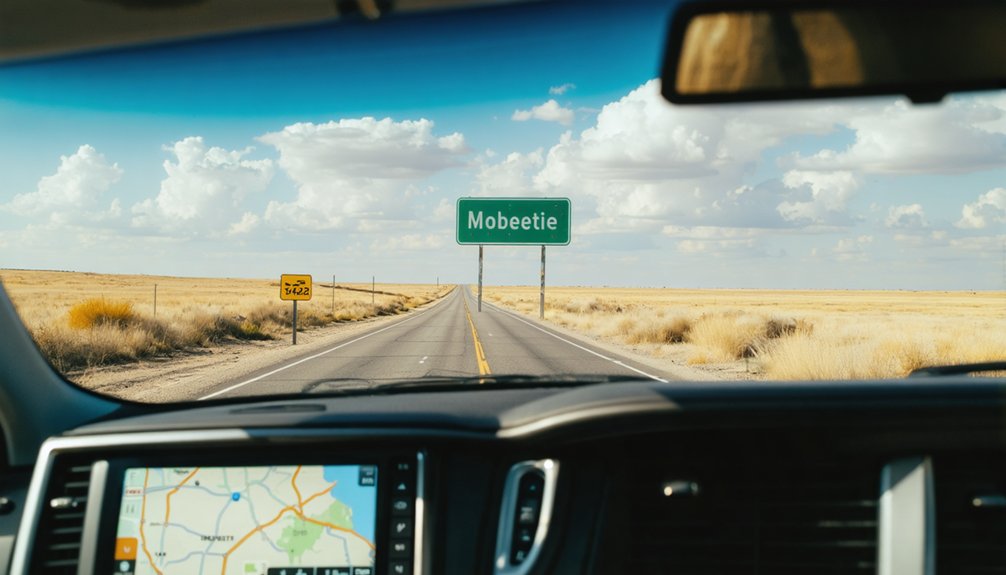
Reaching Mobeetie requires traversing the vast, windswept expanse of the Texas Panhandle, where endless horizons meet ribbon-thin highways cutting through ranch country. You’ll navigate Texas State Highway 152 as your primary artery—Pampa lies 30 miles west, Wheeler 10 miles east. Farm to Market Roads 48 and 1046 provide additional access to this remote outpost at coordinates 35°31′05″N, 100°26′18″W.
Don’t expect public transportation options here; personal vehicles reign supreme in Wheeler County’s 0.6-square-mile territory. The historical Fort Elliott site sits just one mile west along SH 152, marked where past and present intersect.
While tourism infrastructure improvements remain minimal, that’s precisely the appeal. You’ll find the ZIP code 79061 serving this population-87 community where freedom means open roads, unobstructed views, and escape from modern constraints.
The Sweetwater Shootout and Bat Masterson’s Legacy
On January 24, 1876, gunfire shattered the frigid air inside the Lady Gay Saloon, launching Bat Masterson into Western legend and cementing Mobeetie’s reputation as one of the Panhandle’s most dangerous outposts. The 23-year-old gambler faced off against drunken Corporal Melvin King over dance hall girl Mollie Brennan.
When King burst through the door firing, Mollie Brennan’s tragic fate unfolded instantly—she jumped between the men and took a fatal bullet. Masterson, shot in the abdomen, returned fire and killed King before collapsing. You’ll find their graves in Mobeetie Cemetery today, physical reminders of Masterson’s gunfight legacy that would propel him toward becoming Dodge City’s legendary lawman.
This shootout marked your first glimpse into the untamed violence that defined frontier justice before badges arrived.
What to See at the Mobeetie Museum
You’ll step through the stone walls of the 1886 jail where prisoners once awaited their fate beneath unused hanging gallows, each cell whispering stories of frontier justice.
The museum’s collection sprawls across original buildings—a barbershop that still smells faintly of pomade and leather, a one-room schoolhouse with wooden desks scarred by decades of restless students.
From Red River War cavalry saddles to an iron lung that saved lives in a harsher era, these artifacts paint an unvarnished portrait of survival on the Texas Panhandle’s unforgiving plains.
Historic Jail Building Tour
The centerpiece of your Mobeetie Museum visit stands weathered and proud—a two-story stone jail that’s housed desperados, lawmen, and untold stories since 1886. Built from locally quarried rock, this fortress served as both lockup and sheriff’s residence quarters for legendary Texas Ranger Cap Arrington. You’ll walk through the original cell that confined multiple prisoners, then climb to where Arrington defended law and order during the wild buffalo hunter era.
The frontier town setting surrounds you with authenticity—a mock townscape frames the jail, while a cedar flagpole from Fort Elliott stands sentinel nearby. Inside, you’ll discover hanging gallows replicas, cavalry saddles, and Red River War artifacts. This wasn’t just confinement; it was the backbone of Wheeler County’s first judicial center, where civilization met wilderness head-on.
Preserved Barbershop and Schoolroom
Beyond the jail’s imposing stone walls, Mobeetie’s frontier town recreation brings everyday pioneer life into sharp focus. You’ll step into a meticulously preserved barbershop where period accurate frontier furnishings transport you to Saturday grooming rituals—straight razors rest beside leather strops, and era appropriate museum decor lines the weathered walls.
The crown jewel stands nearby: the Texas Panhandle’s oldest school building. This one-room stone structure, with its shingled roof and five windows, educated frontier children after the Red River War of 1874. Inside, wooden desks and slate boards remain frozen in time, evidence of settlers who prioritized learning alongside survival.
These authentic structures aren’t roped-off exhibits—you’re free to explore daily routines that defined frontier existence, understanding how pioneer communities built civilization from raw prairie.
Frontier Artifacts and Exhibits
Step inside this 1886 stone jail, and history cascades around you in carefully curated collections that span Wheeler County’s wildest frontier decades. You’ll discover authentic sheriff’s quarters from the 1800s, complete with the hanging gallows that dispensed rough justice on the Texas Panhandle. Military artifacts tell stories of Buffalo Soldiers and cavalry troopers who rode from Fort Elliott—look up at the fort’s towering 50-foot flagpole from 1875. The Red River War and Battle of Adobe Walls come alive through weapons and memorabilia.
Prairie medicine exhibits reveal frontier healthcare’s harsh realities: an iron lung stands beside a doctor’s office reconstruction, displaying surgical instruments that required nerves of steel. General store relics and post office materials complete your journey through Mobeetie’s untamed past.
Exploring Preserved Landmarks and Historic Buildings
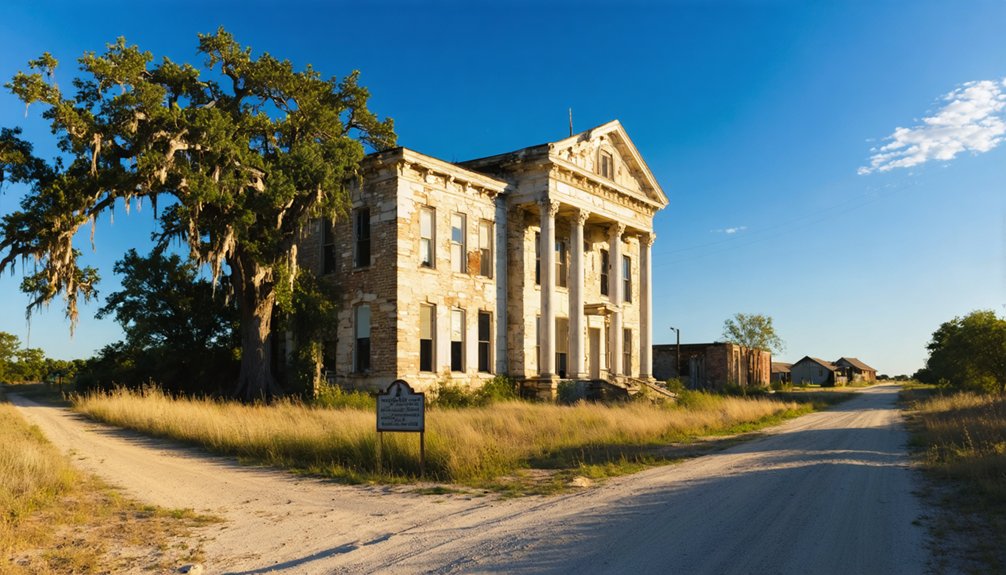
Beyond the museum’s exhibits, you’ll discover Mobeetie’s weathered bones scattered across the prairie—stone walls that once rang with the gavel of the Texas Panhandle’s first courthouse and the clatter of frontier commerce.
The original rock jail stands as an attestation to rowdy cowboy days, while remnants of barbershops and schoolrooms whisper stories of settlers who carved civilization from wild grasslands. These crumbling structures aren’t just preserved landmarks; they’re doorways into the raw, unvarnished reality of 1880s frontier life.
Mobeetie Museum and Jail
At the heart of Old Mobeetie stands a formidable stone structure that’s witnessed over a century of Panhandle history—the restored 1886 jail, crafted from locally quarried stone by skilled Irish rock masons. You’ll step into the Texas Panhandle’s first jail, where original cells once held countless prisoners and courts delivered harsh frontier justice.
Museum guides lead you through exhibits chronicling American Indians, buffalo hunters, and settlers who carved freedom from this unforgiving land. You’ll discover special exhibits featuring hanging gallows, an iron lung, Cavalry saddles, and Red River War memorabilia.
The Sheriff’s quarters reveal how lawmen lived, while buffalo soldiers displays honor African American troops. Outside, a mock frontier town and the original cedar flagpole transport you to 1880s Mobeetie, when wild independence ruled these plains.
Original Barbershop and Schoolroom
Weathered wooden planks and hand-cut stone mark the entrance to Mobeetie’s original barbershop, where buffalo hunters once waited their turn for a shave and the latest gossip from Fort Elliott. You’ll find the barbershop architectural integrity remarkably preserved, with period tools still mounted on walls that witnessed card games, fistfights, and cattle rustlers planning their next move.
The adjacent schoolroom tells a different story—one of civilization taming the wild Texas Panhandle. Original schoolroom furnishings include desks carved with initials of ranchers’ children and a potbellied stove that fought off brutal winters. These buildings survived the 1898 tornado that leveled most of Main Street, standing as stubborn reminders of frontier resilience when conformity meant death.
First Panhandle Courthouse Remains
Standing where Mobeetie’s first stone courthouse once commanded the Texas Panhandle’s frontier justice, you’ll find only traces of the ambitious 1880 structure that Irish masons built from limestone quarried nine miles east at Emanuel Dubbs’ homestead. The courthouse architecture design served fifteen counties until structural flaws—missing metal pins that should’ve held the stones together—doomed it after just eight years. Temple Houston himself prosecuted cases here before the building’s 1888 condemnation.
Today’s limestone ruins condition reflects Mobeetie’s frontier reality: bold dreams meeting harsh Panhandle practicality. While the stone courthouse vanished completely, replaced by a wooden successor that eventually moved to Wheeler, you can explore the story through exhibits at the Old Mobeetie Jail Museum, where the 1886 stone jail still stands defiant against time’s erosion.
The Tornado That Changed Everything
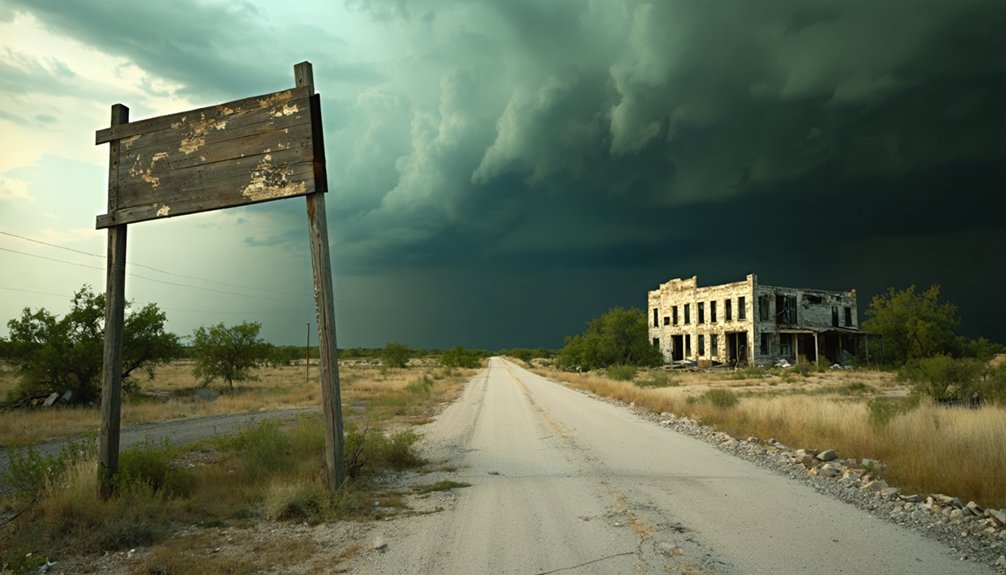
On April 30, 1898—though some records claim it was May 1—an F4 tornado tore through Mobeetie with devastating force. You can still sense the catastrophic power that killed seven people, injured 35 others, and swept away entire blocks. The twister leveled the Huselby House hotel and demolished pioneer cattleman Robert Masterson’s townhouse.
Most devastating? The ghostly remains you’ll encounter today tell the story of buildings never rebuilt, businesses never reopened.
The tornado accelerated Mobeetie’s decline after Fort Elliott’s 1890 abandonment. With no railroad and lost county seat status by 1907, residents simply walked away. While modern community revival efforts maintain a bank, post office, and diner, the population that once reached 300 now hovers around 107—a witness to nature’s unforgiving power.
Best Time to Visit and What to Bring
When planning your ghost town adventure, you’ll find Mobeetie’s semi-arid panhandle climate exceptionally forgiving—264 sunny days annually mean you’ve got flexible timing most months. Spring brings ideal seasonal temperatures, with March through May ranging from 65-73°F, perfect for exploring weathered structures without crowds.
Summer hits 92°F in July, but low humidity keeps it manageable for early morning wanderings. Fall delivers that sweet spot again as temperatures cool from summer peaks.
Your packing considerations should cover Mobeetie’s dramatic range: light layers for 70s-90s days, a solid jacket for potential 24°F winter lows, and rain gear for those 53 precipitation days. Don’t forget sunscreen—you’re exposed out here. Wind-resistant clothing handles those persistent 11-13 mph gusts that whistle through abandoned doorways, adding atmosphere to your exploration.
Nearby Attractions in Wheeler County
Your Mobeetie exploration gains depth when you venture beyond the ghost town’s crumbling foundations to discover Wheeler County’s broader historical tapestry. The Wheeler Historical Museum traces your path from the Red River War through Route 66’s golden era, while Alan L. Bean’s bronze statue marks your journey along Highway 83. You’ll find the Battle of Sweetwater Creek Site preserving sacred ground where Kiowa and Comanche nations once dominated the Panhandle.
Drive east to Shamrock’s U-Drop Inn—that iconic 1936 art deco tower that inspired Pixar’s “Cars”. Between historic Route 66 attractions, Wheeler County trail systems at Wheeler City Park offer respite for stretching road-weary legs. Each stop reveals layers of frontier resilience, from pioneer settlements to cosmic achievements, mapping your own adventure through Texas’s untamed past.
Where to Eat and Stay During Your Visit
The ghost town’s isolation means you’ll base yourself in Wheeler or Shamrock, where small-town hospitality meets practical frontier comfort. Affordable motel options like the Blarney Inn deliver clean rooms with retro Route 66 character and Texas-shaped waffles that’ll fuel your exploration. The Wheeler Inn Texas offers competitive rates from $51 nightly, while Towne Square Inn provides family-friendly accommodations with breakfast included.
While you explore the ghost town attractions in Owenville, be sure to take in the rich stories behind the dilapidated buildings and the haunting echoes of the past. As you wander through the remnants of this once-thriving community, you’ll uncover unique photo opportunities that capture the essence of days gone by. Make sure to pack a camera and a sense of adventure, as you’ll want to remember this one-of-a-kind experience.
For something different, unique lodge accommodations await at Bar G Lodge, where hunting lodge-style quarters put you seventeen miles from Mobeetie’s windswept streets. Best Western properties in Shamrock provide indoor pools and modern amenities when you’re ready to shake off the trail dust. Each option positions you perfectly for daybreak departures into Wheeler County’s untamed territory, where history breathes through abandoned storefronts.
Frequently Asked Questions
Is Mobeetie Safe to Explore Alone or Should I Visit With Others?
You’ll find Mobeetie remarkably safe for solo exploration—violent crime runs 32% below average. Still, take personal safety precautions in abandoned structures. The real solo exploration risks here aren’t human threats but crumbling buildings and that high wildfire danger lurking beyond town.
Are There Guided Tours Available at the Mobeetie Museum?
Yes, you’ll find guided tours at the Mobeetie Museum! Knowledgeable volunteers share engrossing stories during museum hours—Monday, Thursday, and Saturday from 1:00-4:00 pm. Check the Visitor’s Center for visitor information, or call ahead to arrange your personal exploration.
Can I Take Photographs Inside the Preserved Historic Buildings?
You’ll capture history’s whispers inside the old county jail museum freely, but you’ll need to obtain necessary permissions before photographing private residences like the schoolhouse. Always respect privacy of residents while exploring Mobeetie’s time-worn treasures.
What Are the Museum’s Operating Hours and Admission Fees?
The museum’s open Monday, Thursday, and Saturday from 1:00-4:00 pm. You’ll find a donation box since it’s volunteer-run—no official fees listed. While the museum’s seasonal hours vary, there aren’t published admission discounts for students currently available.
Don’t worry about getting stranded—you’ll find excellent cellular connectivity strength in Mobeetie. T-Mobile and AT&T deliver 99%+ coverage reliability, ensuring you’re connected for GPS navigation and emergency calls while exploring this remote ghost town destination.