Mohrland, Utah isn’t much to look at anymore—but that’s exactly the point. You’ll find this Carbon County ghost town tucked inside Cedar Creek Canyon, south of Hiawatha, accessible by standard 2WD vehicle. Once home to nearly 1,000 coal miners, it was abandoned in 1938 and slowly erased by time. Pack water, sturdy boots, and a camera. The deeper story of how this town lived, died, and got its name is waiting just ahead.
Key Takeaways
- Mohrland sits in Cedar Creek Canyon, south of Hiawatha, and is accessible via standard 2WD vehicles without specialized equipment.
- Visit during spring or summer for the clearest travel conditions, as fall and winter weather can be unpredictable.
- Pack ample water, sturdy footwear, a paper map, and a camera, since cell service is limited in this remote canyon.
- The ghost town has no standing buildings, but remnants like old rail lines and scattered foundations mark its mining past.
- Nearby Hiawatha and other Emery County ghost towns make ideal stops for a fuller coal-country road trip experience.
How to Get to Mohrland in Emery County
Reaching Mohrland means venturing into the canyon mining country of central-eastern Utah, where Cedar Creek carved a path through the hills long before coal companies did.
You’ll find the site tucked in Cedar Creek Canyon, south of Hiawatha, near the Carbon County line. Coordinates around 39.44028°N, 111.01528°W will keep you oriented once the landscape starts looking the same.
Among the most reassuring travel tips: access routes into Mohrland are manageable on a standard 2WD vehicle, so you don’t need specialized equipment to make the journey.
No four-wheel drive required — a standard 2WD vehicle handles the route to Mohrland just fine.
Spring and summer offer the clearest conditions for exploration. The road won’t demand much from your rig, but the history it leads you toward absolutely will.
Pack your curiosity — this canyon rewards it.
What Was Mohrland and How Did It Get Its Name?
Before a single house was built or a rail line laid, the name “Mohrland” was already rooted in a business deal. In 1907, four investors — Mays, Orem, Heiner, and Rice — purchased land and mines in Cedar Creek Canyon, organizing the Castle Valley Fuel Company and staking their claim to town history.
Their naming origins were straightforward: splice fragments of their surnames together, add “land,” and you’ve got Mohrland.
What followed transformed a quiet Utah canyon into a thriving coal community. By the early 1920s, nearly 1,000 people called it home.
It wasn’t just a mine — it was a world. Understanding who built it and why they named it the way they did makes standing in that empty canyon feel like something worth the drive.
What You’ll Actually See at Mohrland Today
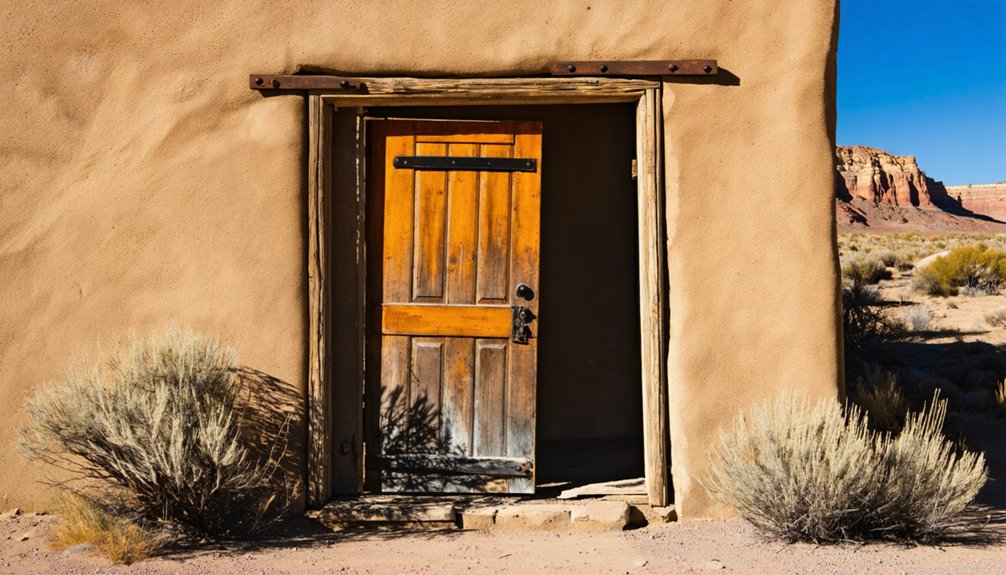
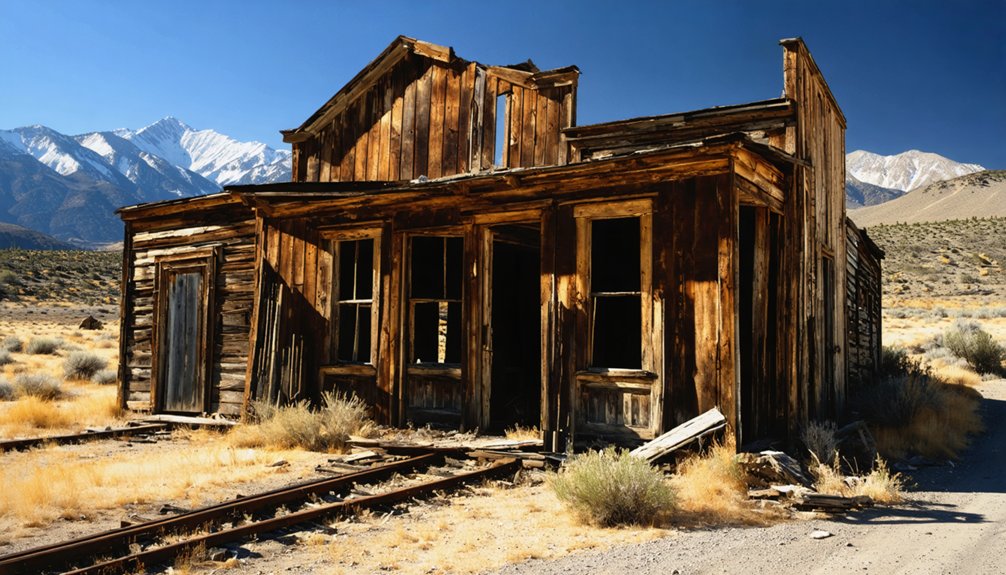
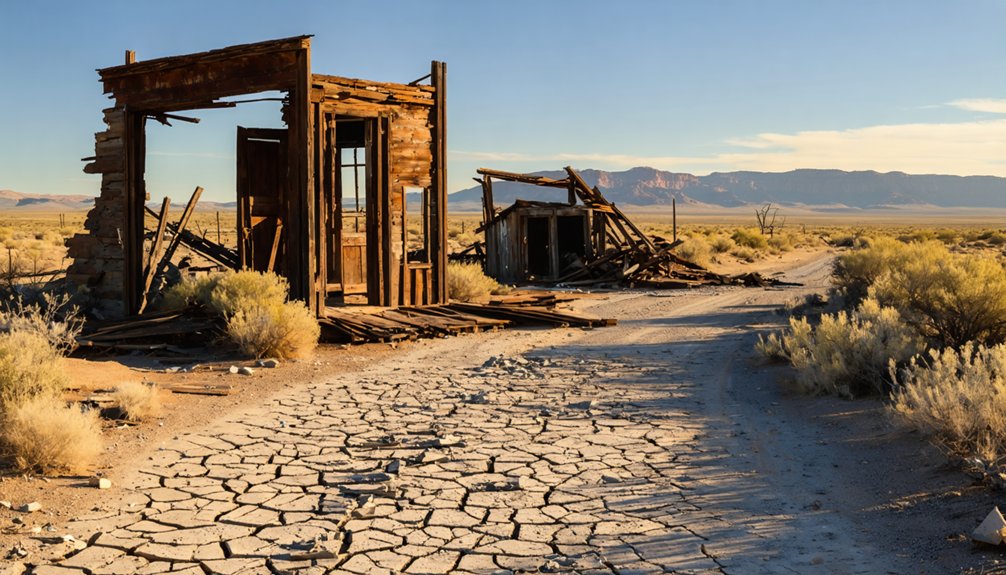
Knowing who built Mohrland makes what’s left of it hit differently. You won’t find standing buildings or preserved storefronts waiting for you. Most ghost town remnants here are subtle — a rail line tracing the canyon floor, scattered foundations swallowed by brush, and silence where nearly 1,000 people once lived.
That absence is the point. Walking this terrain, you’re reading mining history through erasure rather than artifacts. The landscape itself becomes the exhibit. Cedar Creek Canyon frames everything with raw, indifferent beauty, reminding you that nature reclaims what industry abandons.
Bring curiosity instead of expectations. You’re not touring a museum — you’re standing inside a decision someone made in 1938 to shut it all down and walk away. That feeling is worth the drive.
When Should You Visit Mohrland and What Should You Bring?
When you visit matters more than you might expect. The best seasons for Mohrland are spring and summer, when Cedar Creek Canyon opens up and the roads stay cooperative.
Winter closes things down fast out here, and fall can turn unpredictable.
Pack your essential gear deliberately. You’re heading into remote canyon country where the nearest help isn’t close. Bring more water than you think you’ll need, sturdy footwear for uneven terrain, and a paper map since cell service gets thin.
A camera earns its weight here — the old rail line and surrounding landscape carry quiet stories worth capturing.
Mohrland rewards the prepared traveler. Come ready to move freely through the silence of a place that once held a thousand lives, and you’ll leave with something real.
What Ghost Towns Near Mohrland Are Worth Adding to Your Trip?
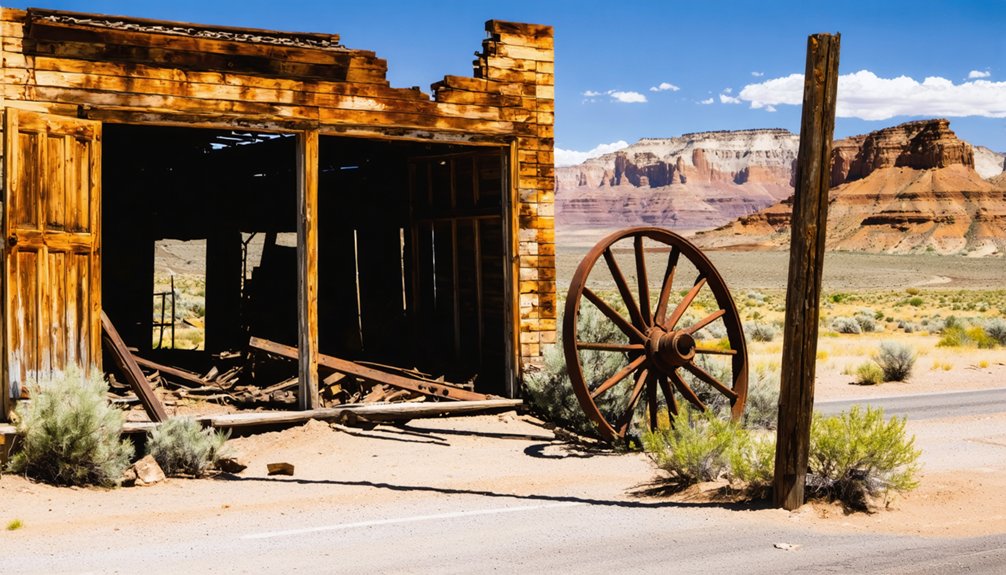
Once you’ve packed your gear and pointed toward Mohrland, it makes sense to stretch the drive into something bigger. The surrounding canyon country holds several nearby ghost towns worth threading into your route.
Hiawatha sits just north of Mohrland and shares the same coal-scarred heritage, offering another layer of Emery County’s industrial past. Both towns operated within the same mining corridor, making them natural companions on a single loop.
Beyond Hiawatha, Emery County’s broader landscape rewards explorers willing to chase historical attractions deeper into central-eastern Utah. Each abandoned settlement tells a version of the same story: boom, decline, silence.
You’re not just visiting ruins when you travel this region. You’re tracing the arc of an economy that once shaped an entire corner of the American West.
Frequently Asked Questions
Is There an Admission Fee or Permit Required to Visit Mohrland?
You don’t need an admission fee or permit to explore Mohrland’s ghost town history. Walk freely among the mining artifacts and vanishing landscape, where Utah’s rugged canyon country invites your adventurous spirit without restrictions or boundaries holding you back.
Are There Any Guided Tours Available Specifically for Mohrland Ghost Town?
No guided tours exist for Mohrland, but you’ll uncover ghost town history and local legends on your own terms — wandering freely through cedar canyon’s silence, where coal dust memories and abandoned rail lines whisper forgotten stories directly to you.
Was Mohrland Ever Considered for Historical Preservation or Landmark Status?
Mohrland’s historical significance never secured formal landmark status — a sobering truth. You won’t find active preservation efforts protecting its fading legacy, but its raw, untamed remnants still call to those craving unscripted freedom and forgotten American stories.
Did Any Notable Events or Accidents Occur During Mohrland’s Mining Years?
Specific mining accidents aren’t well-documented, but you’ll feel their echoes walking Mohrland’s silent grounds. The ghost stories linger where miners once labored, fueling your wanderlust to uncover the raw, untold truths freedom-seekers crave.
Are Metal Detecting or Artifact Collecting Activities Allowed at Mohrland?
Once home to 1,000 souls, Mohrland’s grounds hold secrets. You’ll want to follow metal detecting guidelines strictly — artifact preservation laws protect what’s left. Don’t pocket history; respect it, and you’ll honor those who lived here.
References
- https://www.ghosttowns.com/states/ut/mohrland.html
- https://en.wikipedia.org/wiki/Mohrland
- https://kids.kiddle.co/Mohrland
- https://www.facebook.com/groups/utahgroup/posts/4317195968610082/
- https://www.onlineutah.com/mohrlandhistory.shtml
- http://ghosttowntour.blogspot.com/2014/05/mohrland-emery-county.html
- http://karenhikerchick.blogspot.com/2014/06/hiking-ghost-town-mohrland-utah.html
- https://etvnews.com/articles/progress/tour-of-mohrland-ghost-town-mining-town/
- https://etvnews.com/articles/progress/remembering-the-historic-mining-town-of-mohrland/
- http://emerycountyarchives.blogspot.com/2010/10/mohrland-is-best-ghost-town-in-emery.html