Brookside, Michigan isn’t your typical ghost town with crumbling ruins and eerie streets. It’s a quiet spot in Newaygo County where a converted 1903 schoolhouse is nearly all that’s left of a once-active lumber community founded in 1862. You can reach it easily in a standard vehicle, and it pairs well with nearby ghost towns for a fuller road trip. Stick around to uncover everything you’ll need to plan the perfect Brookside visit.
Key Takeaways
- Brookside is located in Sheridan Township, Newaygo County, Michigan, west of Reed City and south of US-10, accessible via standard 2WD vehicles.
- The site’s last remaining structure is a converted 1903 two-room schoolhouse on W. 72nd Street, now a private residence viewable only from the road.
- Summer is the best season to visit, offering dry roads, longer daylight, and clearer views of the surrounding farmland.
- Brookside suits history enthusiasts seeking quiet reflection, not travelers expecting dramatic ruins or a walkable ghost town village.
- Extend your trip by visiting nearby ghost towns Summitville and Glen Haven for a rewarding Michigan ghost-town road trip loop.
What Made Brookside a Michigan Ghost Town
Brookside didn’t vanish overnight — it unraveled the way most Michigan lumber towns did, one closed door at a time.
When John Fellows arrived in 1862, the area had real promise. Sawmills, a grist mill, a shingle mill, and a general store followed over the next few decades, each piece adding to a working community built on lumber history.
But the lumber ran out, and nothing replaced it. The post office closed in 1901. The store burned. The shingle mill burned. The sawmill came down. A feed mill arrived in 1905 but moved on by 1913.
That pattern of community decline left almost nothing standing. What you’re visiting today isn’t a preserved landmark — it’s the quiet aftermath of an industry that moved on without looking back.
Where Brookside Is and How to Get There
Once you understand what happened here, finding the place is the next step.
Brookside sits in Sheridan Township, Newaygo County, in west-central Michigan. For location details, think west of Reed City and south of US-10, near where Newaygo, Lake, and Osceola counties converge.
Brookside lies in Sheridan Township, Newaygo County — west-central Michigan, near the convergence of Newaygo, Lake, and Osceola counties.
Your travel routes don’t require anything fancy. Standard 2WD vehicles handle the roads well, so you won’t need a truck or SUV to reach the site.
Summer offers the easiest conditions, but the area stays accessible year-round. Head toward W. 72nd Street, where a former two-room schoolhouse — now converted into a private home — marks the crossroads.
That structure is fundamentally all that remains. Plan Brookside as a brief, purposeful stop rather than a sprawling ruins experience.
What You’ll Actually See When You Arrive at Brookside
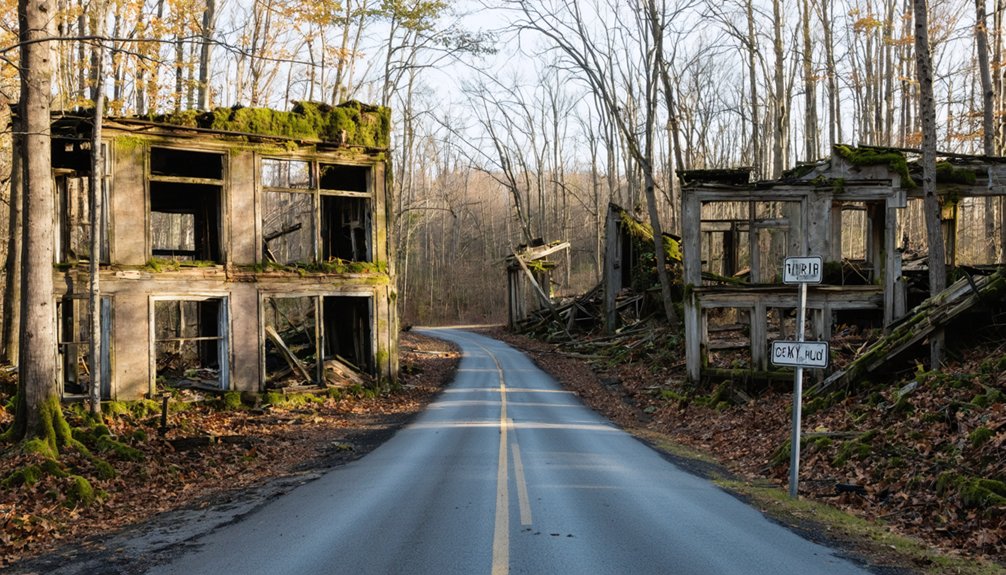
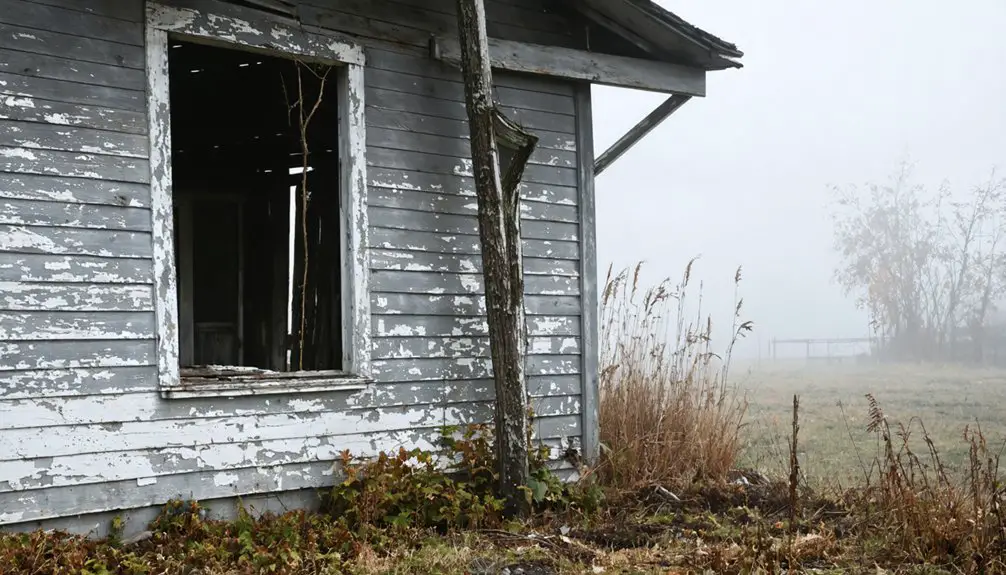
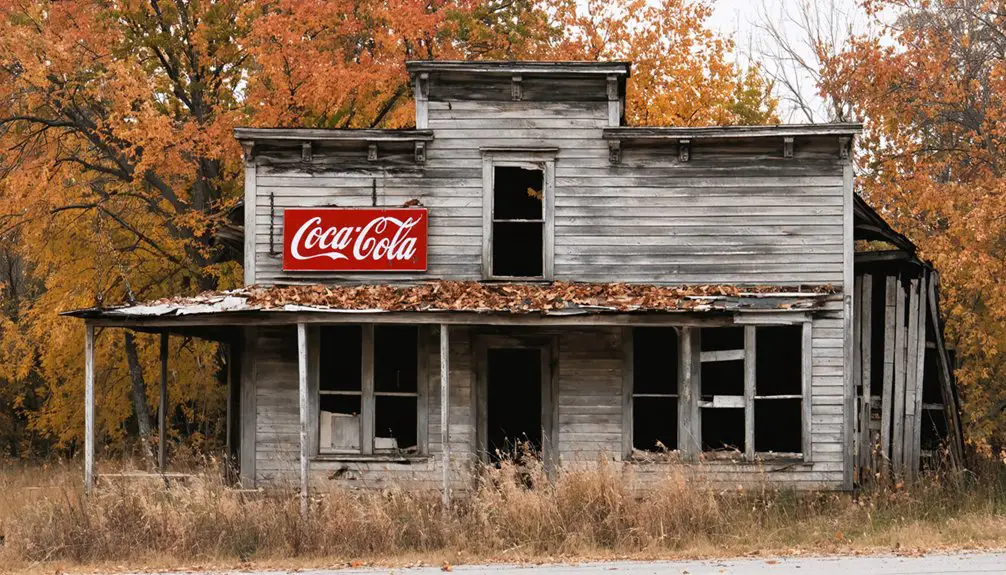
When you pull up to the crossroads at W. 72nd Street, the most striking sight you’ll find is a converted two-room schoolhouse built in 1903 — the last standing structure that ties this spot to its village past.
Beyond that, you’re looking at open farmland stretching out in every direction, a quiet rural landscape that gives little hint of the sawmills, stores, and shingle operations that once defined this community.
It’s a minimal-remains stop, but the contrast between what once stood here and what you see now tells its own story.
The Old Schoolhouse Structure
Although little survives of the village that once hummed with sawmill activity and community life, you’ll find one quiet remnant waiting at the crossroads: a former two-room schoolhouse, built in 1903, that now serves as a private residence.
Its schoolhouse history spans from educating rural children to adapting for modern living, a transformation that’s reshaped its architectural features over the decades.
You’ll notice how the structure sits at the corner of W. 72nd Street, modest yet unmistakable against the surrounding landscape.
Don’t expect original classroom details preserved inside — it’s privately owned, so you’re viewing it from the road.
Still, it stands as the last tangible marker of Brookside’s existence, giving you something concrete to anchor the town’s otherwise vanished story.
Surrounding Farmland Views
Stepping out of your car at the Brookside crossroads, you’ll find yourself surrounded by open farmland stretching in every direction — rolling fields, tree lines marking property borders, and the quiet rhythm of rural west Michigan that’s changed little in character since the town’s working days.
The rural landscapes here carry genuine farmland history beneath their surface, layered with the stories of the sawyers, millers, and settlers who once shaped this land. Several working farms remain active in the broader area, grounding the ghost town experience in something tangible rather than purely imaginary.
You’re standing where commerce once moved and people built lives. The open space isn’t emptiness — it’s evidence. Let that perspective shift how you read the fields around you.
Is Brookside Worth the Drive?
Whether Brookside is worth the drive depends entirely on what you’re after.
If you measure a stop by its historical significance rather than its surviving structures, Brookside delivers. It tells a real story about Michigan’s lumber era through a single converted schoolhouse and open farmland.
The driving distance is short enough that you can fold it into a broader west Michigan ghost-town loop without losing a full day.
However, if you’re expecting dramatic ruins or a walkable village, you’ll leave disappointed.
Think of Brookside as a quiet pause, a place to step out of the car, read the landscape, and imagine what once stood there.
For travelers chasing freedom on open roads, that kind of understated discovery is often reward enough.
When’s the Best Time to Visit Brookside?
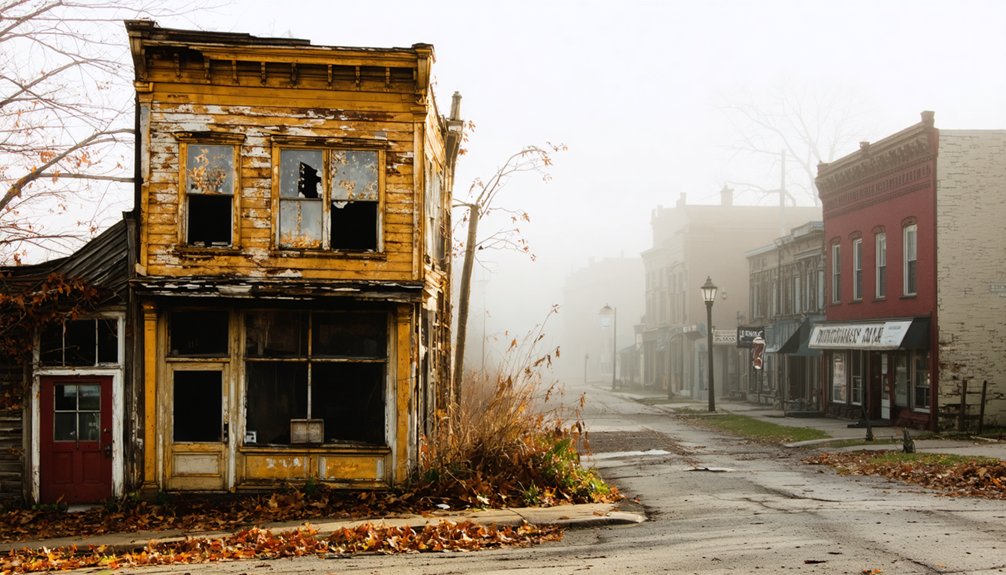
When you visit Brookside matters less than you might think, but summer gives you the clearest experience. Dry roads, longer daylight hours, and comfortable temperatures make it the best season for exploring the crossroads and photographing the converted schoolhouse without rushing.
That said, weather considerations shouldn’t stop you from visiting in other seasons. Fall brings color along the rural roads surrounding the site, adding atmosphere to an otherwise quiet stop.
Don’t let the calendar talk you out of a visit — fall especially rewards the flexible traveler.
Spring can leave dirt roads soft, so check conditions before heading out. Winter visits are possible but offer little reward beyond solitude.
Since Brookside requires minimal walking and no deep trail access, you’re not dependent on ideal conditions. Pick a clear day, point your vehicle toward Newaygo County, and go whenever your schedule allows.
Nearby West Michigan Ghost Towns Worth Combining With Brookside
Brookside works best as one stop on a longer loop, and west Michigan gives you enough abandoned communities nearby to fill a full day behind the wheel.
Dig into Summitville history for another stripped-down lumber-era settlement that echoes Brookside’s quiet disappearance.
Head toward the Sleeping Bear Dunes region and Glen Haven attractions offer a more developed stop with restored structures and lake access.
For ghost town comparisons that stretch beyond the Lower Peninsula, Central Mine insights in the Upper Peninsula reveal a larger, better-preserved community with visible foundations and richer interpretation.
Each site carries a different kind of silence. Brookside’s single converted schoolhouse reminds you how completely a place can vanish, while other stops along your route show how much, or how little, survives when people move on.
Frequently Asked Questions
Who Originally Named Brookside and What Inspired That Name?
William or Walter Gould originally named Brookside in 1864, drawing Name Origin inspiration from nearby Brooks Creek. This Historical Significance choice honors early lumberman John Brooks, giving you a meaningful connection to the town’s rich frontier heritage.
When Exactly Did Brookside’s Post Office Permanently Close?
You’ll find that Brookside’s post office permanently closed in October 1901, marking a pivotal moment in its post office history. This closure deeply shaped the ghost town significance, signaling the community’s irreversible decline into abandonment.
Was the Former Schoolhouse Converted Into a Private Residence?
Yes, the old schoolhouse found a new calling — its residence transformation gave it a second life. You’ll discover this schoolhouse history landmark, once a two-room learning hub, now breathes freely as a converted private home at W. 72nd Street.
Can Standard Two-Wheel-Drive Vehicles Access the Brookside Roads?
You’ll have no trouble reaching Brookside, as road conditions suit standard two-wheel-drive vehicle suitability perfectly. You can cruise the accessible roads with ease, making this ghost town an effortless, freeing adventure for any traveler.
How Does Brookside Compare to Central Mine as a Ghost Town?
Brookside’s ghost town history is worlds apart from Central Mine’s rich mining heritage! You’ll find virtually nothing at Brookside, while Central Mine offers dramatically more preserved structures, making it a far more immersive, developed ghost-town experience for adventurous explorers like you.
References
- https://www.awesomemitten.com/ghost-towns-in-michigan/
- https://99wfmk.com/brookside-michigan/
- https://www.smithsonianmag.com/history/once-a-year-this-19th-century-michigan-ghost-town-comes-to-life-180982695/
- https://www.reddit.com/r/upperpeninsula/comments/1jpqd2n/up_michigan_hidden_gems_n_ghost_towns/
- https://www.youtube.com/watch?v=zFa8wx2yUpk
- https://www.facebook.com/groups/1282668961809379/posts/5062938863782351/
- https://www.youtube.com/watch?v=yyYu9j1naDA
- https://www.ghosttowns.com/states/mi/brookside.html
- https://travelswithabandon.com/2017/09/08/adventure-4a-brookside-summitville-nirvana/
- https://en.wikipedia.org/wiki/List_of_ghost_towns_in_Michigan