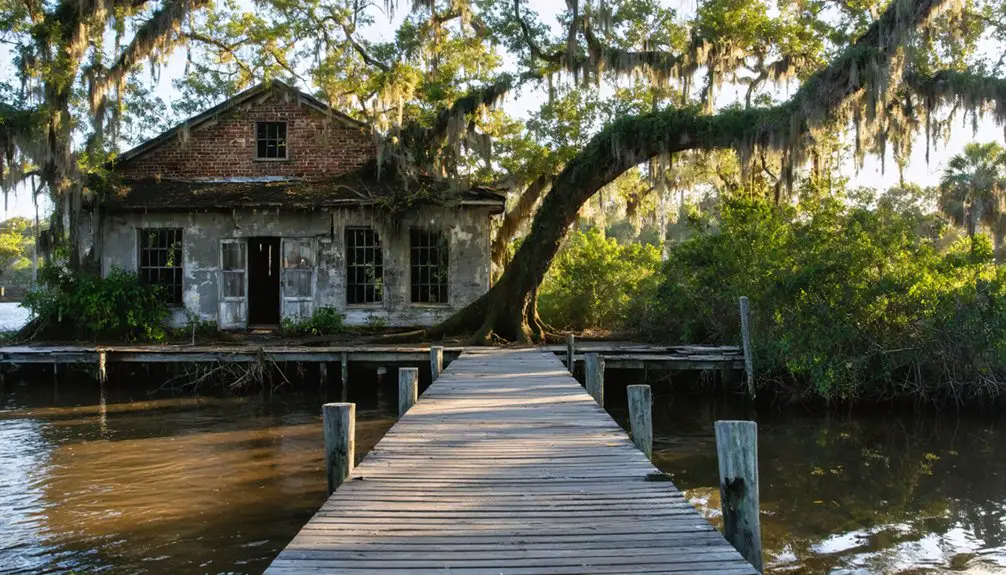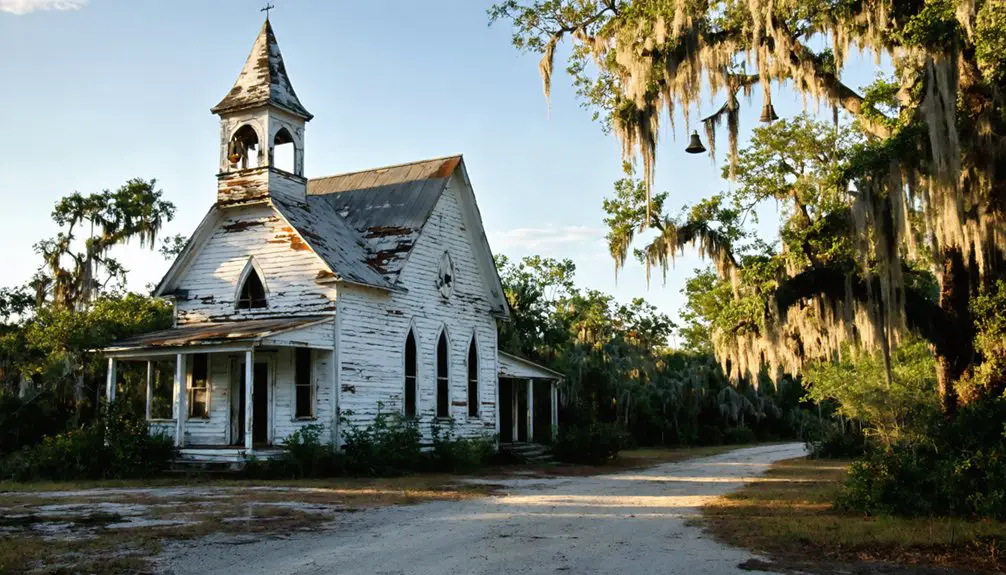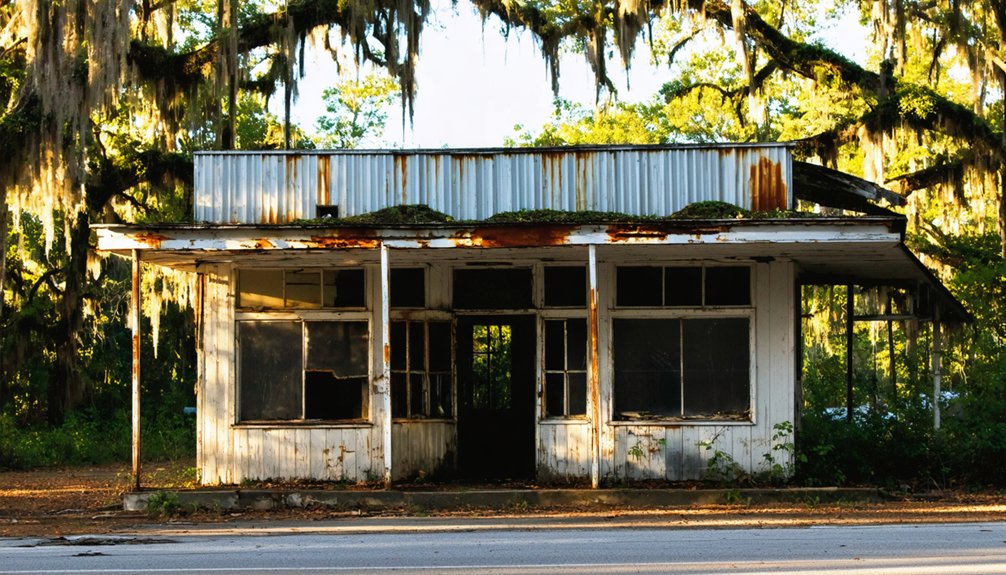
Planning a ghost town road trip to Montague, Florida means heading to a quiet stretch near SE 38th Street in Ocala, where a once-thriving Black community took root in 1879. You’ll find no dramatic ruins here — just a cemetery, mapped place names, and the extraordinary legacy of Rev. John Brooke Pinney, a man who once governed Liberia. Visit between November and March for the most comfortable experience, and there’s much more to this story worth uncovering.
Key Takeaways
- Montague, Florida, founded in 1879 near Ocala, was a rural Black community that declined after citrus freezes and post office closure in 1915.
- The cemetery near SE 38th Loop is the only remaining physical landmark, containing Rev. John Brooke Pinney’s grave and historic markers.
- Access the site via SE 38th St. and Maricamp Rd.; no dramatic ruins remain, making the cemetery the sole attraction.
- Visit during November through March, preferably early morning, for cooler temperatures and optimal photography lighting conditions.
- Bring water, insect repellent, sturdy shoes, sunscreen, and a camera to document headstones respectfully without disturbing fragile markers.
What Was Montague, Florida?
Although it’s little more than a memory today, Montague, Florida was once a small but vibrant rural community tucked into Marion County, southeast of Ocala. By 1911, around 100 residents called it home, anchoring their lives around a school, church, and post office.
The town’s roots trace back to 1879, when Rev. John Brooke Pinney, a former Acting-Governor of Liberia, purchased 240 acres and built a school that doubled as a church for Black residents.
A neighboring settlement called Capulet shared close ties with Montague, and local legends suggest both names came from S.S. Savage as a nod to Shakespeare.
The post office closed in 1915, signaling the town’s quiet fade.
Today, preservation efforts are minimal, leaving mostly cemetery markers and mapped place names behind.
The Man Who Built Montague: Rev. John Brooke Pinney
Behind Montague’s founding stands one of Florida’s more remarkable historical figures: Rev. John Brooke Pinney. In 1879, he purchased 240 acres southeast of Ocala and immediately got to work. He built a small school that doubled as a church, where he preached to Black residents and shaped a community rooted in education and faith.
What makes Pinney’s story so compelling for historical preservation enthusiasts is his background — he’d previously served as Acting-Governor of Liberia. That’s not local folklore; that’s documented history walking straight into Florida’s rural landscape.
He’s buried at 3820–3950 SE 38th Loop, Ocala, alongside Ellen Agnes Seward. Visiting that cemetery connects you directly to the man whose conviction literally built Montague from the ground up.
What Killed Montague’s Small-Town Life?
Pinney built something real in Montague, but the town didn’t survive long after his era. Several forces chipped away at what he helped establish. Citrus freezes devastated regional agriculture, and shifting trade patterns pulled economic life toward larger towns.
When the post office closed in 1915, Montague lost one of its last functioning anchors.
You won’t find local legends tied to dramatic disasters here — just the quiet erosion that swallows small rural communities over generations. Preservation challenges compounded the loss as the fairgrounds were sold off and residential development crept in.
Today, the Magnolias housing project occupies land once central to community life. Without sustained preservation efforts, places like Montague simply disappear beneath progress, leaving only cemetery markers and faded map references behind.
Why Did Two Florida Towns Get Named After Shakespeare?
One detail that stands out in Montague’s history is that neither the town nor its neighbor, Capulet, got their names by accident. A man named S.S. Savage made both choices, and the literary influence behind them is hard to miss.
Montague and Capulet are, of course, the rival families in Shakespeare’s *Romeo and Juliet*.
What makes this place naming so interesting is the contrast it creates. Two neighboring Florida settlements, carved out of rural Marion County wilderness, carry the names of feuding fictional aristocrats.
Whether Savage intended irony, humor, or simply admired Shakespeare, you’ll never know for certain. But the detail adds unexpected depth to your road trip stop, turning a forgotten ghost town into something that rewards curiosity beyond its cemetery markers.
What’s Left to See at the Montague Site Today?
If you’re expecting ruins or preserved historic structures, Montague will likely surprise you with its quietness. What remains here isn’t dramatic — it’s subtle and easy to miss if you don’t know where to look.
The clearest physical connection to the town is the cemetery near 3820–3950 SE 38th Loop, where Rev. John Brooke Pinney and Ellen Agnes Seward are buried.
County maps still acknowledge Montague near SE 38th St. and Maricamp Rd., though surrounding residential development, including the Magnolias housing project, has reshaped the landscape considerably.
Local legends about the town’s Shakespearean naming and missionary roots add meaning to an otherwise quiet stop.
Preservation efforts here remain minimal, so bring your curiosity, respect the cemetery, and let the mapped place name tell its own story.
Is This Ghost Town Worth the Drive?
Whether Montague deserves a spot on your road trip itinerary depends on what you’re chasing. If you value historical preservation and the quiet power of forgotten places, this Marion County ghost town delivers something real.
You won’t find dramatic ruins here, but you’ll find a cemetery, a mapped location, and a layered story tied to a former Acting-Governor of Liberia who built a school and preached to a rural Black community.
Local legends suggest the neighboring town of Capulet was named as a Shakespeare nod, adding unexpected depth to the visit.
It’s a short detour southeast of Ocala, accessible by regular car, and best explored in cooler months.
For the historically curious traveler, that’s a drive worth making.
How to Find Montague Near SE 38th St. in Ocala
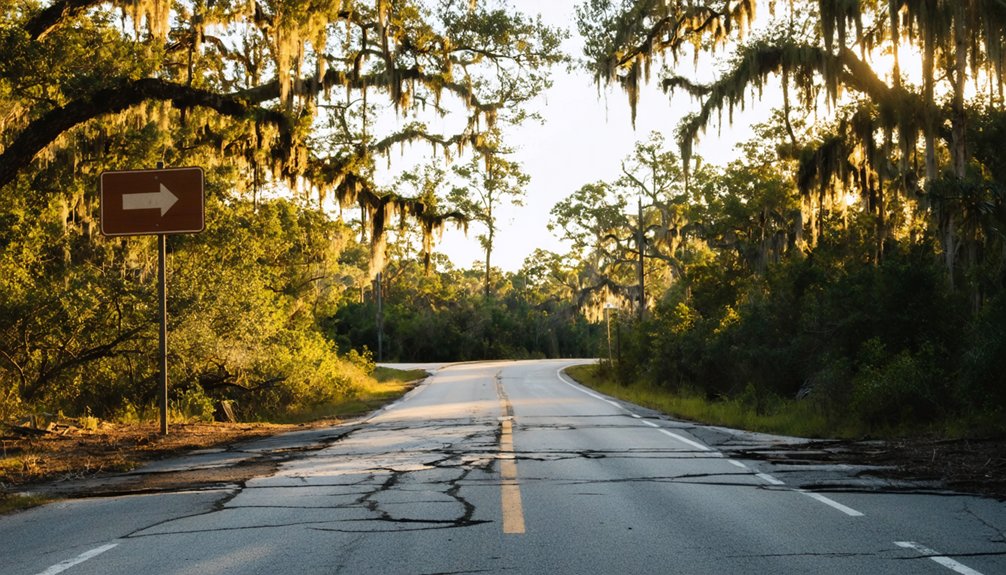
Getting to Montague is straightforward once you know where to look. Head southeast of Ocala and navigate toward SE 38th St. and Maricamp Rd. — that intersection puts you closest to what remains of this former community. You won’t find a welcome sign or visitor center, so rely on county maps or a GPS search for the SE 38th Loop area.
The burial site of Rev. John Brooke Pinney sits between 3820 and 3950 SE 38th Loop, making it your clearest landmark. Local legends tied to this land give the cemetery real historical weight.
While preservation efforts here are minimal, the cemetery itself survives as a tangible connection to Montague’s past. Park safely along the roadside and explore on foot — the whole detour takes under an hour.
The Best Time of Year to Visit Montague, Florida
Florida’s heat can turn a casual outdoor walk into an exhausting slog, so timing your visit to Montague matters more than you’d expect. You’ll get the most from your historical preservation exploration and any wildlife observation opportunities by choosing cooler, drier months.
Timing your Montague visit wisely means cooler months, better history, and far less surviving Florida’s relentless heat.
- November through March offers the most comfortable walking temperatures.
- Spring mornings give you good light for photography before midday heat builds.
- Summer visits are possible but bring water, insect repellent, and patience.
- Weekday visits in cooler months mean fewer people and quieter surroundings near the cemetery.
You can technically visit anytime, but Florida winters genuinely reward the effort. Cooler air makes walking the area around SE 38th Loop far more enjoyable, letting you focus on the site’s history rather than surviving the heat.
Historic Sites Near Montague Worth a Combined Stop
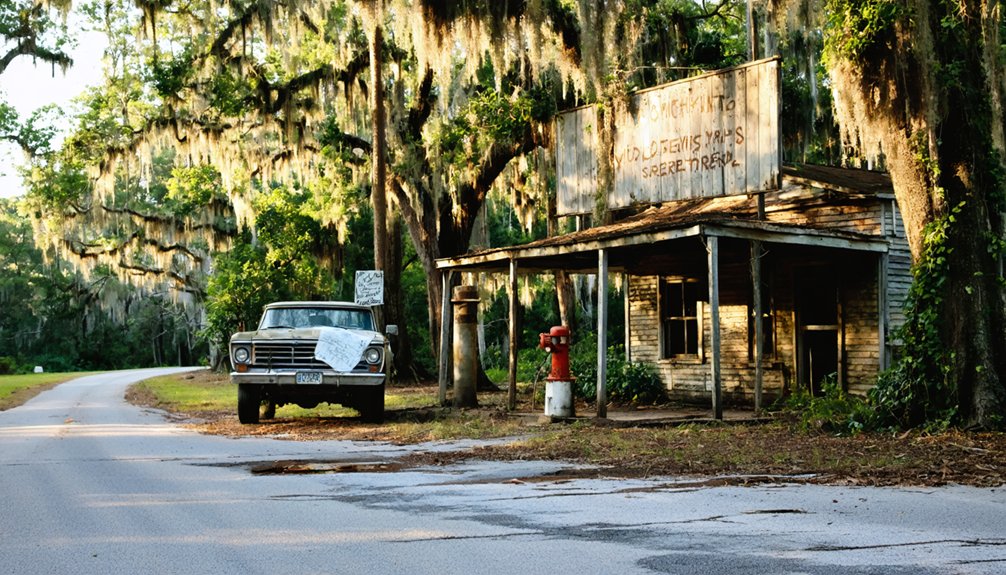
Montague’s historical footprint is small, but you’re within easy reach of several Marion County sites that round out a meaningful road trip.
Start at the cemetery on SE 38th Loop, where Rev. John Brooke Pinney and Ellen Agnes Seward are buried — historical preservation begins with honoring the people who shaped a place.
From there, explore Ocala’s Silver River State Park, where local legends of Florida’s wild interior come alive through preserved landscapes and archaeological remnants.
The nearby town of Micanopy offers well-documented frontier history and walkable streets lined with antique shops and preserved buildings.
Each stop builds context for understanding why communities like Montague rose and faded.
Together, these sites transform a single ghost-town visit into a richer, more rewarding exploration of old Florida.
What to Bring for a Montague Cemetery Visit
You’ll want to pack a few essentials before heading out to Montague’s cemetery, including sturdy closed-toe shoes, insect repellent, and plenty of water to handle Florida’s punishing heat.
A wide-brim hat and light, breathable clothing will keep you comfortable while you explore the grounds on foot.
Bring a camera or use your phone to document headstones, mapped coordinates, and any surviving markers that connect the site to Rev. Pinney’s legacy.
Essential Gear To Pack
Since Montague sits in central Florida’s heat, packing smart makes the difference between a rewarding visit and a miserable one. You’re exploring a historic cemetery where historical preservation matters, so come prepared to respect the space while staying comfortable.
Essential gear includes:
- Water bottle – Florida heat drains you fast; carry at least 16 oz per hour outdoors
- Sunscreen and hat – Open burial grounds offer little shade
- Sturdy closed-toe shoes – Uneven terrain and roots make sandals a poor choice
- Camera or notebook – Document markers thoughtfully, honoring visitor etiquette by never touching fragile stones
Avoid bringing anything that could disturb the site. You’re walking through someone’s history, not a tourist attraction. Pack light, move carefully, and leave everything exactly as you found it.
Comfort Items For Heat
Florida’s summer heat hits hard, and Montague’s open cemetery grounds offer almost no natural shade to recover from it. You’re out there on your own terms, exploring local legends and honoring historical preservation, so pack accordingly.
Bring a wide-brim hat that blocks direct sun without restricting your movement. Carry a reusable water bottle with at least 32 ounces of cold water, and consider an electrolyte packet for longer visits.
Lightweight, breathable clothing in light colors reflects heat rather than absorbing it. Sunscreen with SPF 50 protects exposed skin during extended outdoor walks.
A small battery-powered fan or cooling towel gives you quick relief between headstone readings.
Visit during early morning hours when temperatures stay manageable and the light makes photographing grave markers far easier.
Documenting Your Visit
Capturing Montague’s history takes more than a quick phone snapshot, so bring gear that matches the seriousness of what you’re documenting. Historical preservation starts with honest, clear records — your visit could contribute meaningfully to what little documentation exists of this vanished community.
Local legends surrounding Rev. Pinney and the dual settlements of Montague and Capulet deserve careful, respectful capture.
- A DSLR or mirrorless camera for sharp cemetery headstone detail
- A notebook for sketching plot layouts and recording inscriptions by hand
- GPS or a mapping app to log exact coordinates of markers
- A soft brush for gently clearing debris from worn stone surfaces
Your documentation becomes part of the historical record, so treat every marker, name, and overgrown corner as worth preserving.
Frequently Asked Questions
Is There an Entry Fee to Visit the Montague Cemetery Site?
Like open roads calling wanderers home, you’ll find no gate blocking your path — there’s no entry fee. Historical preservation and cemetery maintenance keep this sacred ground freely accessible for all who seek it.
Are Pets Allowed When Visiting the Montague Historic Cemetery Area?
No official pet policies are confirmed for Montague’s historic cemetery area, but you’ll want to keep animals on leashes, respect the grounds, and check local animal accommodations guidelines before bringing your furry travel companion along.
Can I Find Montague Listed on Google Maps or GPS Apps?
Over 100 years old, Montague’s historical landmarks still surface on county maps! You’ll find it near SE 38th St. in Ocala. Chase local legends by searching GPS apps — it’s discoverable and waiting for your adventure!
Is Photography Permitted at the Burial Site on SE 38TH Loop?
No specific photography restrictions are documented for the burial site on SE 38th Loop. You’re free to capture images respectfully, honoring historical preservation while documenting Rev. Pinney’s legacy and this quietly powerful piece of Florida’s forgotten past.
Are There Any Guided Tours Available for the Montague Ghost Town?
No guided walking tours exist, yet Montague’s historical artifacts and forgotten stories await your independent discovery. You’ll trade structured tours for raw freedom, exploring cemetery markers and mapped remnants entirely on your own terms.
References
- https://travelmadepersonal.com/montague-florida-ghost-town/
- https://www.greatfallstribune.com/story/news/2018/10/29/discover-ghost-town-montague-central-montanas-chouteau-county/1750974002/
- https://www.ghosttowns.com/states/fl/montague.html
- https://travelmadepersonal.com/capulet-ghost-town-florida/
- https://en.wikipedia.org/wiki/List_of_ghost_towns_in_Florida
- https://www.journaloffloridastudies.org/0102ghosttowns.html
- https://fdc.com/blog/ghost-towns-in-florida/