Planning a ghost town road trip to Huron, Pennsylvania means trading tourist signs for raw, unfiltered history. Tucked inside Salem Township, Westmoreland County, this former coal mining community vanished gradually after demand for coal collapsed, leaving behind overgrown depressions, buried foundations, and an eerily reshaped landscape. You won’t find visitor facilities or interpretive markers here — just quiet terrain hiding decades of industrial memory. Stick around, and you’ll uncover everything you need to explore Huron like a seasoned ghost town hunter.
Key Takeaways
- Huron is located in Salem Township, Westmoreland County, western Pennsylvania, best found using county and township maps rather than tourist guides.
- The site has no preserved storefronts or visitor facilities, so expect overgrown foundations, depressions, and scattered structural traces embedded in the landscape.
- Huron declined gradually due to collapsing coal demand, offering a quieter ghost town experience unlike the dramatic abandonment of Centralia.
- Nearby sites like Connellsville, Leisenring, and Scottdale complement a Huron visit, illustrating western Pennsylvania’s broader coal boom-and-collapse cycle.
- Regional historical societies can provide legends, context, and location clues essential for navigating this unmarked, unadvertised ghost town site.
What Is Huron, Pennsylvania and Why Did This Coal Town Disappear?
Though most people have heard of Centralia, Pennsylvania’s fire-hollowed ghost town, far fewer know about Huron — a coal mining ghost town tucked into Salem Township, Westmoreland County, that quietly faded alongside the industry that built it.
Huron’s mining history traces back to the Huron Mines & Coke Works, also known as the Patton Mine, which anchored the entire community’s existence. When coal demand collapsed and operations wound down, the town had no economic foundation left to stand on.
That’s industrial decline in its most honest form — no dramatic fire, no national headlines, just a working community dissolving once the work disappeared.
Today, Huron represents a pattern repeated across western Pennsylvania: a place born from coal, shaped by labor, and ultimately reclaimed by the landscape.
Where to Find Huron in Salem Township, Westmoreland County
Knowing what Huron was makes finding it the next logical step — and that’s where things get genuinely interesting for the road-trip minded explorer. You’ll anchor your search in Salem Township, Westmoreland County, western Pennsylvania. Forget standard tourist maps — county and township maps serve you far better here.
Huron doesn’t advertise itself; it rewards those willing to read the landscape for clues left behind by historical events that shaped and ultimately emptied the town. The Huron Mines and Coke Works once defined this ground, and traces of that industrial past still whisper through the terrain if you know what you’re looking for.
Local legends occasionally surface through regional historical societies, giving you richer context before you ever leave your driveway.
What Survives at Huron: Landscape, Remnants, and Site Conditions
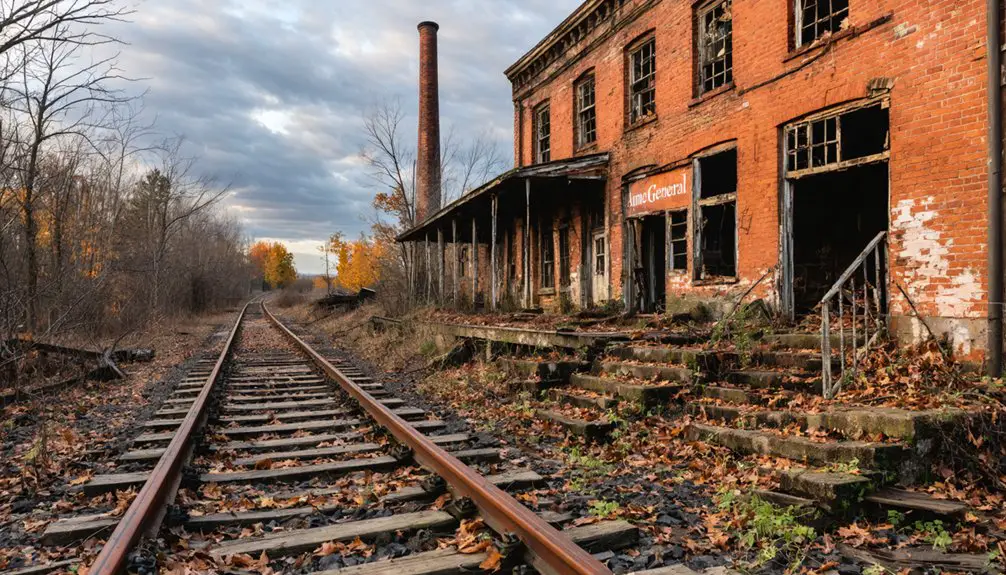
Arriving at a place like Huron means recalibrating your expectations before you step out of the car. You won’t find preserved storefronts or interpretive signs. What you’ll encounter instead are landscape features that whisper the town’s industrial past — overgrown depressions, altered terrain, and vegetation patterns shaped by decades of mining activity.
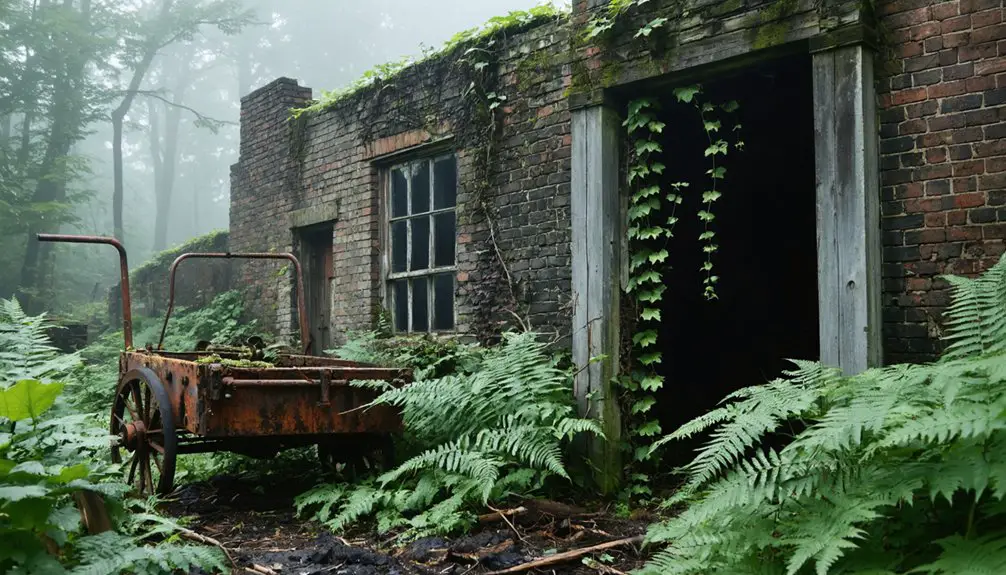
Historical artifacts here aren’t displayed behind glass. They’re embedded in the land itself: scattered structural traces, foundations swallowed by brush, and earth contoured by extraction rather than nature. You’re fundamentally reading the ground like a text.
Treat the site as an open-air investigation. Walk slowly, observe carefully, and bring a county map. Huron rewards curiosity over convenience, making it a genuine ghost-town experience rather than a packaged heritage attraction.
Three Westmoreland County Mining Sites Worth Combining With Huron
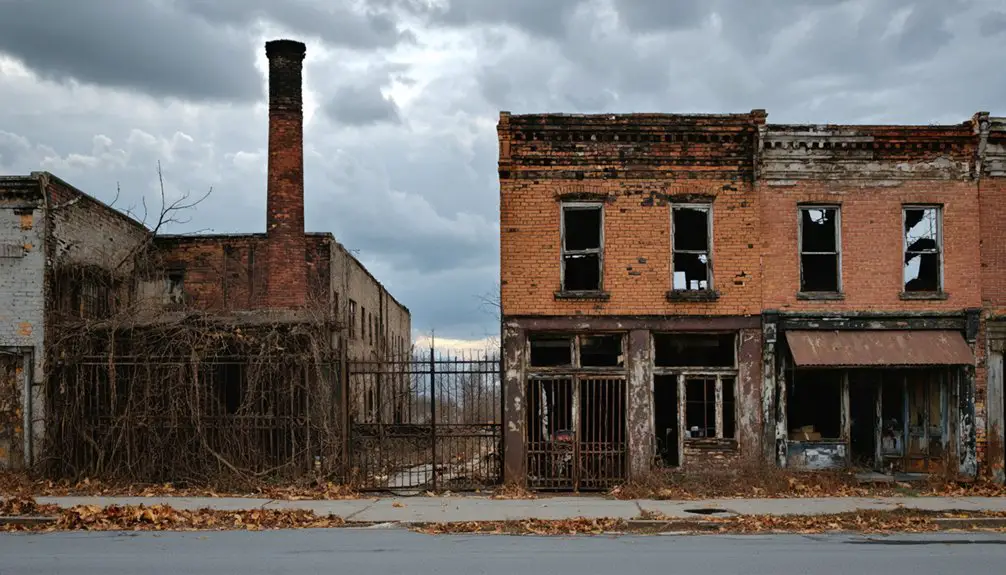
Huron fits naturally into a broader Westmoreland County mining loop, and a few nearby sites can give your road trip real historical depth. Start with Connellsville, once the coke capital of the world, where industrial decline reshaped entire neighborhoods after the furnaces went cold. You’ll read that mining history in the architecture and empty lots still visible today.
Add Leisenring, another former coal and coke community in Fayette County’s border region, where company-town patterns echo Huron‘s own story.
Finally, consider Scottdale, which processed coal-region commerce and still holds traces of that industrial past in its older districts.
Together, these stops build a layered picture of western Pennsylvania’s boom-and-collapse cycle, turning your drive into something genuinely exploratory rather than just scenic.
Why Huron’s Decline Tells a Different Ghost Town Story Than Centralia’s
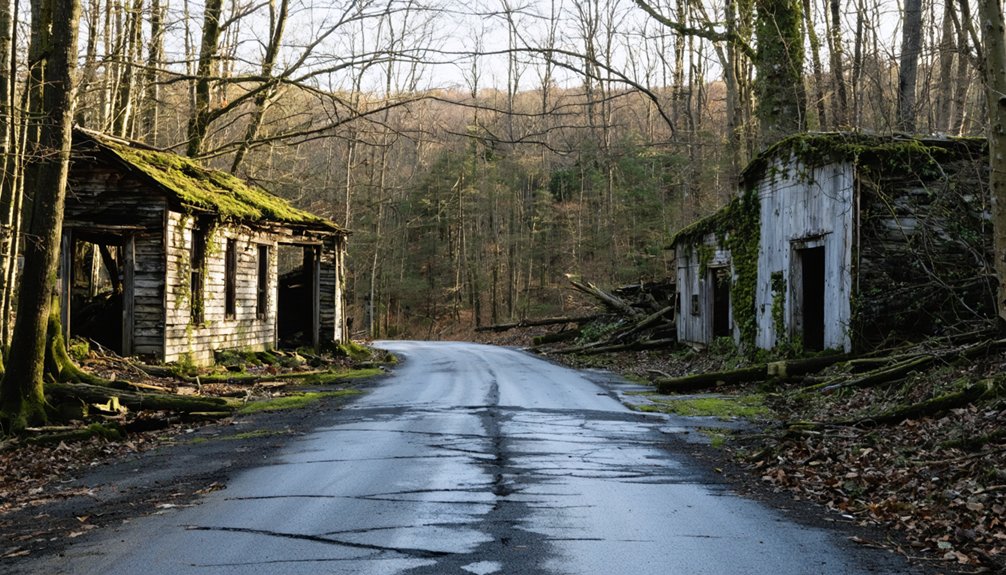
Most ghost town stories lean on dramatic endings, but Pennsylvania gives you two very different versions of how a community disappears. Centralia burns underground, its mine fire igniting in 1962 and driving residents out through smoke, sinkholes, and condemned streets. Its population collapsed from roughly 1,000 in 1980 to just five by 2020. That’s spectacle driving abandonment.
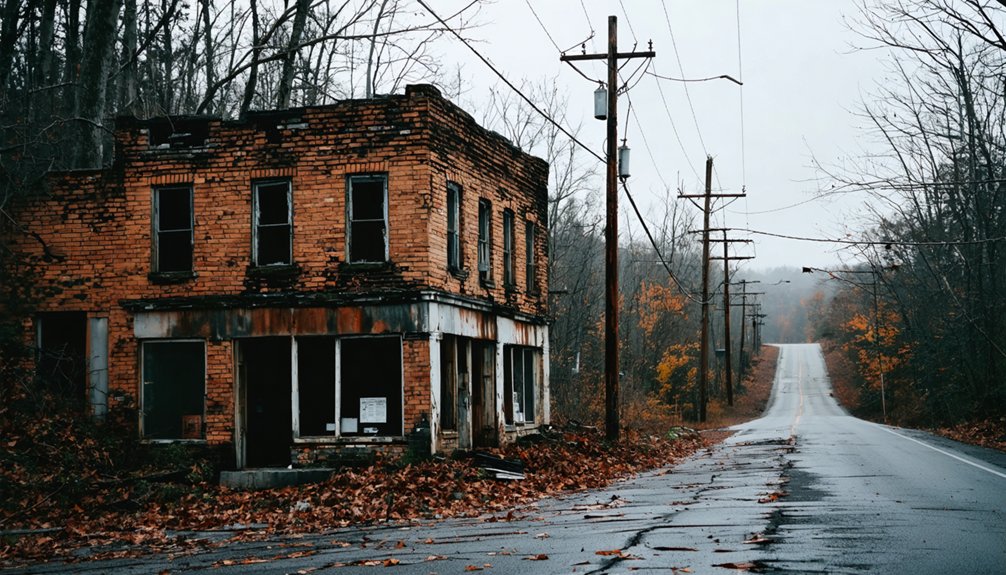
Huron tells a quieter story rooted in economic decline. When the coal ran thin and the Huron Mines and Coke Works stopped producing, the town simply emptied. No fire, no disaster zone — just industrial nostalgia left in the landscape. You won’t find dramatic ruins here, but you’ll find something honest: a place that rose with an industry and faded when that industry walked away.
Frequently Asked Questions
Is There an Entrance Fee or Permit Required to Visit Huron?
You don’t face any entrance fees or permit requirements to explore Huron — it’s an open historic mining landscape. Just respect the land, stay aware of your surroundings, and embrace the freedom of discovery!
What Is the Best Time of Year to Visit Huron?
Late spring is your sweet spot—it’s a canvas of mild seasonal weather, clear trails, and active wildlife sightings. You’ll read the landscape freely before summer heat or winter’s grip closes in.
Are There Accommodations or Campgrounds Near Salem Township for Overnight Stays?
You’ll find nearby hotels, campgrounds, and cozy inns surrounding Salem Township, letting you freely explore historical landmarks at your own pace, recharge overnight, and discover local dining gems that fuel your ghost town adventure.
Can Visitors Bring Metal Detectors or Conduct Artifact Searches at Huron?
Before you grab your metal detector, know this: metal detecting regulations and artifact collection rules vary by landowner. You’ll need to verify access permissions before searching Huron’s grounds, as unauthorized artifact collection could land you in serious legal trouble.
Are There Guided Tours Available for Westmoreland County Ghost Town Sites?
You won’t find formal guided tours, but you can connect with local historical societies uncovering historical preservation efforts and local legends tied to Westmoreland County’s mining past—they’ll often point you toward hidden ghost-town treasures worth exploring freely.
References
- https://en.wikipedia.org/wiki/Centralia
- https://www.jeffreydonenfeld.com/blog/2009/12/exploring-the-ghost-town-of-centralia-pennslvania/
- https://www.youtube.com/watch?v=Qj5LjacccJ0
- https://www.abc27.com/digital-originals/history-of-centralia-a-pennsylvania-ghost-town/
- https://en.wikipedia.org/wiki/List_of_ghost_towns_in_Pennsylvania
- https://www.huroncounty.com/edc-news-information/ghost-towns
- https://sites.rootsweb.com/~mistcla2/Old_Towns.htm
- https://enjoyer.com/this-lake-huron-ghost-town-kept-america-sharp/
- https://www.academia.edu/45658933/HURON_Huron_Mines_and_Coke_Works_Patton_Mine_Huron_Salem_Twp_Westmoreland_Co_Pennsylvania_U_S_A_Coal_Mining_Ghost_Town_