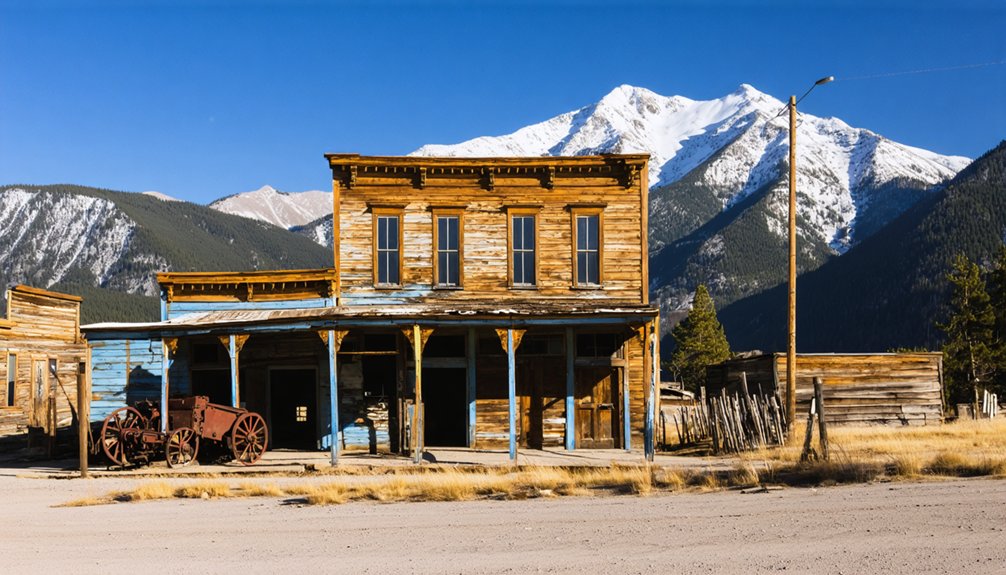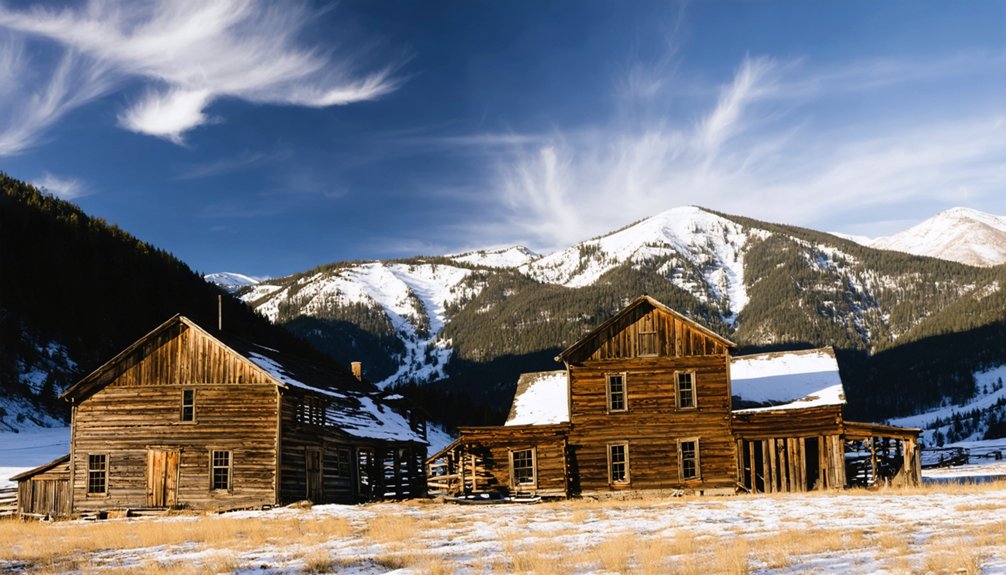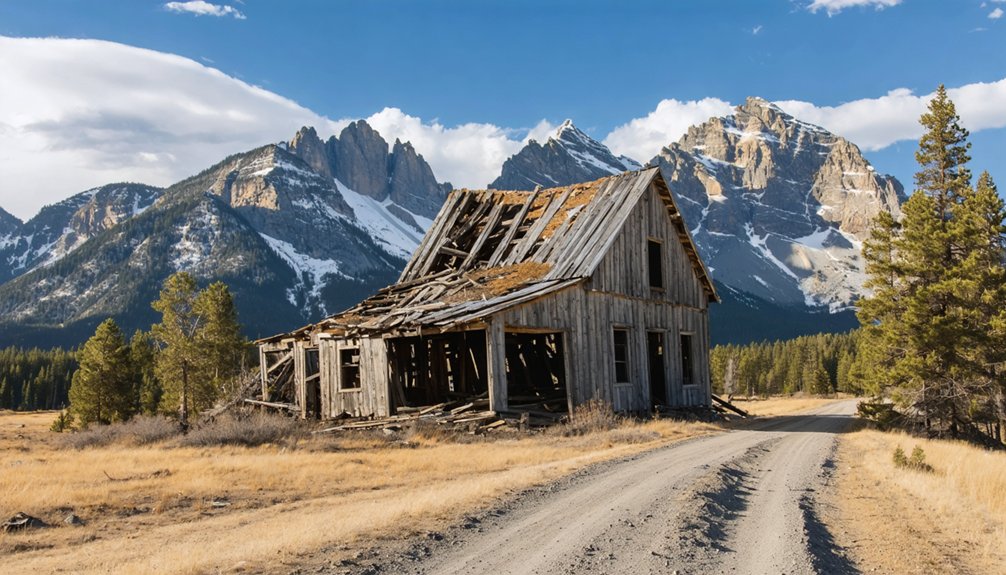
Planning a ghost town road trip to Montezuma, Colorado means heading just five miles off Highway 6 near Keystone into a silver-era time capsule sitting at 10,200 feet. You’ll find 1880s ruins, a century-old schoolhouse, and dirt streets shared by roughly 40 to 65 year-round residents. The main road is paved and accessible to standard vehicles, but parking is strictly limited to designated areas. Everything you need to know is waiting just ahead.
Key Takeaways
- Montezuma sits at 10,200 feet near Keystone, Colorado, featuring 1880s ruins, a historic schoolhouse, and 40–65 year-round residents.
- Access the town by turning onto Montezuma Road (County Road 5) off Highway 6, following a paved 5–6 mile drive.
- Park only at the designated Peru Creek lot, as no visitor parking exists within Montezuma itself.
- Standard 2WD vehicles handle the main road, but 4WD with high clearance is required for surrounding mining routes.
- Visit on weekdays in summer for the best experience; pack layers, hydration, and vehicle recovery gear for safety.
What Makes Montezuma Colorado Worth the Drive?
Why drive an hour from Denver into the mountains for a town with fewer than 65 residents? Because Montezuma delivers something rare — raw, unfiltered history you can actually walk through.
Founded during the 1860s silver boom at 10,200 feet, this semi-ghost town lets you roam 1880s ruins, explore a century-old schoolhouse, and chase ghost town lore through dirt streets lined with crumbling cabins and working homesteads side by side.
You’re not visiting a museum. You’re stepping into a living relic where local legends of silver strikes and boom-and-bust survival still echo across the Snake River valley.
Add year-round road access, nearby trails, and stunning Summit County scenery, and Montezuma becomes more than a curiosity — it becomes the kind of place that earns the drive.
Why Montezuma Boomed in the 1880s and Nearly Disappeared by 1900
When you walk Montezuma’s dirt streets today, you’re standing in the remnants of a silver boomtown that once drew nearly 1,000 residents by 1880.
Rich silver strikes around Argentine Pass fueled that explosive growth, pushing Montezuma to incorporate in 1881 as the largest town in the region.
But the 1893 silver price collapse hit hard and fast, gutting the economy and sending most residents packing almost overnight.
Silver Boom Drives Growth
Silver discoveries along Argentine Pass transformed Montezuma from a modest prospectors’ camp into the region’s largest settlement, swelling its population to an estimated 1,000 residents by 1880.
Silver mining fueled an economy that drew ambitious fortune-seekers willing to brave elevations exceeding 10,000 feet just to stake their claim. Incorporated in 1881, Montezuma embodied classic boomtown culture — raw ambition, rapid construction, and relentless optimism carved into Colorado’s rugged mountain terrain.
You’d have witnessed bustling streets, newly built structures, and entrepreneurs keen to profit from the silver rush.
But that prosperity carried an expiration date. When silver prices collapsed in 1893, Montezuma’s momentum died almost overnight. Residents scattered, businesses shuttered, and the once-thriving settlement began its slow, dramatic transformation into the atmospheric ghost town you’ll explore today.
Silver Collapse Ends Prosperity
That optimism had a breaking point. In 1893, the federal government repealed the Sherman Silver Purchase Act, and silver prices collapsed almost overnight.
For Montezuma, that single political decision meant economic decline no one could outrun. Silver mining became unprofitable, and the men who’d built their lives around it simply left.
Businesses shuttered. Families packed up and moved on to the next promising strike somewhere else.
How to Get to Montezuma From Keystone and Highway 6?
To reach Montezuma, you’ll turn off Highway 6 between Dillon and Loveland Pass onto Montezuma Road (County Road 5), just past Keystone ski resort.
From there, you’ll follow the paved, year-round road for 5 to 6 miles as it winds down into the valley, making the drive accessible even in a standard 2WD vehicle.
Keep in mind that Montezuma has no visitor parking, so you’ll need to use the designated lot at Peru Creek before entering town.
Finding Highway 6 Turnoff
Finding the turnoff to Montezuma from Highway 6 takes just one easy move: watch for Montezuma Road (County Road 5) as you’re driving east past Keystone ski resort, and you’ll spot it branching off to the south.
Highway signage marks the junction clearly, so you won’t need to second-guess yourself or pull over to check your map repeatedly.
Road conditions on Montezuma Road stay paved and plowed year-round, meaning your standard 2WD vehicle handles the five-to-six-mile stretch into town without any trouble.
That accessibility gives you the freedom to visit any season you choose. Just remember, once you’ve reached Montezuma itself, the roads beyond town shift to rough terrain, and 4WD becomes essential for pushing deeper into the surrounding backcountry.
Once you’ve turned onto Montezuma Road (County Road 5), you’re looking at a straightforward five-to-six-mile drive south through some genuinely striking Summit County scenery.
The road is paved and plowed year-round, so your standard 2WD vehicle handles it without trouble.
As you wind deeper into the valley, the scenic views open up dramatically — snow-capped peaks, dense forest, and the Snake River corridor framing your path.
You’re fundamentally retracing routes that shaped Montezuma history, following the same corridor prospectors traveled during the silver boom of the 1880s.
The drive deposits you directly into town.
One critical detail: there’s no designated visitor parking in Montezuma itself.
Use the Peru Creek lot instead.
Ignore this, and you’ll face strictly enforced restrictions that’ll cut your exploration short.
Parking Near Town
Parking here follows one simple rule: use the designated lot at Peru Creek, not the town itself. Montezuma’s residents take their streets seriously, and enforcement is strict — especially on weekends when visitor traffic surges. You’ll want to respect that boundary.
Good visitor etiquette means arriving early, parking responsibly, and leaving space for locals who actually live there year-round. The Peru Creek lot gives you easy access to trails, ruins, and backcountry routes without crowding the town’s narrow dirt roads.
These parking tips aren’t suggestions — they’re the difference between a smooth adventure and a costly ticket.
Weekday mornings offer quieter conditions and more available space. Treat Montezuma like the living, breathing community it still is, and you’ll experience it at its best.
Do You Need 4WD to Drive to Montezuma Colorado?
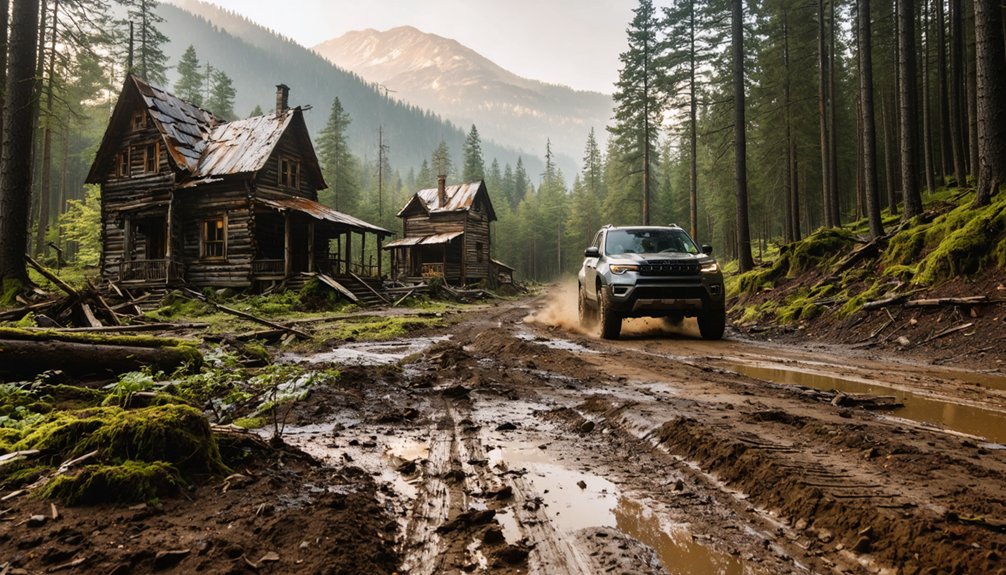
Whether you’re driving a standard sedan or a lifted 4×4, you can reach Montezuma without any special vehicle requirements. Montezuma Road stays paved and plowed year-round, making 2WD vehicles completely capable of handling the 5-6 mile drive from Keystone.
However, 4WD requirements change considerably once you venture beyond town. Road conditions on routes to Saints John and Wild Irishman Mine demand serious off-road capability, high clearance, and solid driving safety awareness. These rough mountain tracks challenge even experienced drivers.
For vehicle recommendations, keep it simple: any reliable car handles the main road, but bring a capable 4×4 if you’re exploring deeper into the backcountry.
Know your limits, respect the terrain, and you’ll reveal everything this remarkable high-elevation region offers.
Where to Park Without Getting a Ticket in Montezuma
Finding a spot to park in Montezuma without catching a ticket comes down to one key rule: there’s no visitor parking within the town itself.
Follow this essential parking tip and you’ll avoid the frustration of returning to a citation on your windshield.
Your best move is heading to the designated lot at Peru Creek, which gives you legal access without the hassle. From there, you can walk into town and explore freely.
Weekends draw heavy crowds, so arriving early keeps your options open and your experience stress-free.
Ticket avoidance is straightforward once you know where officials draw the line.
Respect the restrictions, use the designated lot, and you’ll spend your energy exploring crumbling cabins and historic ruins rather than dealing with parking enforcement.
Ruins, Roaming Dogs, and Actual Residents: What Montezuma Looks Like Now
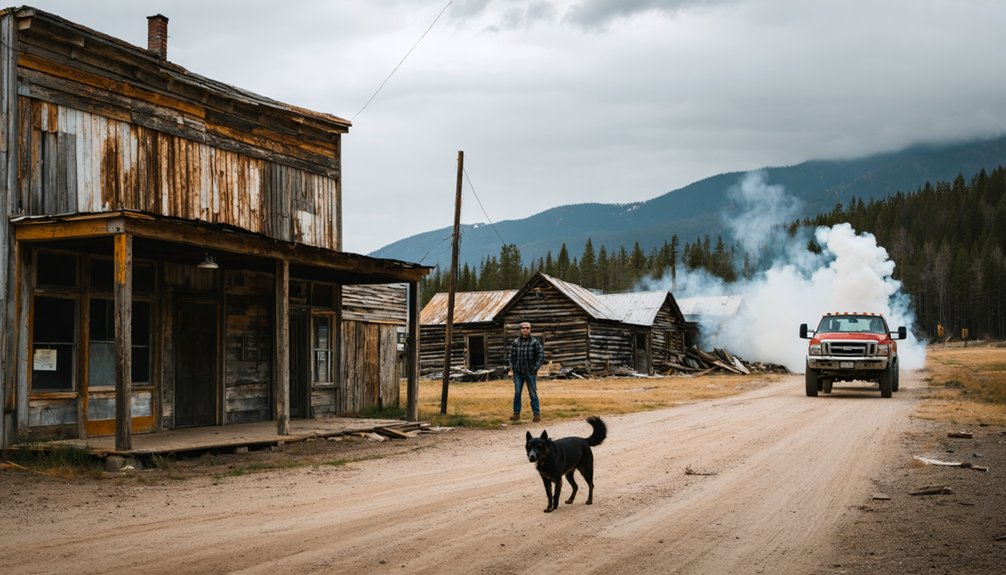
When you roll into Montezuma, you’re not stepping into a frozen-in-time ghost town — between 40 and 65 people actually live here year-round, and vacation homes and modern lodges sit right alongside 1880s ruins.
You’ll spot the old schoolhouse, a weathered general store, and rustic cabins still standing on the dirt streets, giving the place a genuinely gritty, layered character.
One thing to watch for immediately: dogs roam freely throughout town, so keep your eyes open as you explore.
A Living Ghost Town
Montezuma defies easy categorization — it’s part ghost town, part living community, and part open-air history museum all at once.
This ghost town evolution means you’ll find 1880s log cabins standing beside modern vacation homes, rustic ruins sharing dirt streets with year-round neighbors. Between 40 and 65 residents actually call this place home today.
Expect dogs roaming freely, locals gathering in the historic schoolhouse, and a general store anchoring the small downtown.
Local folklore runs deep here — stories of silver booms, devastating fires, and a town that literally re-incorporated in the 1980s just to block resort expansion.
Montezuma refused to disappear. Walk its streets and you’ll feel that stubborn, independent spirit still very much alive beneath the weathered wood and mountain air.
Free-Roaming Dogs Warning
Walking Montezuma’s dirt streets means accepting the full, unfiltered reality of a town that’s still very much lived in — and that includes the dogs. Free-roaming dogs are a genuine part of daily life here, and you’ll likely encounter them wandering between cabins, sniffing around ruins, or trotting toward you without warning.
Dog safety isn’t complicated, but it does require awareness. Move calmly, avoid sudden gestures, and never corner an animal near a structure. These aren’t stray dogs — they belong to residents who embrace a looser, more independent lifestyle.
Beyond dog safety, stay alert to local wildlife sharing this high-elevation terrain. Deer and other animals move through regularly.
Respect both the residents and the environment, and Montezuma rewards you with an experience that feels genuinely untamed.
Historic Ruins Still Standing
What remains of Montezuma’s silver boom era stands in striking contrast to the modern cabins and vacation homes surrounding it — and that tension is exactly what makes the town worth exploring.
You’ll find an 1880s schoolhouse still used for community meetings, a weathered general store, and rustic cabins that speak to the town’s architectural significance. Historic preservation efforts here aren’t museum-polished — they’re raw and real.
Dirt streets wind past crumbling foundations alongside lived-in structures, giving you an unfiltered look at layered history. The 1880s buildings weren’t restored for tourists; they survived on their own terms.
Walk slowly, look closely, and you’ll read decades of boom, bust, and stubborn resilience written directly into the wood, stone, and silence surrounding you.
Visiting Saints John and Wild Irishman Mine From Montezuma
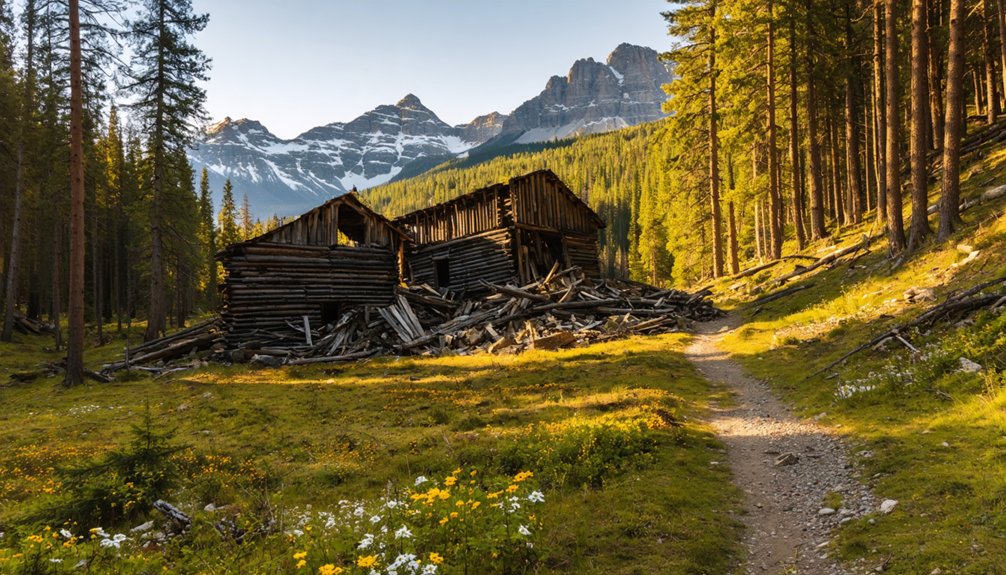
Once you’ve explored Montezuma’s weathered streets, two ghost town destinations await just up the road: Saints John and the Wild Irishman Mine.
Saints John sits roughly 1.5 to 2 miles past Montezuma, where you’ll find three surviving buildings from what was once a remarkably civilized company town — complete with a library but strikingly no saloon. It’s an early silver discovery site worth the rough 4WD drive through White River National Forest.
Push another mile beyond Saints John and you’ll reach the Wild Irishman Mine, where weathered cabins and ruins cling to Glacier Mountain’s slopes.
Both destinations demand a capable 4WD vehicle and solid off-road skills. Trail usage runs high in summer and drops considerably in winter, so plan your timing accordingly.
Best Hikes and Backcountry Routes Around Montezuma Colorado
Montezuma’s surrounding terrain rewards hikers and backcountry enthusiasts with access to some of Summit County’s most dramatic high-elevation routes.
Whether you’re chasing winter solitude or summer adventure, these hiking trails and backcountry routes deliver raw, unfiltered mountain freedom.
From winter solitude to summer adventure, Montezuma’s trails deliver raw, unfiltered mountain freedom at every elevation.
- Snake River Corridor – Follow the river trail on weekday mornings for prime birding and peaceful scenery away from weekend crowds.
- Peru Creek and Deer Creek Meadows – Winter touring and snowshoeing routes start at the road’s end, offering wide-open backcountry routes through stunning terrain.
- Saints John and Wild Irishman Mine Trails – High-use summer hiking trails connect you to historic ruins tucked into White River National Forest’s backcountry.
Pack smart, drive capable, and let Montezuma’s landscape do the rest.
Best Time of Year to Visit Montezuma Colorado
Timing your visit to Montezuma shapes everything about the experience.
Summer reveals the full range of seasonal activities — hiking, backpacking, picnicking among ruins, and wildlife spotting along the Snake River. You’ll catch the American Dipper most reliably on weekday mornings before crowds arrive.
Winter transforms the valley into a quiet backcountry playground for snowshoers and skiers willing to earn their solitude.
Spring and fall suit adventurous travelers comfortable with unpredictable conditions and muddy roads.
Weekends draw heavy traffic year-round, so arriving early or choosing weekdays gives you breathing room in this small community.
Whatever season pulls you in, Montezuma’s high-elevation setting rewards visitors who plan ahead and respect the road’s demands beyond the town boundary.
What to Pack for Montezuma’s 10,200-Foot Elevation and Rough Roads
Packing for Montezuma means preparing for a mountain environment that punishes the unprepared and rewards those who think ahead. At 10,200 feet, elevation essentials aren’t optional — they’re your foundation for a safe, rewarding visit.
Bring these three road safety and elevation essentials:
- Layers and sun protection — Mountain weather shifts fast; pack a waterproof jacket, warm base layers, sunscreen, and sunglasses for intense high-altitude UV exposure.
- Vehicle recovery gear — If you’re venturing beyond town on 4WD roads, carry a tow strap, tire repair kit, and a detailed trail map.
- Hydration and snacks — Altitude accelerates dehydration; drink water consistently and carry enough food for unexpected delays on remote backcountry roads.
Preparation turns a rough mountain road trip into pure freedom.
Frequently Asked Questions
Is There Cell Service or Wifi Available in Montezuma, Colorado?
Don’t count on reliable cell coverage or internet access in Montezuma. You’re venturing into rugged, high-elevation terrain where connectivity fades fast—embrace the freedom of truly unplugging while exploring this stunning, historic Colorado ghost town!
Are Campfires Permitted Near Montezuma’s Backcountry Trails and Ruins?
The knowledge base doesn’t specify campfire regulations for Montezuma’s backcountry trails. You’ll want to check with White River National Forest directly for current campfire regulations and backcountry safety guidelines before exploring ruins and trails.
Can You Legally Metal Detect or Collect Artifacts in Montezuma?
Ironically, you can’t freely pursue metal detecting regulations restrict artifact preservation here. Federal laws protect Montezuma’s ruins, so you’ll leave history undisturbed — your freedom ends where the past begins on White River National Forest land.
Are There Any Food Vendors or Restaurants Operating Inside Montezuma?
You won’t find any local cuisine or formal dining options inside Montezuma. It’s a semi-ghost town, so pack your own food and fuel your freedom before heading out to explore its rugged, historic streets!
Is Montezuma Accessible for Visitors With Mobility Limitations or Disabilities?
Montezuma’s dirt streets and rugged terrain make it challenging for mobility limitations. You’ll find no formal accessible trails or visitor resources here, but the paved road into town lets you explore its rustic charm from your vehicle.
References
- https://www.uncovercolorado.com/ghost-towns/montezuma/
- https://coloradobirdingtrail.com/site/montezuma-road/
- https://www.allsummitcounty.com/history_museums/montezuma_ghost_town.php
- https://en.wikipedia.org/wiki/Jeep_Trails_to_Colorado_Ghost_Towns
- https://forums.bmwmoa.org/threads/the-semi-ghost-town-of-montezuma.61244/
- https://www.ghosttowns.com/states/co/montezuma.html
- https://gotaltitudesite.wordpress.com/2023/12/11/saints-john-and-wild-irishman-mine-montezuma/
- https://www.youtube.com/watch?v=OdGyDe_DFpA