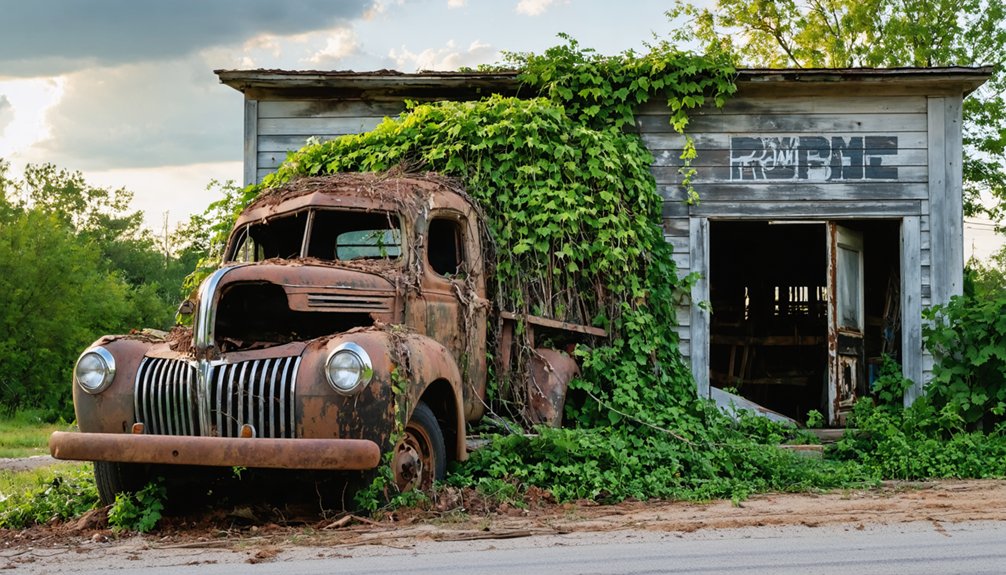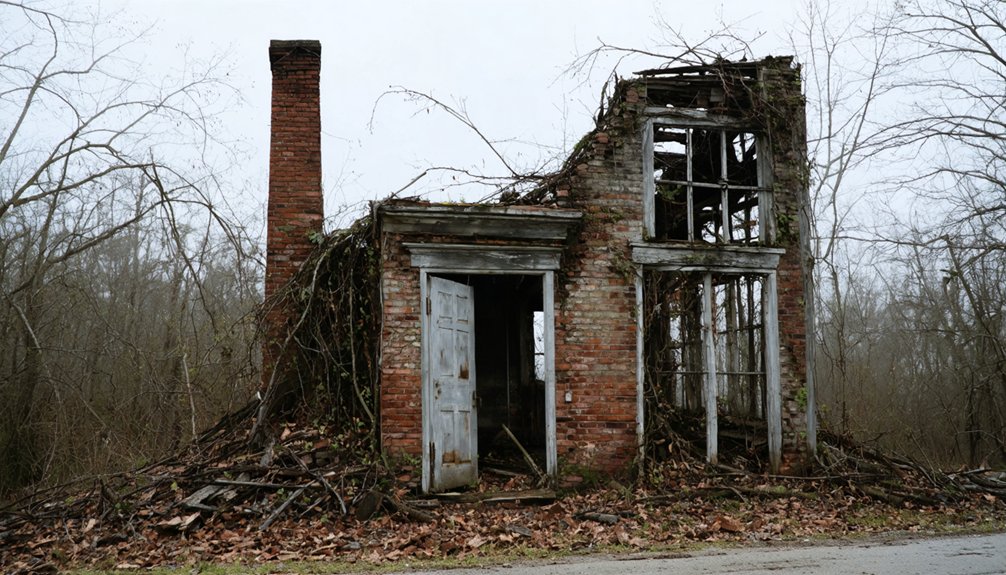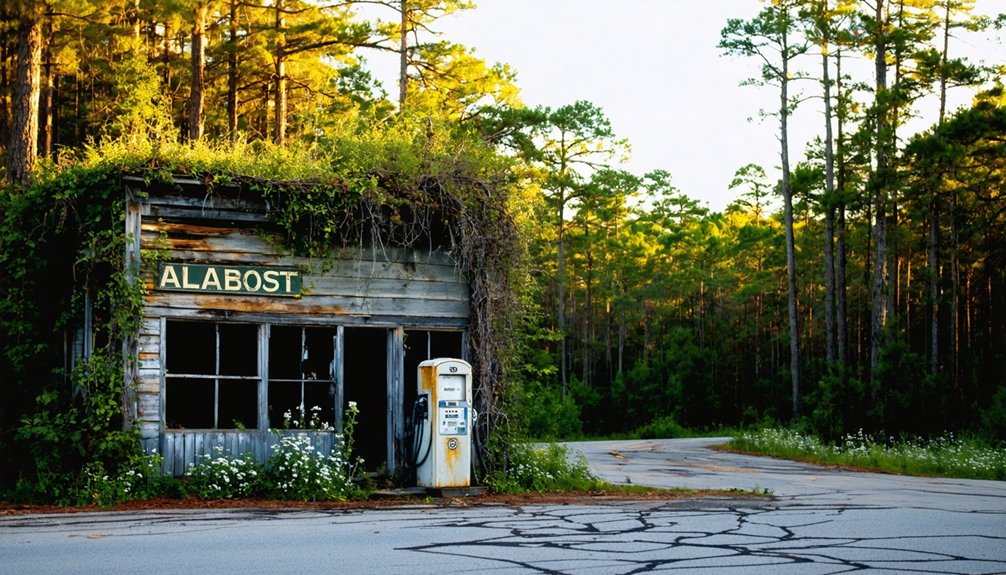
Planning a ghost town road trip to Morgan Stream, Alabama means stepping into one of Etowah County’s most overlooked corners of history. You’ll navigate unmarked backroads to find skeletal sawmill ruins swallowed by overgrowth, a possible forgotten cemetery, and deep Cherokee connections that most locals don’t even know exist. Pack your offline maps, drive a high-clearance vehicle, and bring your curiosity — because Morgan Stream rewards those who come prepared, and there’s far more to this place than first meets the eye.
Key Takeaways
- Morgan Stream is an unmarked ghost town in rural Etowah County, Alabama, featuring sawmill ruins, overgrown foundations, and possible Cherokee cemetery sites.
- Use satellite imagery, county maps, and offline navigation apps, as the site lacks signage and has unreliable cell service.
- Drive a high-clearance vehicle on unpaved backroads and pack water, boots, bug spray, and a camera for the trip.
- Visit during mild weather seasons and check fuel levels beforehand, as gas stations and rural amenities are extremely limited nearby.
- Respect the site by staying on existing paths, leaving all artifacts undisturbed, and following Leave No Trace principles throughout your visit.
What Is Morgan Stream, Alabama?
Tucked away in Etowah County, Morgan Stream is one of Alabama’s lesser-known ghost towns — a former populated place that’s faded from the map but not entirely from the landscape. What you’ll find here isn’t a restored historic district or a managed attraction. Instead, you’re looking at scattered remnants: the remains of a sawmill, a possible cemetery, and land once connected to Cherokee settlement.
Industrial decline claimed this community long ago, leaving behind only fragments that nature has slowly reclaimed. Yet those fragments still matter.
Historical preservation efforts begin with recognition, and Morgan Stream earns its place in Alabama’s ghost-town record. If you’re drawn to places where history lingers quietly off the beaten path, Morgan Stream offers exactly that kind of unfiltered, unpolished encounter with the past.
Where Is Morgan Stream in Etowah County?
Knowing what Morgan Stream is only gets you so far — finding it’s the real first step. Morgan Stream sits in Etowah County, Alabama, a rural stretch where paved roads give way to narrow backroads and thick woodland. You won’t find it on mainstream travel maps, so you’ll want to cross-reference Alabama ghost-town inventories and county records before you go.
The abandoned structures that remain — including sawmill ruins — aren’t clearly marked, meaning your navigation needs to be deliberate. Local legends tie the area to Cherokee tribes, adding cultural weight to what might otherwise seem like a forgotten clearing.
Pull county maps, study satellite imagery, and tap into Etowah County historical resources before you leave home. Preparation is the difference between a rewarding find and a frustrating dead end.
The Best Sources for Morgan Stream Research Before You Visit
Before you hit the road, you’ll want to dig into Etowah County’s archives and historical records, where land deeds, census data, and old county maps may surface details that online sources simply don’t carry.
County historical societies can also point you toward cemetery records that help confirm the settlement’s boundaries and its possible Cherokee connections.
If Cherokee heritage ties genuinely shaped Morgan Stream’s early history, the Cherokee Nation‘s own documentation and regional Indigenous history collections offer a valuable second layer of context you shouldn’t skip.
County Archives And Records
Since Morgan Stream left behind only fragmentary records, the Etowah County Archives should be your first stop before you hit the road.
County deed books and land ownership records can reveal who settled the area, when they arrived, and how the community took shape around its sawmill operations.
You’ll also want to dig into probate files, tax rolls, and survey maps, which sometimes surface details that never made it into published histories.
Ask archivists specifically about historical artifacts tied to Cherokee presence or early industrial activity in the region.
County historical societies often hold unpublished manuscripts, photographs, and oral history transcripts that fill the gaps official records leave open.
Arriving prepared with this research makes your time at the site far more meaningful and focused.
Cherokee Heritage Documentation
Cherokee heritage documentation adds a compelling research layer to any Morgan Stream visit, and you’ll want to tap into several focused sources before you make the drive. Local lore ties the area to Cherokee tribes, so dig into the Alabama Department of Archives and History for tribal records and early settlement maps covering Etowah County.
The Cherokee Nation’s own cultural preservation offices maintain digitized historical materials worth reviewing. You’ll also want to check university anthropology departments in Alabama, where archaeological evidence from regional digs sometimes surfaces in published field reports.
The National Archives holds federal records documenting Cherokee presence across the Southeast, giving you broader geographic context. Cross-referencing these sources sharpens your on-site interpretation and helps you recognize subtle landscape features that casual visitors might completely overlook.
What Remains of the Morgan Stream Sawmill Today
Although time and nature have done their work, you’ll still find the skeletal traces of Morgan Stream‘s sawmill waiting quietly in the Alabama woodland. Overgrowth conceals much, so you’ll need sharp eyes and patience to distinguish historical artifacts from the surrounding terrain.
Time and nature have done their work, yet the skeletal traces of Morgan Stream’s sawmill still wait quietly in the Alabama woodland.
Expect to encounter:
- Partial industrial ruins – fragmentary machinery remnants or structural foundations embedded in the landscape
- Woodland reclamation – dense vegetation actively swallowing what little structure survives
- Local legends made tangible – stories about the mill’s working days suddenly feel grounded once you’re standing among the remains
No signage guides you here, and no exhibits explain what you’re seeing. That rawness is precisely the draw. You’re reading a landscape rather than a display, and that distinction makes Morgan Stream genuinely worth seeking out.
The Forgotten Cemetery at Morgan Stream
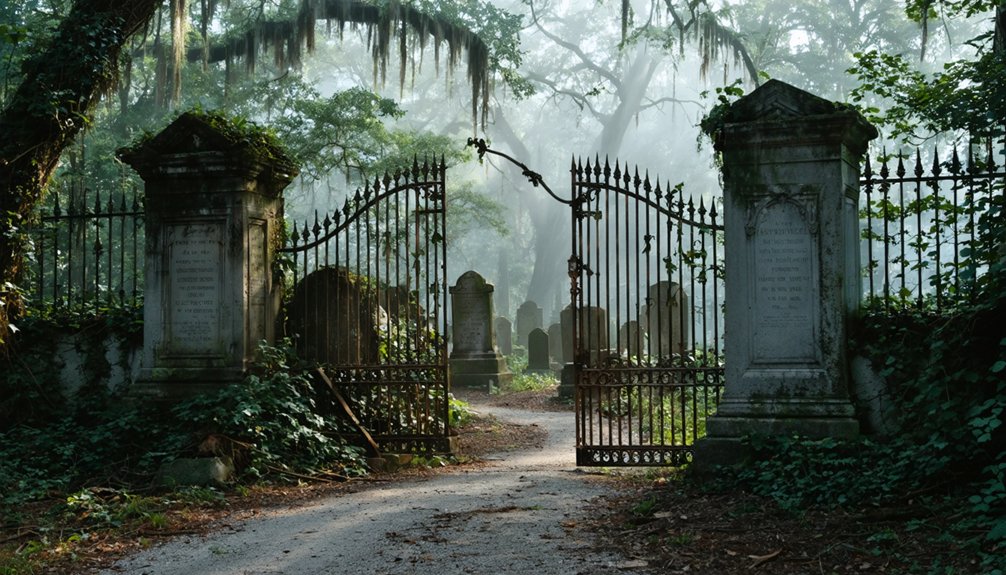
As you move beyond the sawmill ruins, you may stumble upon what local accounts describe as a cemetery somewhere within the overgrown terrain, though its exact location remains unconfirmed and unmarked.
Keep your eyes open for subtle clues like sunken ground, fieldstone markers, or weathered headstones that vegetation may be slowly consuming.
If you do find it, treat the area with quiet respect — don’t disturb markers, watch your footing, and remember that you’re standing on ground that likely holds the memory of real families who once called Morgan Stream home.
Cemetery’s Possible Location
Among the quieter mysteries at Morgan Stream is the possible presence of a forgotten cemetery—one that, if you can find it, may turn out to be the site’s most sobering and historically telling feature.
Cemetery markers, when they survive, carry grave symbolism that no written record quite replaces—they confirm real lives, real loss, and real community.
When you explore this area, keep these search strategies in mind:
- Scan for subtle ground depressions or stone arrangements beneath overgrowth
- Look for flat rocks or carved stones that early settlers used as cemetery markers
- Note any clearing patterns that suggest deliberate human arrangement rather than natural growth
No confirmed coordinates exist, so treat every corner of this woodland site as potentially significant.
Identifying Grave Markers
If there’s a cemetery hidden somewhere at Morgan Stream, identifying its grave markers will test your eye and your patience in equal measure.
Unlike preserved sites with upright stones and clear paths, this location likely offers only sunken ground, moss-covered rocks, or irregular depressions beneath dense overgrowth. You’ll need to move slowly and scan carefully.
Local legends suggest Indigenous and settler burials may share this ground, which means markers could range from carved stone to simple fieldstone with no inscription at all.
Don’t let the industrial relics nearby distract your focus — the cemetery deserves its own dedicated attention.
Bring a soft brush to clear debris, and never move or disturb anything you find.
Document with photographs, note GPS coordinates, and treat every possible marker with genuine respect.
Respectful Visitation Practices
Once you’ve documented what you’ve found, how you leave matters just as much as how you arrived. Morgan Stream’s cemetery exists in a fragile state, and your choices directly shape whether future visitors find anything worth discovering.
- Don’t remove historical artifacts, even fragments that seem insignificant — they anchor local legends to physical reality.
- Stay on existing paths to avoid disturbing unmarked graves that overgrowth may be concealing.
- Leave every stone, marker, and debris piece exactly where you found it.
You’re walking through someone’s resting place, not a roadside curiosity. Treat it accordingly. Quiet observation, careful movement, and zero extraction keep the site intact.
The freedom to explore forgotten places carries real responsibility — honor it, and others will inherit the same opportunity you had.
Cherokee Heritage and the History Behind Morgan Stream
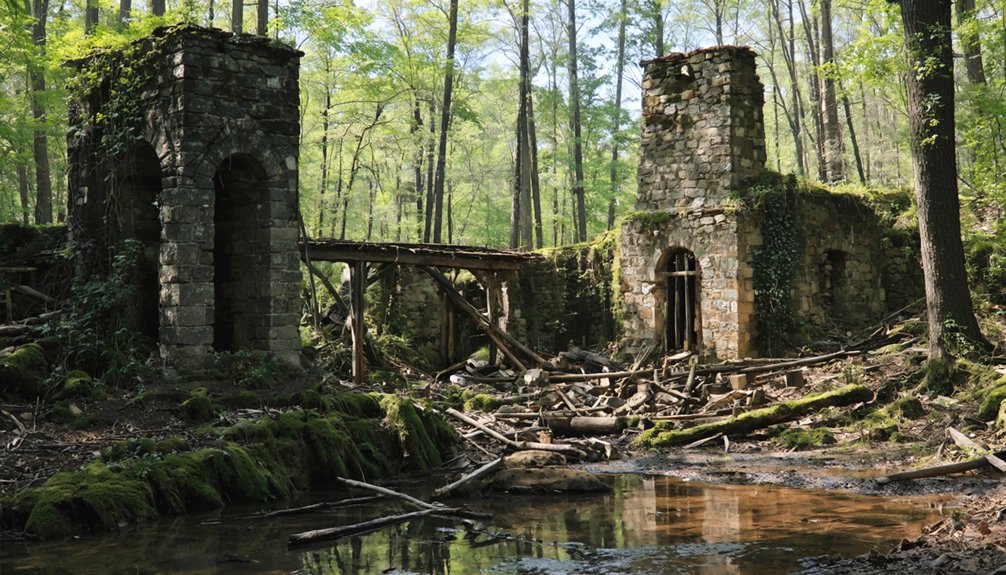
Local lore ties Morgan Stream to a Cherokee presence that once shaped this corner of Etowah County, giving the site a cultural depth that stretches well beyond its sawmill ruins. Several Cherokee tribes reportedly called this area home before the community developed around lumber activity, layering Indigenous history beneath later industrial use.
That overlap carries real archaeological significance, especially if the possible cemetery on-site predates the sawmill era. You’re stepping into a place where cultural preservation matters deeply, so treat every artifact, depression in the ground, or stone arrangement as potentially meaningful.
Don’t disturb anything you find. Instead, document what you observe through photography and notes. Research Cherokee displacement records and Etowah County archives before you visit so you can interpret what you’re seeing with informed, respectful eyes.
Getting to Morgan Stream on Rural Alabama Roads
Traveling to Morgan Stream means committing to rural Alabama roads that won’t always match what your GPS expects. Etowah County’s back roads wind through dense wildlife habitat, so stay alert and embrace the slower pace. Local legends tied to this area make the drive itself feel like part of the discovery.
The road to Morgan Stream is part of the adventure — wind through Etowah County’s back roads and let the journey begin.
Before you head out, keep these practical points in mind:
- Download offline maps since cell coverage can drop unexpectedly on remote county roads
- Drive a high-clearance vehicle if possible, as unpaved stretches may be rough or overgrown
- Note your fuel level before leaving town because gas stations thin out quickly in rural stretches
Treat the journey as intentional exploration, not just navigation, and you’ll arrive prepared for whatever Morgan Stream reveals.
What to Bring on a Morgan Stream Ghost Town Trip
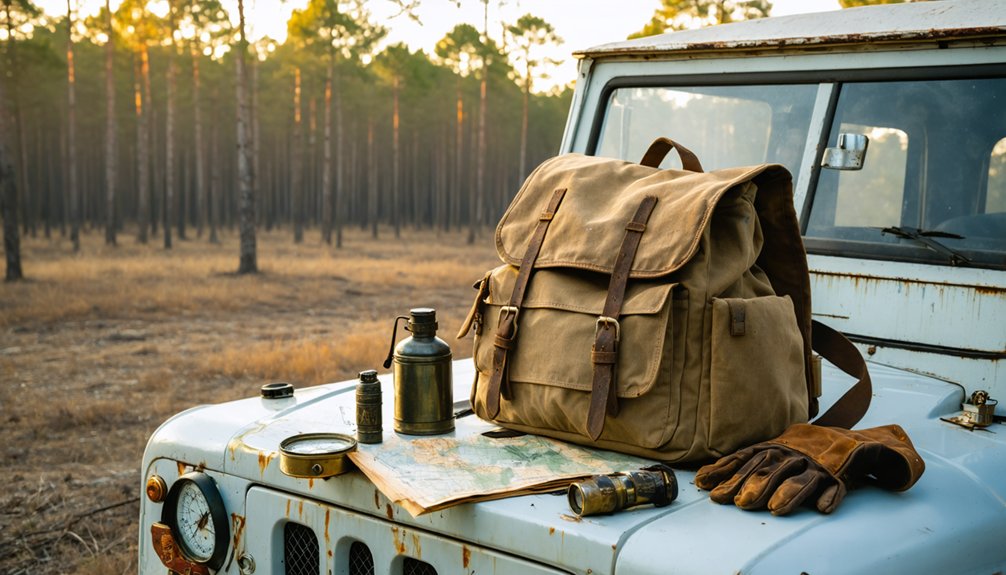
Arriving prepared matters as much as finding the right road. Pack sturdy boots since overgrowth and uneven terrain are likely companions. Bring water, a charged phone with offline maps, and a paper backup because rural Etowah County roads won’t always offer a signal.
A camera helps you document the sawmill remnants and any cemetery traces you discover. Carry a notebook to record observations alongside the historical myths and folklore legends you’ve researched beforehand — context sharpens what you see.
Bug spray and a walking stick aren’t optional comforts; they’re practical tools. Respect any remains you encounter by leaving everything undisturbed. You’re stepping into fragile, largely unmanaged history, so your preparation protects both the site and your experience.
Visiting Without Disturbing What Little Remains
When you step onto the Morgan Stream site, you’re walking through what little physical history survives, so keep to established paths and avoid stepping on or near any structural remnants.
If you spot the cemetery, treat it with full respect—don’t move stones, clear vegetation carelessly, or linger in ways that compact the soil around fragile markers.
Pack out everything you bring in, and leave the site exactly as you found it so future visitors can share the same quiet, unfiltered encounter with this forgotten place.
Tread Lightly On-Site
Because Morgan Stream has no rangers, no signage, and no managed trail system watching over it, you’re fundamentally the only safeguard against further loss of what little survives.
This off the beaten path site demands genuine restraint, especially since its fragile remains double as wildlife habitat.
Keep these principles front of mind:
- Stay on existing paths — trampling vegetation accelerates erosion around structural remnants
- Leave everything in place — artifacts, stones, and cemetery markers hold context that disappears the moment they’re moved
- Limit group size — smaller parties reduce compaction damage and noise disruption to surrounding wildlife
Your freedom to explore this forgotten corner of Alabama history comes with a quiet responsibility: leave Morgan Stream exactly as you found it, perhaps even slightly better.
Respect Fragile Remains
Restraint extends beyond where you walk — it shapes how you interact with every surface, object, and structure you encounter at Morgan Stream.
Don’t touch crumbling masonry or lean against deteriorating sawmill remnants. Fragile materials collapse faster than they look.
If you spot cemetery markers, observe them the way you’d approach wildlife observation — quietly, carefully, and without disturbing the environment around them. Photograph from a distance rather than crowding fragile features.
Treat scenic viewpoints of the ruins as your primary vantage, letting the landscape frame the history rather than pulling you into contact with it. Remove nothing, shift nothing, and resist the urge to clear overgrowth for a better shot.
What feels like harmless curiosity can accelerate irreversible damage to an already vulnerable site.
Leave No Trace Behind
Everything you carry in, you carry out — that’s the baseline expectation at a site like Morgan Stream, where what little survives does so without caretakers, maintenance crews, or restoration funding. Wildlife encounters are common in overgrown sites, so move quietly and avoid disturbing nesting areas or burrows near the ruins.
- Stay on natural pathways rather than pushing through vegetation covering fragile structural remnants.
- Apply photography tips like shooting wide angles from standing positions instead of repositioning artifacts for better framing.
- Pack out every piece of trash, including food scraps that attract wildlife and accelerate ecological disruption.
The freedom to explore forgotten places carries real responsibility. Morgan Stream’s survival — however fragmentary — depends entirely on whether visitors choose restraint over curiosity-driven interference.
Other Ghost Towns to Pair With Morgan Stream in Etowah County
While Morgan Stream makes a compelling starting point, Etowah County holds other forgotten communities worth folding into your route. Alabama’s ghost-town inventories list several nearby abandoned settlements, each carrying its own historical anecdotes and local legends that reward curious travelers willing to dig deeper. Cross-referencing county maps with archival records helps you identify clusters of former communities, letting you build a themed day trip rather than a single-stop excursion.
Visit your local historical society or Etowah County archives before heading out, since documentation varies widely between sites. Some communities left behind cemeteries or structural ruins; others survive only in old plat maps and oral tradition. Stringing these stops together creates a richer, more complete picture of the region’s layered and often overlooked past.
Frequently Asked Questions
Is There a Fee to Access the Morgan Stream Ghost Town Site?
No fee’s required to visit! You’ll freely explore historical artifacts and enjoy wildlife observation among the ruins. It’s an unmanaged, off-the-beaten-path site, so pack your curiosity and respect its fragile, untamed surroundings.
What Time of Year Offers the Best Visibility of Morgan Stream Remains?
Like nature pulling back a curtain, winter strips the overgrowth, giving you the clearest views of Morgan Stream’s remains. You’ll enjoy better seasonal weather, minimal crowds, and bonus wildlife viewing opportunities during those cooler, leaf-free months.
Are Guided Tours of Morgan Stream Available Through Any Local Organization?
You won’t find guided tours of Morgan Stream through any local organization. You’ll explore its historical artifacts and local legends independently, so research Etowah County historical societies beforehand to navigate this raw, untamed ghost town confidently.
Can Metal Detectors Legally Be Used at the Morgan Stream Site?
You’ll want to research metal detecting legal regulations carefully before visiting Morgan Stream. Alabama law and potential private land ownership could restrict your freedom to detect, so always secure permission and check local ordinances first.
Is Morgan Stream Accessible to Visitors With Limited Mobility?
Morgan Stream’s rural terrain and overgrowth likely challenge your limited mobility, but you’ll still embrace historical preservation efforts and enjoy wildlife viewing from accessible entry points before the woodland paths become too rugged to navigate comfortably.
References
- https://en.wikipedia.org/wiki/List_of_ghost_towns_in_Alabama
- https://www.treasurenet.com/threads/ghost-town-sites.97961/
- https://www.youtube.com/watch?v=EdIGphQum-Q
- https://en.wikipedia.org/wiki/Lacon
- https://freepages.history.rootsweb.com/~gtusa/usa/al.htm
- https://www.ghosttowns.com/states/al/al.html
- https://www.nytimes.com/2008/04/18/travel/escapes/18alabama.html
- https://www.al.com/living/2014/11/drowned_towns_what_traces_of_g.html
- https://thebamabuzz.com/5-alabama-ghost-towns-to-put-on-your-bucket-list/
- https://alabamabucketlist.com/ghost-towns-in-alabama/