Planning a ghost town road trip to Morton City, Kansas means stepping into a powerful, forgotten chapter of American history. Tucked in Hodgeman County, this vanished settlement was built by formerly enslaved Kentuckians during the 1870s exoduster migration. You’ll find no road signs or GPS markers here, just rolling prairie, stone foundations, and sod mounds whispering stories of resilience. Pack water, sturdy boots, and a county map before you go, because there’s far more to this haunting landscape than first meets the eye.
Key Takeaways
- Morton City, a Kansas ghost town, was founded by formerly enslaved Kentuckians during the late 1870s exoduster migration in Hodgeman County.
- Key founding figures John F. Thomas and Thomas P. Moore incorporated the Morton Town Company in 1877, establishing legal community structure.
- Visitors will find stone foundations and sod-house mounds, as nature has reclaimed most of what settlers built.
- Morton City doesn’t appear on standard GPS, so bring a detailed county map, water, and sturdy boots.
- Nearby Nicodemus, a National Historic Site, offers additional historical context about Black homesteaders and complements the Morton City visit.
What Is Morton City, Kansas?
Deep in the rolling prairie of Hodgeman County, Kansas, Morton City stands as one of the state’s most quietly compelling ghost towns — a former Black homesteading settlement founded by formerly enslaved Kentuckians who dared to claim land and freedom on the frontier during the exoduster migration of the late 1870s.
You won’t find Morton City on most maps today, but its historical significance runs deep. These settlers didn’t just survive — they built homes, organized a town company, and established a church that outlasted the town itself.
That’s community resilience in its most essential form. The prairie eventually reclaimed what they built, but their story endures. When you visit, you’re walking ground where freedom wasn’t given — it was planted, tended, and fiercely defended.
Where Is Morton City Located in Hodgeman County?
Morton City doesn’t have a street address waiting in your GPS — finding it means reading the land itself. The settlement once stood on the rolling prairie northeast of present-day Jetmore, anchored in Section 27, Township 22, Range 23 of Hodgeman County.
You’re roughly fifty miles south of Nicodemus, another landmark of Black Kansas cultural heritage worth visiting on the same trip.
Out here, the flat, treeless landscape tells its own story. You’ll scan for stone foundations and sod-house mounds where families once built something real from almost nothing.
The historical significance of this location runs deeper than any marker could capture — this ground held the dreams of formerly enslaved people who chose Kansas over fear.
Come ready to look closely.
What Was the Exoduster Migration That Founded Morton City?
To understand Morton City, you’ve got to understand the desperation and courage that drove its founders here in the late 1870s.
The Exodusters were Black Southerners, many of them formerly enslaved Kentuckians, who fled racial terror, broken promises, and post-Reconstruction violence to claim homestead land in Kansas.
They weren’t running away so much as running *toward* something — free land, self-governance, and a life no white mob could easily dismantle.
Exodusters Fleeing Southern Violence
When the Civil War ended and slavery collapsed, many Black Southerners hoped Reconstruction would deliver them land, safety, and a genuine stake in American life — but it didn’t last.
By the late 1870s, white supremacist violence had returned with full force — night riders, economic strangleholds, and rigged courts made freedom feel like a cruel joke.
Rather than endure it, thousands chose movement over submission. These were the Exodusters, and their migration stories weren’t quiet escapes — they were acts of defiance.
The exoduster challenges were staggering: leaving everything familiar, crossing unfamiliar terrain, and trusting that Kansas offered something the South had stolen.
You can feel that desperate courage when you stand on the empty prairie where Morton City once rose and breathed.
Black Settlers Seeking Homestead Land
Fleeing violence and landlessness, a group of Black Kentuckians made a calculated bet on Kansas — and in 1878, that bet landed them on the rolling Hodgeman County prairie where Morton City would take shape.
They weren’t drifting. They’d incorporated the Morton Town Company, selected a specific section of land, and organized around church leadership before they ever loaded a wagon.
Baptist minister John F. Thomas rallied the community while Thomas P. Moore led the migration itself. Despite migration challenges that would have broken less determined people, roughly 107 settlers pressed forward, staking claims on land that promised something the South never would — ownership.
Community resilience transformed that promise into dugouts, wood-frame homes, and a living church.
You’re not visiting a failure. You’re visiting proof they tried.
Who Were the Founders That Built Morton City?
Behind Morton City’s founding stood a determined cast of leaders who transformed a raw Kansas prairie into a functioning Black settlement. Baptist minister John F. Thomas rallied his Kentucky congregation with fierce conviction, while Thomas P. Moore guided families westward through brutal founder motivations rooted in survival and self-determination.
The Morton Town Company, incorporated in 1877, gave their dream legal structure.
Their settlement challenges were real and relentless:
- Carving homes from unforgiving prairie meant dugouts and wood-frame shelters built by exhausted but hopeful hands.
- Organizing a church before almost anything else, because faith anchored their freedom.
- Claiming legal land rights in Section 27, Township 22, Range 23, transforming paper into permanence.
These founders didn’t just settle land. They claimed their humanity.
What Was Daily Life Like for Morton City’s Settlers?
Life inside Morton City wasn’t gentle. Settlers woke before dawn, breaking sod on a treeless, windswept prairie that tested every ounce of their resolve.
You’d have found families crowded into dugouts and wood-frame homes, stretching limited supplies through brutal winters and punishing dry spells.
Yet settler traditions held this community together. Church wasn’t simply worship — it was infrastructure, identity, and survival strategy rolled into one gathering place.
Church wasn’t simply worship — it was infrastructure, identity, and survival strategy rolled into one gathering place.
Community gatherings provided something just as essential as food: proof that freedom meant building something permanent. Neighbors shared labor, tools, and hard-earned knowledge about farming unforgiving Kansas land.
These formerly enslaved Kentuckians had fled violence and landlessness, and every fence post they drove and every crop they planted declared something powerful — that they belonged here, and they’d earned it.
What Caused Morton City to Disappear?
As you stand on the Kansas prairie imagining Morton City’s hopeful beginnings, you can’t ignore the brutal forces that erased it—unforgiving winters, punishing droughts, and soil that tested even the most determined homesteaders.
Faced with impossible farming conditions, many residents packed up and headed to Kinsley, Larned, or Dodge City, trading broken fields for carpenter’s tools and day-labor wages.
Without enough settlers to sustain it, Morton City quietly surrendered to the prairie, leaving behind little more than faint mounds and scattered stone where a community once dared to exist.
Harsh Prairie Farming Conditions
The flat, treeless prairie of Hodgeman County didn’t forgive mistakes, and Morton City’s founders had precious little margin for error. Without adequate knowledge of crop rotation or drought resistance farming techniques, these brave families faced nature’s unrelenting fury head-on.
Imagine enduring:
- Brutal winters that froze crops, livestock, and hope simultaneously
- Punishing dry spells that cracked the earth and emptied root cellars before spring arrived
- Isolation on a treeless landscape offering zero shelter from howling prairie winds
These weren’t abstract hardships — they were daily battles fought by people who’d already survived enslavement and Reconstruction violence.
They deserved better land, better resources, and genuine support. The prairie ultimately won, swallowing Morton City whole and leaving only whispers behind.
Residents Seeking Economic Opportunity
When the harvests kept failing and the winters kept biting, Morton City’s residents made a hard but practical choice: they left. Economic challenges forced families to follow migration patterns toward towns with steadier work. Kinsley, Larned, and Dodge City became destinations where former settlers could rebuild their lives as carpenters, mechanics, and day laborers.
These weren’t people who surrendered easily. They’d already crossed state lines chasing freedom once before. Leaving Morton City was simply the next move in a longer journey toward self-sufficiency.
The prairie had tested them beyond reason, and they responded with the same practical courage that brought them to Kansas in the first place. Their departure didn’t erase their legacy — it scattered it across the region instead.
Prairie Reclaimed The Settlement
Once the people scattered, nature moved in to finish the job. The Kansas wind erased Morton City the way it erases everything — quietly, relentlessly, without apology.
What claimed this community of freedom-seekers:
- Brutal winters stripped away hope faster than they stripped away topsoil.
- Relentless drought turned fertile dreams into cracked, unworkable earth.
- Economic isolation pushed survivors toward Kinsley, Larned, and Dodge City, leaving buildings to collapse into silence.
Today, prairie restoration has reclaimed nearly every trace of Morton City’s settlement legacy.
You’ll find no welcome sign, no marker crowning the horizon.
What you’ll find instead is wind, grass, and the weight of what was built here — and what refused to survive.
What Can You Still See at Morton City Today?
Standing on the rolling prairie northeast of Jetmore, you’ll find almost nothing left of Morton City — and that absence itself tells the story.
Stone foundations peek through the grass. Sod-house mounds interrupt the flat earth. These quiet remnants carry enormous historical significance, marking ground where formerly enslaved people staked their claim to freedom.
You’ll want to visit the Jetmore cemetery, where graves of early Black pioneers offer the clearest evidence of community resilience.
Bring a detailed county map — Morton City won’t appear on standard GPS. Walk the section lines around Township 22, Range 23, and let the wind do the talking.
What’s missing here isn’t emptiness. It’s the echo of people who chose a hard, free life over an easier, controlled one.
Which Ghost Towns Can You Visit Near Morton City?
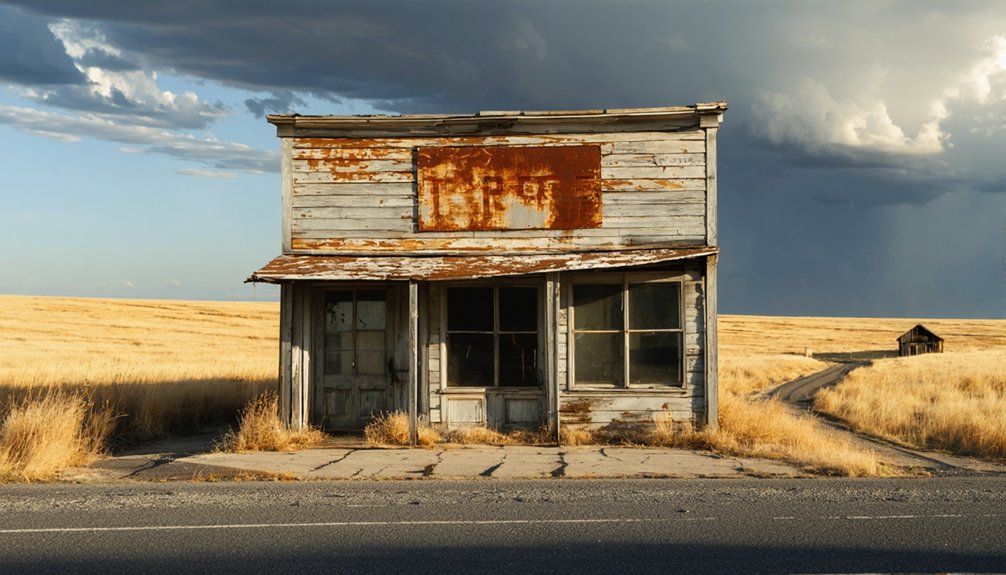
How far can one ghost town road trip take you? In this corner of Kansas, ghost town attractions stretch across the prairie like forgotten chapters of American history.
Each stop carries its own historical significance — and its own haunting pull.
Pair Morton City with these nearby destinations:
- Nicodemus — About fifty miles north, this National Historic Site honors Black homesteaders who refused to surrender their dreams to a hostile frontier.
- Jetmore Cemetery — Walk among the graves of early Black pioneers whose names the history books rarely mention.
- Hodgeman County ghost towns — Scattered settlements where drought, hardship, and isolation silenced entire communities almost overnight.
You’re not just driving through Kansas. You’re tracing the footsteps of people who dared to claim freedom on open ground.
What Should You Expect When You Arrive at Morton City?
What greets you at Morton City isn’t a town — it’s a silence so complete it speaks. The rolling Hodgeman County prairie stretches endlessly, unmarked by signage or fanfare.
You’ll search for ghost town history written in stone foundations, sod-house mounds, and sunken earth where dugouts once sheltered families chasing freedom.
This land holds the weight of black migration — 107 formerly enslaved Kentuckians who staked everything on Kansas soil. No museum curates this story. No gift shop sells it. You’re standing inside the archive itself.
Come prepared. Bring water, sturdy boots, and a county map. The terrain rewards patience and punishes carelessness.
What you find here won’t dazzle you — it’ll move you, quietly and permanently, the way only forgotten courage can.
Frequently Asked Questions
Is Morton City Recognized as an Official Kansas Historical Landmark?
Like a forgotten song, Morton City’s official landmark status isn’t confirmed, yet its historical significance runs deep. You’ll find ghost town legends alive in its exoduster roots, calling freedom-seekers to explore its untamed, storied Kansas prairie.
Can You Metal Detect or Dig for Artifacts at Morton City?
Before you dig, know the rules — most of Morton City sits on private land. Practice metal detecting etiquette, respect artifact preservation laws, and always get landowner permission before uncovering these exodusters’ buried stories.
Are There Guided Tours Available Specifically for Morton City Visitors?
No guided tour options or local tour companies currently serve Morton City specifically. You’ll forge your own path across this wild, forgotten prairie, uncovering the courageous exoduster story through personal exploration and independent historical research.
What Is the Best Time of Year to Visit Morton City?
Spring’s your best season to explore Morton City’s windswept prairie, when skies open wide and you’ll breathe in the freedom the exodusters once chased. Check local events in nearby Jetmore to enrich your historically-charged adventure.
Is Morton City Located on Private Land Requiring Permission to Visit?
Morton City likely sits on private land, so you’ll want to secure permission before ghost town exploration begins. Respect the soil where Black Kansas history unfolded, and you’ll honor the freedom-seekers who once called it home.
References
- http://kansasghosttowns.blogspot.com/2015/12/morton-city-dead-exoduster-colony-in.html
- https://www.hppr.org/2026-03-24/high-plains-history-hodgeman-county-ghost-towns
- https://legendsofkansas.com/hodgeman-county-extinct-towns/
- https://www.nps.gov/places/hodgeman-county-colony-kansas.htm
- http://kansasghosttowns.blogspot.com
- https://lostkansas.ccrsdigitalprojects.com/sites/lostkansas/files/private_static/2022-12/LT_HG_MortonCity_Brown.pdf
- https://www.facebook.com/chapmancenter/posts/hodgeman-county-is-home-to-a-now-dead-town-called-morton-city-morton-city-was-an/10155522869175966/
- https://mtcoks.com/244/History
- https://lostkansas.ccrsdigitalprojects.com/morton-city-hodgeman-county
- https://en.wikipedia.org/wiki/Morton_County