Planning a ghost town road trip to New Danville, Texas starts with heading southwest from Longview on US-259 toward Kilgore, then connecting to Farm Road 349 in Gregg County. You won’t find it on most modern maps, so download offline navigation before you go. Expect quiet rural roads, historical markers, and nearby cemetery grounds rather than developed attractions. Bring water, wear comfortable shoes, and arrive early for the best experience — there’s plenty more to uncover about this forgotten East Texas community.
Key Takeaways
- New Danville, located six miles southwest of Longview in Gregg County, is accessible via US-259 toward Kilgore, then Farm Road 349.
- The ghost town lacks tourist infrastructure, so expect only historical markers, overgrown clearings, old fence lines, and a nearby cemetery.
- Pack water, sunscreen, and comfortable shoes; visit early morning, and avoid the area after heavy rain due to slick roads.
- Download offline maps before arriving, as New Danville doesn’t appear on most modern maps and cell service is limited in the area.
- Stock up on fuel, food, and supplies in Longview beforehand, as rural roads offer virtually no amenities once you leave the highway.
What Is New Danville, Texas?
New Danville, Texas, is a ghost-town community tucked into the rural landscape of Gregg County in East Texas, roughly six miles southwest of Longview near Farm Road 349.
You’ll also find it referenced as Danville or Rabbit Creek in older historical accounts, which hints at its layered past and local folklore. Established around 1847, the settlement once supported stores, saloons, a blacksmith shop, and a mule-powered gin — a genuine rural trading hub in its prime.
By 1847, New Danville was already a trading hub — stores, saloons, and a mule-powered gin humming with rural life.
Its historic significance stems from that active early life and its quiet disappearance after the railroad bypassed it in the 1870s.
Today, it’s largely absorbed into the Kilgore area, leaving behind little more than rural roads, scattered markers, and the kind of forgotten history that makes East Texas worth exploring.
Why New Danville Faded: and What That Means for Visitors
When the International-Great Northern Railroad bypassed New Danville in the early 1870s, it effectively signed the town’s death warrant, pulling businesses and residents toward Kilgore and leaving the community economically stranded.
The post-Civil War disruptions had already weakened the settlement’s momentum, and without rail access, there was no path back to prosperity.
Today, you’ll find a quiet rural landscape rather than a developed attraction, so pack your expectations accordingly and treat the visit as a short but rewarding roadside-history stop.
Railroad Bypass Killed Growth
Like many small Texas settlements of the 1800s, New Danville didn’t fade because its people gave up — it faded because the railroad didn’t show up. In the early 1870s, the International-Great Northern Railroad bypassed the community entirely, and that railroad impact sealed its fate.
Trade, businesses, and families followed the tracks — straight toward Kilgore.
What community resilience existed couldn’t outrun economic reality. Here’s what that bypass meant:
- Stores and saloons closed as customers relocated closer to rail access.
- Commerce shifted permanently to railroad-connected towns nearby.
- Population declined sharply, leaving farms and buildings behind.
When you visit today, you’re standing where ambition once thrived — and where a single infrastructure decision quietly erased a town’s future.
Post-Civil War Economic Decline
The railroad bypass didn’t strike alone — it hit a town already bruised by the Civil War’s aftermath. Economic shifts dismantled what war had weakened. Farms struggled, trade dried up, and families who’d built their lives around New Danville’s stores, saloons, and blacksmith shop faced hard choices about staying or leaving.
Community resilience kept a few souls rooted, but the numbers shrank steadily. Without rail access pulling commerce back, the town’s energy simply migrated toward Kilgore and Longview.
For you as a visitor, that history adds weight to the landscape. You’re not just driving past an empty field — you’re crossing ground where real economic collapse unfolded slowly, one abandoned storefront and one relocated family at a time.
What Visitors Find Today
Drive out to New Danville today, and you’ll find a landscape that’s honest about what it lost.
No polished tourist stops, no reconstructed storefronts — just open East Texas countryside threaded with rural roads that once carried real commerce.
For those drawn to ghost town legends and genuine rural exploration, that rawness is exactly the point.
Here’s what you can realistically expect:
- Historical markers pointing toward the community’s mid-1800s origins
- Rural road access via Farm Road 349, connecting you to the old settlement area
- A quiet, unhurried stop where the land itself tells the story
You’re not visiting a museum.
You’re standing where something real once thrived — and that’s worth the drive.
What You’ll Actually See When You Arrive
When you pull off Farm Road 349 and reach the old New Danville area, you won’t find a preserved town square or marked storefronts—just open East Texas countryside where a busy 19th-century settlement once stood.
The rural landscape itself becomes your guide, with scattered road markers, fence lines, and the occasional historical reference pointing you toward what’s left.
You’ll likely spend more time reading the land than reading any signage, so bring a county map and keep your expectations grounded in quiet, roadside discovery.
Limited Physical Remnants
Although New Danville once supported a cluster of stores, saloons, and a mule-powered gin, you won’t find much standing when you pull off Farm Road 349 today. This ghost town traded its bustle for quiet countryside, but its historical significance still draws curious road trippers willing to look closely.
Here’s what you can realistically expect:
- Roadside markers – County historical signage occasionally identifies former settlement boundaries.
- Rural landscape clues – Old fence lines, overgrown clearings, and worn paths hint at where buildings once stood.
- Cemetery remnants – Nearby burial grounds often preserve the clearest physical connection to the original community.
You’re fundamentally reading the land itself, piecing together a story the structures can no longer tell.
Rural Landscape Markers
Stepping out of your car on Farm Road 349, you’ll notice the landscape itself becomes your guide. The rural charm here speaks quietly — weathered fence lines, scattered timber, and open fields mark where a once-active settlement stood.
You won’t find polished signage or paved walkways, but that raw honesty is exactly the point.
Look for county historical markers along the roadside; they anchor the historical significance of what you’re standing on. Danville Road itself traces the old community’s footprint, and the surrounding rural geography hasn’t dramatically changed from what early settlers would’ve recognized.
Read the land carefully. Overgrown lots, aged trees, and cemetery boundaries tell the story that no museum exhibit could replicate.
This is unfiltered Texas history, and it rewards curious, observant travelers.
How to Find New Danville on Modern Maps
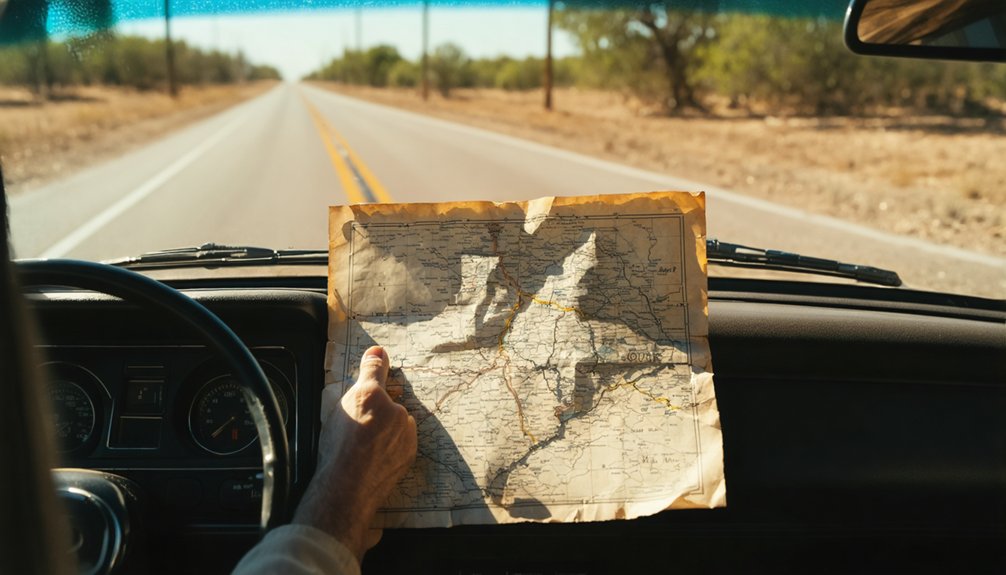
Finding New Danville on a modern map takes a bit of detective work, since the community no longer appears as a labeled town on most digital platforms.
You’ll need solid mapping techniques and digital navigation tools to pinpoint the historical site accurately.
Start with these three targeted steps:
Start with three targeted steps to pinpoint New Danville using Farm Road 349, satellite view, and county verification.
- Search for Farm Road 349 in Gregg County and locate the area approximately six miles southwest of Longview.
- Cross-reference Danville Road on satellite view within your preferred mapping app to identify rural intersection points matching historical descriptions.
- Confirm you’re targeting Gregg County, not Montgomery County, since a separate Danville exists there and creates frequent confusion.
Once you triangulate these reference points, you’ll have a reliable starting coordinate before hitting the road.
Best Time of Year to Visit New Danville
When you visit New Danville matters more than you might expect for a site with so little physical infrastructure remaining.
East Texas’s local climate runs hot and humid through summer, making outdoor exploration genuinely uncomfortable by July and August. For the best visiting season, aim for late October through early March, when temperatures stay mild and vegetation thins out enough to reveal old foundations, fence lines, and historic markers.
Spring wildflowers make April visits scenic, though rising humidity arrives quickly. You’ll want comfortable walking shoes, water, and sunscreen regardless of season.
Avoid visiting after heavy rain, since rural Gregg County roads can turn slick. Early mornings offer cooler air and better light for photography, letting you move freely through the surrounding landscape without fighting midday heat.
The Best Route to New Danville From Longview and Kilgore
If you’re starting your ghost-town road trip from Longview, head southwest on US-259 toward Kilgore, where you’ll connect with local routes pointing you deeper into Gregg County’s rural backroads.
Once you’ve rolled through Kilgore, pick up Farm Road 349, which carries you directly into the old settlement area that the Texas Almanac places about six miles southwest of Longview.
Keep your eyes on the roadside markers and your county map handy, since the landscape shifts quickly from highway commerce to the quiet rural corridors where New Danville once stood.
Starting From Longview
Longview makes the most logical jumping-off point for reaching New Danville, putting you roughly six miles from the old settlement via Farm Road 349.
Stock up on fuel and supplies before heading southwest, because rural exploration means leaving convenience behind. Ghost town legends don’t wait at well-marked exits.
Follow these steps before leaving Longview:
- Download offline maps — cell service thins out along Farm Road 349, and you don’t want to guess at unmarked turnoffs.
- Check county historical marker locations — Gregg County records can pinpoint reference points near the old community footprint.
- Note daylight hours — arriving with limited light cuts your exploration time considerably.
Once you’re rolling southwest on Farm Road 349, the landscape shifts quickly into quiet East Texas countryside.
Connecting Through Kilgore
Kilgore sits just a few miles southeast of New Danville, making it a natural second anchor for your route if you’re coming from the east or want to build a loop rather than a straight out-and-back run.
Kilgore history runs deep, and the town grew largely because the railroad that bypassed New Danville passed right through it instead. That contrast tells the whole story of how ghost towns are made.
From Kilgore, follow Farm Road 349 northwest and you’ll reach the old New Danville area without a complicated drive.
Connecting these two stops turns a single ghost town visit into a fuller East Texas experience, letting you trace how one community thrived while another faded into the long list of forgotten ghost towns scattered across the region.
Finding Farm Road 349
Farm Road 349 is the one road you need to commit to memory before heading out to New Danville, connecting both Longview and Kilgore to the old settlement site without sending you through a tangle of county routes.
This Farm Road cuts through classic East Texas countryside, rewarding you with scenic views of pine stands and open pastures along the way.
Before you roll out, keep these three points in mind:
- From Longview, head southwest on Farm Road 349 approximately six miles.
- From Kilgore, travel northeast on Farm Road 349 to intersect the same corridor.
- Watch for historical markers near the roadside that confirm you’re approaching the old community boundary.
You’ll find the drive straightforward, unhurried, and genuinely worth the detour.
East Texas Ghost Towns Worth Pairing With a New Danville Visit
Since New Danville offers little more than a quick roadside stop, you’ll want to plan a few companion destinations to make the drive worthwhile.
East Texas rewards rural exploration with ghost town legends scattered across back roads and forgotten counties.
Kilgore sits closest and delivers real history through its oil boom architecture and Gregg County landmarks.
Longview gives you a practical base with fuel, food, and lodging before heading deeper into the piney woods.
From there, historic cemeteries, roadside markers, and abandoned community sites line the rural routes connecting these small settlements.
Each stop adds texture to your understanding of how East Texas developed, declined, and quietly endured.
String these destinations together on a single day loop and you’ll leave with a fuller picture than any one site provides alone.
Where to Eat, Stay, and Refuel Near Longview
Longview handles all 3 practical needs—food, lodging, and fuel—without making you hunt across multiple towns. You’ll find everything within easy reach before heading southwest on Farm Road 349.
Longview covers every practical need—food, lodging, and fuel—all before you head southwest on Farm Road 349.
- Local dining – Longview’s independent restaurants and diners serve East Texas comfort food, so skip the chains and eat like a local before you hit the backroads.
- Accommodation options – Chain hotels cluster near US-259 and Loop 281, giving you flexible check-in times and reliable amenities after a long day exploring rural sites.
- Fuel stops – Multiple gas stations sit along the major corridors, so top off your tank before leaving town since rural Gregg County offers limited options.
Plan your stop in Longview first, and the rest of your route stays stress-free.
What to Know Before Driving Rural Gregg County Roads
Rural Gregg County roads can catch you off guard if you’re used to city driving, so it’s worth knowing what you’re getting into before you leave Longview.
Farm Road 349 and Danville Road are paved but narrow, with sharp curves and minimal signage. Your rural navigation tips start here: download offline maps before you go, because cell service drops unexpectedly in stretches between Kilgore and the old settlement area.
Watch your speed on blind curves, especially at dusk. Local wildlife encounters are common along these corridors — deer, armadillos, and the occasional wild hog cross without warning.
Keep your tank full leaving Longview, since fuel stops thin out fast. Respect private-property boundaries if you step off the pavement, and carry water. You’re on your own out here.
Historical Records and Markers That Document New Danville’s Past
Tracking down New Danville’s history means working with scattered but rewarding sources.
You’ll find the community’s historical significance preserved through county records, Texas Almanac references, and roadside markers that quietly hold the community legacy together.
Three key resources help you piece the story together:
- Gregg County historical markers — Look for roadside markers near Farm Road 349 that reference the original settlement and its Civil War-era activity.
- Texas Almanac entries — Cross-reference the almanac to confirm you’re researching New Danville in Gregg County, not the separate Danville in Montgomery County.
- Ghost-town research databases — Online registers document New Danville as absorbed by Kilgore, giving you context for what once stood here.
Bring a notebook, because you’ll want to record what you discover.
Frequently Asked Questions
Is New Danville the Same as Danville in Montgomery County, Texas?
No, they’re not the same! New Danville sits in Gregg County, while Danville’s in Montgomery County. Their separate Danville history and distinct settlement patterns make each unique—so you’ll want to confirm your destination before hitting the road!
Who Originally Named New Danville and What Inspired That Name?
S. Slade Barnett and his relatives hold the naming origins of New Danville, drawing historical significance from their Kentucky hometown of Danville. You’ll find their pioneering spirit woven into every corner of this fascinating East Texas ghost town!
Can Visitors Access the New Danville Cemetery Without Crossing Private Property?
You’ll want to confirm cemetery access before your visit, as private land may surround the site. Always check property boundaries ahead of time so you’re free to explore New Danville’s history without trespassing.
Are There Any Organized Ghost Town Tours Covering New Danville Specifically?
You won’t find organized ghost town tours covering New Danville specifically, but you can craft your own adventure, exploring its historical significance through self-guided drives along Farm Road 349 and connecting it with broader East Texas ghost town tours.
What Businesses Operated in New Danville During Its Peak Settlement Years?
Like a frontier boomtown, you’d have found three or four stores, saloons, a blacksmith shop, and a mule-powered gin among New Danville’s historic establishments — until railroad bypasses triggered economic decline, scattering these businesses toward Kilgore forever.
References
- https://www.texasescapes.com/EastTexasTowns/Danville-Texas.htm
- https://communityimpact.com/conroe-montgomery/history/2019/02/19/the-city-of-danville-how-a-once-lively-community-lost-its-chance-to-prosper-and-became-a-ghost-town/
- https://www.yourconroenews.com/neighborhood/moco/news/article/ghost-town-history-fostoria-waukegan-danville-19835994.php
- https://en.wikipedia.org/wiki/List_of_ghost_towns_in_Texas
- https://www.youtube.com/watch?v=8MDNGS8hcJ8
- https://www.texasalmanac.com/places/danville-1
- https://mix931fm.com/east-texas-ghost-towns/
- https://www.kiiitv.com/video/news/special-reports/3news-originals/south-texas-ghost-towns/503-36be9941-5b7f-4286-a949-e75455c4de3b
- http://www.ghosttowns.com/states/tx/danville.html
- https://www.newdanville.org