Planning a Vermont ghost town road trip puts you on trails where forests swallow stone foundations and cellar holes mark communities that time forgot. You’ll anchor your route along US-7 and Route 100, stopping at haunting sites like Glastenbury, Somerset, Tyson Furnace, Ricker Basin, and West Castleton. Each location carries its own forgotten story carved into the landscape. Keep going, and you’ll uncover everything you need to explore these hidden histories like a pro.
Key Takeaways
- Munhall, Vermont is not documented as a known ghost town; consider nearby sites like Glastenbury or Somerset for a similar experience.
- Anchor your road trip along US-7 and Route 100 to efficiently reach Vermont’s most notable ghost town destinations.
- Begin in Bennington, exploring Glastenbury’s cellar holes and folklore, then travel north toward Somerset and Tyson Furnace.
- Continue to Ricker Basin near Waterbury and finish at West Castleton’s Slate History Trail for a complete journey.
- Visit between late spring and early fall, carry offline maps, and check Vermont State Parks for current trail conditions.
Why Vermont Ghost Towns Are Among New England’s Best Kept Secrets
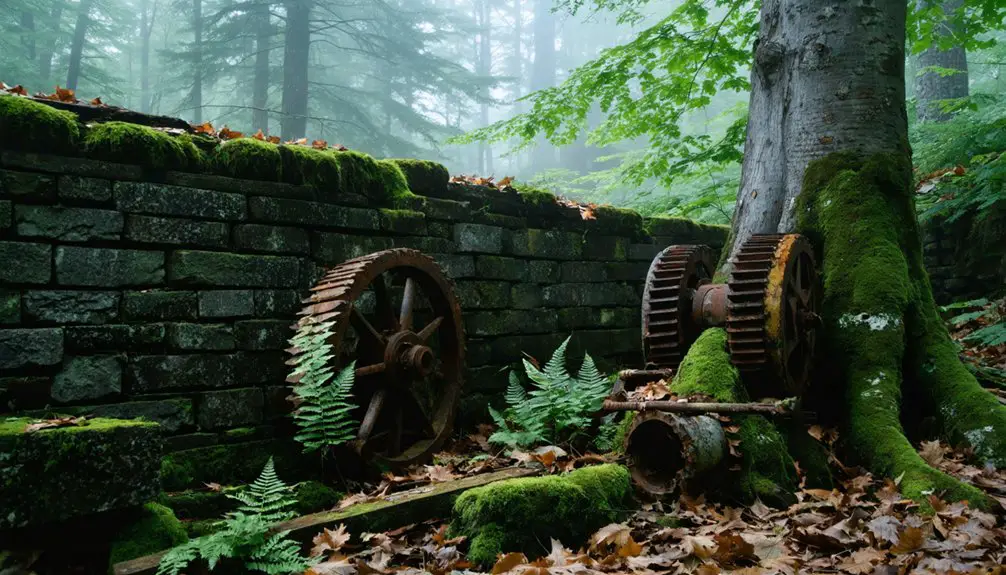
Vermont’s ghost towns fly under the radar for a simple reason: the state’s dense forests and rugged terrain have quietly swallowed entire communities whole, leaving only stone foundations, cellar holes, and crumbling walls hidden beneath decades of undergrowth.
Unlike more commercialized historic sites, these places reward curious travelers willing to seek them out independently. You’ll discover hidden histories tied to logging, iron smelting, slate quarrying, and reservoir flooding — industries that once drove entire communities before vanishing almost overnight.
That ghost town allure is real: standing inside a cellar hole surrounded by birch trees, you’re experiencing something raw and unfiltered.
Vermont doesn’t package these places for mass tourism, and that’s exactly what makes them worth exploring on your own terms.
Vermont Ghost Towns Along the Bennington and Green Mountain Corridor
Running southwest through the Green Mountain National Forest, the Bennington corridor is where Vermont’s ghost-town history hits its most atmospheric stretch.
Glastenbury folklore pulls you in first — cellar holes swallowed by forest, Bennington Triangle legends still unresolved. Push north and Somerset history unfolds near the reservoir, where an entire community quietly vanished beneath progress.
Ricker Basin ruins reward hikers who follow interpretive trails through Little River State Park, reading stone foundations like open books. Tyson Furnace exploration reveals a hulking iron stack along Route 100, raw and unapologetic.
West Castleton trails thread past slate-quarry workers’ homes inside Bomoseen State Park. Each of these abandoned settlements carries its own ghost town legends, and your hiking adventures connect them into one unforgettable corridor of forgotten Vermont lives.
Best Vermont Ghost Town Sites to Add to Your Route
Once you’ve walked the Bennington corridor, it’s worth widening your map to catch a few more sites that punch well above their weight. Glastenbury history draws most visitors first, but don’t stop there.
Follow Route 100 south to Tyson Furnace, where a 19th-century iron furnace stack still rises from the tree line like a forgotten monument. Push further to Somerset trails winding near the reservoir’s quiet edges, where a submerged town’s story lingers beneath the surface.
Tyson Furnace rises forgotten from the trees while an entire town sleeps silently beneath Somerset’s still water.
Head north toward Waterbury and hike Ricker Basin’s interpretive trail through cellar holes and stone walls reclaimed by forest.
Finally, swing west to West Castleton inside Bomoseen State Park, where the Slate History Trail connects workers’ foundations to a vanished quarry world. Each site rewards curiosity and rewards movement.
How to Build Your Vermont Ghost Town Road Trip
Building a Vermont ghost town road trip works best when you anchor your route around two main corridors: US-7 and Route 100. These roads connect clusters of abandoned settlements with genuine historical significance, letting you move efficiently between sites without backtracking.
Start near Bennington with Glastenbury, then push north along Route 100 toward Somerset, Tyson Furnace, and eventually Ricker Basin near Waterbury.
Swing west on US-7 to finish at West Castleton near Lake Bomoseen. Most driving segments run one to two hours, making multi-day pacing realistic and relaxed.
Plan your stops around state park access points, download offline maps before entering dead zones, and check seasonal trail conditions.
Freedom means moving on your own terms — just make sure you’re prepared before you go.
When to Go and How to Get In Without Getting Turned Away
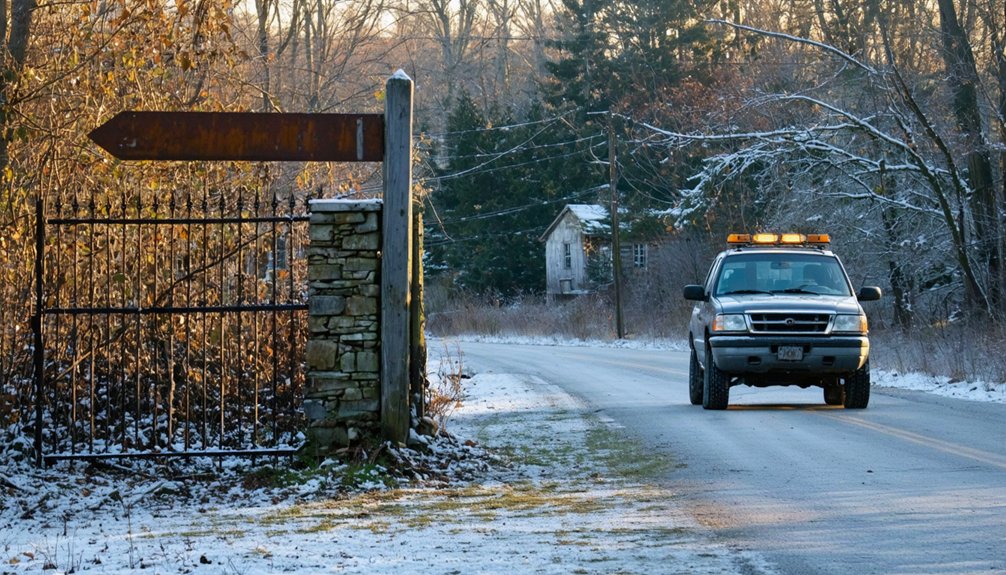
Timing your visit correctly separates a productive ghost town road trip from a wasted drive to a locked gate. The best seasons for exploring Vermont’s ghost town sites run from late spring through early fall, when forest roads are passable and trails are clear.
Winter closures shut down many backcountry access points entirely, and mud season in early spring can make routes impassable.
For access tips, check current conditions through Vermont State Parks, the Green Mountain National Forest website, and local trail association pages before you leave home. Some trailheads require day-use fees or parking permits.
Cell service disappears fast in remote areas, so download offline maps and carry a paper backup. Arrive early on weekends to secure parking, especially at popular state park entry points.
Gear, Maps, and Safety Essentials for Remote Vermont Sites
Before you head out to explore Munhall’s remote terrain and surrounding Vermont ghost-town sites, pack a daypack with water, snacks, a first-aid kit, layers for shifting weather, and a fully charged battery bank for your devices.
You’ll want both a downloaded GPS app and a printed USGS topo map, since cell service drops out fast once you’re deep in the forest or following an old logging road.
Trust the paper map when your phone fails you, and always tell someone your planned route and expected return time before you leave the trailhead.
Essential Gear Checklist
Packing the right gear can mean the difference between a rewarding adventure and a dangerous situation at Vermont’s remote ghost-town sites. You’re heading into areas with limited cell service, unmarked terrain, and unpredictable weather, so come prepared.
- Navigation: Carry paper topographic maps and a GPS device; don’t rely solely on your phone.
- Safety essentials: Pack a first-aid kit, emergency whistle, and bright clothing for hunting-season visibility.
- Supplies: Bring enough water, high-energy snacks, and layers for shifting temperatures.
- Respect tools: A printed trail etiquette guide helps you honor historic preservation rules, keeping foundations and artifacts undisturbed.
Stay on designated trails, check current access rules through state park and national forest resources, and tell someone your itinerary before heading out.
Navigating Remote Trails
Once you’ve left the trailhead at a site like Glastenbury or Somerset, the forest closes in quickly and cell service disappears just as fast, so reliable navigation tools aren’t optional—they’re survival gear.
Download offline maps through navigation apps like Gaia GPS or AllTrails before you leave the parking area. Don’t rely solely on trail markers—they fade, fall, or get buried under seasonal debris.
Carry a paper topo map and a compass as your failsafe. Tell someone your planned route and expected return time. Wear bright colors during hunting seasons, and keep emergency gear—a whistle, first aid kit, and extra water—in your pack.
These remote sites reward bold explorers, but only those who move through the backcountry with honest preparation and clear heads.
Frequently Asked Questions
Is Munhall, Vermont an Officially Recognized Ghost Town by the State?
Munhall, Vermont isn’t an officially recognized ghost town — it doesn’t exist! You’ll find no state registry listing it. Explore Vermont’s real ghost towns instead, where history significance and local legends await your adventurous, freedom-seeking spirit.
Are Children Allowed on Backcountry Trails Leading to Vermont Ghost Towns?
Yes, you can bring children on Vermont’s backcountry ghost town trails! Prioritize family safety by packing emergency gear and following trail etiquette—stay on marked paths, respect ruins, and embrace the freedom of exploring history together.
Can I Camp Overnight Near Vermont Ghost Town Sites During My Road Trip?
You can camp overnight near Vermont ghost town sites! Check camping regulations carefully, as ghost town accessibility varies by location. State parks and national forests offer designated campgrounds, letting you freely explore these hauntingly beautiful, historic ruins at your own pace.
Are Pets Permitted on Interpretive Ghost Town Trails in Vermont State Parks?
Like a welcome companion on an adventure, your pet’s allowed on many Vermont State Park interpretive trails! Always check pet policies per park, keep them leashed, and practice trail etiquette to respect wildlife and fellow explorers.
Do Vermont Ghost Town Sites Charge Admission or Require Advance Reservations?
Most Vermont ghost town admissions are free! You don’t need advance reservations—just show up, hit the trails, and explore at your own pace. Some state parks charge small day-use parking fees, so carry a few dollars.
References
- https://www.youtube.com/watch?v=ScW-H7A8yL8
- https://www.youtube.com/watch?v=Yy85eB_ZBh8
- https://www.pittsburghbeautiful.com/2018/01/30/pittsburgh-suburbs-history-of-munhall/
- https://en.wikipedia.org/wiki/List_of_ghost_towns_in_Vermont
- https://www.burlingtonfreepress.com/story/news/2018/10/29/history-space-tale-two-vt-ghost-towns/38202243/
- https://en.wikipedia.org/wiki/Category:Ghost_towns_in_Vermont
- https://archive.org/stream/vermonthistorica02heme/vermonthistorica02heme_djvu.txt
- http://freepages.rootsweb.com/~gtusa/history/usa/vt.htm
- https://benningtonmuseum.org/library/walloomsack/volume-01/glastenbury-the-history-of-a-vermont-ghost-town.pdf
- https://vermonthistory.org/journal/77/VHS770106_57-81.pdf