You’ll find Neighborsville between Denton and Brownwood, accessible via farm-to-market roads near Thrifty. Plan your visit for spring when temperatures hover between 70-80°F, avoiding summer’s brutal heat and winter’s flash floods. Pack a gallon of water per person, sturdy boots, and offline GPS maps since cell service vanishes out here. The final three miles traverse caliche roads that become treacherous after rain, so check weather conditions before heading to these skeletal structures where fifteen nationalities once made labor history beneath Erath County’s unforgiving sky.
Key Takeaways
- Neighborsville lies between Denton and Brownwood, accessible via farm-to-market roads, with the final three miles on caliche roads.
- Visit during spring when temperatures range 70-80°F, avoiding brutally hot summers exceeding 100°F and flood-prone winters.
- Pack one gallon of water per person daily, sturdy boots, sun protection, first-aid kit, and offline GPS maps.
- Explore skeletal buildings with hand-hewn beams and an 1870s cemetery, but cell service disappears in this remote area.
- Respect the fragile site by staying on paths, not touching structures, and packing out all trash brought in.
The Rise and Fall of Neighborsville: From Settlement to Abandonment
In 1836, when George Lord first settled the windswept prairie that would become Neighborsville, he couldn’t have imagined his volunteer service to Texas would plant the seeds of a frontier community. Thomas Baker’s 1857 log cabin and the Preston family’s arrival from Georgia established permanence.
One veteran’s prairie homestead unknowingly sowed the foundation for an entire Texas frontier settlement destined to rise and fall.
By 1880, shopkeeper Thomas Carter platted 90-foot-wide town lots, and the post office opened two years later in Gonzales County.
Cotton prosperity fueled Neighborsville’s golden era through the late 1800s. The Freeman-Watson store served customers while an interdenominational church anchored community spirit.
But changing agricultural practices without soil conservation devastated the land by the 1930s. Virgin soil turned to exhausted pasture. The Great Depression sealed its fate.
What Remains: Exploring Neighborsville’s Surviving Structures
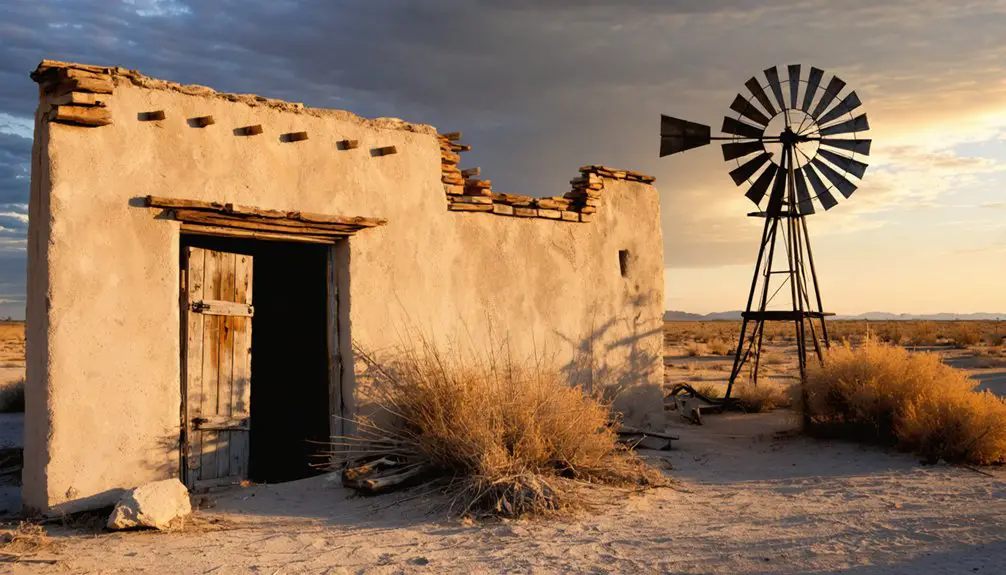
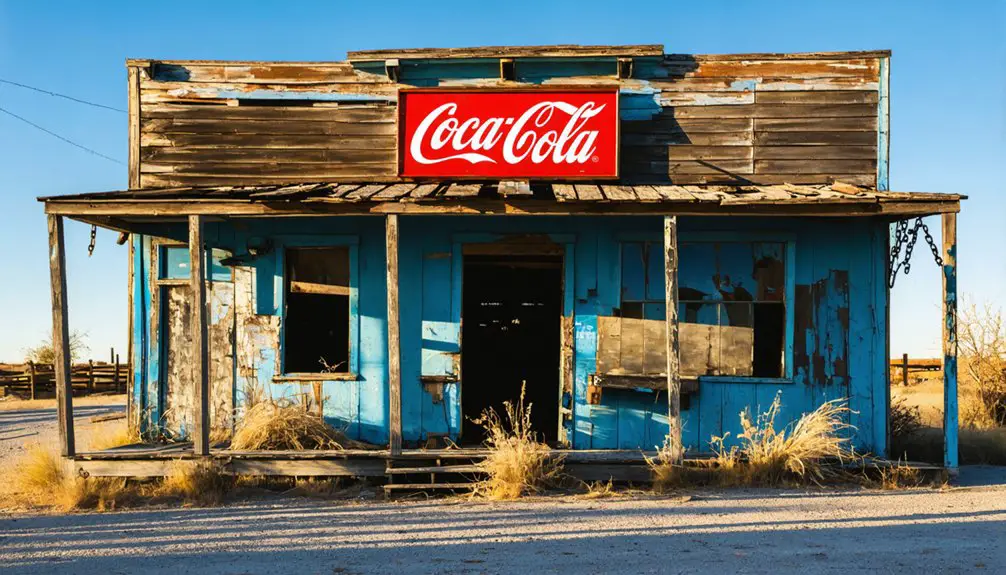
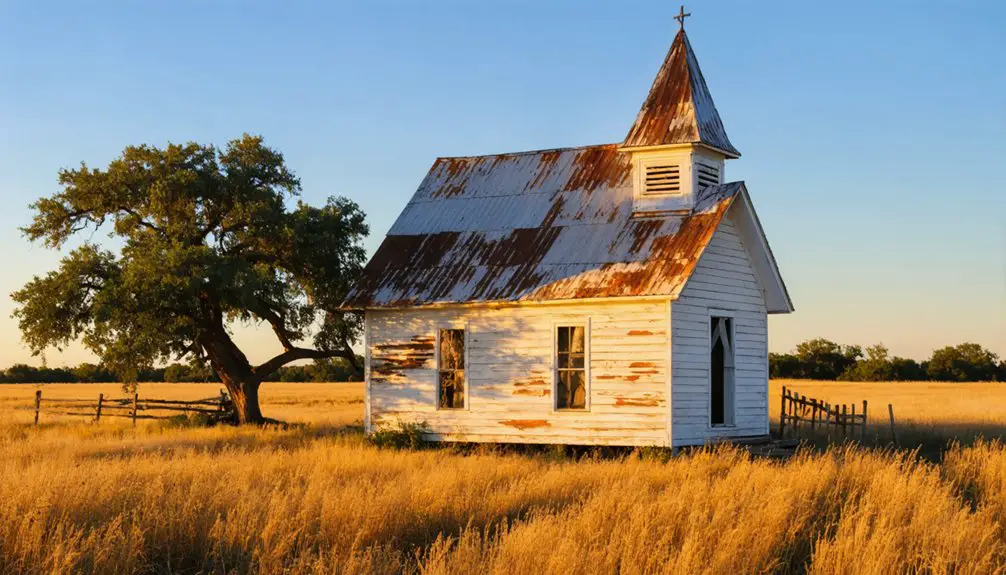
The elements have reclaimed most of Neighborsville, but a handful of weathered structures still mark where cotton-era settlers built their dreams. You’ll find skeletal remnant buildings dotting the landscape—a collapsed general store with its timber frame exposed to endless Texas skies, a schoolhouse missing its roof but retaining surprisingly intact limestone walls. The architectural highlights reveal frontier ingenuity: hand-hewn beams, mortared stone foundations, and remnants of tin roofing that once protected families from summer storms.
These structures aren’t roped off or preserved. You’re free to explore carefully, though stability varies wildly. Bring your camera for dramatic shots through empty doorframes. The abandoned cemetery nearby offers another glimpse into Neighborsville’s past, with headstones dating back to the 1870s slowly sinking into prairie grass.
Getting There: Directions and Access Routes to Neighborsville
You’ll find Neighborsville tucked away in the rural expanses between Denton and Brownwood, accessible primarily through a network of farm-to-market roads that branch off US Highway 377.
The nearest recognizable landmark sits about twelve miles south—the small community of Thrifty, where you’ll want to top off your fuel tank and grab detailed directions from locals who actually know these unmarked turnoffs.
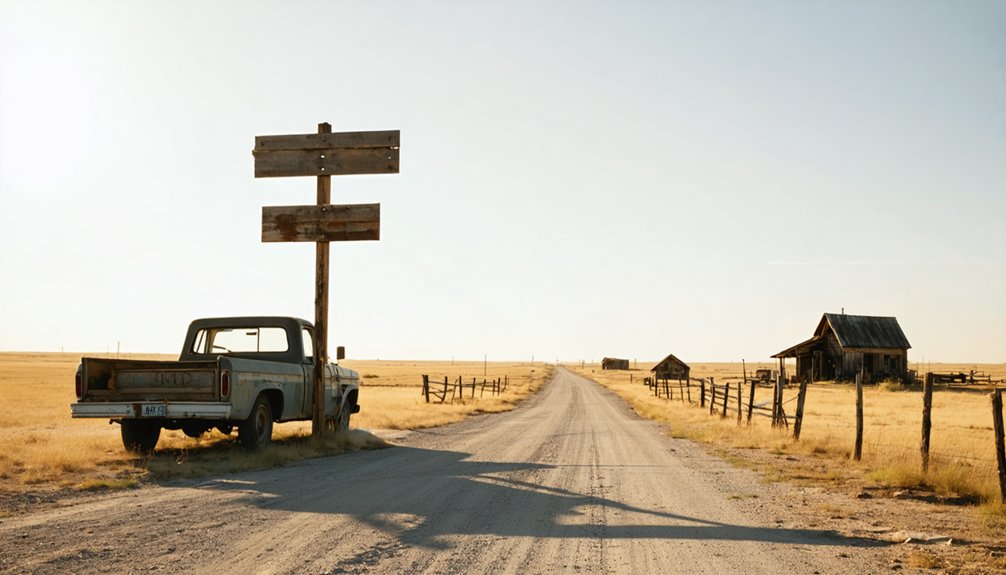
Fair warning: your GPS will likely fail you out here, and the final three miles consist of caliche roads that turn treacherous after rain, so check weather conditions before you commit to the journey.
Primary Highway Access Points
Reaching Neighborsville requires traversing a network of Texas Hill Country highways that slice through scenic Comal County terrain. You’ll find US-281 serving as your primary north-south artery, connecting San Antonio’s urban sprawl to New Braunfels before crossing the Guadalupe River near your destination. This route delivers authentic scenic highway vistas through rural two-lane stretches where traffic thins and freedom expands.
I-35 runs parallel about five to ten miles east, offering high-speed access from Austin or San Antonio. Exit at New Braunfels, then navigate FM 306 or FM 3159 westward across the river. Regional transportation planning has preserved these farm-to-market roads’ rustic character while maintaining paved surfaces suitable for any vehicle.
Punch coordinates 29.8°N, 98.1°W into your GPS, and let the asphalt guide you toward this forgotten riverside community.
Nearest Towns and Landmarks
Once you’ve navigated the major highways, your journey to Neighborsville positions you within striking distance of some of Texas Hill Country‘s most alluring destinations.
Nearby exploration options include:
- Fredericksburg (your closest hub) offers over fifty wineries and German heritage attractions that celebrate the region’s immigrant roots
- Wimberley’s Jacob’s Well beckons with crystal-clear waters and teal hue swimming holes at Blue Hole
- Luckenbach sits under 20 km away, featuring its legendary post office and general store
You’ll find Boerne’s Hill Country Mile perfect for refueling with craft brews at Cibolo Creek Brewing Company, while Marble Falls tempts with Sweet Berry Farm and the iconic Blue Bonnet Cafe. Each town connects through rolling Hill Country roads, transforming your ghost town pilgrimage into a broader adventure through authentic Texas landscapes.
Road Conditions and Warnings
Before setting out toward Neighborsville’s remnants, check DriveTexas for real-time highway conditions that’ll shape your journey through the Hill Country’s unpredictable terrain. Their live traffic cameras reveal flooding zones, ice patches, and construction delays before you encounter them. You’ll find crowdsourced travel advisories through Waze particularly valuable when traversing rural backroads where official monitoring thins out.
TxDOT’s district-specific views highlight locally reported hazards—downed fences, wandering livestock, or washed-out farm roads that don’t make state bulletins. Watch for weather warnings from Amarillo NWS if you’re approaching from the Panhandle, where conditions shift rapidly. County road closures appear on DriveTexas’s searchable lists, though Neighborsville’s isolation means you’ll likely find no specific alerts. Call +1-800-452-9292 for current conditions before committing to remote routes.
Nearby Ghost Towns Worth Adding to Your Itinerary
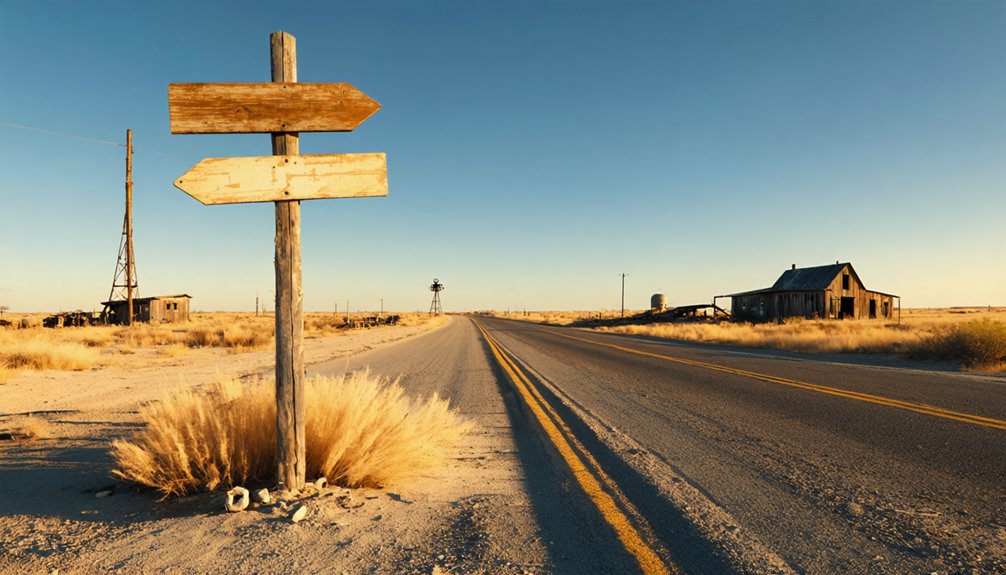
While you’re exploring Comal County’s cluster of abandoned settlements, you’ll find richer ghost town experiences by venturing beyond Neighborsville’s immediate neighbors.
Cherokee County harbors several atmospheric ruins worth the eastward journey, where weathered structures tell stories of frontier life and economic shifts.
To the west, Thurber stands as Texas’s most accessible mining ghost town, its coal-powered past preserved in brick ruins and an iconic smokestack that still pierces the horizon.
The history of Quigley, Texas offers a glimpse into the once-thriving mining industry that defined the region. Today, only remnants of this past can be found scattered throughout the landscape, where abandoned structures tell stories of hardworking families and dreams of prosperity. As visitors explore, they can imagine the bustling life that once filled the town with energy and ambition.
Cherokee County Ghost Towns
Beyond Neighborsville’s quiet remnants, Cherokee County harbors a constellation of ghost towns that paint a fuller picture of East Texas’s turbulent past. You’ll discover forgotten homesteads where tragedy and ambition left their marks on the piney woods landscape.
Three settlements deserve your attention:
- Larissa — Site of the 1837 Killough Massacre, where the Killough family’s fatal return for corn harvest became Texas’s deadliest Indian attack. A cemetery and monument mark this somber ground.
- New Birmingham — Alexander B. Blevins’s 1880s industrial dream that collapsed after furnace explosions and financial panic. Nothing remains except bricks repurposed for Rusk buildings.
- Atoy — A Civil War-era community that supported schools and churches until its post-WWII absorption into Rusk.
Local oral histories breathe life into these vanished settlements, revealing the precarious nature of frontier existence.
Thurber Mining Town Remnants
West of Cherokee County’s vanished settlements, Thurber rises from the Palo Pinto hills as Texas’s most complete ghost town—a once-mighty coal camp where 10,000 souls labored beneath barbed wire and armed guards. You’ll discover coal mining heritage etched into every remaining brick, from the towering smokestack marking underground shafts to foundations where an opera house once seated 650.
The company town architecture reveals a self-contained empire: schools, saloons, a 200-room hotel, even the county’s only library—all controlled by Texas Pacific Coal Company through scrip currency and iron-fisted management. Though the mines closed in 1921 and dismantling finished by 1939, you’ll walk where fifteen nationalities—Italians, Poles, Mexicans—struck America’s first totally unionized closed shop, defying their captors beneath Erath County’s unforgiving earth.
Best Time to Visit and What to Bring
Planning your ghost town adventure means timing it right, and spring emerges as the champion season for exploring Neighborsville’s weathered remains. You’ll experience mild 70-80°F temperatures perfect for wandering through crumbling structures without summer’s brutal 100°F+ heat or winter’s unpredictable flash floods.
Spring’s 70-80°F sweet spot lets you explore safely between scorching summers and flood-prone winters.
Your seasonal packing considerations should include:
- Layered clothing and sturdy boots for 40°F mornings shifting to 80°F afternoons
- Sun protection arsenal: wide-brim hat, sunglasses, high-SPF sunscreen for relentless UV exposure
- Self-sufficiency supplies: one gallon water per person daily, first-aid kit with snakebite treatment, offline GPS
Essential onsite preparation means bringing everything—Neighborsville offers zero facilities. Pack snacks, flashlights for dim building interiors, and trash bags. Cell service disappears here, so download maps beforehand. You’re venturing into authentic abandonment.
Photography Tips and Preservation Etiquette for Ghost Town Explorers
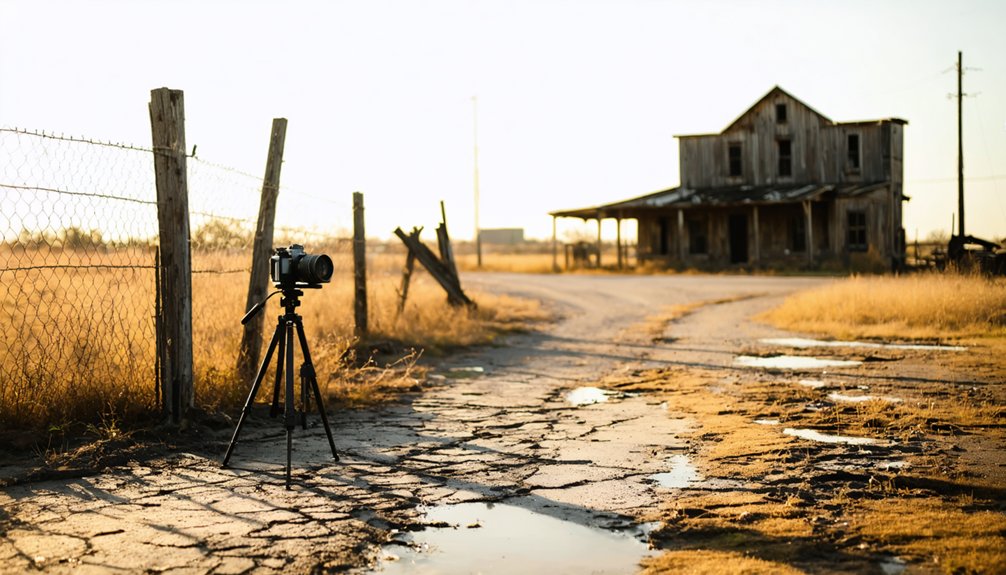
Respect Neighborsville’s fragility: stay on designated paths, never touch structures, and pack out everything you bring.
Your photographs should document history without accelerating its disappearance—freedom thrives when exploration meets responsible stewardship.
Frequently Asked Questions
Is Overnight Camping Allowed on or Near Neighborsville Ghost Town Property?
Like tumbleweeds settling where wind permits, you’ll find camping availability limited near Neighborsville’s ghost town property. Check permitted camping areas at nearby Texas State Parks instead, where designated sites welcome road-trippers seeking freedom under vast desert skies.
Are There Any Guided Tours Available for Neighborsville Ghost Town Visits?
Unfortunately, you won’t find guided history tours at Neighborsville since it’s an unincorporated area without formal tourism infrastructure. However, you’re free to explore independently, creating your own immersive ghost town experiences through self-directed adventure and discovery.
What Cell Phone Coverage Can Visitors Expect in the Neighborsville Area?
You’ll ironically find a ghost town within a ghost town—cell phone dead zones haunt Neighborsville’s ruins. While Texas carriers offer varying statewide coverage, you’ll likely encounter limited data speeds or no signal in this remote, off-grid adventure destination.
Are There Restroom Facilities or Services Available Near Neighborsville?
Neighborsville’s remote ghost town location means you’ll find limited restroom facilities nearby. You’ll want to plan ahead by visiting dining options or local businesses in surrounding towns like Paige before heading out to explore this abandoned settlement.
Is Private Property Permission Required to Explore Parts of Neighborsville?
Yes, you’ll need permission since most structures sit on private land. Public access concerns and legal liability risks make trespassing dangerous—both legally and physically. Always respect property boundaries and seek landowner consent before exploring Neighborsville’s abandoned buildings.