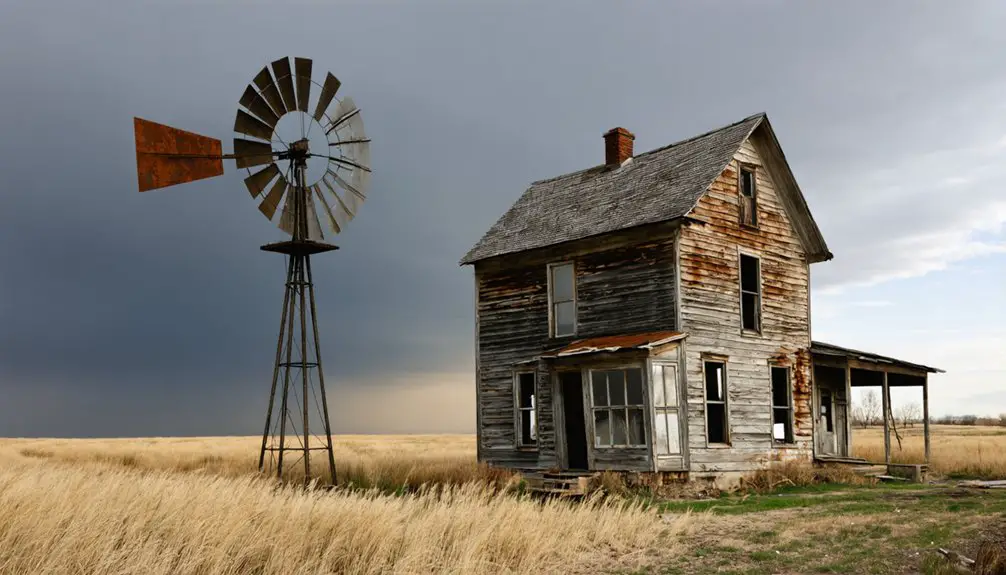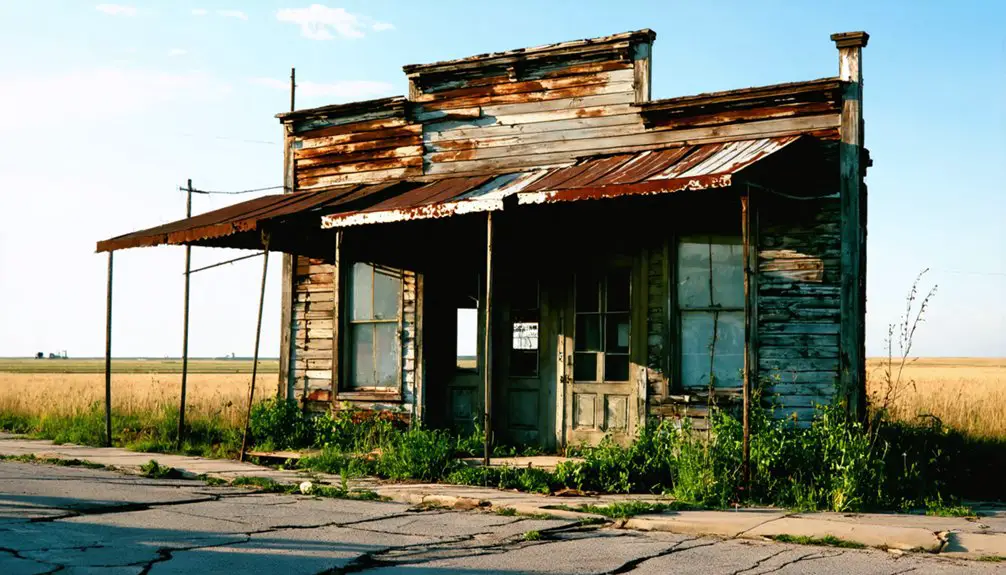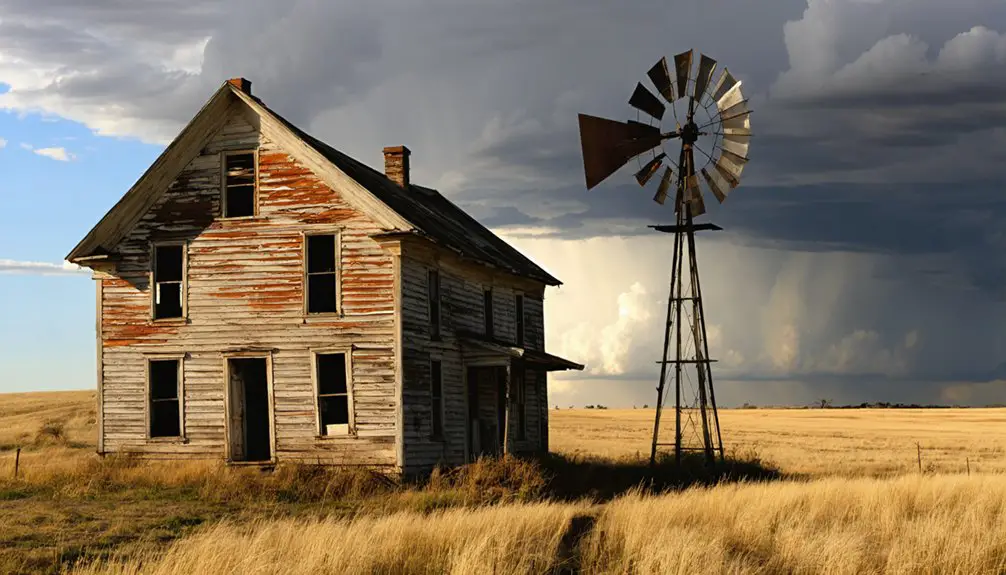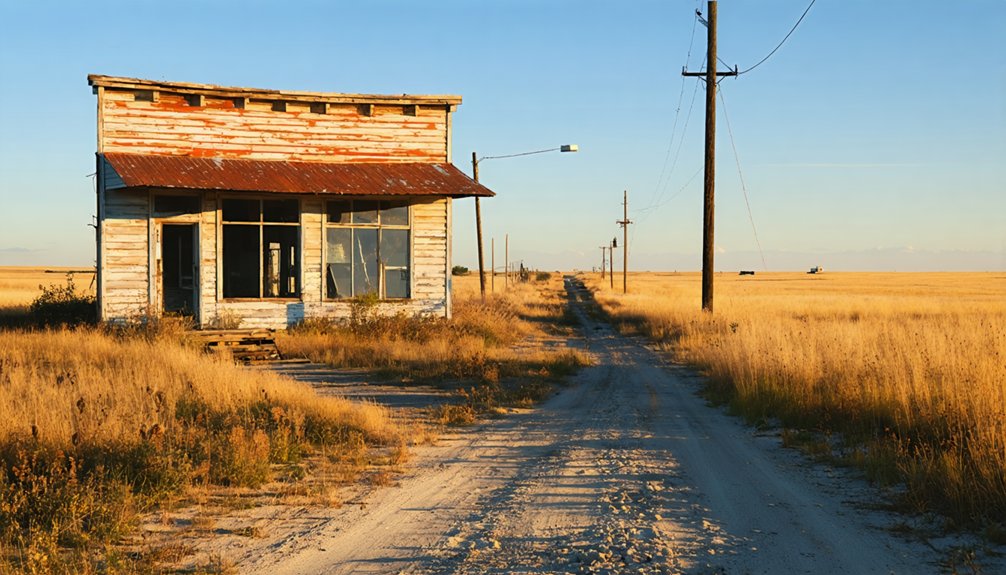
Planning a ghost town road trip to New Home, Nebraska means chasing a settlement the prairie quietly erased. You’ll navigate Box Butte County’s gravel back roads, read subtle landscape clues like soil discoloration and vegetation clusters, and piece together a vanished frontier community. Pack emergency supplies, download offline maps, and book accommodations in Alliance or Chadron ahead of time. Late spring and early autumn offer the best conditions, and there’s much more to uncover about this forgotten corner of Nebraska.
Key Takeaways
- New Home, Nebraska, is a vanished ghost town from the late 1800s, abandoned during the 1930s due to agricultural decline and railroad closures.
- Navigate using offline maps, aerial photos, and historical railroad grades, as gravel back roads near Highway 137 lack reliable cell service.
- Visit during late spring or early autumn for mild temperatures, stable weather, and optimal road and photography conditions.
- Pack a spare tire, printed maps, water, emergency supplies, and camera gear for safe and responsible remote exploration.
- Book accommodations in advance in Alliance or Chadron, as lodging options near the ghost town site are extremely limited.
Why New Home Still Draws Ghost Town Hunters to Box Butte County
Even though New Home has been swallowed by the Nebraska prairie, ghost town hunters keep finding reasons to make the drive out to Box Butte County.
The prairie swallowed New Home whole, yet ghost town hunters still find reasons to make the drive.
You’re not chasing tumbleweeds or crumbling saloons here — you’re chasing something quieter and more elusive. The town’s erasure from the landscape makes it compelling.
Ghost stories and local legends tied to failed settlements like this one remind you that the frontier wasn’t always kind. New Home represents every broken promise the railroad era made to hopeful settlers.
When you stand on that open ground, you feel the weight of those abandoned dreams. That invisible history is exactly what pulls curious travelers off the highway and onto gravel roads, searching for a town the prairie decided to keep for itself.
The Rise and Fall of New Home’s Frontier Community
To understand why New Home pulls you in so deeply, you have to look at how it got there in the first place. During the late 1800s railroad expansion, settlers flooded northern Nebraska’s panhandle, carving communities from raw prairie with bold optimism.
New Home emerged from that energy, platted by land developers who believed the frontier challenges of isolation and harsh climate were conquerable. They weren’t wrong — until they were.
Agricultural decline hit hard through the 1930s. Drought, Dust Bowl conditions, and collapsing commodity prices gutted rural economies across Box Butte County.
When railroad branches closed, remote towns like New Home lost their only economic lifeline. Highways bypassed them entirely. Families left quietly, and the prairie moved back in, reclaiming everything almost without a trace.
How to Reach New Home via Nebraska’s Gravel Back Roads
Reaching New Home means committing to Nebraska’s gravel back roads, where GPS signals grow uncertain and the landscape stretches empty in every direction. Download offline maps before leaving Alliance or Chadron, and cross-reference aerial photos with county historical records to pinpoint faint foundations hiding beneath prairie grasses.
Highway 137 connects you to the broader Box Butte County corridor, where unmarked gravel roads branch toward forgotten settlements. Follow gravel wayfinding tips from local historians: note your odometer, watch for tree clusters masking old homesteads, and drive slowly. Those lush windbreaks signal civilization once stood nearby.
Arrive during golden hour for ghost town photography that captures Nebraska’s haunting emptiness at its most dramatic. Pack extra water, keep your fuel tank full, and embrace the deliberate freedom of traversing roads most travelers never find.
Foundations, Roadbeds, and Aerial Clues: Reading the New Home Townsite
Few ghost towns challenge your interpretive skills like New Home, where the townsite reveals itself not through crumbling walls but through subtle landscape signatures you’ll need sharp eyes to decode.
During foundations exploration, you’re scanning for slight depressions, unusual vegetation clusters, and stone outlines swallowed by grass. Trees growing in unnatural rows signal former homestead boundaries, while soil discoloration marks buried structural remains.
Scan for slight depressions and stone outlines—the ground itself holds the memory of what once stood here.
Roadbed navigation becomes your compass here. Old wagon routes and railroad grades leave faint linear impressions across the prairie, visible from elevated ground or captured beautifully in aerial photography.
Pull up Google Earth before visiting and trace those ghostly lines back to their origins.
Cross-reference county historical maps with what you’re seeing underfoot, and New Home’s forgotten grid suddenly snaps into focus beneath the grassland silence.
Ghost Towns to Pair With New Home on Your Route
While you’re tracking down New Home’s faint traces in Box Butte County, you’d be missing out if you didn’t extend your route to include a few equally haunting stops nearby.
Antioch kicks off a compelling sandhills ghost town segment. Brocksburg hugs Highway 12 with tree-shrouded ruins left behind when its post office closed in 1957.
Ardmore sits dramatically on the Nebraska-South Dakota border, abandoned as recently as the 1980s over a water dispute.
Together, these three towns transform a single-site detour into a rich, multi-layered road trip through Nebraska’s forgotten past.
Antioch Sandhills Ghost Town
Antioch makes a compelling first stop on any northern Nebraska ghost town circuit, anchoring the sandhills segment before you push deeper into the panhandle toward New Home.
Antioch history centers on a potash boom during World War I, when the government needed the mineral for munitions and fertilizer. That demand briefly transformed this quiet spot into a bustling industrial town. Once the war ended, the potash market collapsed, and residents scattered fast.
Today, the Sandhills landscape swallows nearly everything that once stood here. Rolling grass-covered dunes stretch endlessly, erasing the frantic energy of a boomtown that burned bright and died quickly.
You’ll find scattered foundations and silence where factories once hummed. It’s a raw, open introduction to the ghost town experience waiting ahead on your route.
Brocksburg Along Highway 12
Leaving the sandhills behind, you’ll follow Highway 12 east toward Brocksburg, a quiet stop that earns its place on any ghost town circuit through sheer atmosphere.
Brocksburg history reveals a community that once thrived before its post office closed in 1957, marking the town’s slow fade into memory.
Today, trees swallow the remaining structures, their roots gripping foundations that stubborn settlers once called home.
You won’t find dramatic ruins here — instead, you’ll discover something subtler: a landscape that feels like it’s keeping secrets.
Ghost town legends tend to grow in places like this, where silence replaces commerce and nature reclaims human ambition.
Walk the edges carefully, consult a county history beforehand, and let Brocksburg remind you how completely the prairie absorbs its losses.
Ardmore Near South Dakota
Tucked against the Nebraska-South Dakota border, Ardmore stands apart from the other ghost towns on your route — it wasn’t swallowed quietly by agricultural decline but abandoned as recently as the 1980s over a water dispute that made survival impossible.
Ardmore history carries a raw, modern edge that makes it uniquely compelling among frontier ruins.
You’re not chasing century-old foundations here; you’re walking through a community that collapsed within living memory.
Ardmore mysteries linger in that unsettling recentness — structures still standing, stories still told by people who remember.
When you roll through on your northern Nebraska loop, that proximity to South Dakota adds geographic drama.
The border landscape feels wide open, untamed, perfectly suited for travelers who crave discovery beyond the mapped and the comfortable.
Best Seasons to Visit New Home and the Northern Nebraska Ghost Town Circuit
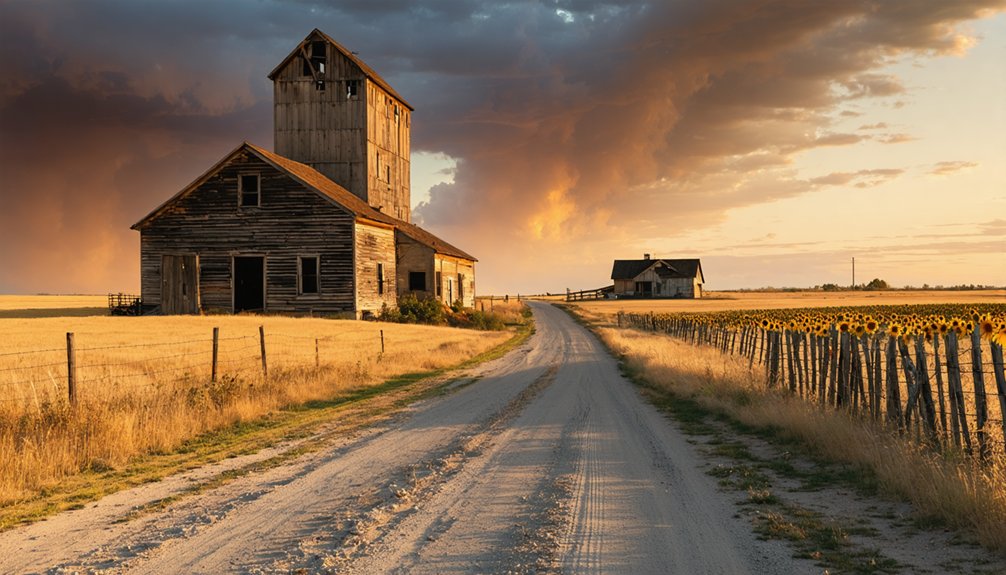
Timing your visit to New Home and the northern Nebraska ghost town circuit makes a significant difference in what you’ll experience on the road.
You’ll find late spring and early fall offer the best combination of mild temperatures, dry gravel roads, and clear skies for spotting faint foundations and overgrown homesteads.
Summer heat can be brutal on the open prairie, while winter storms turn remote dirt roads into impassable muddy or icy hazards that’ll strand you miles from help.
Optimal Visiting Seasons
Whether you’re chasing the last light of summer or the crisp stillness of early autumn, the northern Nebraska ghost town circuit rewards visitors who plan their timing carefully.
Ideal weather makes exploration safer and more rewarding, while seasonal activities add depth to your journey.
The best windows for visiting include:
- Late spring (May–June): Mild temperatures, green grasslands, and accessible gravel roads
- Early autumn (September–October): Cool air, low humidity, and stunning prairie light
- Summer (July–August): Long daylight hours, though heat and storms demand preparation
- Avoid winter: Snow closes rural roads and obscures already faint foundations
You’ll navigate dirt roads and overgrown homestead sites most effectively when conditions favor open skies and dry ground.
Weather And Road Conditions
Four distinct seasons shape your experience on the northern Nebraska ghost town circuit, and knowing which one suits your plans can mean the difference between a memorable road trip and a muddy, storm-interrupted slog.
Weather patterns here swing dramatically — winters bring ice and impassable gravel roads, while spring thaws turn dirt paths into axle-deep mud traps.
Summer offers the longest daylight and dry conditions, though afternoon thunderstorms can roll in fast across open grasslands.
Fall delivers crisp air, stable weather patterns, and stunning prairie light perfect for photography.
Road safety demands that you check county road conditions before heading out, especially after rain.
Always carry a physical map, since cell service disappears quickly once you leave paved highways behind.
What to Bring When the Roads Turn to Gravel
Once the pavement ends and the gravel begins, you’ll want to have the right gear loaded before you leave town.
Exploring New Home and nearby sites means traversing remote Box Butte County roads where preparation separates a great adventure from a frustrating breakdown.
Pack these essentials before heading out:
- Spare tire and jack – gravel chews through tires fast
- Printed county maps and aerial photos – cell service disappears quickly
- Camera gear – ghost town photography demands wide lenses and extra batteries
- Water and emergency supplies – no services exist for miles
Historical preservation starts with responsible visiting, so bring trash bags and disturb nothing you find.
You’re out here chasing freedom and forgotten history, so arrive ready to stay as long as the light allows.
Where to Sleep and Eat Near Nebraska’s Ghost Town Back Roads
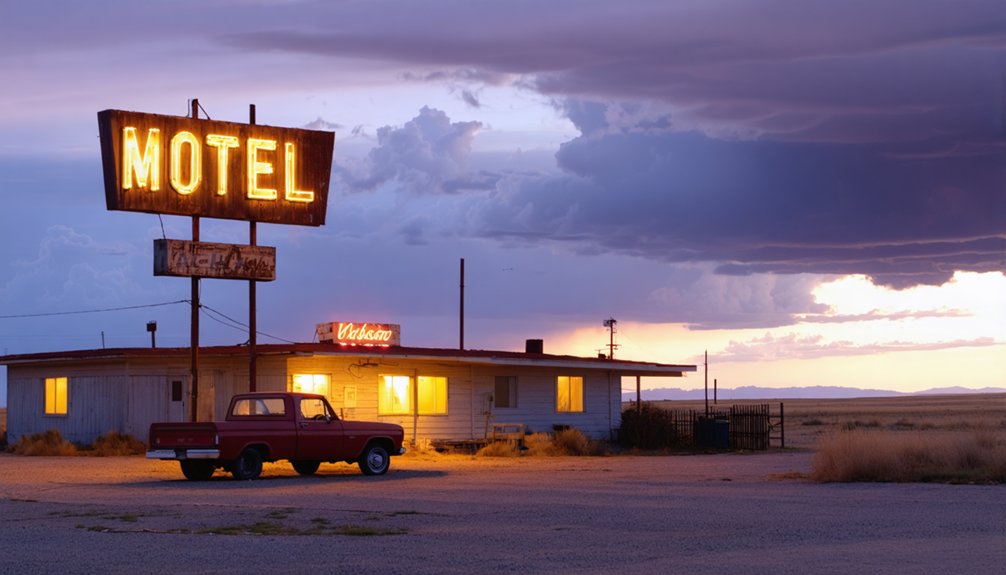
After loading the truck and hitting those gravel roads, your body will eventually demand fuel and rest. The remote stretches near New Home don’t offer much in the way of roadside conveniences.
Ghost town accommodations are sparse, so book ahead in Alliance or Chadron, both within reasonable driving distance and offering motels, bed-and-breakfasts, and campgrounds for independent travelers.
Book ahead in Alliance or Chadron — both offer motels, bed-and-breakfasts, and campgrounds within reasonable driving distance.
For local dining options, small-town diners in these communities serve honest, hearty meals that’ll keep you moving through long exploration days. Stock a cooler with snacks and water before heading out, because once you’re deep into Box Butte County’s back roads, options disappear fast.
Plan your overnight base strategically, and you’ll cover more ghost town ground without scrambling for somewhere to sleep or eat.
Frequently Asked Questions
Is Trespassing on Private Farmland a Legal Risk Near New Home?
Yes, you’ll face real trespassing consequences crossing those silent, fence-lined Nebraska fields. Respect private property laws, or risk fines and legal trouble. Always seek landowner permission before venturing beyond public roads near New Home.
Are There Any Documented Photographs of New Home Before Abandonment?
You’ll find documented photographs are scarce, but don’t let that stop you! Dig into county archives for historic preservation gems and uncover local folklore that breathes life into New Home’s vanished streets through rare, surviving images.
Did New Home Ever Have a Post Office or Official Designation?
You’ll find New Home’s post office history and official designation remain elusive, but many similar Nebraska ghost towns earned recognition through postal records — so you’d want to dig into Box Butte County archives for confirmation.
Can Metal Detectors Legally Be Used at Nebraska Ghost Town Sites?
You’ll need to check Nebraska’s metal detecting regulations before digging, as historical preservation concerns restrict artifact removal on public or protected lands. On private property, always secure the landowner’s permission first to explore freely.
Are Any Descendants of New Home’s Original Settlers Still Contactable?
You’ll likely find descendant connections through historical records like county archives, genealogy databases, and local Nebraska historical societies. Reach out actively — many descendants treasure their frontier heritage and welcome conversations about New Home’s forgotten past.
References
- https://www.onlyinyourstate.com/trip-ideas/nebraska/ne-ghost-towns-road-trip
- https://history.nebraska.gov/finding-nebraskas-ghost-towns/
- https://7feetnorth.com/2020/08/23/the-ghost-town-and-the-train-house/
- https://agupdate.com/midwestmessenger/lifestyles/article_bad42db4-f5a9-11ed-b06b-6392de4c7141.html
- https://www.youtube.com/watch?v=Iw21dwaXkck
- https://en.wikipedia.org/wiki/List_of_ghost_towns_in_Nebraska
- https://www.youtube.com/watch?v=QJ-Y9CkMsgg
- https://www.youtube.com/watch?v=oa7MVDq-wo4