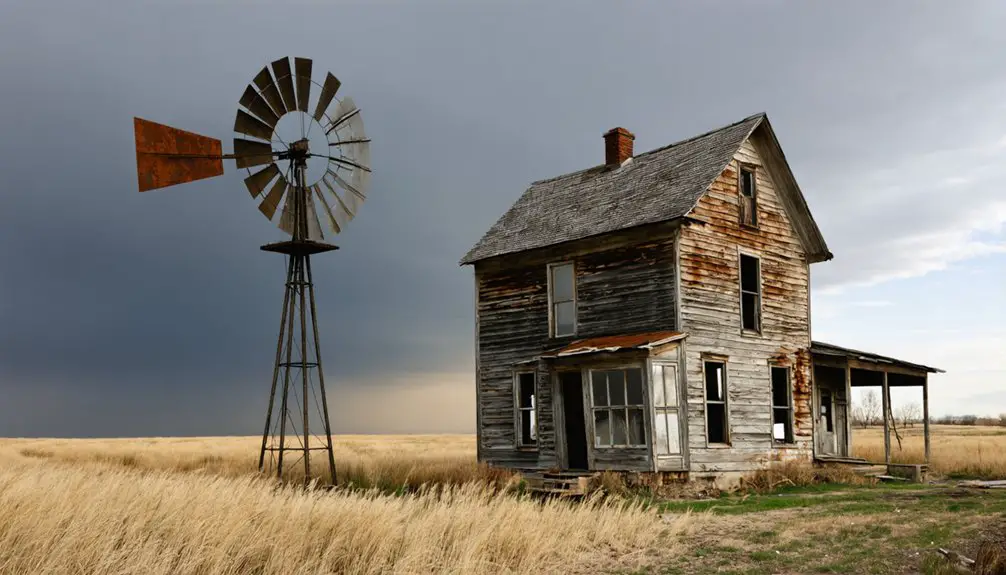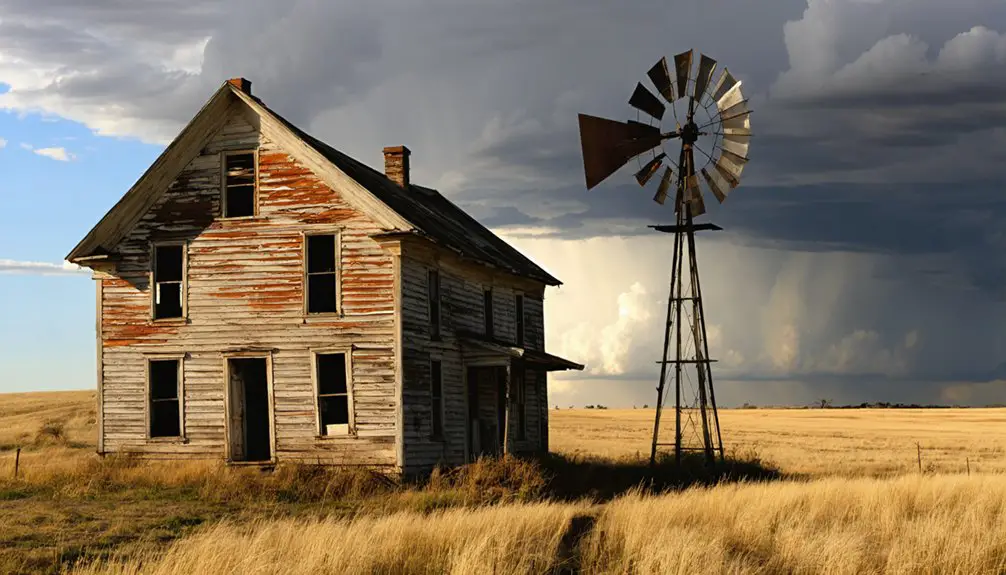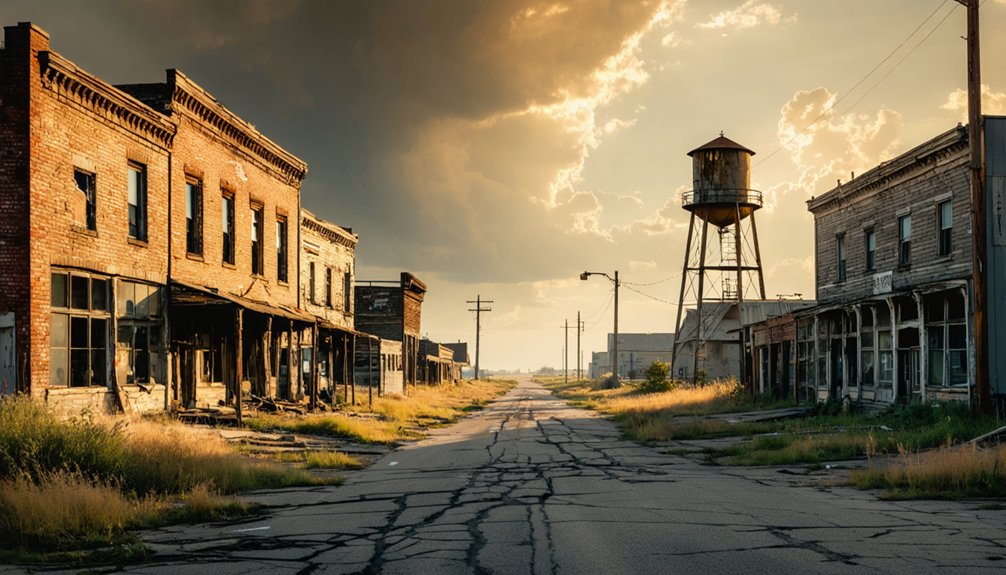
Planning a ghost town road trip to Homerville, Nebraska means stepping into Gosper County’s forgotten past. You’ll find a quiet cemetery holding nearly 49 graves, almost 40% belonging to children, which tells a powerful story about frontier hardship. Bring layered clothing, historic maps, and a field notebook, since GPS won’t always guide you here. Chat with locals in nearby Elwood or Bertrand for directions. Stick around, and Homerville’s full story gets even more compelling.
Key Takeaways
- Homerville, Nebraska, a former Gosper County seat, declined by the 1930s due to railroad closures, drought, and agricultural collapse.
- The Homerville Cemetery, featuring approximately 49 graves with nearly 40% belonging to children, serves as the site’s primary landmark.
- GPS may not recognize Homerville, so use historic maps and consult locals in nearby Elwood or Bertrand for navigation assistance.
- Pack moisture-wicking layers, an insulating mid-layer, a windproof shell, and sturdy ankle-supporting boots for Nebraska’s unpredictable weather.
- Respect private property, obtain landowner permission, leave artifacts untouched, and contact the Nebraska State Historical Society for site verification.
Homerville, Nebraska: What Remains of Gosper County’s Lost County Seat
Homerville, Nebraska, once carried the proud title of Gosper County’s seat — a “wide-awake little inland county seat,” as contemporaries described it.
Today, you’ll find little among its Homerville Remnants beyond a quiet cemetery holding approximately 49 graves, nearly half of them children. The railroad’s departure and agriculture’s collapse sealed the town’s fate by the 1930s, leaving it among Nebraska’s most solitary Ghost Towns.
Nearly half of Homerville’s 49 graves belong to children — a haunting testament to a town erased by time.
No buildings greet you here — just open plains, weathered history, and a burial ground that speaks louder than any standing structure could.
Before you visit, consult historic maps and Nebraska State Historical Society records for precise directions. Respect private property boundaries while exploring.
What remains isn’t ruins — it’s silence, and that silence tells Homerville’s story more honestly than anything else could.
The Rise and Fall of Homerville as a County Seat
During Nebraska’s railroad boom of the 1870s through 1890s, Homerville rose fast and rose with purpose — claiming its place as Gosper County’s official seat and earning a reputation as “the wide-awake little inland county seat.”
Homesteaders poured into the region, drawn by land development initiatives and the frontier optimism that railroad connectivity seemed to promise.
But ghost town economics proved unforgiving. When railroad branches closed and agricultural markets collapsed by the late 1930s, Homerville’s foundation crumbled beneath it.
Community resilience could only stretch so far against isolation, harsh weather, and economic forces beyond any settler’s control. The county seat designation couldn’t save what infrastructure abandonment destroyed.
What once buzzed with frontier ambition quietly emptied, leaving behind a cemetery, scattered historical records, and a cautionary story written across Nebraska’s plains.
What Killed Homerville? Railroads, Drought, and Hard Times
Few forces killed a frontier town faster than a railroad pulling out — and that’s exactly what happened to Homerville. When railroad companies shifted their routes, communities lost their economic lifeline overnight.
Without rail access, farmers couldn’t move crops to market, merchants couldn’t restock shelves, and residents had no reason to stay.
Without rail access, everything unraveled — crops rotted, shelves emptied, and people simply had no reason to stay.
Railroad impact alone didn’t finish Homerville off. Agricultural decline delivered the final blow. Drought cycles punished Great Plains farmers throughout the late 1800s and into the 1930s, draining savings and breaking spirits.
When the agricultural economy collapsed, Gosper County’s once-promising county seat simply emptied out.
You’re looking at a familiar Great Plains pattern — optimism built the town, but forces beyond any settler’s control dismantled it piece by piece, leaving little behind but silence and a cemetery.
Inside the Homerville Cemetery: 49 Graves and What They Reveal
When you step into the Homerville Cemetery, you’ll find roughly 49 graves arranged across the quiet grounds, their weathered markers offering a rare window into the community’s brief and difficult existence.
You can map the layout and quickly notice that nearly 40 percent of those buried here are children — 19 young lives cut short by the harsh realities of frontier Nebraska.
Those small graves tell a heartbreaking story about the dangers families faced in this isolated settlement, where disease, harsh winters, and limited medical care claimed the youngest residents first.
Mapping The Cemetery Layout
Forty-nine graves wait quietly in the Homerville Cemetery, and each one tells a piece of the story this ghost town left behind.
Walk the grounds and you’ll notice the layout speaks through cemetery symbolism — clustered family plots, weathered markers, and nineteen child burials that reflect frontier hardship no history book fully captures. The arrangement isn’t random; it mirrors how the community once lived and who they lost earliest.
Ghost stories naturally surface in places like this, where silence feels earned rather than empty. You’re free to explore, but respect the site’s boundaries and private surrounding land.
Bring a map, photograph every marker you can read, and document what remains. These graves aren’t just history — they’re the clearest voices Homerville still has.
Child Burials Tell Stories
Nineteen of the forty-nine graves in the Homerville Cemetery belong to children, and that single fact reframes everything you thought you understood about frontier optimism.
These aren’t abstractions — they’re burial significance made visceral. Standing here, you’ll feel childhood memories of storybook pioneers dissolve into something rawer and realer. Families arrived chasing freedom, planted roots in unforgiving soil, and buried their smallest members before the town itself surrendered.
Each child’s marker represents a life that barely cleared the threshold of possibility. The Great Plains didn’t negotiate with youth or ambition.
When you walk among these graves, you’re not just reading names — you’re absorbing the actual cost of westward independence. Homerville didn’t simply fade; it grieved, repeatedly, before it disappeared entirely.
How to Find Homerville Without Getting Lost
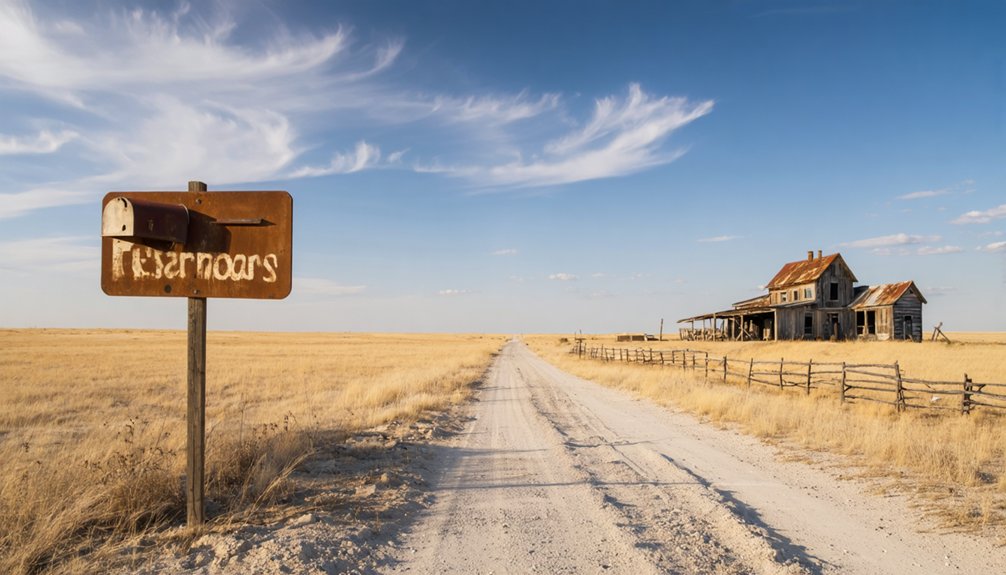
Finding Homerville isn’t as simple as punching an address into your phone’s GPS — this ghost town has slipped off most modern maps entirely.
You’ll need to dig deeper, consulting historic maps and resources from the Nebraska State Historical Society, which documents ghost town legends and supports historical preservation efforts across the state.
Head to Gosper County in western Nebraska and treat the journey like detective work.
Download or print historical county plat maps before you leave home — cell service gets unreliable fast out here.
Ask locals in Elwood or Bertrand; longtime residents often know exactly where forgotten settlements once stood.
Watch for the cemetery, your clearest landmark, featuring roughly 49 graves.
That quiet patch of headstones confirms you’ve found what remains of Homerville.
What to Bring When Visiting Homerville’s Remote Site
Before you head out to Homerville’s remote Gosper County site, you’ll want to pack a few essentials that make the difference between a frustrating trip and a rewarding one.
Load up on historic maps, GPS tools, and printed Nebraska State Historical Society records so you can navigate the area confidently and document what you discover.
Layer your clothing for the Great Plains’ unpredictable weather, and bring a camera, notepad, and any genealogical research materials if you’re planning to investigate the cemetery’s 49 documented graves.
Essential Navigation Tools
Traveling to Homerville demands more than a casual glance at your phone’s GPS, since modern mapping apps often fail to recognize remote ghost town sites with no standing structures or active addresses.
Supplement your navigational apps with printed historic maps sourced from the Nebraska State Historical Society, which document Gosper County’s original township layouts and historical landmarks far better than digital tools.
Carry a physical compass and a detailed county road atlas as backup, since rural Nebraska’s flat terrain can disorient even experienced travelers.
The Homerville Cemetery serves as your primary visual target once you’re close, so cross-reference its documented location against multiple map sources before departing.
Reliable navigation transforms a frustrating search into a purposeful journey through Nebraska’s forgotten frontier.
Weather-Appropriate Clothing Layers
Once your maps are packed and your route’s confirmed, your next preparation challenge is dressing for Nebraska’s unpredictable western plains weather.
Gosper County’s open terrain offers zero shelter from sudden temperature swings, so layering strategically is essential.
Start with moisture-wicking base layers that handle sweat during warm afternoon treks across exposed cemetery grounds. Add an insulating mid-layer for morning cold that lingers surprisingly late into summer days.
Always pack a windproof outer shell — prairie weather conditions shift fast, and that open landscape accelerates wind chill dramatically.
Your clothing options should also include sturdy, ankle-supporting boots for uneven ground and tall grass concealing hidden hazards.
Sun protection matters too — wide-brimmed hats and UV-blocking layers defend against Nebraska’s intense plains sun during extended site exploration.
Documentation And Research Materials
Packing the right documentation materials transforms a vague countryside drive into a genuinely productive historical investigation.
Before heading out, gather your ghost town documentation and historical research materials so you’re fully equipped to locate and interpret what remains at Homerville’s remote site.
Essential items to bring include:
- Historic maps sourced from Nebraska State Historical Society archives for precise site identification
- Printed genealogical records if researching the cemetery’s 49 documented graves
- A dedicated field notebook for recording grave markers, GPS coordinates, and site observations
- Contact information for the Nebraska State Historical Society in case you need additional verification
You’ll navigate more confidently knowing exactly what you’re looking for and where to find it.
This preparation turns an uncertain countryside exploration into a meaningful, independent historical discovery.
Ghost Towns Near Homerville Worth the Detour
While you’re making the trek out to Homerville, Nebraska’s surrounding Gosper County region rewards curious explorers with several additional ghost towns that deserve a spot on your itinerary.
Nebraska’s western plains hide countless forgotten legacies scattered across the landscape, each carrying ghostly whispers of frontier ambition and subsequent abandonment. Communities that once buzzed with homesteader activity now exist only as cemetery plots, foundation outlines, and faded entries in historical society records.
Forgotten frontier dreams linger across Nebraska’s western plains — silent testaments etched in crumbling foundations and overgrown cemetery plots.
Cross-reference historic maps before you leave home, marking clusters of abandoned settlements along your route. This strategy maximizes your drive time while minimizing backtracking across sparsely populated county roads.
Consulting the Nebraska State Historical Society’s ghost town documentation reveals which nearby sites still offer visible remains worth stopping for.
Don’t Trespass: How to Explore Nebraska Ghost Towns Respectfully
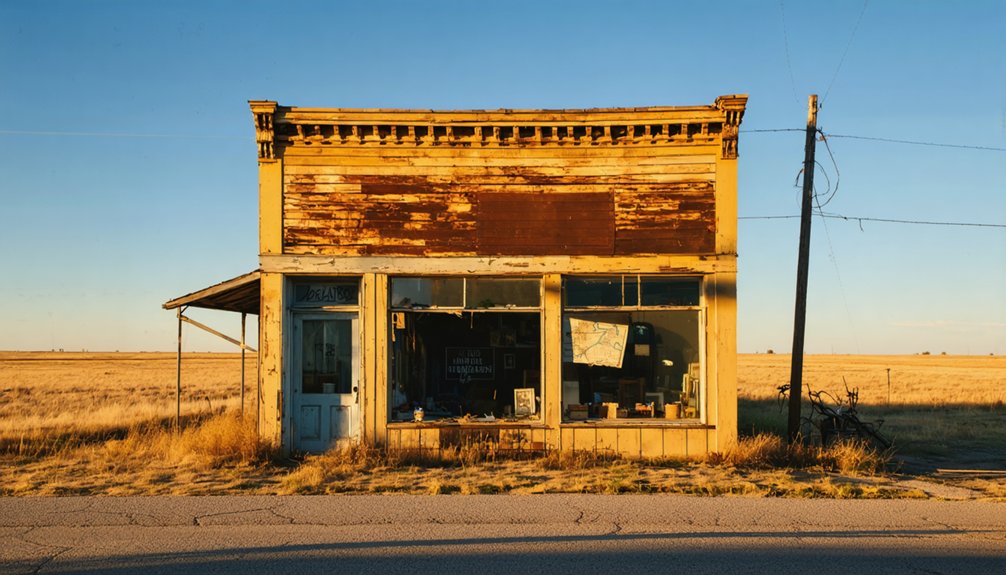
Exploring Nebraska’s ghost towns ethically starts with one non-negotiable rule: respect private property boundaries. Ghost town etiquette isn’t complicated, but it matters deeply for preserving these fragile sites for future explorers.
Before visiting Homerville or nearby abandoned settlements, practice respectful exploration by following these essential guidelines:
- Get permission first — contact landowners before stepping onto private property
- Consult historical maps — Nebraska State Historical Society resources help you navigate accurately and legally
- Leave everything untouched — artifacts, grave markers, and structures aren’t souvenirs
- Stick to accessible areas — the Homerville Cemetery welcomes visitors; unmarked private land doesn’t
Your freedom to explore depends on honoring these boundaries. Communities that once fought to survive deserve your respect, not your footprints where they don’t belong.
How to Research Homerville Using Historical Maps and State Records
Tracking down Homerville starts with the Nebraska State Historical Society, which maintains extensive ghost town records that’ll give you a solid foundation before you ever set foot in Gosper County.
Request their ghost town documentation to understand Homerville’s historical significance as the former county seat and how railroad decisions shaped its fate.
Next, pull historic maps from the society’s archives or online databases like the David Rumsey Map Collection.
These maps reveal settlement patterns that explain exactly where communities like Homerville took root and why they disappeared.
Cross-reference plat maps from the 1870s-1890s with modern satellite imagery to pinpoint the site accurately.
The Homerville Cemetery with its 49 documented graves provides your most reliable on-the-ground landmark once your research points you toward Gosper County’s back roads.
Frequently Asked Questions
Is Homerville Cemetery Still Actively Maintained by Local Volunteers Today?
The available records don’t confirm active volunteer involvement today, but you’ll find Homerville Cemetery’s history preserved through documented grave markers and periodic maintenance, making it a compelling destination worth exploring for its rich cemetery history.
Can Children Safely Accompany Adults on a Homerville Ghost Town Visit?
Yes, you can bring children, but take safety precautions on uneven terrain. It’s a unique family friendly activity—exploring history together while respecting private property boundaries and supervising kids near the cemetery’s aging grave markers.
What Is the Best Season to Visit Homerville for Clear Visibility?
Like a canvas wiped clean, fall offers you the clearest visibility for ghost town photography at Homerville. You’ll capture its historical significance beautifully as leaves drop, revealing the cemetery and site without summer’s obscuring overgrowth blocking your view.
Are There Guided Tours Available Specifically for Homerville Ghost Town Visits?
You won’t find formal guided tours for Homerville’s ghost town history, but you can arrange guided exploration through Nebraska’s State Historical Society, who’ll connect you with knowledgeable local historians enthusiastic to share this hauntingly forgotten frontier story.
Does Visiting Homerville Require Any Permits or Prior Permissions Beforehand?
Like a wild frontier beckoning you forward, Homerville’s ghost town regulations are simple: respect private property boundaries for visitor safety, avoid trespassing, and you’re free to explore this hauntingly beautiful Nebraska relic without formal permits.
References
- https://history.nebraska.gov/wp-content/uploads/2017/12/doc_publications_NH1937GhostTowns.pdf
- https://en.wikipedia.org/wiki/List_of_ghost_towns_in_Nebraska
- https://llcgs.info/cpage.php?pt=54
- https://visitnebraska.com/trip-idea/explore-7-authentic-ghost-towns-nebraska
- https://everafterinthewoods.com/these-deserted-ghost-towns-in-nebraska-are-full-of-history-and-mystery/
- https://www.youtube.com/watch?v=l3s2qhSxis8
- https://history.nebraska.gov/finding-nebraskas-ghost-towns/
- http://nebraskaphantasms.weebly.com/homerville.html