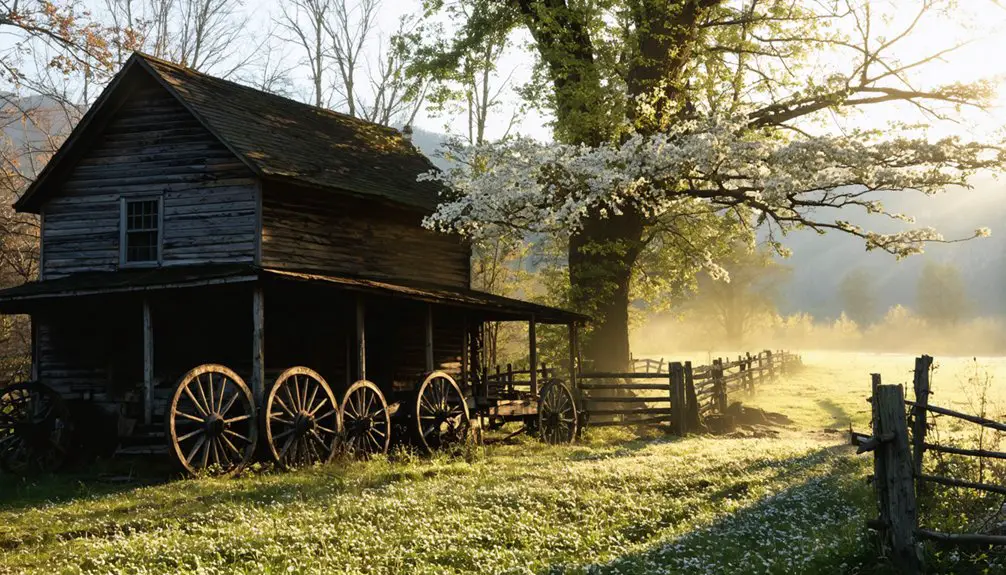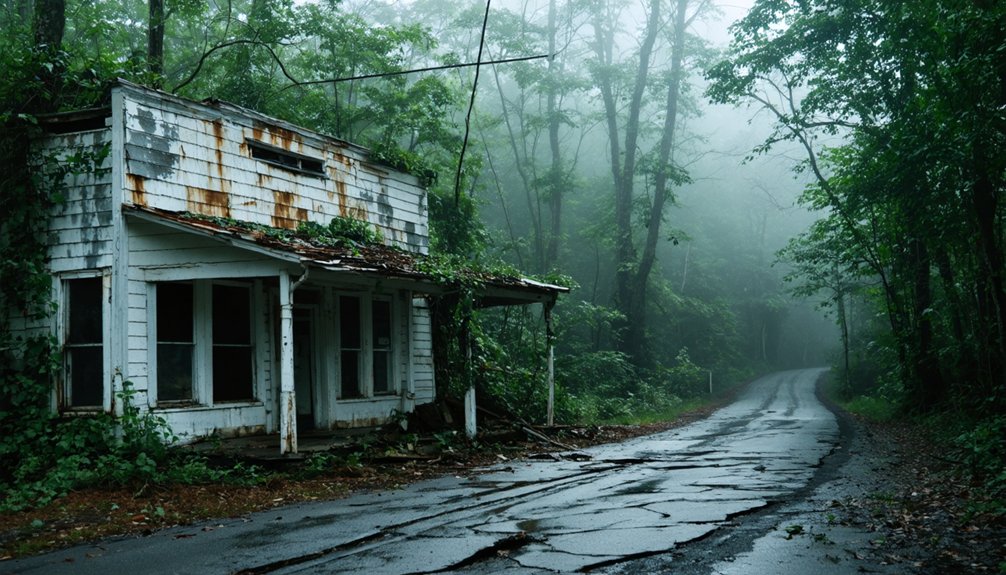
Planning a ghost town road trip to No Business, Tennessee means heading deep into Scott County’s Big South Fork wilderness, where history disappeared into the forest around 1960. You’ll want to base yourself in Oneida, stock up on supplies, and hit the Terry Cemetery trailhead for a 4.7-mile hike to the valley’s haunting remnants. Stone foundations, collapsed chimneys, and an eerie silence tell the story — and there’s far more to uncover about this forgotten settlement.
Key Takeaways
- No Business, Tennessee, is a ghost town in Scott County, accessible via the Terry Cemetery trailhead, roughly two hours from Knoxville.
- The main hiking trail is a 4.7-mile out-and-back to John Muir Overlook, offering views of the abandoned valley settlement.
- Remnants include Terry Cemetery, stone foundations, collapsed chimneys, and fence lines, as nature has reclaimed most original structures.
- Stage your trip from Oneida, just over an hour away, for fuel, groceries, budget motels, and short-term rentals.
- Nearby ghost towns like Elkmont, Rugby, and Loyston can enrich your road trip with additional historical stops.
What Is No Business, Tennessee?
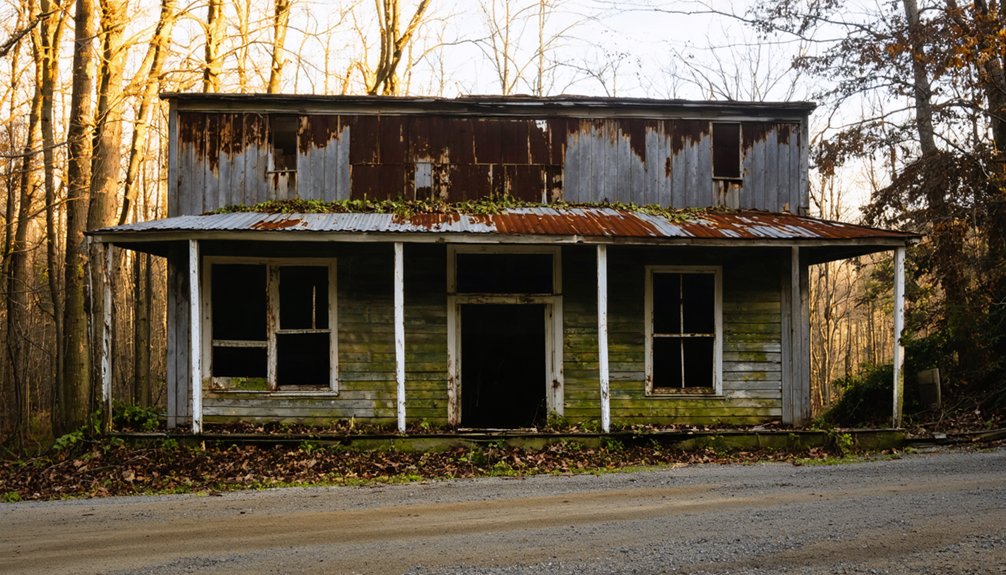
Tucked deep inside Scott County, Tennessee, No Business is a ghost town that once held a real community — farms, a church, a school, and around 300 residents — before the last family packed up and left in 1960.
Founded in 1796 after a Revolutionary War veteran claimed a land grant here, the settlement carries real historical significance as a place where generations built full lives in almost complete isolation. The name itself tells you something — outsiders had “no business” going there.
Today, the ruins sit inside the Big South Fork National River and Recreation Area, slowly being reclaimed by forest. Local legends and faded remnants are all that remain, making it a compelling destination if you’re drawn to places that time quietly swallowed whole.
Why No Business Went From Boomtown to Ghost Town
When the logging industry dried up and coal jobs faded, No Business lost the economic backbone that had kept families rooted in the valley for generations.
Economic decline hit hard, and younger residents who returned after World War II saw little reason to stay. The community isolation that had once defined the settlement’s character became its final obstacle.
No roads, no reliable outside contact, no future — at least not one that matched what the wider world was offering. By 1960, the last resident had gone.
The town that once supported nearly 300 people, complete with farms, a school, a church, and stores, simply emptied out. Nature moved back in, and the valley returned to the quiet it had known long before settlers arrived in 1796.
How to Get to No Business

Reaching No Business today takes real effort, which feels fitting for a place that earned its name from sheer remoteness. Your best access routes start at the Terry Cemetery trailhead, where a 4.7-mile out-and-back trail leads to the John Muir Overlook and the old settlement ruins.
Keep these travel tips in mind before you head out:
- Fly into Knoxville — it’s roughly two hours from the trailhead
- Use Oneida as a staging town — it’s just over an hour away
- Expect dirt roads and creek crossings before you even start hiking
- Pack for a full day hike — this isn’t a drive-through destination
- Consider the 5.5-mile loop via Maude’s Crack for extra terrain
Freedom comes with preparation here.
The Best Trails to Reach the No Business Ghost Town
Once you’ve made it to the Terry Cemetery trailhead, you’ll follow a 4.7-mile out-and-back route to the John Muir Overlook, where valley views and remnants of the old settlement reward the effort.
If you’re up for more ground, you can extend the adventure with a 5.5-mile loop that weaves through Maude’s Crack and Longfield Branch trails.
Either way, you’re hiking in rather than driving, so pack accordingly and give yourself enough daylight to explore.
Main Trail Overview
Getting to No Business isn’t as simple as pulling off a highway, but that’s part of what makes the journey worthwhile. Your best starting point is the Terry Cemetery trailhead, where a 4.7-mile out-and-back route leads you toward the John Muir Overlook and the valley ruins below.
Key trail features and hiking tips to know before you go:
- Trailhead: Start at Terry Cemetery for the most direct access
- Distance: 4.7-mile out-and-back to the John Muir Overlook
- Longer option: A 5.5-mile loop adds Maude’s Crack and Longfield Branch trails
- Terrain: Expect dirt paths, creek crossings, and forested mountain scenery
- Travel style: Plan for a full day hike, not a quick drive-through
The overlook delivers sweeping valley views before you descend toward the ghost town’s remaining ruins.
Longer Loop Option
If the 4.7-mile out-and-back feels too short, the 5.5-mile loop stretches the adventure by pulling in two additional trails: Maude’s Crack and Longfield Branch.
These loop trails wind you through deeper forest terrain, adding variety to the landscape you’ll move through on your way to and from the ghost town site.
A few hiking tips worth keeping in mind: the loop adds creek crossings and elevation changes, so wear waterproof boots and check trail conditions before you head out.
You’ll still pass the John Muir Overlook, but the extended route gives you more time inside the valley.
For anyone who came this far into Scott County, the extra half mile is worth it.
You’ve already earned the remoteness — you might as well take full advantage of it.
The Ruins, Cemeteries, and Remnants Still Standing at No Business
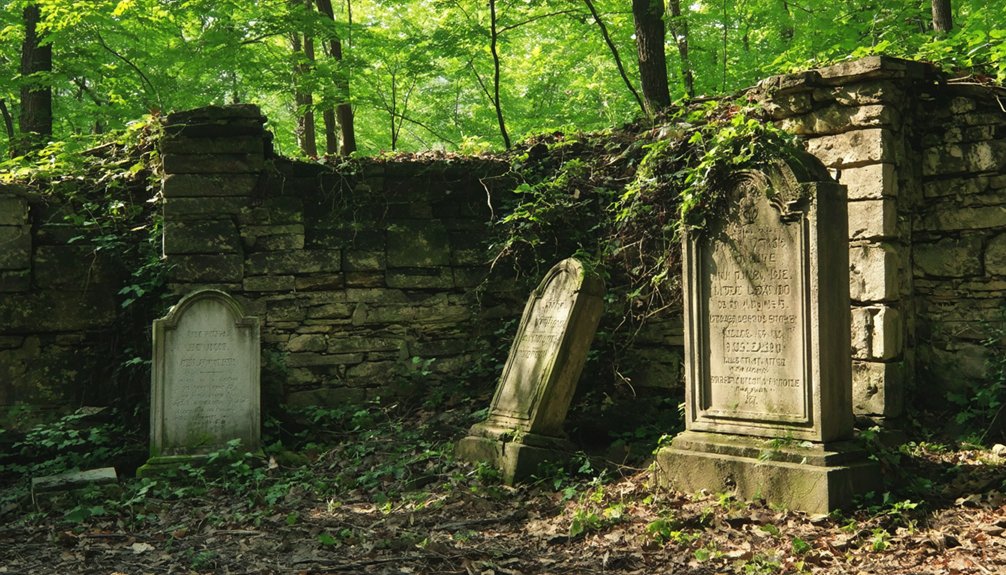
Once you reach the old settlement, you won’t find a preserved ghost town frozen in time — what remains is sparse, weathered, and slowly being swallowed by the surrounding forest.
The Terry Cemetery still stands as one of the most visible remnants, its headstones marking generations of families who built their lives in this isolated valley.
Stone foundations and scattered structural traces hint at where farms, homes, and community buildings once stood, but nature has done its work, pulling most of No Business back into the hillside.
What Ruins Remain
Time has quietly erased most of what No Business once was, but a few stubborn remnants still break through the forest floor to remind you that 300 people once called this hollow home.
Nature’s reclaimed most structures, yet ruins exploration here still carries real historical significance.
Watch for these remnants as you hike through:
- Stone foundations partially buried beneath decades of leaf litter
- Old homesites marked by flattened clearings and scattered rock
- Terry Cemetery, where weathered headstones still stand guard
- Collapsed chimney stacks rising from overgrown hillsides
- Remnant fence lines tracing property boundaries long forgotten
Don’t expect a preserved museum.
Expect something rawer — a landscape slowly swallowing a community whole, leaving just enough behind to spark your imagination and respect for those who carved life from this remote hollow.
Cemeteries Still Visible
Among the remnants clinging to No Business, the cemeteries carry the heaviest presence. Hand-carved stones mark graves of families who worked this isolated valley for generations, and the Terry Cemetery serves as your actual trailhead, connecting cemetery significance directly to your journey before you’ve taken a single step into the woods.
These burial grounds represent more than sentiment. They’re anchor points for historical preservation in an area where nature has reclaimed nearly everything else. Unlike crumbled foundations that require imagination, the grave markers tell you names, dates, and family lines that trace back to 1796.
Walking among them, you feel the weight of a community that lived entirely outside the mainstream. These people chose this valley, and the cemeteries confirm they never entirely left it.
Nature Reclaims Structures
What the forest hasn’t swallowed, it’s slowly digesting. Nature’s resilience wins here — vines crawl over stone foundations, moss blankets old walls, and tree roots split what settlers once built.
Historical preservation happens naturally at No Business, though not by human hands. You’ll recognize remnants if you look closely:
- Crumbled stone foundations barely visible beneath leaf cover
- Rotting timber outlines marking where structures once stood
- Overgrown clearings hinting at former farmland
- Rock chimneys standing as the forest’s reluctant guests
- Worn path depressions tracing old foot traffic routes
Don’t expect restored buildings or interpretive signs. What remains is raw and unfiltered.
That authenticity is exactly why explorers seeking something real keep coming back to this forgotten valley.
Where to Stay Near No Business
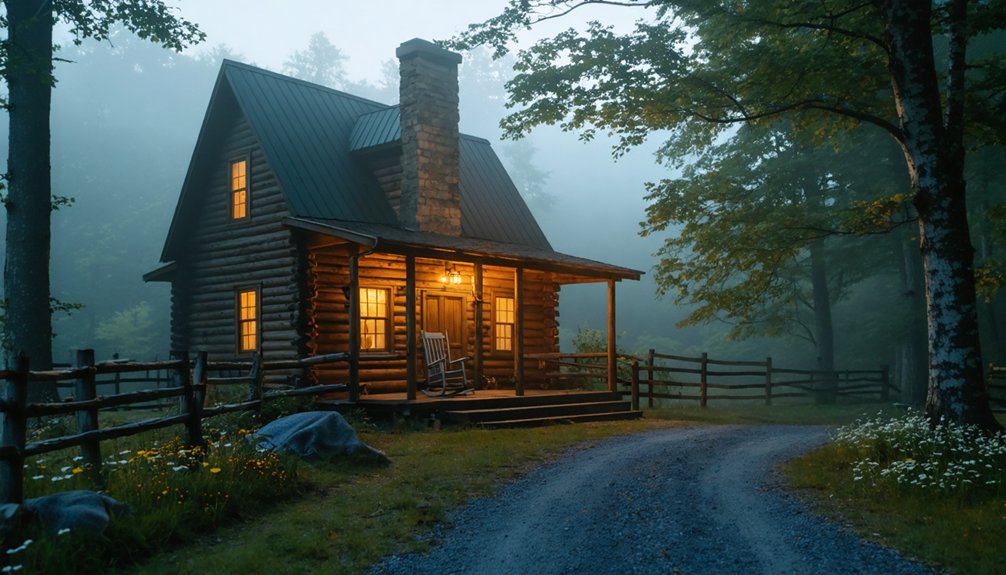
Since No Business sits deep in one of Tennessee’s most isolated corners, you’ll want to plan your base camp carefully before hitting the trail.
Oneida, just over an hour away, offers solid accommodation options ranging from budget motels to short-term rentals, plus local amenities like fuel, groceries, and diners to stock up before you head out.
Oneida sits just over an hour out and covers the basics — motels, fuel, groceries, and a decent meal before the trail.
If you’d rather start farther back, Knoxville sits a little over two hours from the trailhead and gives you a wider selection of lodging, restaurants, and gear shops.
Campers can explore sites within Big South Fork itself, putting you closer to the wilderness.
Whichever base you choose, book ahead during peak hiking season since this region draws more visitors than its remote reputation might suggest.
Other Tennessee Ghost Towns Worth the Detour
If No Business left you hungry for more forgotten history, Tennessee’s ghost-town trail doesn’t end there. The state holds several abandoned settlements worth adding to your route, each offering its own chapter in historic preservation.
- Elkmont – A Smoky Mountains resort community reclaimed by nature inside Great Smoky Mountains National Park.
- Loyston – Submerged beneath Norris Lake, visible only during low water.
- Old Butler – Flooded in 1948, with remnants occasionally surfacing near Watauga Lake.
- Rugby – A utopian British colony frozen in the 1880s with original structures still standing.
- Roddy – A quiet coal camp ruin tucked into the Cumberland Plateau.
Each stop deepens your understanding of Tennessee’s layered, often overlooked past.
What Is the No Business 100 Trail Race?
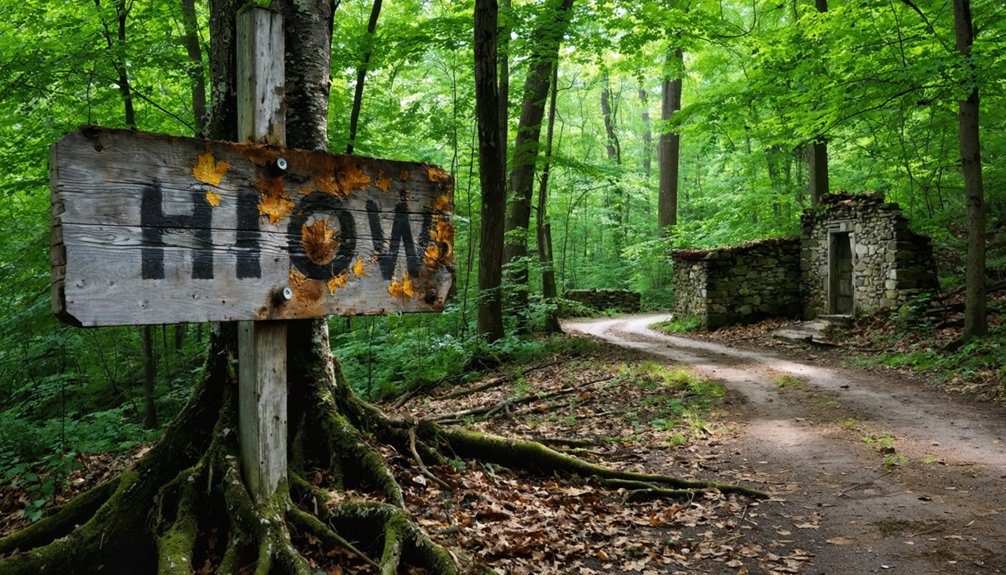
The No Business 100 isn’t just a race — it’s a 102-mile test of endurance that pushes runners through the same rugged terrain that once isolated the ghost town itself.
The course loops through Big South Fork and crosses into Kentucky, demanding everything from those who enter. Trail race logistics here aren’t simple — you’re traversing remote valleys, creek crossings, and forest trails that challenge even experienced ultra-runners.
The course crosses into Kentucky and demands everything — remote valleys, creek crossings, and trails that break even seasoned ultra-runners.
If you’ve ever wanted to feel the raw isolation that defined life in No Business, runner experiences from this event capture exactly that.
The land doesn’t yield easily, and neither does this race. Whether you’re competing or just following the course on foot, the landscape tells the same unforgiving story the original settlers knew well.
Frequently Asked Questions
Is No Business, Tennessee Suitable for Children or Beginner Hikers?
Yes, it’s manageable for beginner hikers and families! You’ll enjoy the 4.7-mile trail’s family friendly activities, but prioritize hiking safety — creek crossings and remote terrain demand sturdy footwear and careful preparation before you explore.
Are Pets Allowed on the Trails Leading to No Business?
Over 70% of national recreation areas welcome leashed pets! You’ll find Big South Fork’s trails follow pet friendly policies, so you can bring your dog. Keep trail safety in mind by leashing your pet throughout the journey.
What Is the Best Time of Year to Visit No Business?
Spring and fall offer the best season to visit No Business. You’ll enjoy mild weather conditions, vibrant foliage, and comfortable hiking temperatures that make exploring this remote ghost town’s rugged trails an unforgettable, freeing adventure.
Is a Permit Required to Hike to No Business, Tennessee?
You don’t need a permit to hike to No Business! Simply follow hiking regulations, check trail conditions beforehand, and you’re free to explore this remote, breathtaking ghost town within Big South Fork National River and Recreation Area.
Are There Guided Tours Available for the No Business Ghost Town?
No formal guided tours exist, but you’ll uncover ghost town history on your own terms via self-guided trails. Stay mindful of hiking safety as you freely explore this remote, nature-reclaimed Tennessee wilderness.
References
- https://www.islands.com/2015789/no-business-tennessee-abandoned-quirky-name-blue-ridge-beauty/
- https://www.youtube.com/watch?v=aUrBmtWkL78
- https://everafterinthewoods.com/deserted-ghost-towns-in-tennessee-that-history-lovers-still-wander-through/
- https://en.wikipedia.org/wiki/List_of_ghost_towns_in_Tennessee
- https://www.onlyinyourstate.com/trip-ideas/tennessee/tn-ghost-town-road-trip
- https://1075theriver.iheart.com/featured/battle/content/2019-04-03-hiking-trail-near-nashville-leads-you-straight-to-an-abandoned-village/
- https://www.youtube.com/watch?v=7mYZYhQaj4U
- https://www.youtube.com/watch?v=EnR08fW3rQ4
- https://www.tnmagazine.org/19-ghost-towns-in-tennessee-that-are-not-underwater/
- https://www.nps.gov/biso/learn/historyculture/nobusiness.htm