Planning a ghost town road trip to Norfleet, Texas means heading to Hale County in the Texas Panhandle, about ten miles west of Hale Center. You’ll find no remaining structures here, just open land where a railroad dream died during the 1907 financial panic. The town’s founder, J. Frank Norfleet, left behind a legacy far bigger than the ghost town itself. Stick around to uncover one of the most remarkable true stories in Texas history.
Key Takeaways
- Norfleet is located in Hale County, Texas Panhandle, approximately ten miles west of Hale Center, on the north bank of the Double Mountain Fork of the Brazos River.
- No structures remain at the site, offering visitors open landscapes and a reflective glimpse into frontier life’s boom-and-bust cycle.
- Pack water, offline maps, a spare tire, a first aid kit, and a flashlight, as drive conditions vary seasonally.
- The town was founded by rancher J. Frank Norfleet and abandoned after railroad funding collapsed during the 1907 nationwide financial panic.
- J. Frank Norfleet’s remarkable legacy as a cowboy detective, capturing over 100 criminals, adds compelling historical depth to the road trip experience.
How to Find Norfleet, Texas
Tucked into Hale County in the Texas Panhandle, Norfleet sits on the north bank of the Double Mountain Fork of the Brazos River, about ten miles west of Hale Center and southwest of Plainview, the county seat.
You’ll find it west of Hale Center and north of Lubbock, positioned on the east boundary of the historic Spade Ranch.
Ghost town tourism draws curious travelers to remote sites like this, and Norfleet rewards the adventurous with wide-open Panhandle landscapes and a compelling Norfleet history.
Don’t expect structures — none remained as of July 2014.
You’re fundamentally visiting a place that time erased.
Pack a map, top off your tank in Hale Center, and embrace the freedom of chasing a town that exists only in memory.
The Boom-and-Bust Story Behind Norfleet Ghost Town
When you piece together Norfleet’s short history, you find a classic Texas boom-and-bust tale built on railroad dreams that never came true.
Rancher J. Frank Norfleet platted the town himself, betting everything on the Panhandle Short Line Railroad‘s surveyed route from Vega to Lubbock cutting right through the site. For a few years, the town actually took shape with a school, houses, stores, and a post office.
Then the nationwide financial panic of 1907 killed the railroad’s funding, the trains never came, and residents walked away from Norfleet almost as fast as they’d arrived.
Railroad Dreams Die Hard
Like so many towns across the Texas Panhandle, Norfleet lived and died by the railroad. The Panhandle Short Line Railroad surveyed a route from Vega to Lubbock straight through the townsite around 1905, fueling railroad ambitions that transformed a blank stretch of prairie into a functioning community.
Settlers arrived, stores opened, and a post office stamped its first letter in 1909.
Then reality hit hard. A nationwide financial panic strangled funding, competition undercut the railroad’s viability, and the tracks never came.
Without that iron lifeline, residents packed up and left, abandoning everything Norfleet had promised. What remained became one of the Panhandle’s quieter ghost town legends — no crumbling buildings, no dramatic ruins, just open land where a community once dared to believe a train was coming.
Norfleet’s Bold Town Vision
Before the railroad dreams collapsed, someone had to believe in Norfleet enough to build it — and that someone was J. Frank Norfleet. This Texas rancher platted the town himself, betting that the Panhandle Short Line Railroad’s planned route from Vega to Lubbock would transform his land into a thriving community.
Norfleet’s vision wasn’t reckless — it was calculated. He relocated a school to the site, attracted houses and stores, and secured a post office by 1909.
Settlers arrived, stakes were claimed, and momentum built.
But the 1907 financial panic killed the railroad’s funding, and without rails, there was no reason to stay. Residents packed up and left, sealing the ghost town legacy of a place that almost became something remarkable.
Panic Seals The Fate
The 1907 financial panic didn’t just slow Norfleet’s growth — it strangled it. Nationwide financial turmoil pulled the rug out from under the Panhandle Short Line Railroad, draining the competition and funding it desperately needed.
Without rails cutting through the Texas Panhandle, Norfleet had nothing to offer settlers chasing opportunity.
You can imagine the deflation people felt watching their hopes evaporate. Families who’d built homes and stocked store shelves quietly packed up and moved on.
The post office, the school, the scattered structures — all abandoned. Nobody stayed for a ghost town.
What’s left today is open sky, flat land, and silence. Financial turmoil wrote the final chapter before Norfleet’s story even got started.
That’s the brutal honesty of boom-and-bust frontier life.
Who Was J. Frank Norfleet?
Born on February 23, 1865, in Lampasas, Texas, J. Frank Norfleet built himself into a true Texas legend. He worked as a cowboy and trail herder before acquiring a ranch near Plainview, eventually expanding his holdings to 20,000 acres.
He even developed prized racehorses, his famous “Five Dollar Strain,” from a pony he bought for just five dollars.
Norfleet’s legacy runs deeper than ranching, though. Town planning was just one chapter of his remarkable story.
Norfleet’s story stretched far beyond cattle and land — it was the stuff of true American legend.
In 1919, con artists swindled him out of $45,000, so he pursued them across 30,000 miles through the U.S., Mexico, Canada, and Cuba, capturing all five criminals without killing a single one.
He’d go on to capture over 100 criminals total, earning the nickname “Little Tiger.”
How Norfleet Founded a Town That Died Before It Lived
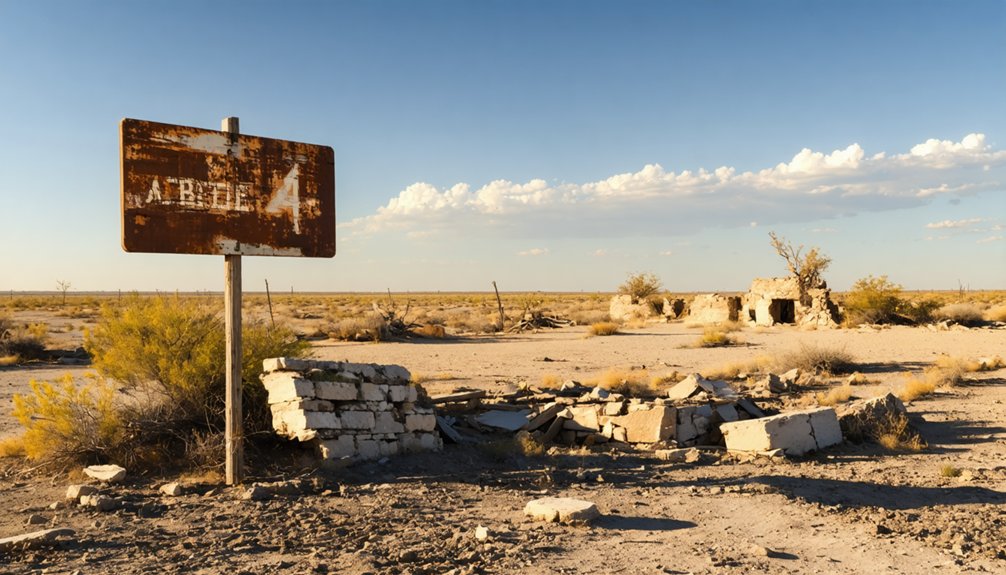
In 1905 or 1907, the Panhandle Short Line Railroad surveyed a route from Vega to Lubbock, and Norfleet saw his chance, platting a town where the tracks would pass through his land on the east boundary of Spade Ranch.
A school relocated to the site, houses and stores went up, and a post office opened with a 1909 postmark — all the bones of a real town taking shape.
But the nationwide financial panic of 1907 killed the railroad’s funding, and without the tracks, residents packed up and left, leaving Norfleet, Texas, a ghost town before it ever truly lived.
Norfleet’s Failed Railroad Dream
When J. Frank Norfleet platted his town, his railroad ambitions seemed destined to succeed. The Panhandle Short Line Railroad had surveyed a route from Vega to Lubbock directly through the site around 1905 to 1907, promising to transform his community dreams into reality.
Settlers arrived, stores opened, a school relocated, and a post office began operating by 1909. Everything pointed toward a thriving future.
Then the nationwide financial panic of 1907 hit hard. Railroad funding dried up, competition intensified, and the project collapsed entirely.
Without the railroad’s lifeline, residents had no reason to stay. They packed up and left, abandoning everything Norfleet had built. The town he’d envisioned died before it ever truly lived, leaving nothing but open Texas Panhandle wind where streets once bustled.
Town’s Swift Abandonment
The collapse of the Panhandle Short Line Railroad didn’t just doom a business venture—it erased an entire community almost overnight.
Residents had built homes and stores around community dreams that simply vanished when the tracks never came. The town’s legacy became a cautionary tale about betting everything on a single promise.
When the railroad failed, people didn’t linger:
- Families packed up and left without looking back
- Businesses shuttered with no customers remaining
- The post office, active since 1909, fell silent
- Structures eventually disappeared entirely from the landscape
The Con That Made Norfleet Famous Across America
By 1919, J. Frank Norfleet had built a 20,000-acre ranch and earned serious respect across the Texas Panhandle.
Then five conmen stripped him of $45,000 in a Dallas and Fort Worth swindle — roughly $1.3 million today.
Rather than accepting defeat, Norfleet transformed his loss into purpose. He pursued those criminals across 30,000 miles, crossing into Mexico, Canada, Cuba, and throughout the United States.
Using cowboy detective instincts — disguises, patience, and trail-hardened persistence — he tracked down all five swindlers, including ringleader Joe Furey.
He captured over 100 criminals between 1919 and 1935 without killing a single one.
His 1924 memoir, *Norfleet*, turned him into a national sensation.
That extraordinary Norfleet legacy stands in sharp contrast to the forgotten ghost town bearing his name.
How Norfleet Tracked Five Swindlers Across 30,000 Miles
After five conmen cheated J. Frank Norfleet out of $45,000 in 1919, he didn’t hire a private detective or wait for the law — he grabbed his cowboy skills and hit the trail himself.
You’d be hard-pressed to find a more relentless pursuer, as Norfleet tracked the swindlers across 30,000 miles through the United States, Mexico, Canada, and Cuba using disguises, patience, and sheer determination.
One by one, he ran down all five men — Joe Furey, E.J. Ward, W.B. Spencer, Charles Gerber, and Reno Hamlin — earning himself the nickname “Little Tiger” along the way.
The $45,000 Swindle
When J. Frank Norfleet rode into Dallas in 1919, five conmen saw an easy mark. They were wrong. The swindle details reveal a sophisticated confidence scheme that drained Norfleet of $45,000—roughly $1.3 million today.
The conmen identities included:
- Joe Furey – the operation’s mastermind
- E.J. Ward – key conspirator in the scheme
- W.B. Spencer – active participant in the fraud
- Charles Gerber and Reno Hamlin – completing the criminal five
Rather than accept defeat, Norfleet made a decision that would define his legacy.
You’d expect a swindled rancher to lick his wounds and move on. Instead, he strapped on his cowboy skills, grabbed his patience like a weapon, and launched one of history’s most remarkable private manhunts.
Cowboy Turns Detective
Strapping on his cowboy instincts like a second skin, J. Frank Norfleet transformed himself into a one-man cowboy detective agency.
After losing $45,000 to five con artists, he didn’t wait for justice to find him — he went hunting for it himself. Armed with patience, disguises, and trail-hardened determination, he launched a legendary manhunt that covered over 30,000 miles across the United States, Mexico, Canada, and Cuba.
He tracked Joe Furey, E.J. Ward, W.B. Spencer, Charles Gerber, and Reno Hamlin one by one, capturing all five without firing a single fatal shot.
Authorities earned their paychecks sitting at desks; Norfleet earned his nickname, “Little Tiger,” chasing criminals across two continents. His pursuit proved that a cowboy’s grit could outmatch any criminal’s cunning.
Capturing All Five Conmen
Tracking five hardened con artists across two continents sounds like the plot of a dime novel, but J. Frank Norfleet actually did it. This cowboy detective traveled over 30,000 miles, using disguises, patience, and sharp frontier instincts to hunt down every man who robbed him.
He captured all five:
- Joe Furey – the ringleader, tracked across multiple states
- E.J. Ward – apprehended through relentless pursuit
- W.B. Spencer – caught despite elaborate evasions
- Charles Gerber and Reno Hamlin – neither escaped justice
Norfleet’s legacy isn’t just personal revenge—it’s a demonstration of individual determination over institutional failure. He refused to let criminals walk free simply because the system moved too slowly.
You won’t find that kind of grit just anywhere.
What Remains at the Norfleet Ghost Town Site Today?
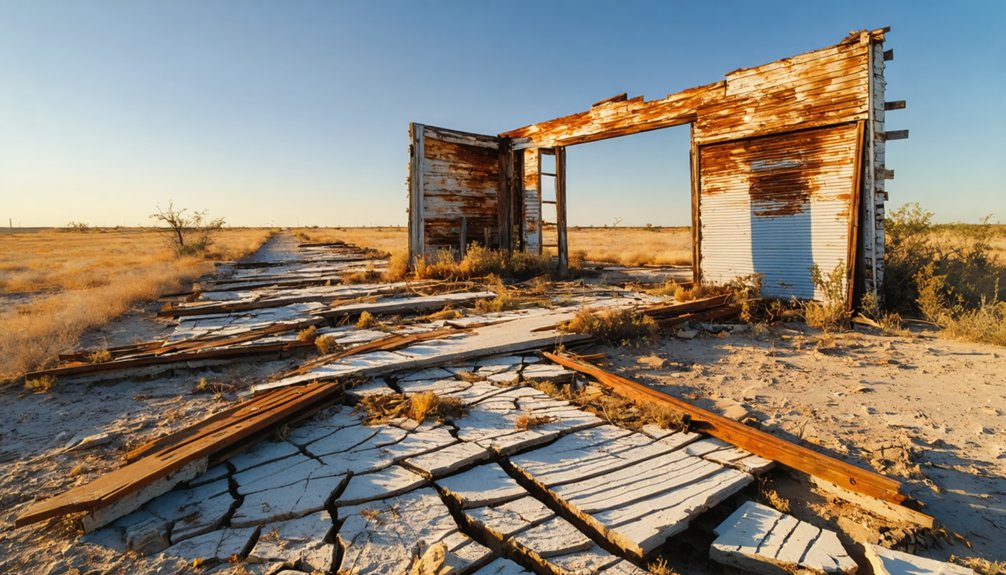
Although the Norfleet ghost town once buzzed with the promise of railroad prosperity, you’ll find nothing standing at the site today. As of July 2014, no structures remain from the brief chapter when hopeful settlers built homes and stores along the north bank of the Double Mountain Fork of the Brazos River.
Despite the absence of physical remnants, the site carries deep historical significance for ghost town exploration enthusiasts. You’re standing where Jasper Frank Norfleet envisioned a thriving railroad town, platted with ambition and ultimately abandoned when the Panhandle Short Line Railroad never arrived.
The open Texas Panhandle landscape surrounding the former townsite tells its own story. Located ten miles west of Hale Center, the land itself becomes your only tangible connection to this forgotten settlement.
Is the Drive Out to Norfleet Worth Making?
Whether the drive out to Norfleet is worth your time depends entirely on what you’re chasing. Drive conditions vary seasonally, so check road accessibility before heading out. The scenic routes through the Texas Panhandle reward those who appreciate wide-open solitude.
The drive to Norfleet rewards patient explorers — check road conditions first, then let the Panhandle’s vast solitude do the rest.
You’ll find value in this trip if you:
- Crave raw, unfiltered Texas history without tourist crowds
- Enjoy photographing vast, empty landscapes on scenic routes
- Want to walk ground where a determined rancher once built dreams
- Love the freedom of exploring places most people never know exist
There’s nothing left standing, but the silence itself tells the story.
If you’re the type who finds meaning in forgotten places, Norfleet delivers something no preserved historic site can replicate — pure, unscripted emptiness.
Ghost Towns and Historical Sites Within an Hour of Norfleet
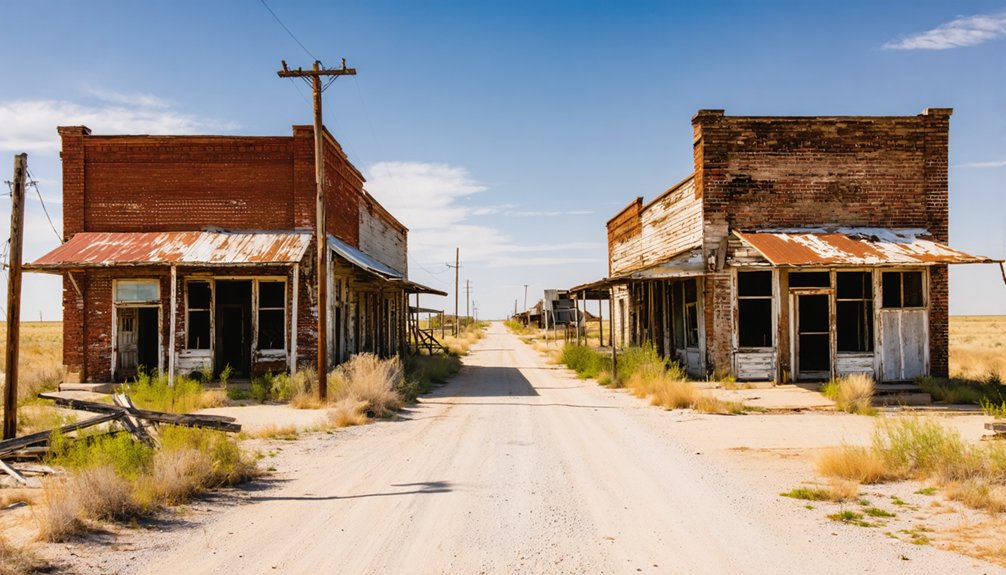
The Texas Panhandle rewards ghost town hunters generously — Norfleet sits within an hour’s drive of several forgotten communities and historical landmarks worth adding to your route.
Cotton Center, just a short drive south, carries its own ghost town legends rooted in the same railroad-era dreams that doomed Norfleet.
Hale Center’s historical markers connect you to the broader story of Panhandle settlement and the ranching culture that shaped the region.
Plainview, the Hale County seat, offers museums preserving artifacts from communities that vanished before most people were born.
Each stop deepens your understanding of why towns like Norfleet rose and collapsed so quickly.
String these sites together, and you’ll turn a single ghost town visit into a genuinely rewarding full-day road trip.
What to Pack Before You Drive Out to Norfleet
Reaching Norfleet means driving into genuinely remote Texas Panhandle terrain where cell service drops, pavement ends, and the nearest help sits miles away — so you’ll want to pack smart before you leave.
Norfleet doesn’t ease you in — it drops you into remote terrain where pavement, signal, and nearby help all disappear at once.
These road trip tips and packing essentials keep your adventure moving instead of stalling.
- Water and food: Carry more than you think you’ll need; heat and distance demand it
- Offline maps or GPS: Download the route before you lose signal
- Spare tire and basic tools: Caliche roads punish unprepared vehicles fast
- First aid kit and flashlight: Remote exploration rewards preparation, not assumptions
Pack these items, load up, and drive out knowing you’ve handled the practical side before the ghost town experience begins.
Frequently Asked Questions
Can You Camp Overnight Near the Norfleet Ghost Town Site?
Like a blank canvas, Norfleet’s deserted land awaits you! You’ll need camping permits since it’s private ranch territory. Nearby facilities are scarce, so pack everything you’ll need for your rugged overnight adventure here.
Are There Any Guided Tours Available for the Norfleet Area?
You won’t find formal guided tour options for Norfleet, but don’t let that stop you! Explore its local historical significance independently, connecting with Hale County locals or historical societies who’ll enthusiastically share J. Frank Norfleet’s remarkable legacy.
Is the Norfleet Ghost Town Site on Private or Public Land?
The knowledge doesn’t confirm whether Norfleet’s land is private or public, so you’ll want to verify before visiting. Respecting boundaries guarantees Ghost town preservation and honors Norfleet history for fellow freedom-seeking explorers like yourself.
What Is the Best Time of Year to Visit Norfleet?
Strike while the iron’s hot — visit Norfleet in spring or fall for the best weather. You’ll enjoy mild temperatures and seasonal attractions like wildflowers and golden prairie landscapes, making your ghost town exploration truly unforgettable.
Are There Any Annual Events Commemorating Norfleet’s History Nearby?
You won’t find annual events specifically commemorating Norfleet history, but Plainview and Hale Center occasionally celebrate local folklore through county fairs and historical society gatherings where you’ll discover fascinating stories about J. Frank Norfleet’s legendary manhunt adventures.
References
- https://www.texasescapes.com/TexasPanhandleTowns/Norfleet-Texas.htm
- https://www.hmdb.org/m.asp?m=91329
- https://petticoatsandpistols.com/2011/05/17/james-franklin-norfleet-a-cowboy-with-a-plan/
- https://en.wikipedia.org/wiki/J._Frank_Norfleet
- https://www.texasstandard.org/stories/norfleet-the-texas-rancher-who-kept-on-coming/
- https://www.tshaonline.org/handbook/entries/norfleet-james-franklin
- https://texashistory.unt.edu/ark:/67531/metapth5864/m1/358/