Your ghost town road trip to North Unity, Michigan starts in Leelanau County within Sleeping Bear Dunes National Lakeshore. This Bohemian settlement, founded in 1855, was nearly wiped out by the devastating 1871 forest fire, pushing survivors inland to Shalda Corners. Today, no ruins mark the original lakeshore site—nature’s reclaimed everything. You’ll walk Shalda Creek’s trail, feel the silence, and piece history together through landscape alone. There’s far more to this forgotten story waiting just ahead.
Key Takeaways
- North Unity, established in 1855 by Bohemian and German immigrants, was destroyed by the 1871 fire; survivors relocated inland to Shalda Corners.
- The original lakeshore site within Sleeping Bear Dunes National Lakeshore shows no ruins, as nature has fully reclaimed the area.
- Access the site via County Road 669 toward Shalda Creek, parking roadside and walking the beach or creek trail.
- Visit late May through June or early September for the best weather, avoiding crowded, hot July and August months.
- Combine your trip with nearby ghost towns Keswick and Fouch, sharing similar timber-era histories throughout Leelanau County.
The 1855 Bohemian Settlement That Burned and Moved Inland
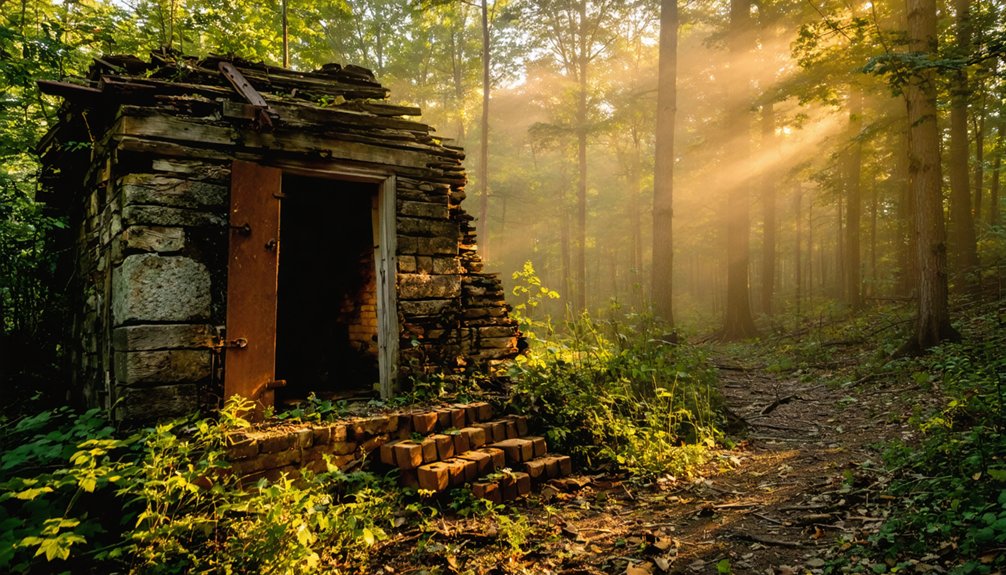
Before North Unity existed on any map, a group of Bohemian immigrants stepped off a sailboat from Chicago in 1855 and walked into deep forest along the shores of Lake Michigan in Leelanau County. They weren’t tourists — they were builders.
Thirty-two families of Czech and German settlers cleared land, raised a 150-foot communal barrack, and survived that brutal first winter partly on corn provided by local Indigenous people. They built farms, a gristmill, a schoolhouse, and a general store.
Thirty-two families. One brutal winter. Corn from neighbors they’d never met. They built anyway.
Then the 1871 forest fire erased nearly everything. Rather than abandon their lives, survivors moved inland to what’s now Shalda Corners.
Cultural preservation drove that decision, and it shows — a restored log cabin, school, and church still stand today as rare historical artifacts of a community that refused to disappear twice.
What’s Left of North Unity Today
When you arrive at the original lakeshore site today, you’ll find something both humbling and strange — no foundations, no cellar holes, no fence posts, nothing. The forest and shoreline have completely reclaimed what 32 families once built. No historical artifacts mark the ground where that 150-foot barrack once stood.
But venture inland toward Shalda Corners, and the story changes. There, you’ll discover the restored Shalda log cabin, a surviving school building, and a Catholic church near M-22 — tangible proof that this community refused to disappear quietly.
Local legends about the 1871 fire and the settlers who rebuilt still circulate through Leelanau County.
The National Park Service encourages visitors to use imagination here. You’re not walking through ruins — you’re walking through memory.
How to Reach North Unity in Sleeping Bear Dunes
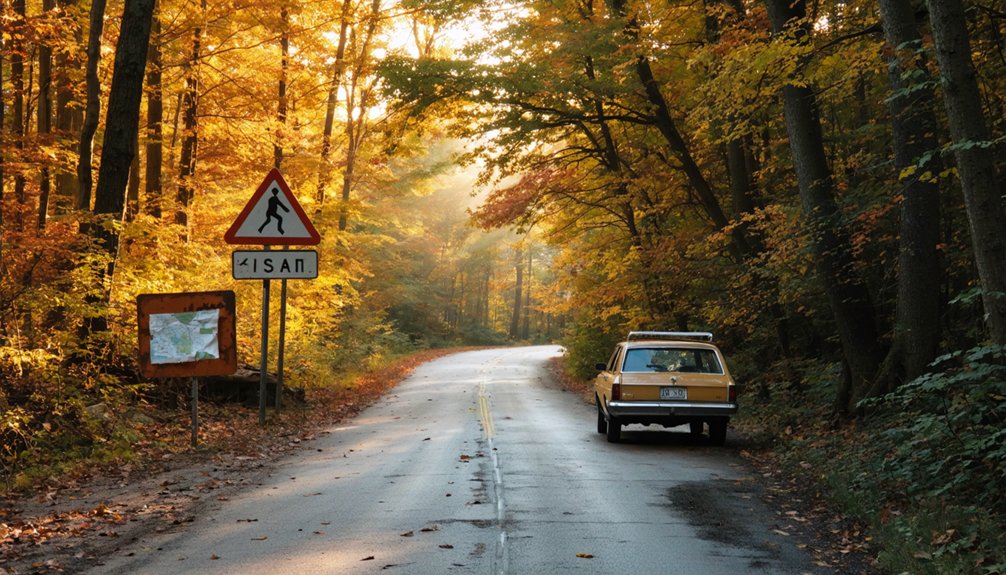
Getting to North Unity takes a little intention, but that’s part of the adventure.
Head to the northern section of Sleeping Bear Dunes National Lakeshore in Leelanau County, where Shalda Creek meets Lake Michigan.
Turn onto County Road 669 and follow Lake Michigan Drive toward the creek.
You’ve got two solid options from there: park roadside near Shalda Creek and hike along it to the shoreline, or drive to the end of CR 669 and walk the beach until you reach the creek.
Don’t expect historical artifacts or visible ruins at the lakeshore site — the National Park Service confirms nothing remains.
But the landscape itself carries the community stories.
Let the dunes, the water, and the silence do the storytelling.
Surviving Buildings at North Unity Near M-22
While the lakeshore site holds no visible trace of the original village, the inland area near M-22 tells a different story. Community preservation efforts kept several structures standing, giving you a rare glimpse into North Unity‘s resilience after the 1871 fire. These examples of historical architecture connect you directly to the settlers who rebuilt their lives here:
- Shalda Log Cabin – restored and still standing as a frontier landmark
- Original schoolhouse – a weathered reminder of community life
- Catholic church – anchoring the rebuilt settlement near M-22
- Shalda Corners crossroads – where M-22 meets County Road 669
- Post office site – closed by 1905, marking the town’s final chapter
Explore each stop and let the story unfold around you.
How to Walk to Shalda Creek From the Road
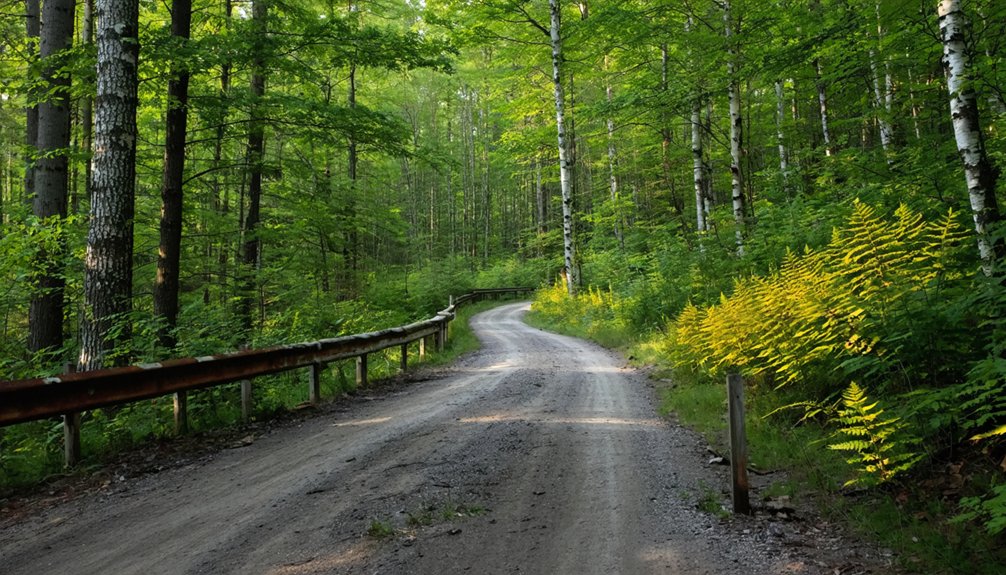
To reach Shalda Creek, pull off onto the roadside near County Road 669 and look for a natural path that traces the creek toward Lake Michigan.
You’ll follow the creek through a quiet, wooded corridor that gradually opens as you approach the shoreline.
Once you reach the beach, you’re standing at the edge of what was once a thriving Bohemian settlement — now swallowed by forest and sand.
Finding Roadside Parking
Parking near Shalda Creek requires a bit of roadside improvisation, but that’s part of the adventure. You won’t find a designated lot, so you’ll pull off where the road allows and let the landscape guide you into local history.
Watch for these practical stopping points:
- County Road 669 offers roadside shoulders near the creek crossing.
- Lake Michigan Drive provides informal pull-offs close to the shoreline access.
- Shalda Creek’s edge marks your natural landmark for orientation.
- M-22 intersections give you a reliable reference point before turning.
- Gravel shoulders along CR 669 handle light foot traffic well.
This cultural heritage site rewards those willing to navigate on their own terms. Park smart, lace up your boots, and let the ghost town’s forgotten story pull you forward.
Following The Creek Path
Once you’ve claimed your roadside spot, the real journey begins on foot. Follow the creek path along Shalda Creek, letting the water guide you westward toward Lake Michigan. The trail isn’t manicured or marked — that’s the point. You’re walking through living cultural heritage, tracing the same landscape that Bohemian settlers navigated after arriving in 1855.
As you move closer to the lakeshore, the forest thickens and the creek widens. Historical preservation efforts by Sleeping Bear Dunes National Lakeshore mean this corridor remains largely untouched, giving you an authentic sense of what early settlers encountered.
No signs announce the ghost town. No monuments interrupt the tree line. Just you, the creek, and the quiet weight of a community that once stood here and vanished.
Reaching Lake Michigan
Where the creek meets the lake, the ghost town’s story reaches its most haunting chapter. You’re standing where North Unity’s earliest settlers first came ashore, and local legends say the lakeshore still holds echoes of that vanished world.
Watch for these trail highlights as you reach Lake Michigan:
- Sandy shoreline opens dramatically after the tree line breaks
- Historical artifacts occasionally surface after heavy storms along the beach
- Pyramid Bay stretches northward, unchanged since 1855
- Wave-carved bluffs reveal layers of untouched wilderness
- Shalda Creek’s mouth marks the exact settlement boundary
No structures remain, but the raw landscape tells everything. You’ll feel the isolation those 32 founding families faced.
Stand at the water’s edge and let the silence do the storytelling.
Why the Lakeshore Site Shows No Visible Remains
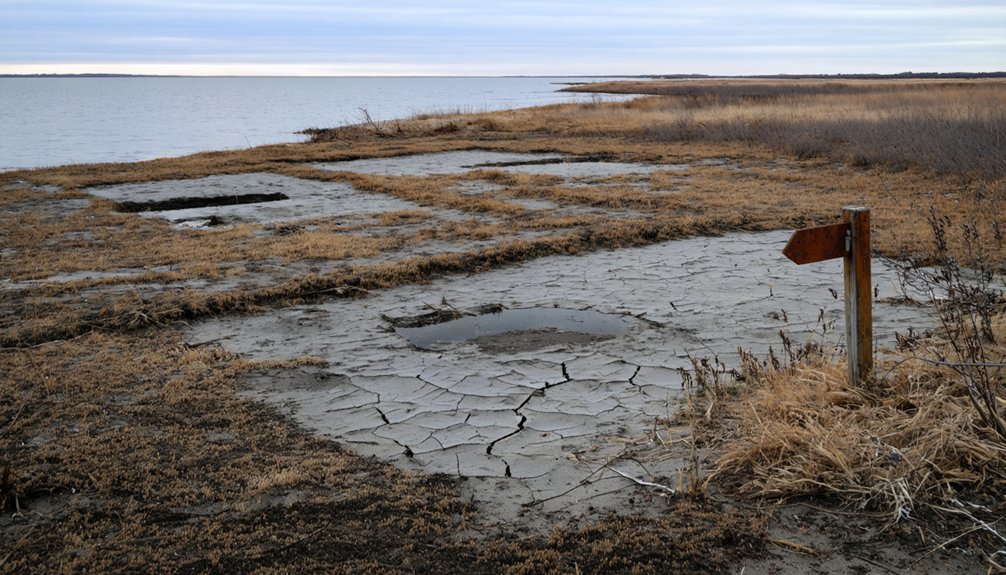
When you reach the lakeshore site of North Unity, don’t expect crumbling foundations or weathered timber — there’s nothing left to find.
The 1871 forest fire that drove settlers inland didn’t just destroy buildings; it erased the entire settlement, leaving nature free to reclaim every trace.
Decades of forest regrowth, shifting sands, and Lake Michigan’s relentless shoreline have buried whatever the flames didn’t take.
Fire Erased Everything
The 1871 forest fire didn’t just damage North Unity — it erased it. Every structure the settlers built vanished in the flames, leaving nothing behind for historical preservation efforts to recover. Community memory is all that remains of the original lakeshore site.
Here’s what the fire took with it:
- The 150-foot communal barrack that sheltered the first families
- Permanent homes built after that brutal first winter
- The gristmill that kept the settlement fed
- The general store at the heart of daily life
- Every boundary, foundation, and trace of the village layout
When you stand near Shalda Creek today, you’re standing on silence. The National Park Service confirms it — no visible evidence remains. The fire went completely.
Nature Reclaimed The Site
Fire cleared the land, but nature finished the erasure. Decades of wind, water, and forest growth swallowed every foundation, beam, and post the 1871 fire left behind. Today, Sleeping Bear Dunes National Lakeshore confirms that the original lakeshore site holds no visible village remains. You won’t find crumbling walls or sunken cellar holes marking where those 32 families once built their lives.
That absence is the story. Cultural heritage doesn’t always survive in brick and mortar. Sometimes it lives in the landscape itself, quietly waiting for someone curious enough to show up.
Historic preservation here means protecting the memory, not the structures. When you stand near Shalda Creek where it meets Lake Michigan, you’re walking ground that once held an entire frontier world. Bring your imagination, because the land won’t hand you easy answers.
Best Time to Visit North Unity
Timing your visit to North Unity can make or break the experience. For historical preservation and cultural significance, you’ll want conditions that let you explore freely and comfortably.
The best windows for visiting are:
- Late May through June – mild temps, minimal crowds, wildflowers along Shalda Creek
- Early September – cooler air, stunning lake views, fewer summer tourists
- October – dramatic fall color frames the surviving church and school buildings
- Avoid peak July/August – heat and crowds shrink the sense of solitude this ghost town deserves
- Skip winter entirely – snow blocks CR 669 access and hides the landscape’s subtle storytelling
Whatever season you choose, arrive early. The site rewards patience, quiet, and a willingness to imagine what once stood where the forest now rules.
Other Leelanau County Ghost Towns Worth Adding to the Route
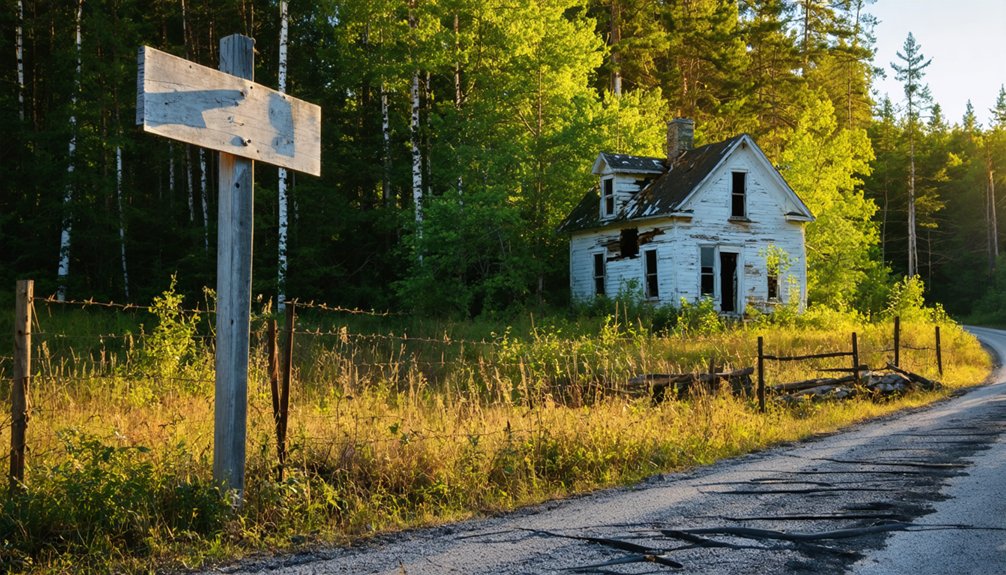
Once you’ve walked the quiet shoreline where North Unity once stood, Leelanau County rewards the curious with more ghost towns hiding along its back roads. Keswick and Fouch both carry real historical context worth chasing — small settlements that rose with Michigan’s timber economy and faded just as fast.
Each site adds cultural significance to your route, layering the region’s immigrant and frontier story beyond a single stop. You won’t find dramatic ruins or marked trails at most of these spots. Instead, you’ll find overgrown foundations, forgotten cemeteries, and the particular silence that abandoned places carry.
Grab a county map, leave room in your schedule, and let Leelanau’s back roads pull you deeper into Michigan’s vanished past. The freedom to wander is the whole point.
Frequently Asked Questions
Is a Permit Required to Visit North Unity Within Sleeping Bear Dunes?
Permits aren’t required! You’re free to freely explore North Unity’s historical landmarks and soak up local folklore within Sleeping Bear Dunes National Lakeshore — just park, hike, and let adventure guide your journey there.
Are Pets Allowed on the Hike to Shalda Creek?
You can bring your pet, but keep pet safety in mind on uneven terrain. The trail difficulty’s manageable, yet you’ll want your furry companion leashed as you adventure toward Shalda Creek’s wild, scenic shores!
Is There an Entrance Fee for Sleeping Bear Dunes National Lakeshore?
Yes, freedom isn’t free! You’ll pay an entrance fee to explore Sleeping Bear Dunes National Lakeshore. Check current camping regulations and stay alert for wildlife encounters as you chase North Unity’s adventurous, haunting ghost town legacy!
Are Restroom Facilities Available Near the North Unity Access Points?
Restroom facilities aren’t guaranteed near North Unity’s access points, so plan ahead! You’ll want to stop in Empire or Glen Arbor before venturing out — freedom tastes sweeter when you’re fully prepared for the wild trail ahead!
Can the Surviving North Unity Buildings Be Entered by Visitors?
Ironically, you can’t enter these abandoned structures, but you’ll still feel their historical significance all around you! Marvel at the restored Shalda log cabin, schoolhouse, and Catholic church from outside — they’re close enough to ignite your adventurous spirit!
References
- https://glenarborsun.com/north-unity-a-bohemian-ghost-town/
- https://www.nps.gov/slbe/learn/historyculture/ghosttowns.htm
- https://lostinmichigan.net/the-ghost-town-of-north-unity/
- https://en.wikipedia.org/wiki/Cleveland_Township
- https://en.wikipedia.org/wiki/List_of_ghost_towns_in_Michigan
- https://library.kirtland.edu/eg/opac/record/32165
- https://www.visitkeweenaw.com/things-to-do/museums-history/ghost-towns/
- https://www.reddit.com/r/upperpeninsula/comments/1jpqd2n/up_michigan_hidden_gems_n_ghost_towns/