Starting in Orwell along Route 22A gives you a grounded historical anchor before venturing into Vermont’s more mysterious corners. From there, you’ll explore Brookside’s preserved 1789 farmstead, detour through Ricker Basin’s overgrown cellar holes, and push into the legendary Bennington Triangle if you’re up for a serious backcountry challenge. Each stop reveals a different side of Vermont’s abandoned past. Stick with this guide and you’ll uncover everything you need to plan the ultimate two-day ghost town road trip.
Key Takeaways
- Start your road trip in Orwell along Route 22A, which provides easy highway access and historical context before exploring Vermont’s ghost towns.
- Visit Brookside, built in 1789, a preserved farmstead representing Vermont’s rural heritage through Merino sheep farming and Morgan horse breeding.
- Detour to Ricker Basin in Little River State Park, where cellar holes, stone foundations, and a quiet cemetery mark an 1816 settlement.
- Explore the Bennington Triangle’s Glastenbury wilderness, linked to mysterious 1940s disappearances, requiring a demanding 22.3-mile two-day backcountry hike.
- Combine Brookside’s preserved architecture, Ricker Basin’s accessible ruins, and Glastenbury’s wilderness for a comprehensive Vermont ghost town experience.
Vermont Ghost Town Road Trips: Why Start in Orwell
When you’re mapping out a Vermont ghost town road trip, Orwell makes for a surprisingly strong starting point. It sits along Route 22A, giving you easy access without the grueling hikes that other destinations demand.
From here, you can push southwest toward the Bennington Triangle, a region thick with urban legends and documented disappearances spanning the 1940s and 1950s.
Orwell itself anchors the journey with documented history rather than haunted legends alone, which makes your storytelling richer along the way. You’re not just chasing mystery — you’re tracing a landscape shaped by abandoned communities, forgotten farms, and rural isolation.
Starting in a place with real historical weight gives the rest of your route genuine context before the wilderness swallows the trail ahead.
How Brookside Connects to Vermont’s Abandoned Past
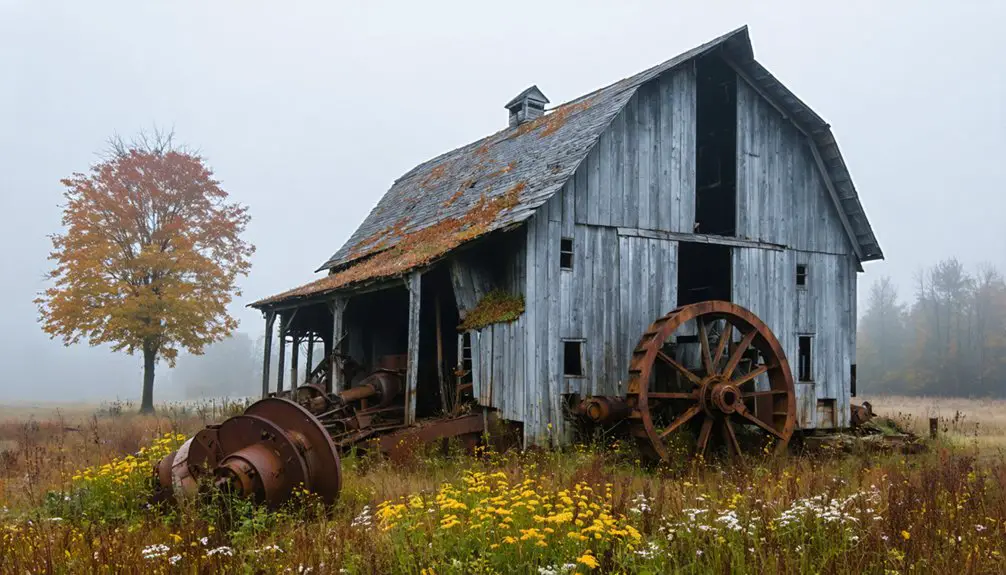
When you trace Vermont’s ghost town roots, you quickly find that the state’s abandoned past isn’t limited to crumbling settlements buried in the woods. Brookside grounds you in that same era of rural ambition, connecting you to a time when Vermont farmsteads built fortunes on Merino sheep and Morgan horses before isolation and economic shifts quietly emptied communities across the region.
You’re not visiting a ruin here, but Brookside’s 1789 farmhouse and its 1843 Greek Revival addition stand as living evidence of the heritage that once anchored — and sometimes outlasted — the villages that didn’t survive.
Vermont’s Ghost Town Roots
Though Brookside isn’t an abandoned town, it connects deeply to Vermont’s broader ghost-town legacy. When you explore its architectural history, you’re tracing a journey from an 1789 farmhouse to an 1843 Greek Revival estate, built by farmers who raised Merino sheep and Morgan horses on quiet rural land.
That blend of ambition and isolation mirrors the stories behind Vermont’s true ghost towns.
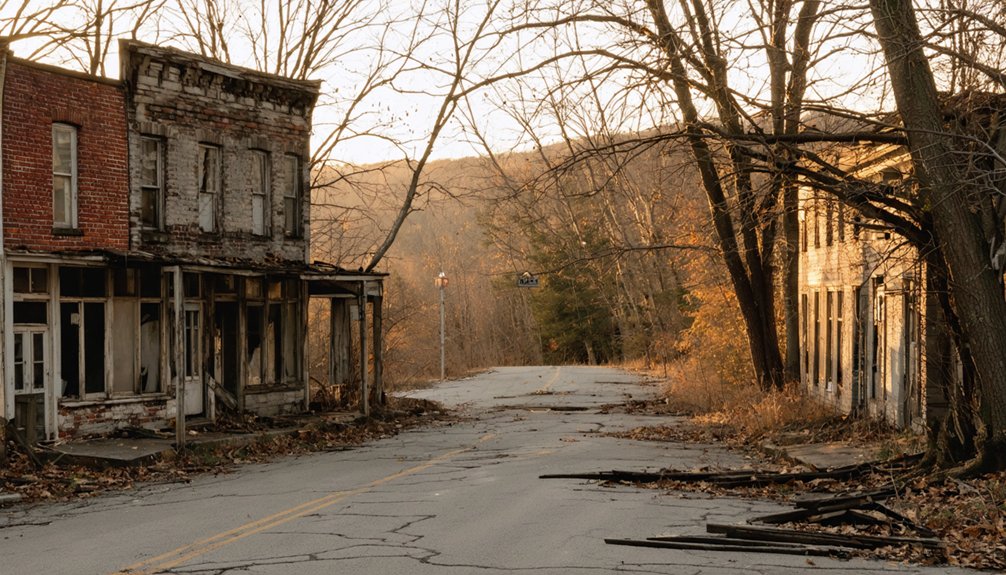
Vermont’s abandoned places thrive on local legends, disappearances, and communities swallowed by wilderness or rising floodwaters. Glastenbury, Ricker Basin, and the Bennington Triangle all carry that weight.
Brookside anchors your road trip in documented history before you venture toward those wilder, more mysterious stops. It gives you context, grounding your journey before the landscape grows stranger and the stories harder to explain.
Heritage Meets Abandonment
Brookside doesn’t fit the classic ghost-town mold, yet it connects to Vermont’s abandoned past in ways that make it a compelling road trip stop. The property bridges two eras — an 1789 farmhouse anchoring rural preservation, and an 1843 Greek Revival front section showcasing the ambition of early American modern architecture.
While nearby settlements like Glastenbury faded into wilderness and Ricker Basin surrendered to floodwaters, Brookside survived through active stewardship. That contrast is exactly what makes it valuable on your itinerary.
You’re not staring at cellar holes here — you’re standing inside a structure that refused to disappear. It grounds your ghost-town journey in something tangible, giving you a reference point before you head deeper into Vermont’s quieter, more forgotten corners.
The Nearest Vermont Ghost Towns Worth the Detour
Once you’ve soaked in Brookside’s stately columns and storied past, the real ghost-town adventure begins just down the road. Head toward Glastenbury, deep in the Bennington Triangle, where urban decay meets dense wilderness and disappearances between 1940 and 1950 still fuel unsettling legends. Reaching it demands a 22.3-mile, two-day hike, so plan accordingly.
Prefer something more accessible? Ricker Basin inside Little River State Park rewards a shorter trek with cellar holes, stone foundations, and a quiet cemetery — raw historical preservation standing against Vermont’s encroaching forest. Founded in 1816 and abandoned by 1934, the ruins speak without explanation.
Both stops sharpen the contrast with Brookside’s cultivated elegance, reminding you that Vermont’s forgotten places wear many faces — some polished, some swallowed whole by wilderness.
Inside the Bennington Triangle and Glastenbury Wilderness
Few places in New England carry a stranger reputation than the Bennington Triangle, a loosely defined stretch of southwestern Vermont wilderness where a cluster of disappearances between 1940 and 1950 left investigators with more questions than answers.
Glastenbury sits at the heart of this region, a former settlement now swallowed by dense forest. You won’t find old architecture standing here — just cellar holes, overgrown trails, and silence.
Reaching Glastenbury demands a serious commitment, roughly a 22.3-mile, two-day hike through remote backcountry. If haunted legends draw you deeper into Vermont’s past, this wilderness delivers an unfiltered experience.
Pack carefully, plan your route, and treat the terrain with respect. The Triangle doesn’t offer comfort — it offers something rawer and harder to forget.
What Remains at Ricker Basin in Little River State Park
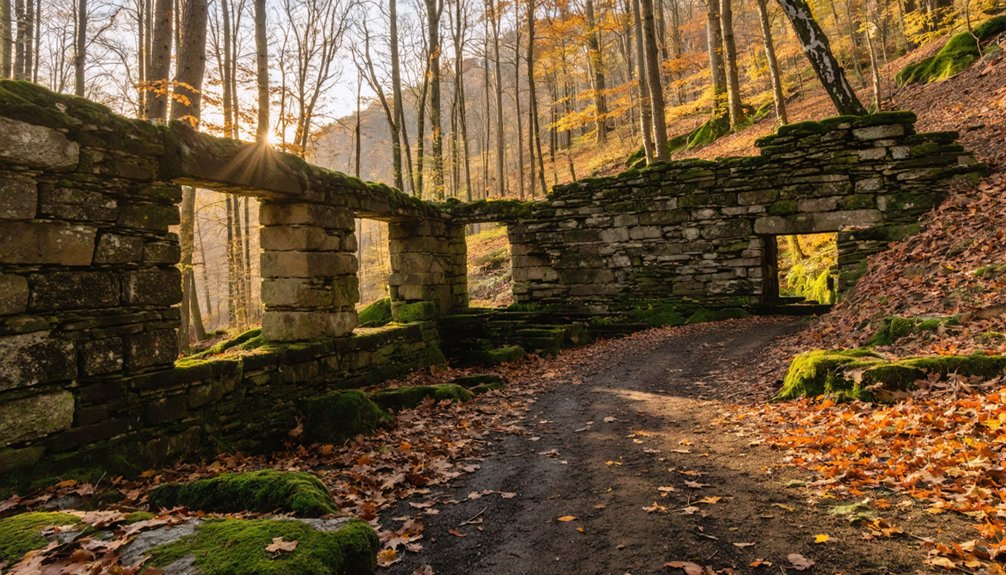
Not every Vermont ghost town demands a two-day backcountry hike. Ricker Basin inside Little River State Park gives you genuine wilderness exploration without surrendering your return-trip flexibility.
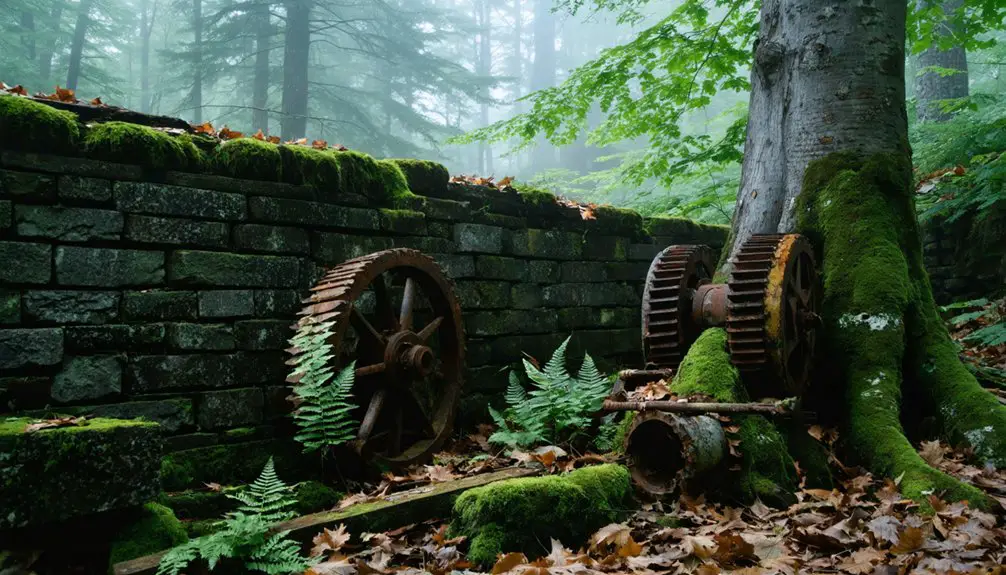
Founded in 1816 and abandoned by 1934 after flooding and reservoir construction swallowed the community, the basin now holds cellar holes, stone foundations, and a cemetery quietly overtaken by forest. You’re walking through historical preservation in its rawest form — no interpretive center, no gift shop, just evidence of lives built and eventually surrendered to nature.
The contrast with Brookside’s maintained Greek Revival elegance is striking and intentional. Pack the basin into your itinerary when you want your road trip to shift from curated heritage into something rawer, quieter, and genuinely remote.
Your Two-Day Vermont Ghost Town Road Trip Route
Pulling this route together takes two days, but the payoff is a sweep through southwestern Vermont that moves from preserved grandeur to genuine wilderness. Start at Brookside along Route 22A, where the architectural evolution from an 1789 farmhouse to an 1843 Greek Revival estate sets a strong historical tone. Spend your first afternoon absorbing Orwell’s rural character before pushing south toward the Bennington Triangle.
On day two, explore Glastenbury’s edges and the local legends surrounding its cluster of mid-century disappearances. If hiking isn’t your focus, swing northeast toward Little River State Park and walk the Ricker Basin ruins instead. Both stops deliver atmosphere without requiring identical effort.
Together, they transform Brookside from a standalone heritage visit into the anchor of a genuinely compelling Vermont road trip.
Frequently Asked Questions
Can Visitors Stay Overnight at Brookside in Orwell, Vermont?
Yes, you can stay overnight! Brookside’s Airbnb suite lets you sleep among historic architecture, breathe Vermont’s crisp air, and absorb local legends — you’ll wake refreshed, inspired, and ready to explore more ghost-town mysteries.
Is Brookside Listed on the National Register of Historic Places?
Yes, you’ll find Brookside proudly listed on the National Register of Historic Places, where its historic preservation status honors two distinct architectural styles — an 1789 farmhouse seamlessly blending with an 1843 Greek Revival masterpiece.
What Animals Were Historically Bred at the Brookside Property?
You’ll discover that Brookside’s former owners practiced impressive animal husbandry, breeding prized Merino sheep and Morgan horses — a legacy reflecting early wildlife conservation values and the rural freedom that defined Vermont’s independent agricultural spirit.
When Was the Greek Revival Section Added to Brookside?
In 1843, Brookside’s timeless elegance blossomed with a stunning Greek Revival architecture addition. You’ll marvel at how this historic building preservation effort transformed the estate, giving it the magnificent temple façade with Ionic columns you can still admire today.
When Was the Brookside Property Most Recently Purchased and Renovated?
You’ll love knowing that in June 2021, new owners purchased Brookside and began transforming its historic architecture through an exciting renovation timeline, breathing fresh life into this stunning Greek Revival estate for you to explore today.
References
- https://www.youtube.com/watch?v=ScW-H7A8yL8
- https://happyvermont.com/2014/10/23/glastenbury-ghost-town/
- https://www.youtube.com/watch?v=0lwzvvVOcD4
- https://www.youtube.com/watch?v=FWJp20rKWNE
- https://en.wikipedia.org/wiki/List_of_ghost_towns_in_Vermont
- https://www.youtube.com/watch?v=gxePk0rsBx4
- https://www.youtube.com/watch?v=2fvPo9iQC-w
- https://newenglandwithlove.com/ghost-towns-in-vermont/