To plan your ghost town road trip to Novak, South Dakota, start on Nemo Road in Lawrence County, where Boxelder Creek winds through the northern Black Hills. You’ll find crumbling foundations and roofless structures where a full mining community once stood—then vanished by the early 1910s. Pair it with nearby ghost towns like Carbonate and Crook City for a backtracking-free history tour. There’s far more to this forgotten settlement than its quiet ruins let on.
Key Takeaways
- Novak sits along Boxelder Creek in Lawrence County, accessible via Nemo Road, about three miles northwest of Nemo in the northern Black Hills.
- Mining began around 1903, peaked by 1907, and the town was fully abandoned by the early 1910s after resources dwindled.
- Unlike nearby Deadwood, Novak was a sober, family-focused settlement with company-built homes and a school but no saloons.
- Visit between late spring and early fall for the best road conditions, with crumbling foundations and early structures still visible on-site.
- Combine Novak with nearby ghost towns like Carbonate, Crook City, and Blacktail for a backtracking-free Lawrence County mining history tour.
What Is Novak, South Dakota?
Tucked along the bank of Boxelder Creek in Lawrence County’s northern Black Hills, Novak, South Dakota, is a ghost town with a mining past that’s long since faded into silence. You’ll find it sitting just three miles northwest of Nemo along what’s now Nemo Road, also known by its alternative name, Cindell Spur.
Its mining history began around 1903, with operations turning profitable by 1907. The company built houses and a school to support workers, shaping a tight-knit community that particularly skipped the saloons and dance halls common in nearby Deadwood.
Once the ore ran out, everyone left. Today, Novak’s ghost town architecture tells that story through crumbling structures and quiet foundations, offering you an unfiltered glimpse into the Black Hills’ boom-and-bust era.
Where Exactly Is Novak Located in Lawrence County?
You’ll find Novak tucked along the bank of Boxelder Creek in the northern Black Hills, sitting right on Nemo Road in Lawrence County. The town lies 2.5 miles from Benchmark and about three miles northwest of Nemo, placing it along the historic route toward Deadwood.
If you’re mapping your road trip, following Nemo Road directly connects you to the site without requiring any specialized transport.
Novak’s Geographic Position
Nestled in Lawrence County’s northern Black Hills, Novak sits on the bank of Boxelder Creek along Nemo Road, placing it 2.5 miles from Benchmark and three miles northwest of Nemo. This positioning makes it an accessible stop on your route toward Deadwood, where mining history shaped everything you’ll see.
Here’s what defines Novak’s location:
- Waterway access – Boxelder Creek runs directly alongside the townsite.
- Road connectivity – Nemo Road links Novak to surrounding communities.
- Deadwood proximity – It sits roughly three miles northwest along that historic corridor.
- Ghost town preservation context – Lawrence County clusters multiple abandoned towns nearby.
You’re fundamentally traveling through an open-air museum when you follow this route, with Novak representing one compelling chapter in the region’s story.
Nearby Landmarks And Roads
Sitting along Nemo Road in Lawrence County’s northern Black Hills, Novak occupies a specific corridor that connects several key reference points you can use to navigate the area. You’ll find it on Boxelder Creek’s bank, roughly 2.5 miles from Benchmark and three miles northwest of Nemo.
That same road pushes northwest toward Deadwood, giving you a natural route that links multiple destinations in one drive.
As you travel this corridor, you’re moving through terrain shaped entirely by mining history. The railroad spur built specifically for Novak once ran alongside this stretch, and remnants of town architecture may still hint at what stood here during the early 1900s.
Use Nemo as your anchor point, head northwest, and Novak’s location becomes easy to pinpoint.
How Did Novak Boom and Collapse in Less Than a Decade?
Novak’s rise and fall unfolded with startling speed, compressing an entire town’s lifespan into roughly a decade. Mining history here reads like a cautionary tale you won’t forget.
The boom-to-bust timeline broke down like this:
- 1903 – Mining operations launched, drawing workers and families to Boxelder Creek.
- 1907 – The mine finally turned profitable, justifying houses, a school, and a railroad spur.
- Early 1910s – Resources began petering out, signaling the town’s inevitable end.
- Departure – The entire population left, leaving structures to deteriorate.
Unlike Deadwood, Novak never had saloons or dance halls — it was strictly a working settlement.
Ghost town preservation efforts remind you that places like Novak deserve recognition beyond their brief, productive years.
What You’ll Find at the Novak Site Today
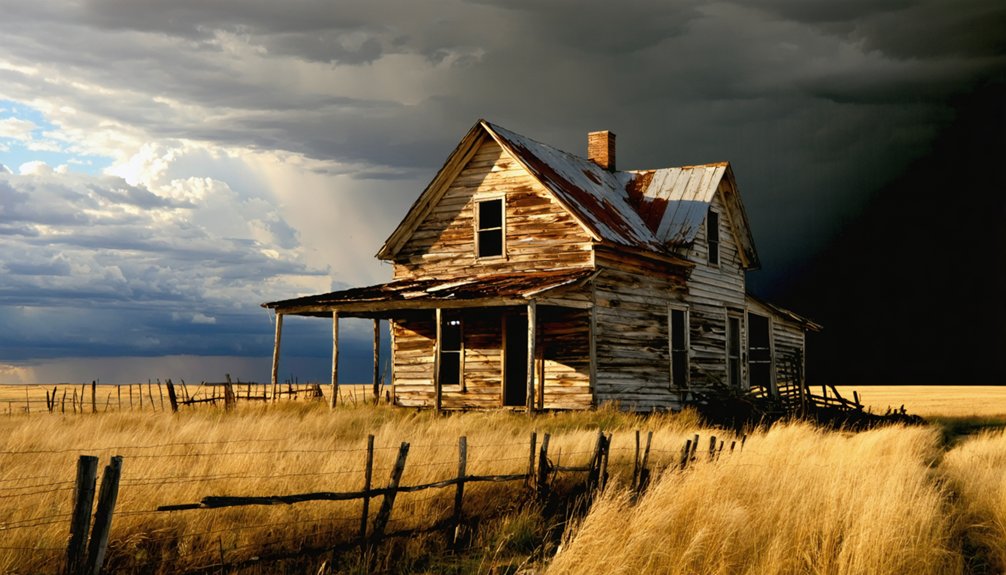
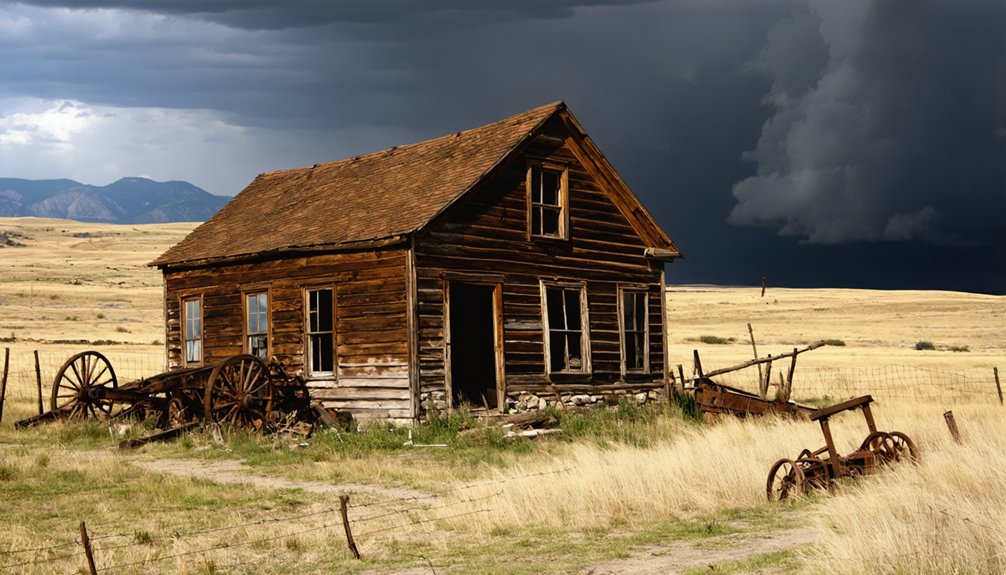
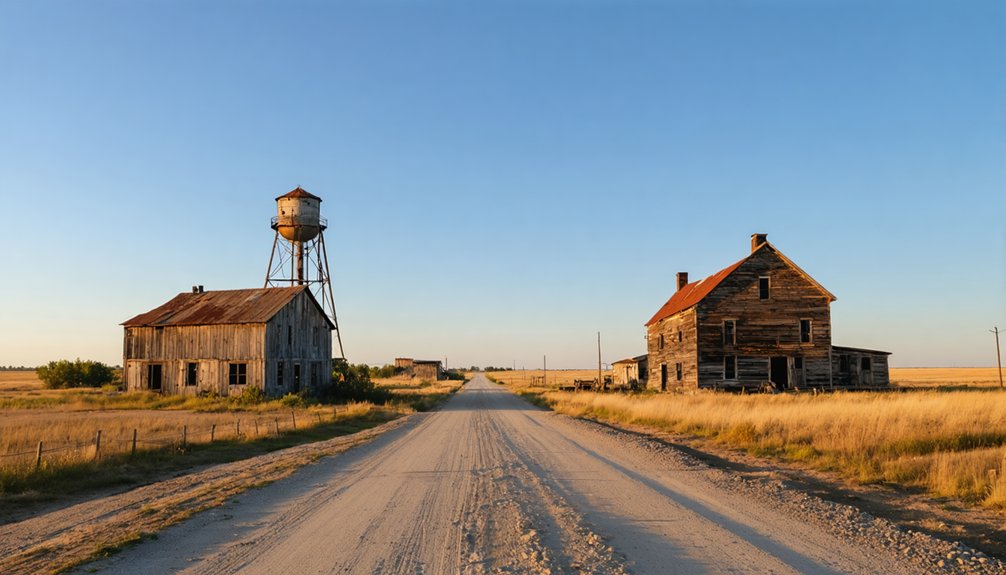
When you arrive at the Novak site today, you’ll find a landscape that speaks more through absence than presence. Historical preservation here is minimal — nature has largely reclaimed what miners once built. Crumbling foundations, roofless structures, and scattered remnants mark where houses and a school once stood.
Don’t expect polished tourist attractions or interpretive signs. Novak rewards visitors who appreciate raw, unfiltered history. You’re fundamentally reading the land itself, tracing the outline of a community that vanished once the ore ran out.
Boxelder Creek still flows nearby, and Nemo Road frames the scene quietly. The silence carries weight.
For travelers chasing authentic ghost town experiences, Novak delivers exactly that — an honest, undisturbed window into the Black Hills’ boom-and-bust past without any modern embellishment softening the reality.
What Made Novak Different From Deadwood?
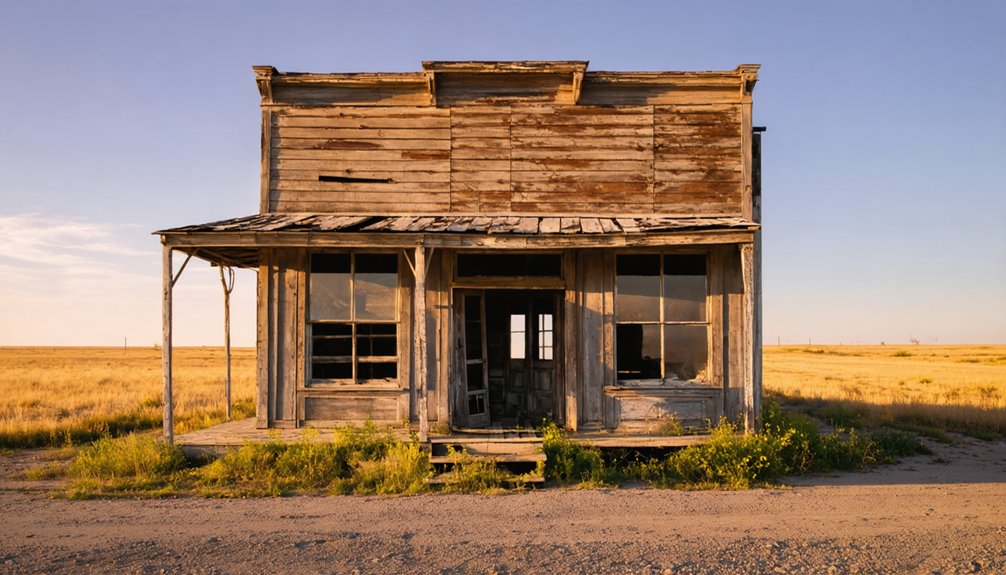
When you think of the Black Hills mining era, Deadwood’s wild saloons and dance halls probably come to mind first — but Novak tells a very different story.
The mining company deliberately kept the town free of saloons and dance halls, shaping Novak into a family-focused community where workers could raise children and attend school.
You’re fundamentally looking at a rare example of a planned, sober mining settlement that stood in sharp contrast to its rowdy neighbors.
No Saloons Allowed
Unlike the rowdy saloons and dance halls that defined Deadwood’s wild reputation, Novak took a strikingly different approach to town life. This mining history settlement operated with notable restraint, shaping its town architecture and community culture around work rather than vice.
When you visit Novak, consider what that sobriety meant for residents:
- Families felt safer settling in a controlled environment
- Workers stayed productive without nightly drinking culture
- Company-built homes and a school reflected intentional, family-focused town architecture
- Mining history advanced faster when the workforce remained disciplined
You can almost feel the contrast walking Novak’s quiet grounds versus imagining Deadwood’s chaotic streets. The mining company deliberately shaped this town’s identity, proving that not every Black Hills settlement chased the same wild freedom.
Family-Focused Mining Community
That deliberate absence of saloons wasn’t accidental — it reflected something deeper about Novak’s identity as a whole. Unlike the wild, rough-edged energy of nearby Deadwood, Novak was built for families.
The mining company constructed houses and a school, signaling a clear intention — this was a place where workers could raise children, not just chase fortune.
When you explore Novak’s mining history today, you’ll sense that distinction in the landscape itself. Ghost town preservation efforts help tell the story of a community that prioritized stability over spectacle.
Novak wasn’t trying to compete with Deadwood’s notorious reputation. It was quietly building something different — a functioning neighborhood rooted in labor and family life.
That contrast makes visiting Novak feel surprisingly personal, even now.
How to Reach Novak on Nemo Road
Reaching Novak is straightforward—you’ll follow Nemo Road into the northern Black Hills of Lawrence County, South Dakota. The route connects you directly to this ghost town‘s rich mining history while keeping ghost town preservation in mind.
Follow Nemo Road into the northern Black Hills of Lawrence County, South Dakota, to reach the historic ghost town of Novak.
Here’s what you’ll encounter along the way:
- Nemo – Start your journey here, just three miles southeast of Novak.
- Boxelder Creek – You’ll spot this landmark running alongside the townsite.
- Benchmark – Pass this point roughly 2.5 miles from Novak.
- Deadwood corridor – Continue northwest if you’re extending your trip toward Deadwood.
No specialized transport is needed—standard roads handle the route comfortably.
You’re free to explore at your own pace, making stops at nearby ghost towns like Crook City and Carbonate along the way.
Other Ghost Towns Near Novak Worth Visiting
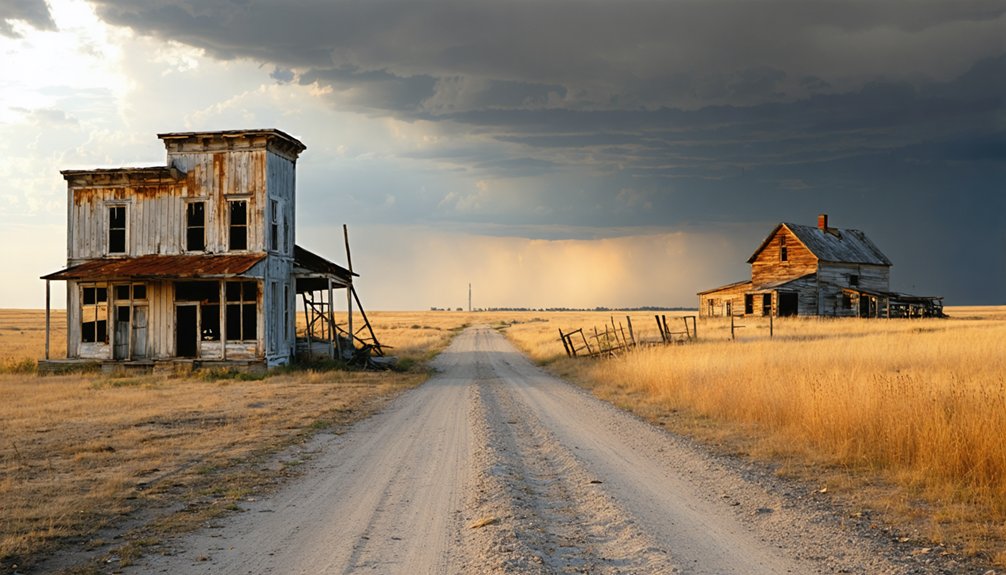
Lawrence County packs an impressive cluster of ghost towns around Novak, so why stop at just one? You’ll find Blacktail, Carbonate, Crook City, Flatiron, Greenwood, Maitland, Ragged Top, Tinton, and Trojan all within reach, each carrying its own piece of mining heritage worth exploring.
These abandoned settlements tell the same boom-and-bust story that shaped the entire Black Hills region.
As you move between sites, you’ll encounter crumbling structures, roofless buildings, and sometimes nothing but foundations—raw evidence of ghost town preservation challenges facing this region.
Some locations have nearly vanished entirely, reclaimed by the surrounding landscape.
Visiting them together paints a vivid picture of how widespread mineral extraction once transformed Lawrence County, and how completely it disappeared when the resources ran dry.
How to Chain Novak With Blacktail, Carbonate, and Crook City
Since Novak sits along Nemo Road in Lawrence County, you can efficiently chain it with Blacktail, Carbonate, and Crook City by treating the county itself as your map.
Plan your route to move between these abandoned settlements without doubling back, keeping Novak as either your starting point or midway anchor.
Each stop adds another layer to the region’s boom-and-bust mining story, making the whole cluster feel like one continuous open-air history lesson.
Planning Your Cluster Route
Four ghost towns scattered across Lawrence County’s northern Black Hills make for a compact and compelling road trip, and Novak is the perfect anchor for the route. Start here along Nemo Road, then work your way through the cluster efficiently:
- Novak – Begin along Boxelder Creek, studying mining techniques that shaped early 1900s operations.
- Blacktail – Scan remaining historical architecture before moving deeper into the county.
- Carbonate – Explore this abandoned settlement’s stripped foundations and crumbling walls.
- Crook City – Cap your route at this storied ghost town with deep regional history.
You’re covering ground where boom-and-bust cycles left entire communities hollow. Pack water, keep your tank full, and move freely between sites without backtracking unnecessarily through Lawrence County’s rural roads.
Stops Along Lawrence County
Chaining these four stops together is straightforward once you understand how they sit relative to each other across Lawrence County’s northern Black Hills. Start at Novak along Nemo Road, where mining history began around 1903 and ghost town preservation reveals foundations and crumbling structures still marking the landscape.
From there, push toward Crook City, one of the region’s earliest settlements, before swinging through Carbonate, another abandoned mining settlement carrying its own layered past. Blacktail rounds out your cluster, adding another abandoned chapter to your route.
You’re fundamentally tracing the same boom-and-bust arc across a compact stretch of terrain. Each stop builds context for the next, so you leave Lawrence County with a genuine understanding of how mineral extraction shaped and ultimately emptied this entire corner of South Dakota.
Best Time of Year to Visit Novak and the Northern Black Hills
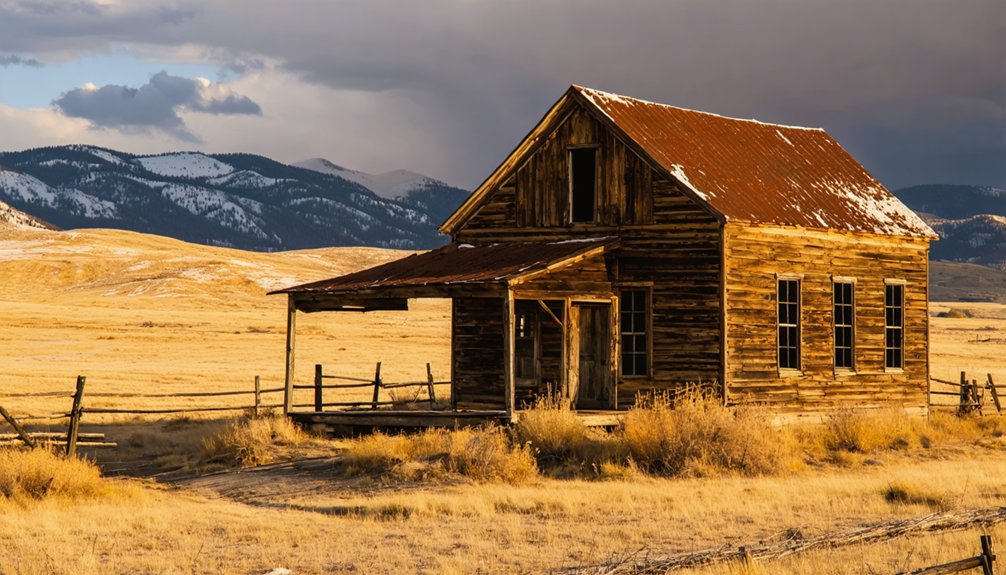
The northern Black Hills offer distinct experiences depending on when you visit, so timing your trip to Novak can make a real difference. Each season shapes what you’ll find along Nemo Road and the surrounding ghost town cluster.
- Spring (April–May): Mild temperatures support historical preservation efforts and photography without summer crowds.
- Summer (June–August): Long daylight hours maximize exploration time across multiple Lawrence County sites.
- Fall (September–October): Crisp air and golden foliage create dramatic backdrops for wildlife observation along Boxelder Creek.
- Winter (November–March): Snow isolates the region; road conditions on Nemo Road can become unpredictable.
Your best window runs late spring through early fall, giving you accessible roads, comfortable weather, and the freedom to roam Lawrence County’s abandoned mining settlements thoroughly.
Road Conditions, Access, and Safety Notes for Novak
Knowing when to visit sets you up for success, but understanding how to actually reach Novak keeps you safe once you’re on the road. You’ll follow Nemo Road through Lawrence County, a standard rural route accessible without specialized transport. The drive connects you to Nemo before pushing northwest toward Novak’s mining history-rich site along Boxelder Creek.
Watch for gravel stretches and uneven shoulders common on Black Hills back roads. Wear sturdy footwear when exploring, since ghost town preservation means structures often stand with crumbling walls, missing roofs, or unstable foundations. Don’t enter deteriorating buildings.
Tell someone your route before heading out, since cell coverage gets spotty in remote areas. Bring water, a paper map, and extra fuel. Freedom tastes better when you’ve planned smart.
Frequently Asked Questions
Are There Any Guided Tours Specifically Focused on Lawrence County Ghost Towns?
The knowledge doesn’t mention guided tours, but you’ll find Lawrence County’s ghost towns are incredible historical preservation sites and tourist attractions worth exploring independently, letting you chart your own course through Novak, Crook City, and beyond freely.
Can You Camp Overnight Near the Novak Ghost Town Site?
Like a blank canvas awaiting your adventure, camping near Novak’s ghost town is possible! You’ll want to check local camping regulations first, as overnight amenities are sparse in this rugged, rural Lawrence County wilderness.
Is Photography of Abandoned Structures at Novak Legally Permitted?
The knowledge doesn’t confirm specific legal restrictions or photography permits for Novak. You’ll want to check with Lawrence County authorities before shooting abandoned structures, since rules can vary and you’d hate unexpected complications ruining your adventure.
Were Any Artifacts From Novak Preserved in Local South Dakota Museums?
The knowledge doesn’t contain a mountain of details about historical preservation or artifact collection from Novak’s museums. You’ll want to contact local Lawrence County historical societies directly to uncover what artifacts they’ve potentially gathered.
Does Lawrence County Offer Any Official Ghost Town Maps for Visitors?
The knowledge doesn’t confirm Lawrence County’s official ghost town maps, but you’ll want to seek tourist information centers for historical preservation resources. They’re your best bet for exploring Novak and nearby abandoned settlements like Crook City and Tinton.
References
- https://en.wikipedia.org/wiki/Novak
- https://amotorcyclediary.blogspot.com/2014/08/famous-road-signs-novak.html
- https://fallout.fandom.com/zh/wiki/諾瓦克
- https://kids.kiddle.co/List_of_ghost_towns_in_South_Dakota