Before you hit the road, fix one critical error: Dudley isn’t in Polk County — it’s in Wapello County, Iowa. Getting that wrong will send you miles off course. Once you’ve corrected your navigation, you’ll discover a genuine ghost town where only 12 residents remain from a community that once bustled with 64 people. It’s a fascinating slice of Iowa’s forgotten history, and there’s much more to uncover about planning your perfect route.
Key Takeaways
- Dudley is located in Wapello County, not Polk County; using the correct county prevents misdirection and frustrating detours during navigation.
- Visit in late September or October for ideal weather, fall foliage, and clear views of structural remnants.
- A roadside sign marks Dudley’s edge, listing just 12 remaining residents, reflecting the town’s gradual historical depopulation.
- Use paper maps alongside GPS, as rural ghost town sites often have unmarked or missing navigation points.
- Combine your trip with other Wapello County ghost towns, using the University of Iowa’s index of 2,200 deserted settlements for planning.
Dudley Is in Wapello County, Not Polk County
Before you load up the car and head out, there’s a critical detail to get straight: Dudley isn’t in Polk County. Despite what the article title suggests, this ghost town sits in Wapello County, specifically its northwestern section. If you punch Polk County into your navigation, you’ll miss the site entirely.
Dudley draws curious travelers enthusiastic to explore historical landmarks and absorb local legends tied to Iowa’s vanishing settlements. The distinction matters because no ghost town named Dudley exists in Polk County at all.
A city called Carlisle operates there, but it’s no ghost town.
Before you leave home, update your navigation to search “Dudley, Wapello County” to reach the correct location. Verifying the county now saves you a frustrating detour later.
Why Dudley Qualifies as a True Iowa Ghost Town
Dudley checks every box that defines a true ghost town: it was once a functioning settlement, and now it’s largely empty, with most of its original residents long gone.
Dudley once hummed with life — now it stands hollow, its original residents replaced by silence and dust.
In its prime, Dudley supported a post office, dozens of residents, and the kind of daily activity that made small Iowa towns feel alive. By 1925, the population had only reached 64 people, and the decline was already underway.
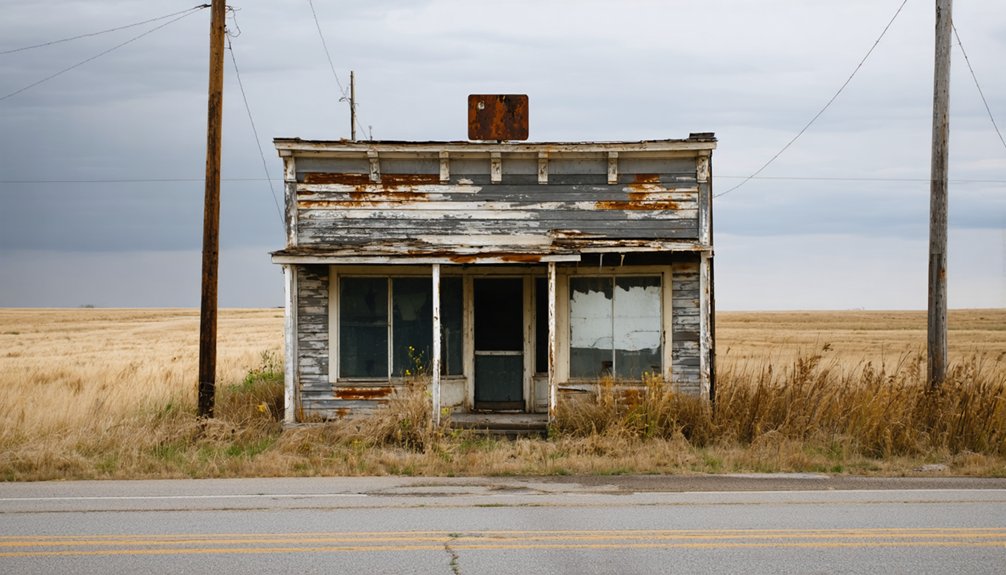
Today, you’ll find abandoned structures and a roadside sign claiming just 12 residents remain. That historical significance isn’t lost on curious travelers like you.
Iowa recognizes thousands of deserted settlements, and Dudley fits the definition precisely: a place that was once busy, now reclaimed by silence.
It’s exactly the kind of raw, forgotten history worth exploring on your own terms.
Dudley’s Population Dropped From 64 Residents to Almost Nobody
When Dudley hit its peak, you’d have found 64 residents calling this small Iowa settlement home through the 1940 census.
The town’s population had actually climbed from 55 people in 1902, making the eventual abandonment even more striking.
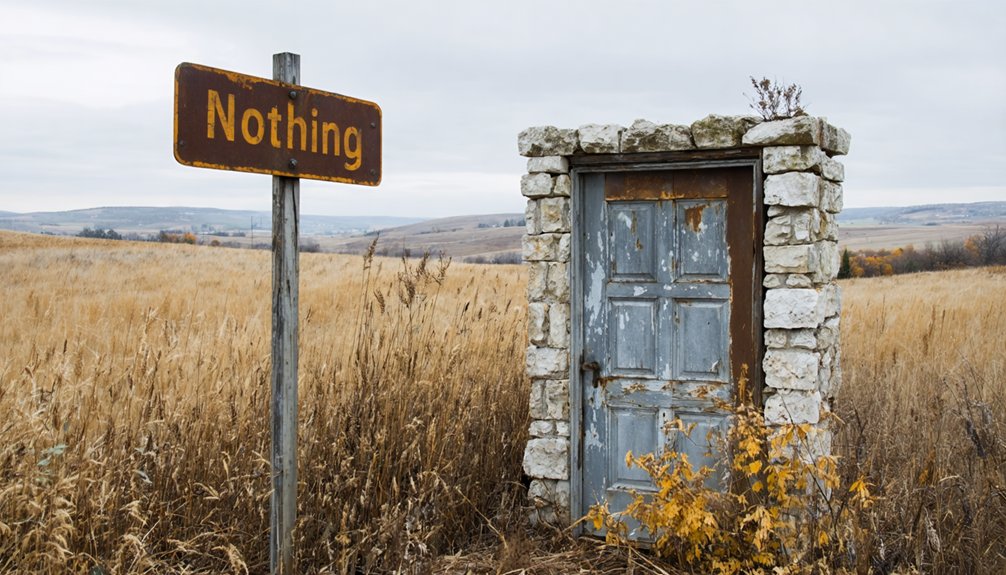
Today, a sign at the former town’s edge tells the whole story, listing just 12 residents alongside an unknown number of dogs and cats.
Peak Population Reaches 64
At its peak in 1925, Dudley’s population had climbed to just 64 residents, a modest but meaningful count for a small Iowa settlement. That number held steady through the 1940 census, suggesting a community determined to persist despite its size.
Population trends like these tell a compelling story — people chose to stay, build lives, and maintain daily routines in a place most travelers never noticed.
You can appreciate this history through a historical preservation lens, recognizing that even small communities shaped Iowa’s broader identity. From 55 residents recorded in 1902, Dudley grew slowly but consistently before its eventual decline.
Understanding that arc helps you connect more deeply with the site when you visit, transforming a simple road trip stop into a genuinely meaningful encounter with Iowa’s forgotten past.
Decline To Near Abandonment
What held steady for decades eventually gave way, and Dudley’s story shifted from quiet persistence to near-total emptiness. The urban decline that swept through countless small Iowa settlements didn’t spare Dudley.
Population loss hit hard, stripping the town of the residents who’d once made it a functioning community worth mapping and surveying.
You’ll notice this shift most clearly when you arrive and spot the roadside sign marking the former town edge. It lists a current population of just 12, with an unknown number of dogs and cats rounding out the headcount. That detail isn’t just charming — it’s telling.
Where 64 people once built daily lives, almost nobody remains. Dudley didn’t vanish overnight; it simply emptied out, one departure at a time.
Modern Sign Tells All
Standing at the former town edge, you’ll find a roadside sign that says everything Dudley’s history can’t quite put into words — a current population of 12, plus an unspecified number of dogs and cats. That deliberately vague animal count adds a layer of dry humor to what’s otherwise a sobering snapshot of decline.
From 64 residents holding steady through 1940, Dudley has collapsed into near-silence. The sign doesn’t dramatize ghost stories or lean into urban legends — it simply states the facts with quiet honesty.
Twelve people. Unknown pets. That’s what remains.
For road trippers chasing authentic abandonment, this sign delivers more than any dramatic marker could. It confirms you’ve arrived somewhere real, somewhere forgotten, and somewhere that traded its former busy identity for radical, permanent stillness.
The Post Office That Kept Dudley on Iowa Maps
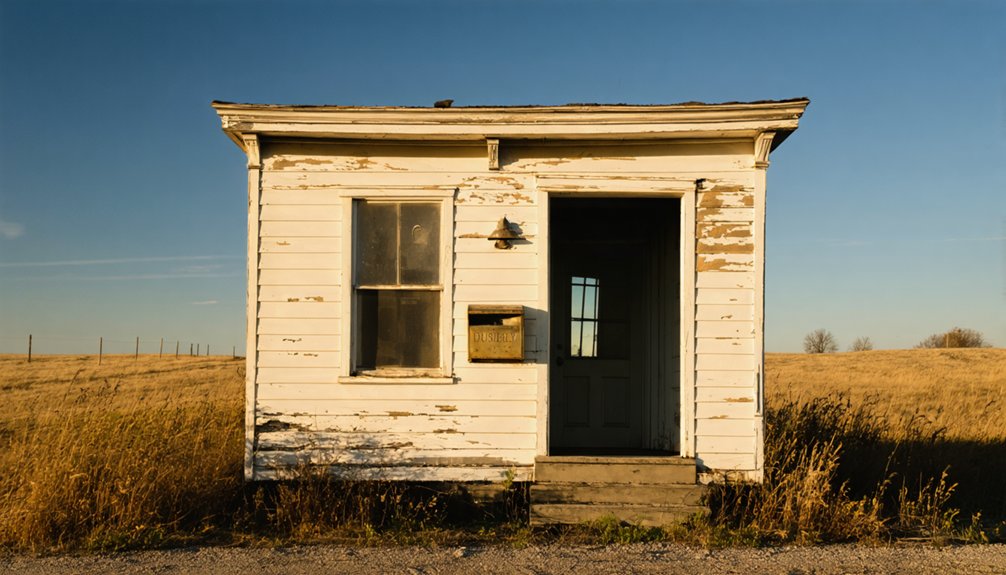
When you trace Dudley’s footprint on historical maps, the post office becomes your clearest landmark. Surveyors confirmed its operation in both 1908 and 1920, placing it firmly within northwestern Wapello County across two separate official records.
Those back-to-back confirmations kept Dudley’s name alive on Iowa’s postal registry long after its population had begun its quiet fade.
Post Office Survey Confirmations
Though Dudley’s population never boomed, its post office kept the tiny settlement firmly on Iowa’s official maps. Two separate survey confirmations locked Dudley into the state’s postal history — one in 1908 and another in 1920. Both surveys placed the post office in northwestern Wapello County, giving you a precise geographic anchor when you’re planning your visit.
That documented postal history matters for road trippers like you. Official survey confirmation meant Dudley wasn’t just a cluster of homes someone named on a whim — it carried real administrative weight. Surveyors recognized it twice, decades apart, which tells you this settlement had staying power before depopulation won out.
When you search your maps, target northwestern Wapello County and let that surveyed postal record guide your route straight to Dudley’s former edge.
Mapping Dudley’s Postal History
Dudley’s post office did more than deliver mail — it drew boundary lines that kept a fading settlement visible on Iowa’s official records long after its population stalled. When surveyors mapped postal routes across northwestern Wapello County in 1908 and again in 1920, Dudley earned a confirmed spot on both records. That’s significant.
Historical mail infrastructure gave small settlements legal and geographic identity, meaning Dudley existed on paper even as residents trickled away. If you’re retracing forgotten Iowa communities, tracking these postal confirmations tells you exactly where to look.
Navigation systems won’t always recognize ghost towns, but historical mail records will. Use those 1908 and 1920 survey confirmations as your anchor points when plotting your route into Wapello County’s northwestern terrain.
What the Sign at Dudley’s Edge Actually Says
Standing at the former edge of Dudley, you’ll spot a sign that cuts straight to the point: the population is 12, with the number of local dogs and cats left deliberately uncounted. That deliberate omission isn’t accidental — it’s the kind of dry humor that ghost towns earn honestly.
The sign says 12. Dogs and cats? Uncounted — a ghost town’s quiet, earned sense of humor.
The sign functions as more than comedy, though. It anchors local legends about a once-busy settlement that gradually emptied, and it quietly supports preservation efforts by giving curious travelers something tangible to photograph and share.
You’re not reading polished tourism copy here; you’re reading a community’s honest self-assessment carved into roadside wood.
For a town that peaked at 64 residents in 1925, that sign represents Dudley’s final public statement — stripped down, unfiltered, and oddly dignified in its honesty.
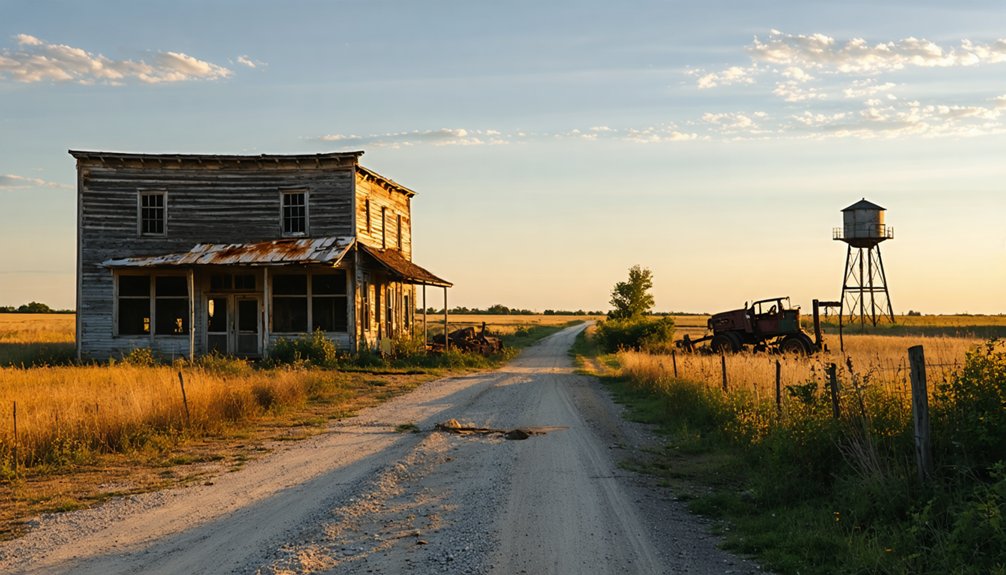
Before you punch any destination into your GPS, correct the county first — Dudley sits in Wapello County, not Polk County, and that single error will send you hours in the wrong direction.
Target the northwestern section of Wapello County specifically, where historic preservation efforts have kept this forgotten settlement findable.
Local legends surrounding Dudley’s quiet collapse make the drive genuinely worth the effort.
Follow these three navigation steps:
- Search “Dudley, Wapello County, Iowa” — never just “Dudley, Iowa”
- Cross-reference your route against northwestern Wapello County road maps before departing
- Watch for the physical sign marking the former town edge upon arrival
You’re chasing abandoned history on your own terms — just make sure your route actually gets you there.
Where Dudley Ranks Among Iowa’s 2,807 Ghost Towns
Iowa holds between 26 and 2,807 ghost towns depending on how strictly you define abandonment, and Dudley earns its place among the most historically documented of them. The University of Iowa’s index confirms 2,205 deserted settlements, and Dudley stands out because its historical population data remains traceable.
You can follow its growth from 55 residents in 1902 to 64 by 1925, a rare level of detail for a forgotten place. Infrastructure remnants like the post office, confirmed in both 1908 and 1920 surveys, give Dudley measurable historical weight.
While popular travel lists name only 26–30 notable Iowa ghost towns, Dudley’s documented past earns it recognition beyond obscurity. You’re not visiting just an empty field — you’re visiting a place with a verifiable story.
The Best Season to Visit This Wapello County Ghost Town
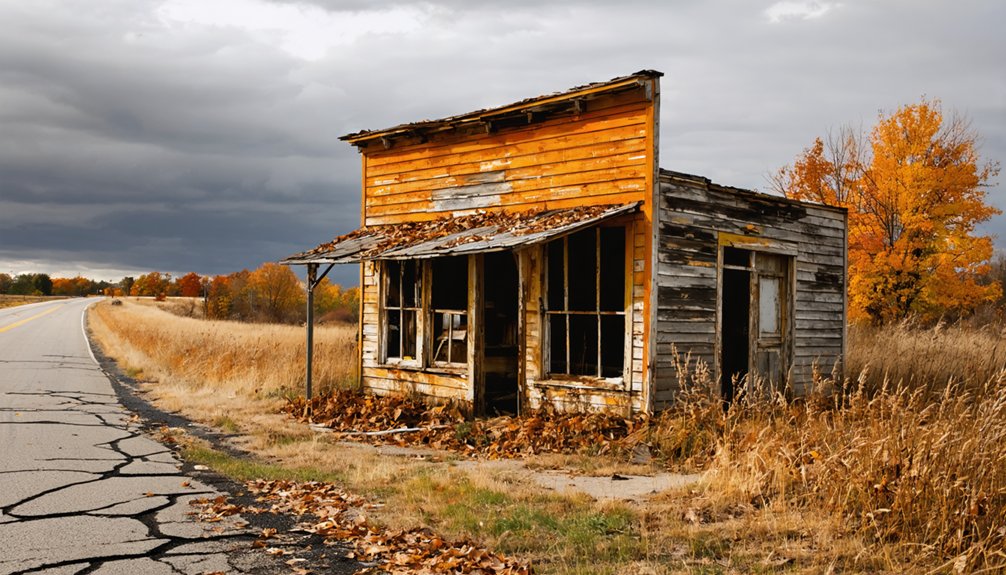
You’ll find Dudley, Wapello County most rewarding during late September and October, when fall foliage transforms the surrounding Iowa landscape into a vivid backdrop for exploring an abandoned settlement.
Spring and summer also offer comfortable touring conditions, though autumn’s cooler temperatures and lower humidity make the outdoor walk to that iconic population sign far more pleasant.
Whatever you do, avoid planning your visit in January or February, when brutal Midwestern winters can turn rural Wapello County roads into dangerous, impassable stretches that cut off access to the site entirely.
Ideal Weather For Visiting
Timing your visit to Dudley in Wapello County can make the difference between a memorable road trip and a muddy, uncomfortable slog through an abandoned field. Iowa’s seasons dramatically shape your experience exploring historical landmarks at this quiet ghost town.
- Late Spring (May–June): Mild temperatures and green surroundings make walking the former town edge comfortable and visually rewarding.
- Early Fall (September–October): Cooler air, minimal bugs, and stunning foliage create ideal conditions for photography and exploration without brutal heat.
- Avoid Winter and Mud Season: Snow and March thaws limit accessibility, and there aren’t visitor amenities to shelter you if conditions turn rough.
You’re free to roam this abandoned site year-round, but smart timing guarantees a far richer experience.
Fall Foliage Season Benefits
When September arrives in Wapello County, the landscape surrounding Dudley transforms into something worth driving miles to witness. Crimson and amber canopies frame the historical landmarks that once defined this forgotten settlement, giving every photograph a natural depth that summer simply can’t match.
You’ll move through quiet backroads where local legends still circulate among curious travelers who make the pilgrimage each autumn. The cooler temperatures keep you comfortable while you explore the site on foot, and the thinning underbrush actually reveals structural remnants that dense summer growth conceals.
Fall strips everything back to essentials, matching the ghost town’s stripped-down character perfectly. If you want unfiltered access to Dudley’s atmosphere without battling heat or crowds, target late September through mid-October for your visit.
Avoiding Harsh Winter Conditions
Fall earns its reputation at Dudley, but the calendar flips quickly in Wapello County, and winter doesn’t ease into the region gently. Frozen ground, icy backroads, and limited visibility can turn a meaningful historical preservation journey into a dangerous gamble.
Avoid winter visits for these reasons:
- Icy rural roads leading into northwestern Wapello County become hazardous and difficult to navigate safely.
- Snow obscures physical markers, including the town’s edge sign, erasing community stories written into the landscape.
- Short daylight hours compress your exploration window, rushing the experience you’ve driven to absorb fully.
You deserve a visit where you’re moving freely, reading the land clearly, and absorbing everything Dudley’s quiet history offers without battling brutal Midwestern conditions working against you.
Other Ghost Town Sites Near Dudley Worth the Detour
Several ghost towns scattered across Wapello County and its neighboring counties make the drive to Dudley worth extending into a fuller day trip. You’ll find forgotten settlements tucked along rural roads, each offering a raw glimpse into Iowa’s past before depopulation reshaped the landscape.
These sites reflect ongoing conversations around historical preservation, reminding you how quickly thriving communities can vanish without sustained effort. Some locations show early signs of community revitalization, where small groups work to document and protect what remains.
Bring a paper map alongside your GPS, since navigation apps often miss these unmarked spots. Exploring multiple sites in a single loop maximizes your mileage and deepens your understanding of how ghost towns collectively tell Iowa’s broader story of settlement, growth, and eventual abandonment.
How to Plan a Full Iowa Ghost Town Road Trip
Stretching your Dudley visit into a full Iowa ghost town road trip takes only a bit of advance planning, and the payoff is substantial. Iowa holds over 2,200 confirmed deserted settlements, giving you endless freedom to explore abandoned structures and witness ghost town preservation efforts firsthand.
Follow these steps to build your route:
- Cross-reference the University of Iowa’s index of 2,205 deserted settlements to identify sites nearest Wapello County.
- Verify each county location before departure, since mismatched county names waste driving time.
- Photograph abandoned structures responsibly, respecting any posted preservation guidelines at each site.
Pack a paper map as backup, since rural Iowa navigation apps occasionally lag. Your road trip becomes richer each time you stop, explore, and connect with Iowa’s quietly fading history.
Frequently Asked Questions
Is There an Entrance Fee to Visit the Dudley Ghost Town Site?
You don’t pay an entrance fee to explore Dudley’s ghost town site. It’s freely accessible, honoring historical preservation values. Follow visitor guidelines, respect the land, and you’ll enjoy this abandoned Iowa treasure on your own terms.
Are Overnight Camping or Stays Permitted Near the Dudley Location?
No official camping regulations exist for Dudley’s abandoned site. You’ll want to check with Wapello County authorities before staying overnight. Always prioritize safety considerations, as the remote, deserted location offers little infrastructure for adventurous freedom-seekers exploring independently.
Can Children Safely Explore the Abandoned Dudley Ghost Town Area?
Cautious, curious children can explore Dudley’s historical preservation site, but you’ll want to watch for wildlife safety concerns. Supervise your kids actively, stay alert to uneven terrain, and embrace the freedom of discovering Iowa’s fascinating forgotten past together.
Are There Restroom Facilities Available Near the Dudley Site?
You won’t find restroom facilities or tourist amenities at Dudley’s historical preservation site. Plan ahead by stopping in nearby towns before exploring this abandoned Wapello County gem, ensuring your adventure stays comfortable and freely uninterrupted.
What Photography Rules Apply When Visiting Dudley Ghost Town?
Photographing Dudley’s peaceful, preserved premises follows no formal rules—you’re free to capture compelling composition techniques at will. Practice creative photo composition, frame forgotten structures thoughtfully, and you’ll document this deserted Wapello County wonder beautifully.
References
- https://kids.kiddle.co/Dudley
- https://en.wikipedia.org/wiki/Dudley
- https://www.houseofhighways.com/usa/midwest/iowa/dudley