You can explore Old Kaw City by driving just ten miles east of Ponca City on State Highway 11. This once-thriving farming community now rests beneath Kaw Lake, flooded after Kaw Dam’s construction in the late 1960s. During spring and fall, receding water exposes rooftops of grain elevators and historic buildings. You can even dive its sunken streets with scuba gear. There’s far more to this ghost town’s fascinating story than meets the eye.
Key Takeaways
- Old Kaw City, now submerged beneath Kaw Lake, offers a unique ghost town experience with rooftops visible during spring and fall low water levels.
- From Ponca City, drive ten miles east on State Highway 11; standard 2WD vehicles are sufficient, and roads are well-maintained.
- Visit the Kaw Museum, housed in the relocated railroad station, for photographs, artifacts, and historical context about the submerged town.
- Scuba diving allows underwater exploration of sunken streets and structures, while spring and fall offer the best above-water viewing conditions.
- Extend your trip by exploring nearby ghost towns like Washunga, making a full day of Kay County’s layered historical sites.
What Is Old Kaw City and Why Is It Underwater?
Deep beneath the waters of Kaw Lake in Kay County, Oklahoma, lies an entire town frozen in time — Old Kaw City. Established around 1902, this thriving farming community once flourished along the Arkansas River’s Ox Bow Bend, ten miles east of Ponca City.
Then the Army Corps of Engineers built Kaw Dam in the late 1960s to control flooding, and the town’s fate was sealed. By 1970, Main Street had vanished underwater.
Urban legends about the submerged streets still circulate among locals, and wildlife sightings near the lake’s surface add an eerie atmosphere to the experience.
If you’re craving an adventure that blends history with mystery, Old Kaw City delivers something most ghost towns simply can’t — an entire world waiting silently below.
How a Thriving Farm Town Ended Up at the Bottom of a Lake
Once upon a time, Old Kaw City thrived as a prosperous farming community along the Arkansas River’s banks, drawing settlers who built hotels, grain elevators, and bustling storefronts throughout the early 1900s.
Then, in the late 1960s, the Army Corps of Engineers constructed Kaw Dam to control regional flooding, sealing the town’s fate beneath the rising waters.
Prosperous Roots, Flooded Future
Nestled along the Arkansas River’s Ox Bow Bend, Old Kaw City thrived as a prosperous farming community from its founding around 1902 until the late 1960s — home to a four-story hotel considered one of the best lodging establishments west of St. Louis. Its historical significance ran deep, attracting travelers and supporting a tight-knit rural community.
Then the Army Corps of Engineers built Kaw Dam, and by 1970, Main Street sat underwater. Cultural preservation became urgent as residents relocated west to higher ground, rescuing what they could:
- The railroad station was moved and converted into the Kaw Museum
- The hotel’s rare art collection was transferred to Tulsa’s Philbrook Museum of Art
- Photographs and artifacts were archived for future generations
Freedom sometimes means surrendering what you love to protect something greater.
The Dam That Changed Everything
Behind that cultural scramble to save what mattered most was a single engineering decision that sealed Old Kaw City‘s fate. In the late 1960s, the Army Corps of Engineers constructed Kaw Dam south of the original townsite to control the Arkansas River’s chronic flooding.
The historical significance of that choice still resonates today — a thriving farming community simply ceased to exist above water.
Residents packed up and relocated a few miles west to higher ground, watching the lake slowly swallow their streets. By 1970, Main Street had disappeared beneath the surface.
The cultural impact was irreversible. In 1972, townsfolk held a “Last Day Parade,” one final public farewell before the water claimed everything. That parade marked the end of a living community and the beginning of an underwater ghost town.
Old Kaw City’s Four-Story Hotel and Its Surprising Art Collection
Before the waters of Kaw Lake swallowed Old Kaw City, its crown jewel was a four-story hotel considered one of the finest lodging establishments west of St. Louis.
You might be surprised to learn that this frontier hotel housed one of the world’s rarest art collections in the early 1900s, a cultural treasure few would expect to find in rural Oklahoma.
That remarkable collection didn’t go down with the town — it now lives on at the Philbrook Museum of Art in Tulsa, where you can still experience this unexpected piece of Old Kaw City’s legacy.
A Legendary Western Hotel
Though it now rests beneath Kaw Lake’s surface, Old Kaw City’s four-story hotel was once considered one of the finest lodging establishments west of St. Louis. It stood as a symbol of frontier ambition, drawing travelers into a thriving community rooted in Native heritage and agricultural prosperity.
What made it truly remarkable:
- It housed one of the world’s rarest art collections in the early 1900s
- Its historical artifacts and artwork now live at Tulsa’s Philbrook Museum of Art
- It represented the cultural sophistication flourishing in this small Oklahoma town
You won’t find this hotel standing today, but knowing its story transforms your visit. When water levels drop and rooftops emerge, you’re glimpsing the crown of something genuinely extraordinary beneath the surface.
World’s Rarest Art Collection
Few small Oklahoma towns in the early 1900s could claim what Old Kaw City had tucked inside its four-story hotel: one of the world’s rarest art collections. That collection made the hotel one of the finest lodging establishments west of St. Louis, drawing visitors who never expected such sophistication on the Arkansas River’s banks.
Today, that art lives on at Tulsa’s Philbrook Museum of Art, saved before the floodwaters claimed everything else. It’s a rare historic preservation win in a story defined by loss.
Most of Old Kaw City’s cultural legacy now belongs to underwater archaeology, accessible only by scuba gear beneath Kaw Lake. But knowing that priceless art survived makes your road trip feel like more than just chasing a sunken town — it’s tracing a rescued legacy.
Art’s New Tulsa Home
The Philbrook Museum of Art in Tulsa now holds what once graced the walls of a four-story hotel in a town that no longer exists above water. That collection’s survival represents remarkable historical preservation — art rescued before the waters rose permanently.
When you visit Philbrook, you’re connecting with Old Kaw City’s cultural significance in ways no scuba dive can replicate. Consider what made this collection extraordinary:
- The hotel ranked among the best lodging establishments west of St. Louis
- It housed one of the world’s rarest art collections in the early 1900s
- That art outlived the entire town it once decorated
You don’t need diving gear to experience this piece of Old Kaw City’s story — just a road trip southeast to Tulsa.
What the Kaw Museum Preserves From Old Kaw City
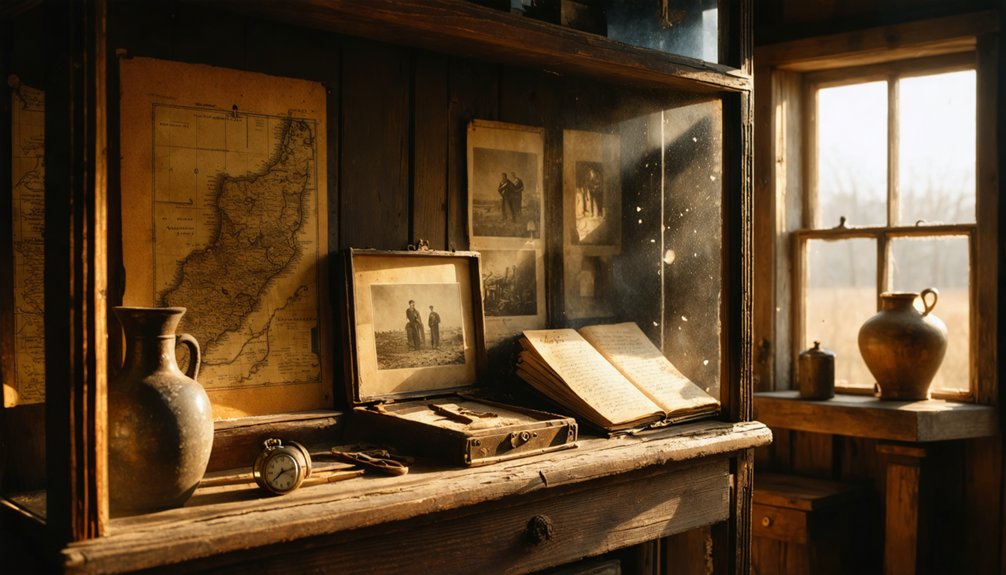
Housed in the original town’s relocated railroad station, the Kaw Museum at New Kaw City holds pictures, artifacts, and detailed records that bring Old Kaw City’s submerged history back to life. You’ll find historical artifacts and museum exhibits documenting the thriving farming community that once lined the Arkansas River’s banks before Kaw Lake swallowed it whole.
The museum preserves photographs of Chief Washungah, the last Chief of the Kaw Indians, honoring the indigenous legacy woven into the town’s identity. You can trace the community’s arc from its 1902 founding through its 1972 Last Day Parade.
If you can’t strap on scuba gear to explore the submerged streets below, the Kaw Museum gives you the next best thing — the full story, preserved above water.
What’s Left to See at Old Kaw City Today?
Although Old Kaw City lies submerged beneath Kaw Lake, you can still catch glimpses of it when water levels drop low enough to expose the rooftops of the grain elevator, old stores, and the historic hotel. Spring and fall offer your best chances for surface viewing.
When water levels drop, Old Kaw City’s rooftops eerily resurface — best witnessed during spring and fall.
For deeper underwater exploration, scuba gear lets you experience the sunken streets firsthand. Historical artifacts and structural remnants rest exactly where residents left them.
Here’s what you can expect to encounter:
- Rooftops of the grain elevator, hotel, and storefronts during low-water seasons
- Submerged streets and building foundations accessible only by scuba diving
- A ghostly townscape frozen beneath Kaw Lake since 1970
You’re fundamentally visiting a time capsule — one that rewards the adventurous traveler willing to look beneath the surface.
The Best Time to Visit Old Kaw City
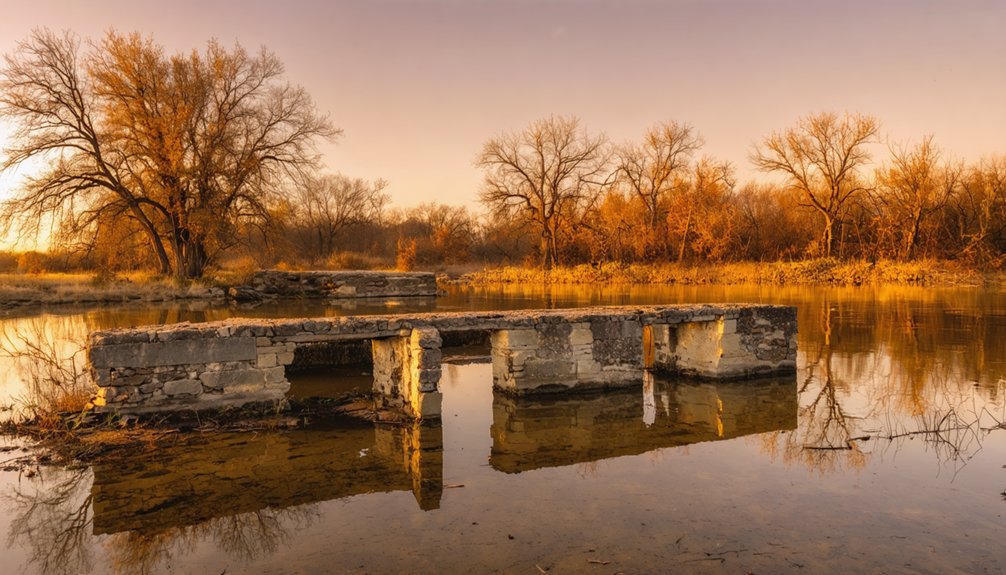
Timing your visit to Old Kaw City can mean the difference between staring at open water and actually spotting submerged rooftops breaking the surface. Water level fluctuations make spring and fall your best windows for surface viewing, when receding waters expose remnants of the grain elevator, old storefronts, and the historic hotel roof.
Oklahoma’s winters bring icy, unpredictable conditions, while summers bake the lake region with intense heat, making both seasons less than ideal for exploration.
If historical preservation is your priority, pair your visit with the Kaw Museum in New Kaw City, open year-round. You’ll find photographs and artifacts documenting Old Kaw City’s full story regardless of lake conditions.
Plan accordingly, and you’ll experience this submerged ghost town on its best terms.
Getting to Kaw City: Routes and Road Conditions
Reaching Old Kaw City is straightforward once you know the route. Urban development and environmental impact reshaped this landscape dramatically, but finding your way here remains simple.
From Ponca City, head ten miles east — you’ll find present-day Kaw City sitting quietly above its submerged predecessor.
Key route details to remember:
- State Highway 11 connects you directly, running twelve miles east of U.S. Highway 77
- Standard 2WD vehicles handle all roads fine — no off-road equipment necessary
- Ponca City serves as your nearest major hub for fuel and supplies before heading out
Once you arrive, present-day Kaw City sits roughly a half-mile uphill from the original submerged site.
The roads are accessible and well-maintained, letting you focus entirely on exploring this hauntingly beautiful slice of Oklahoma history.
Other Ghost Towns to Visit in Kay County
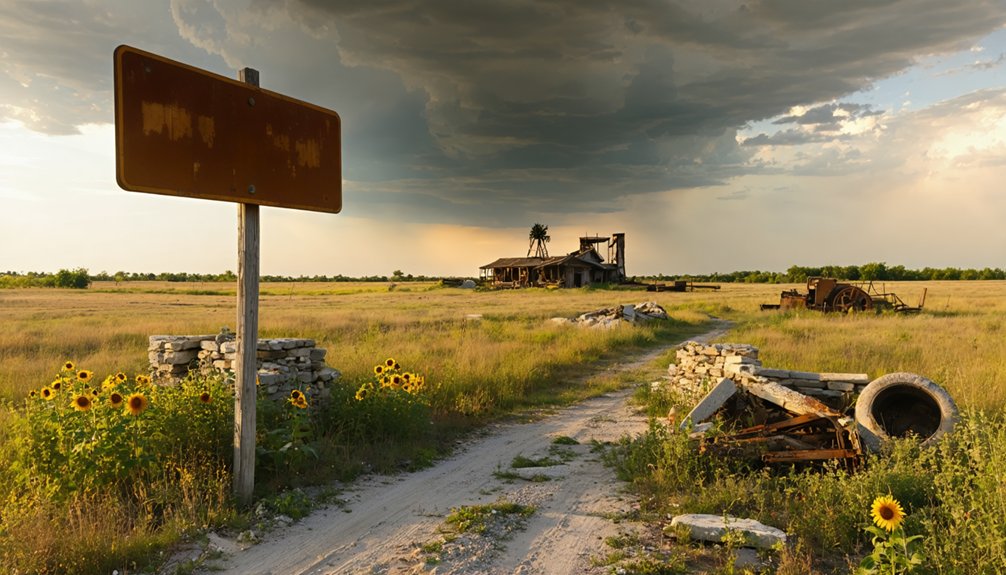
Ghost town explorers love Kay County for its hidden treasures — remnants of communities that vanished quietly as the region transformed. Washunga and Old Kaw City together tell a layered story of displacement, resilience, and loss.
Visiting both sites in a single day is entirely realistic, giving you a richer, more complete picture of what this stretch of Oklahoma once looked like.
Frequently Asked Questions
What Was the Population of Old Kaw City Before Submersion?
The exact population isn’t documented, but you’ll find ghost town legends surrounding Old Kaw City’s abandoned structures fascinating. It thrived as a prosperous farming community until the late 1960s, when rising Kaw Lake waters swallowed it whole.
Can Visitors Swim or Dive Legally in Kaw Lake Today?
Like a key releasing a sunken vault, scuba gear’s your ticket to explore Old Kaw City’s depths. Lake activities thrive here, but check swimming regulations locally, as you’ll need proper diving equipment to legally access submerged remnants.
Were Residents Compensated When Forced to Relocate for Kaw Lake?
The historical record doesn’t fully detail compensation specifics, but you’d find relocation hardships were real and compensation controversies surrounded many such Army Corps projects. Residents watched their beloved community vanish beneath Kaw Lake, often feeling inadequately reimbursed for irreplaceable losses.
What Year Did the Army Corps of Engineers Complete Kaw Dam?
While the exact completion date isn’t documented here, the Army Corps of Engineers built Kaw Dam in the late 1960s. Don’t let that gap stop your ghost town exploration — this dam construction history shaped an unforgettable underwater world you’ll love discovering.
Is Old Kaw City Listed on Any Historic Preservation Registers?
The available knowledge doesn’t confirm if Old Kaw City’s historic landmarks appear on preservation registers. You’ll want to research local preservation efforts through Oklahoma’s State Historic Preservation Office for accurate registration details before planning your adventure.
References
- https://www.okhistory.org/publications/enc/entry?entry=KA008
- https://www.facebook.com/groups/264767723538898/posts/25003078682614459/
- https://en.wikipedia.org/wiki/Kaw_City
- https://www.ghosttowns.com/states/ok/kawcity.html
- https://en.wikipedia.org/wiki/List_of_ghost_towns_in_Oklahoma
- https://www.ghosttowns.com/states/ok/washunga.html
- https://www.oklahoman.com/story/news/1999/04/24/kaw-city/62245144007/