To plan your ghost town road trip to Who’d Thought It, Texas, head to northern Hopkins County via Farm to Market Road 1536, approaching from Tira to the west or Sand Hill to the south. This hauntingly named rural settlement peaked before World War II, thriving on cotton farming before younger generations left and the town faded away. Visit in spring or fall for the best experience, and there’s plenty more to uncover about this mysterious vanished community.
Key Takeaways
- Who’d Thought It is located in northern Hopkins County, Texas, accessible via Farm to Market Road 1536, east of Tira and north of Sand Hill.
- The community peaked before WWII, centered on cotton and corn farming, with two stores, a church, and a cemetery.
- No buildings, businesses, or residents remain today, making navigation reliant on maps and instinct.
- Visit during spring or fall for mild weather, better visibility of remnants, and ideal photography conditions.
- Pair the visit with nearby Hopkins County ghost towns for a full-day rural history road trip.
What Is Who’d Thought It, Texas?
Tucked away in northern Hopkins County, Texas, Who’d Thought It’s a ghost town that sits east of Tira and north of Sand Hill along Farm to Market Road 1536. This rural farming community likely took shape sometime after 1900, though its peculiar name remains a genuine mystery. No historical myths or local legends have ever explained how this settlement earned such an unusual moniker — historians simply don’t know.
At its peak before World War II, you’d have found two operating stores, cotton and corn fields stretching across 150-acre plots, a church, and a cemetery. By the late 1980s, the stores had closed, younger residents had moved to cities, and Who’d Thought It had quietly faded into Texas history, leaving behind little more than an unforgettable name.
How Did Who’d Thought It Get Its Mysterious Name?
If you’re expecting a colorful backstory behind the name “Who’d Thought It,” you’ll hit a dead end fast. No official records explain how this northeast Texas community acquired its peculiar moniker, leaving historians without a single credible theory.
The naming process went entirely undocumented, so you’re left to wonder just as much as everyone else who’s ever stumbled across it.
Origins Remain Historically Unclear
One of the quirkiest ghost towns you’ll encounter on a Texas road trip carries a name that historians simply can’t explain: Who’d Thought It. Despite searching historical artifacts and combing through official records, researchers have found zero documentation explaining how this Hopkins County settlement earned such an unusual moniker.
No outlaws, no notable figures, no official designation process — nothing surfaces to clarify the mystery. Community legends might seem like a natural source of answers, but even local oral traditions left no traceable explanation behind. The name apparently emerged through completely undocumented means sometime after 1900.
That ambiguity is part of the appeal. You’re free to speculate as you navigate Farm Road 1536 toward this vanished farming community, knowing the truth may never surface.
No Official Records Exist
What makes the mystery even more compelling is that it’s not simply a matter of lost records — no official records ever existed in the first place. No government body, land office, or civic authority ever formally documented how this community acquired its peculiar name. You won’t find courthouse filings or territorial paperwork explaining the decision.
Unverified stories circulate among local history enthusiasts, but none hold up under scrutiny. Unrelated legends occasionally surface, yet historians consistently find zero credible evidence connecting them to the name’s true origin.
The town simply emerged from rural northeast Texas with this extraordinary moniker already attached, undocumented and unexplained. For freedom-seeking road trippers who love unsolved puzzles, that absence of official explanation makes Who’d Thought It genuinely fascinating rather than frustratingly incomplete.
Undocumented Naming Process
Unlike most Texas settlements that earned their names through documented decisions, land grants, or prominent founders, Who’d Thought It acquired its extraordinary moniker through a process that simply left no paper trail. You won’t find any official records explaining how this community landed such an unusual name.
Historians have explored historical myths, searched courthouse archives, and investigated naming mysteries surrounding the settlement — all without success. No prominent outlaw, colorful character, or founding family member appears responsible for the designation.
The name emerged organically through undocumented means, leaving you to wonder what conversation, moment, or circumstance inspired someone to call this rural Hopkins County farming community something so unexpectedly expressive. That enduring mystery actually makes visiting the site more compelling for road trippers chasing authentic Texas history.
Where Exactly Is Who’d Thought It Located?
Tucked away in northern Hopkins County, Texas, Who’d Thought It sits east of Tira and north of Sand Hill, making it a classic off-the-beaten-path destination. Your best route runs along Farm to Market Road 1536, which cuts directly past the site and gives you easy access without requiring any specialized vehicle or guide.
You won’t find local legends pointing you toward flashy historic landmarks here — just quiet Texas countryside marking where a once-active farming community stood. The rural northeast Texas landscape surrounds the site completely, reminding you how isolated these vanished settlements truly were.
If you’re mapping your road trip, position Who’d Thought It between Tira to the west and Sand Hill to the south, and you’ll find the location without much trouble.
How to Get There via Farm Road 1536
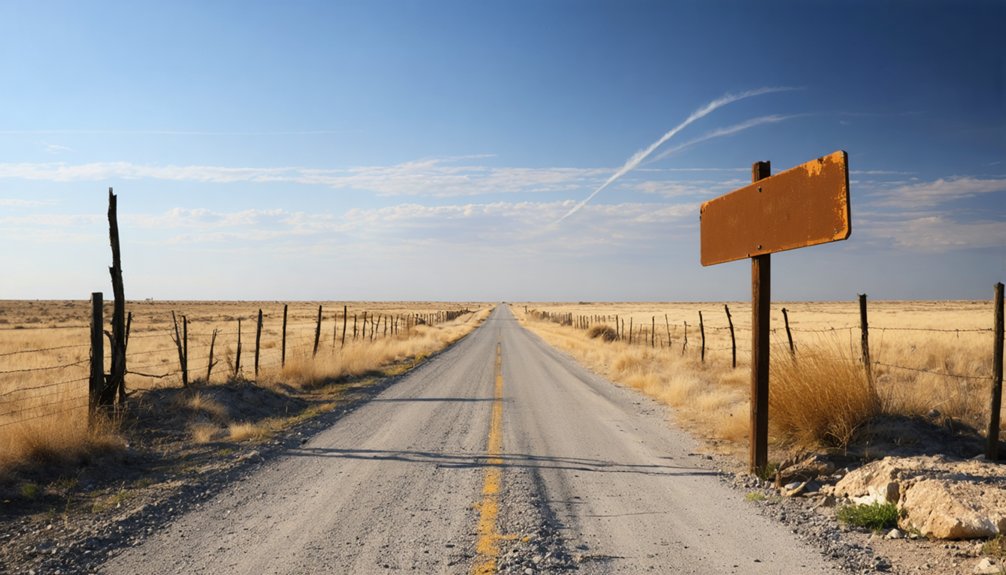
Farm Road 1536 serves as your direct lifeline to Who’d Thought It, so pull it up on your map before you leave. Head into northern Hopkins County, positioning yourself east of Tira, and you’ll find the settlement sitting quietly alongside this rural route.
The drive itself sets the tone perfectly. Rolling northeast Texas farmland surrounds you, hinting at the cotton and corn economy that once kept this community alive.
When you arrive, you’re primarily navigating by instinct since no welcome signs greet visitors.
Don’t expect crowds. This road delivers you straight into solitude, where remnants of historical architecture and whispered local legends replace modern distractions.
You’re traveling on your own terms here, discovering a vanished farming world that most Texans have completely forgotten exists.
How Cotton Farming Built: and Doomed: Who’d Thought It
Cotton built Who’d Thought It from the ground up, and cotton quietly strangled it too. You’re walking through a place where generations staked everything on 150-acre plots, coaxing life from northeast Texas soil. No local legends romanticize the collapse — just quiet economic truth.
Cotton gave Who’d Thought It everything — then took it all back, one harvest at a time.
What cotton farming left behind:
- Two stores that once hummed with farmers trading harvests, now gone silent forever
- Families who planted corn alongside cotton, diversifying just enough to survive lean years
- Ghost stories aren’t supernatural here — they’re economic, written in abandoned storefronts
- Children who grew up free on open farmland eventually chased freedom elsewhere, in cities
- A community that World War II didn’t destroy — postwar prosperity did, pulling youth away permanently
You’re standing where ambition once smelled like fresh-turned soil.
How Who’d Thought It Went From Farming Hub to Ghost Town
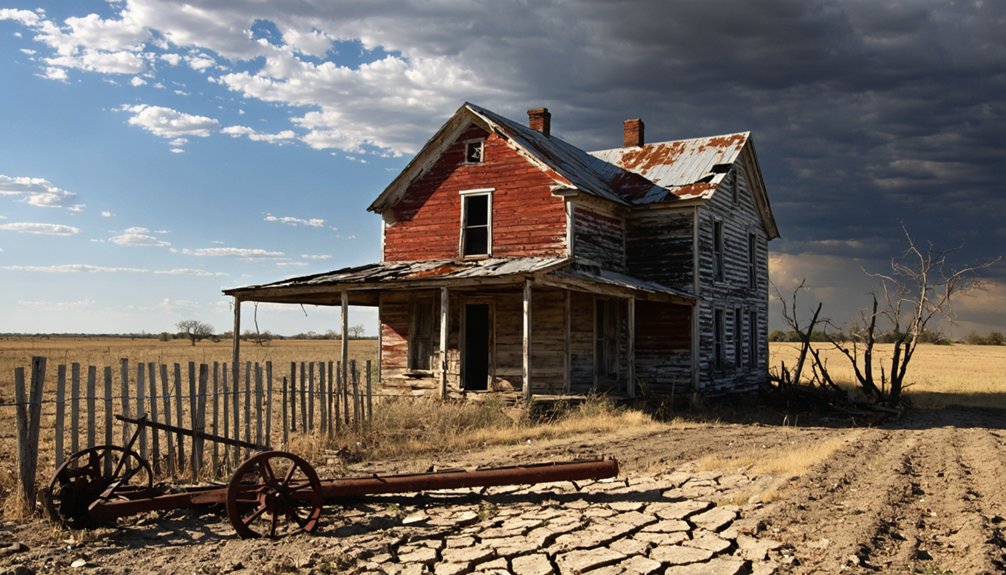
When you picture Who’d Thought It at its peak, you’re looking at a tight-knit farming community where cotton and corn sustained two active stores and a population with roots deep in the northeast Texas soil.
Once those stores shuttered, though, the economic foundation crumbled fast, giving younger residents little reason to stay.
You can trace the town’s collapse directly to that chain reaction: no commerce, no community, no future — just empty buildings and fading memories by the late 1980s.
Cotton Fields Fueled Growth
How does a quiet farming community rise, thrive, and then vanish entirely? In Who’d Thought It, cotton and corn fields answered that question. Farmers worked roughly 150-acre plots, building livelihoods tied directly to the land beneath their boots. These historical landmarks of agricultural independence once defined an entire community’s identity.
Local legends grew alongside the crops — neighbors trading stories at Levi Kearny’s first store, two businesses operating before World War II changed everything.
You can almost feel what was lost when you consider:
- Families planting seeds every spring with genuine hope
- Children running between cotton rows
- Neighbors sharing harvests freely
- Independence earned through honest, hard labor
- A community that needed nothing beyond its own fields
That freedom built Who’d Thought It — and its loss unraveled it.
Stores Closed, Town Collapsed
Thriving fields can only carry a town so far. When Who’d Thought It’s stores shuttered permanently, the community lost its economic backbone. Without local commerce, residents had little reason to stay, and younger generations drifted toward urban opportunities.
Buildings emptied, and by the late 1980s, the settlement had officially crossed into ghost town territory.
Today, you can drive Farm Road 1536 and feel that absence firsthand. No local legends survived to explain the town’s peculiar name, and its historical landmarks have faded into the northeast Texas landscape.
What remains is a quiet, sobering reminder that even productive farming communities can collapse once commerce disappears. If you’re chasing lost Texas settlements, Who’d Thought It delivers exactly the kind of raw, unvarnished history worth seeking out.
What Remains at Who’d Thought It Today
What’s left of Who’d Thought It today is fundamentally nothing — no buildings, no businesses, no residents. Yet its historical preservation matters because the land itself carries cultural significance worth experiencing firsthand.
What remains of Who’d Thought It is nothing — yet the land itself still carries something worth seeking out.
When you visit via Farm Road 1536, you’ll find:
- Open fields where cotton once stretched toward the horizon
- Quiet rural roads that absorbed generations of footsteps
- A landscape unchanged by the urban sprawl that swallowed its people
- Air undisturbed by commerce, engines, or ambition
- The raw freedom of standing somewhere history simply walked away from
Nothing marks the spot officially. No signs. No monuments. Just northeastern Texas countryside doing what it’s always done — existing without permission or apology.
That silence tells you everything about what small communities lose when younger generations chase distant city lights.
Spring and Fall: The Best Seasons for Northeast Texas Ghost Town Drives
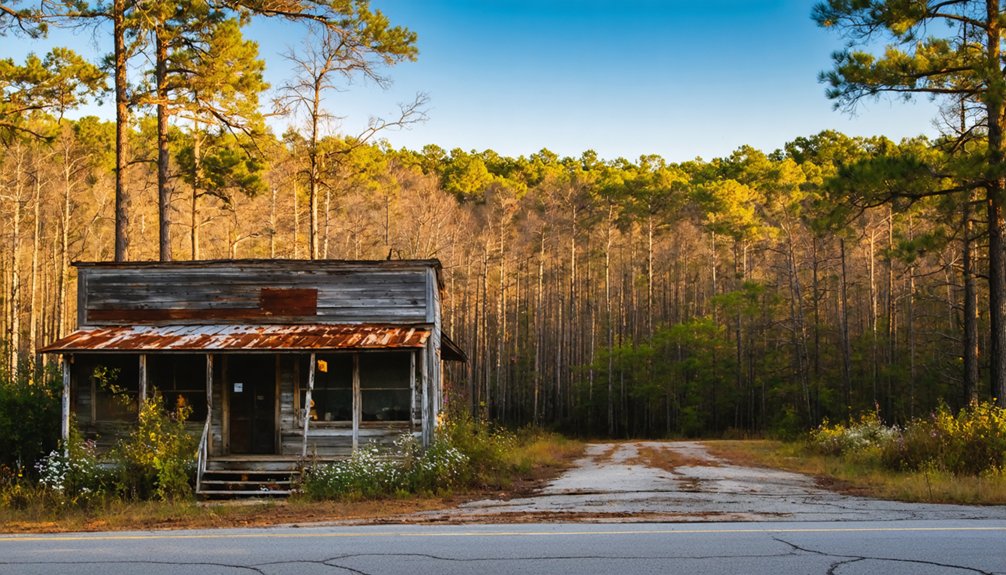
When you’re planning a ghost town drive through northeast Texas, timing matters more than you’d think. Spring brings mild temperatures, wildflowers lining Farm Road 1536, and soft golden light that makes historical architecture look alive again. You’ll photograph abandoned structures without battling summer’s brutal heat or winter’s gray skies.
Fall delivers equally compelling conditions. Cooling temperatures make walking the site comfortable, and changing foliage frames the landscape dramatically. Both seasons offer clear visibility for spotting remnants and reading the land’s story.
You’ll also find locals more talkative during these shoulder seasons, which matters when you’re hunting local legends surrounding peculiar place names like Who’d Thought It.
Visit Tuesday through Thursday to avoid weekend traffic and experience the isolation that genuinely defines this vanished farming community.
Nearby Ghost Towns to Pair With Your Who’d Thought It Visit
Northeast Texas rewards curious road trippers with clusters of vanished communities, so pairing Who’d Thought It with nearby ghost towns turns a single stop into a full day’s journey through the region’s lost rural past. Explore abandoned structures and local legends scattered across Hopkins County by mapping a loose route connecting forgotten settlements.
- Feel the silence of empty farmsteads where families once built entire lives
- Trace cotton field boundaries that fed communities now completely erased
- Photograph weathered buildings carrying stories nobody officially recorded
- Discover cemeteries where local legends quietly rest without recognition
- Stand on rural crossroads where commerce, community, and connection once thrived
Farm Road 1536 gives you freedom to move between these sites efficiently, letting northeast Texas reveal its layered, melancholy agricultural history mile by mile.
Frequently Asked Questions
Was Who’d Thought It Ever Considered for Official Texas Historical Marker Designation?
Like faded ink on forgotten pages, the records don’t confirm you’ll find any official Texas Historical Marker designation for Who’d Thought It — its ghost town origins and preservation efforts remain undocumented in available historical sources.
Are There Any Known Photographs Documenting Who’d Thought It During Its Peak Years?
You won’t find known photographs documenting Who’d Thought It’s peak years. No preservation efforts captured its story visually, leaving urban decay to quietly erase its history. You’re left imagining cotton fields and bustling stores through sparse written records alone.
Did Who’d Thought It Ever Have a Post Office Established Within the Community?
Like Elko, Texas, which lost its post office before fading away, Who’d Thought It never had one established. You’ll find no postal records among its local legends — only abandoned buildings whispering stories of this vanished farming community.
Can Visitors Legally Access and Walk Around the Who’d Thought It Ghost Town Site?
You can access Who’d Thought It via Farm Road 1536, but you’ll want to respect any private property boundaries for tourist safety. Always check local access restrictions before exploring this fascinating, forgotten Texas farming community.
Have Any Local Historians Attempted to Formally Document Who’d Thought It’s Complete History?
You’ll find that local historians haven’t fully documented Who’d Thought It’s complete history — local folklore surrounding its mysterious name remains unexplained, and preservation efforts haven’t uncovered official records detailing the settlement’s true origins or development.
References
- https://www.tshaonline.org/handbook/entries/whod-thought-it-tx
- https://frontporchnewstexas.com/2022/10/31/history-of-whod-thought-it-texas-ghost-town/
- https://kicks105.com/ghost-town-strange-name/