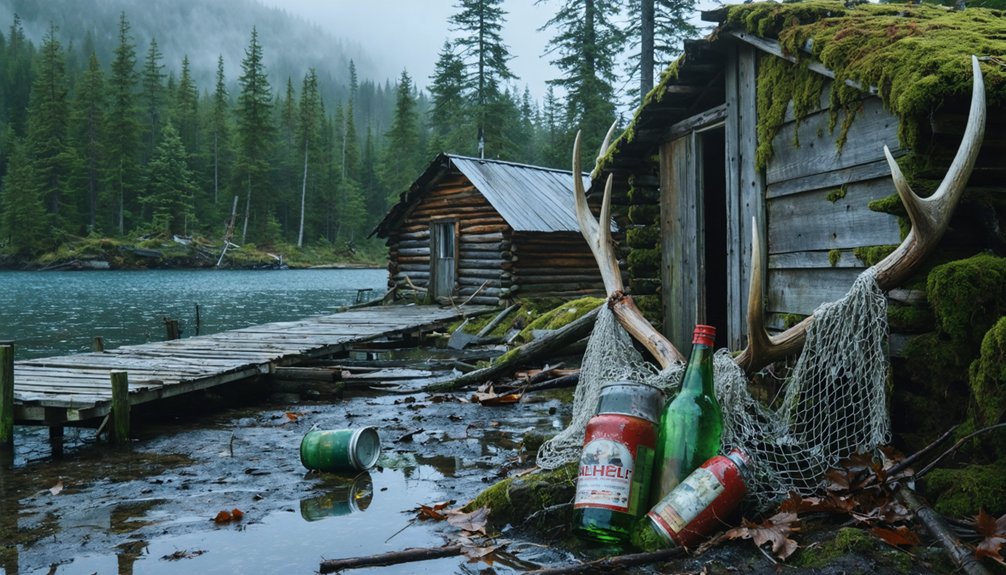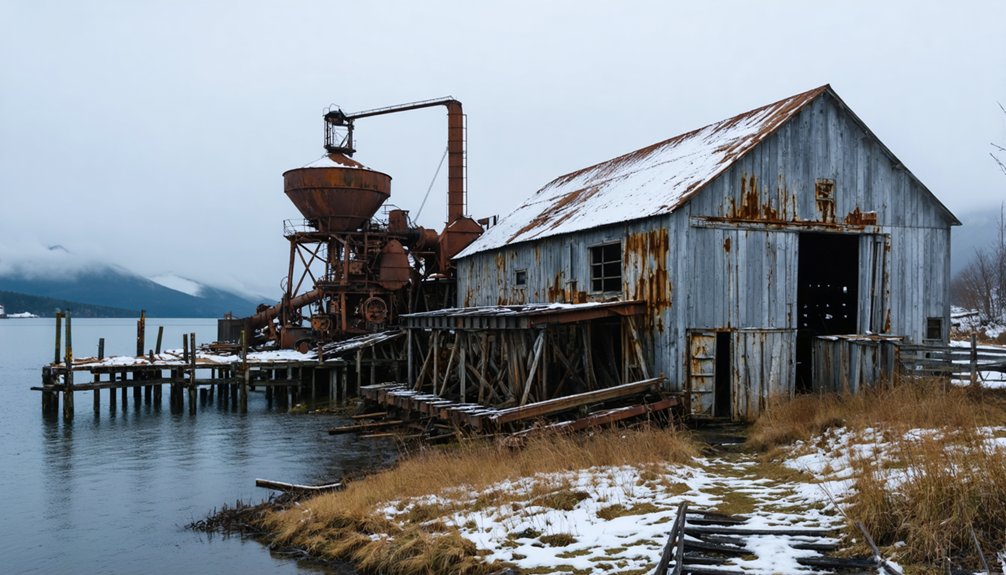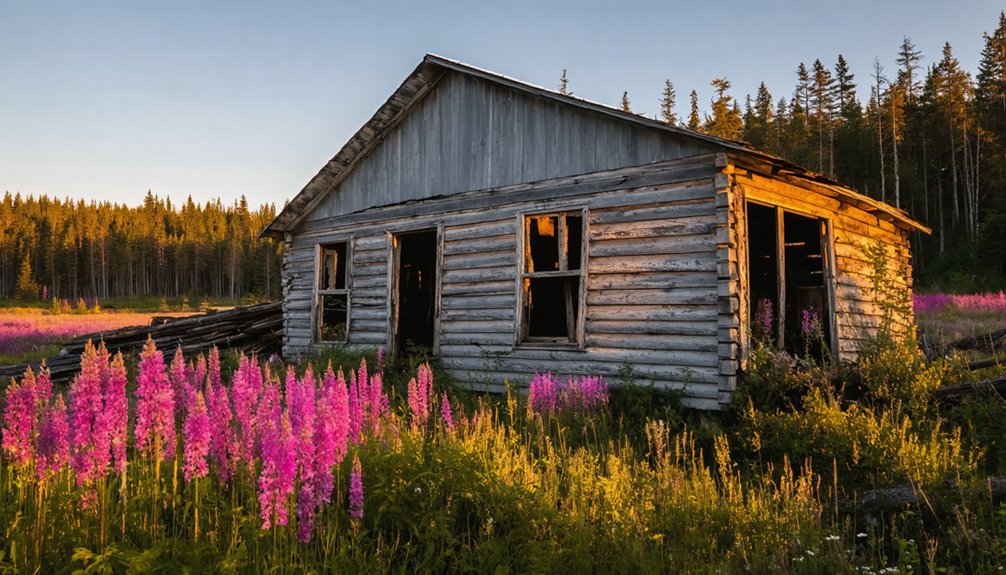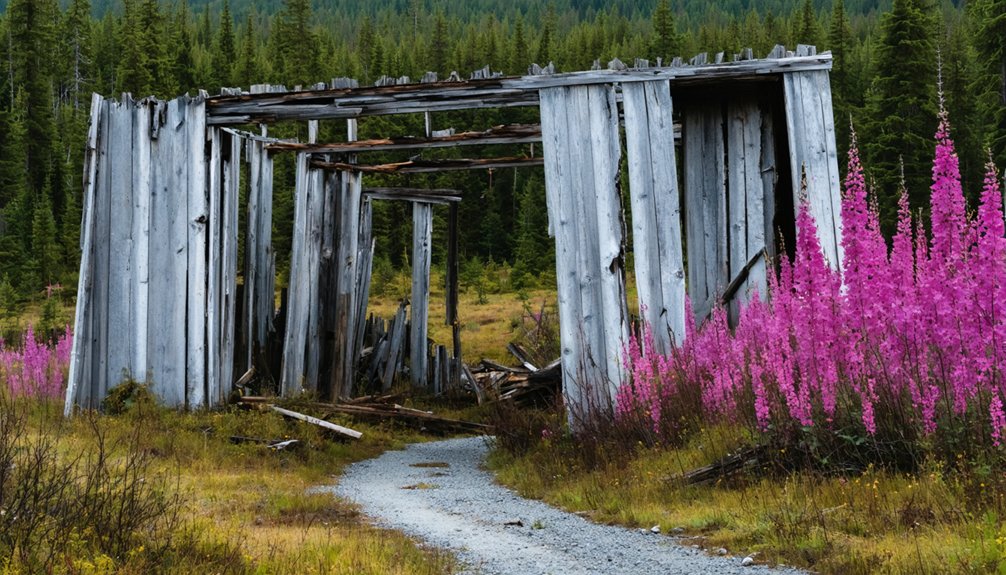
Olnes is just 20 miles north of Fairbanks along the Elliott Highway, but it feels like another century entirely. You’ll find weathered cabins, a quirky “Pop. 1” sign, and the ghostly bones of a railroad town frozen in 1930. Top off your fuel tank before leaving Fairbanks, pack recovery gear, and check Alaska 511 for road conditions. There’s far more to this forgotten town than you’d expect.
Key Takeaways
- Olnes is located 20 miles north of Fairbanks along the Elliott Highway, making it an accessible yet remote ghost town destination.
- Top off your fuel tank in Fairbanks before departing, as fuel stops are rare along the route to Olnes.
- Check Alaska 511 before traveling, as road conditions change rapidly depending on season, including icy winters and soft spring ground.
- Pack essential supplies including water, a first-aid kit, recovery gear, and offline maps due to limited cell coverage outside Fairbanks.
- Key historic structures include the old railroad depot, original cabins, boarding house remnants, and a population sign reading “Pop. 1.”
What Made Olnes, Alaska a Ghost Town?
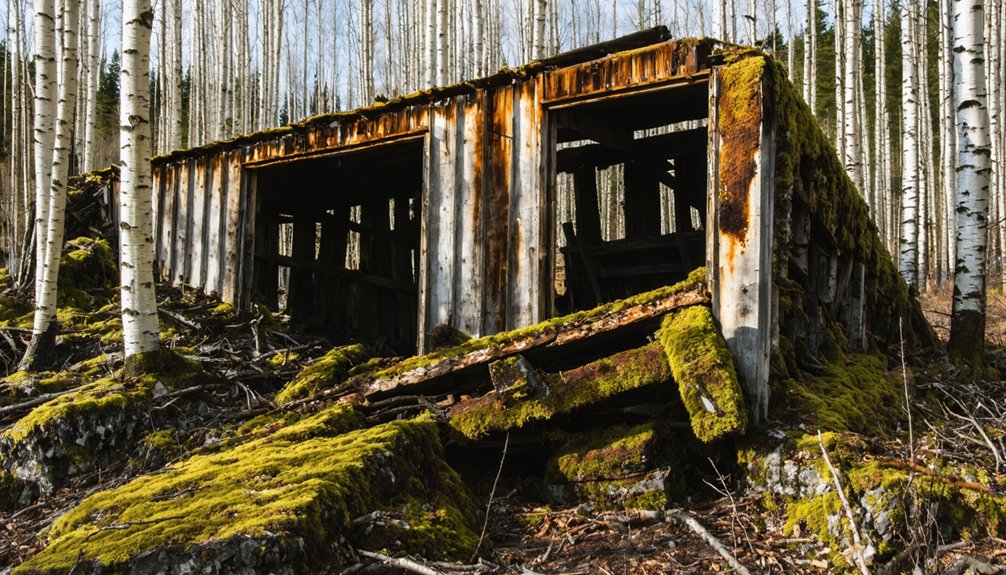
When the easily accessible gold deposits ran dry, Olnes lost its reason to exist. Its ghost town origins trace back to a perfect storm of economic collapse and industrial abandonment.
Founded by Norwegian prospector Nels Olnes, the town thrived as a railroad stop and mining history hub, serving freight bound for Livengood and Tolovana. At its peak, roughly 300 residents filled its hotels, saloons, and boarding houses.
Then the Tanana Valley Railroad shut down in 1930, and the silence rolled in fast. Unlike neighboring communities that were completely dismantled, Olnes simply emptied out. Its buildings remained standing, frozen in time along the Elliott Highway.
Today, you’re exploring a rare, intact relic — a place where Alaska’s gold rush ambitions collided hard with cold economic reality.
How Far Is Olnes From Fairbanks?
Just 20 miles north of Fairbanks along the Elliott Highway, Olnes sits close enough for a day trip yet far enough to feel like you’ve crossed into another era. You’ll cover that distance quickly, but once you arrive, the town’s ghost town history slows everything down.
The drive itself sets the tone — boreal forest closing in, civilization thinning out, Alaska’s raw landscape reminding you why prospectors once pushed this far north chasing gold.
Boreal forest closes in, civilization thins out — Alaska’s raw landscape does the talking.
Olnes carries that mining legacy in its weathered structures and silent streets, where a peak population of 300 once hustled around a working railroad depot.
Before you go, verify road conditions along the Elliott Highway. This is Alaska, and conditions change fast — but that unpredictability is exactly what makes the journey worth taking.
Which Historic Buildings Can You Still See in Olnes?
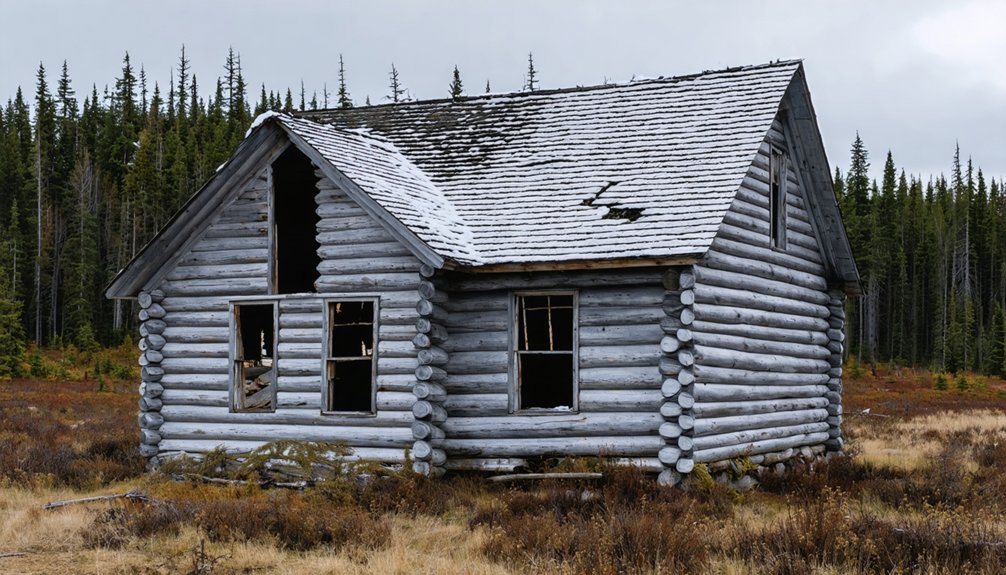
When you pull into Olnes, you’ll find that time hasn’t completely erased its past — a handful of historic structures still stand as quiet reminders of the town’s boom years.
Unlike nearby ghost towns that were stripped bare or burned down, Olnes held onto its buildings, giving you a rare chance to walk among authentic remnants of early 20th-century Alaskan frontier life.
The old railroad depot, once the beating heart of this trans-shipment hub, is among the most compelling stops you’ll make on this road trip.
Surviving Structures Still Standing
Unlike many of Alaska’s gold rush settlements that were stripped bare or burned to the ground, Olnes holds a quiet defiance in its surviving structures — remnants that still break the treeline and tell the story of a community that once hummed with railroad commerce and mining ambition.
Ghost town legends live inside these weathered walls, and the historic architecture speaks louder than any museum exhibit ever could.
Watch for these surviving landmarks as you explore:
- Original cabins still standing along the settlement’s footprint
- Deteriorating boarding house remnants
- The famously characterful old outhouse structure
- Railroad depot foundation traces
- Warehouse building remnants tied to freight operations
Each structure you encounter rewards the freedom-seeking traveler willing to wander off the beaten path.
The Historic Railroad Depot
Among Olnes’ most historically significant remnants, the old Tanana Valley Railroad depot once anchored the town’s identity as an essential trans-shipment hub connecting Fairbanks to the goldfields near Livengood and Tolovana, 50 miles north.
Operating between 1907 and 1930, the depot’s railroad significance stretched far beyond simple passenger stops — it fueled an entire economy.
As you explore the site today, you’ll notice the depot architecture that once housed a working warehouse and machine shop, structures built to handle the relentless demands of frontier mining logistics.
When the railroad closed in 1930, it stripped Olnes of its economic lifeline almost overnight.
Standing here, you’re witnessing the skeleton of an operation that once sustained 300 residents chasing Alaskan gold and freedom across unforgiving terrain.
What Will You Actually Find When You Arrive in Olnes?
Pulling off the Elliott Highway into Olnes, you’ll immediately sense the quiet weight of a place that time has nearly forgotten. Ghost town experiences don’t get more raw than this. The historical significance here speaks through weathered wood and rusted iron rather than museum placards.
Here’s what you’ll actually encounter:
- A population sign famously reading “Pop. 1,” a sardonic landmark dating to at least 1990
- Weathered cabins and original structures still standing against the Alaskan elements
- A characterful old outhouse worth photographing
- Remnants of the former railroad depot footprint
- An overwhelming, liberating silence broken only by wind through spruce trees
No gift shops. No crowds. Just honest ruins and open sky — exactly the kind of unfiltered freedom most travelers rarely find.
The Best Time of Year to Visit Olnes
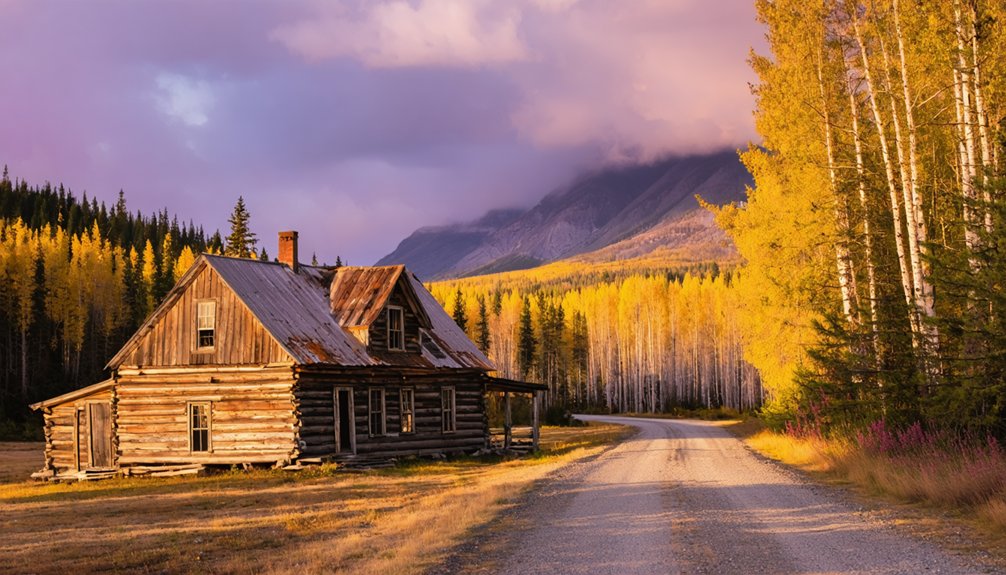
Knowing what waits for you in Olnes is only half the equation — getting there when conditions actually cooperate is the other half. Among the best seasons, late May through early September offers the clearest roads, longest daylight hours, and most navigable terrain along the Elliott Highway.
Summer hands you extended golden light that makes photographing those weathered structures genuinely spectacular. Avoid winter unless you’re experienced with Alaska’s brutal road conditions — ice and snow can trap unprepared travelers fast.
Fall brings stunning color but shortening days and early frost.
Essential visitor tips: always check highway conditions before departing Fairbanks, carry emergency supplies, and fuel up completely before heading north.
Olnes rewards the prepared adventurer with raw, unfiltered history — but only if you arrive on its terms.
How Does Olnes Compare to Other Alaskan Ghost Towns Nearby?
As you cruise the Elliott Highway, you’ll notice that Olnes stands apart from neighboring ghost towns like Chatanika and Eldorado City, which suffered near-total destruction through dismantling and relocation of their structures.
Olnes’ buildings remained standing, giving you a rare, tangible connection to Alaska’s early 20th-century mining era that more thoroughly abandoned sites simply can’t offer.
This corridor of forgotten settlements tells a layered story of boom-and-bust cycles, and Olnes occupies a unique position within it as a place where preservation—however accidental—won out over erasure.
Nearby Ghost Towns Compared
While Olnes quietly holds its ground along the Elliott Highway, nearby ghost towns like Chatanika and Eldorado City tell a far more dramatic story of destruction and loss. These communities didn’t survive—they were dismantled, relocated, or swallowed whole by time.
Olnes defied that fate, preserving its mining history and ghost town legends in weathered wood and silent structures.
Here’s how Olnes stacks up against its vanished neighbors:
- Chatanika and Eldorado City lost most original structures to demolition
- Olnes retains standing buildings, offering authentic visual history
- Railroad-era infrastructure gives Olnes a distinct industrial character
- Neighboring towns lack comparable trans-shipment heritage
- Olnes’ “Pop. 1” sign adds irreverent, living personality absent elsewhere
You’ll find Olnes uniquely rewards the curious traveler willing to explore its quietly defiant existence.
Preservation Versus Total Abandonment
Olnes occupies a rare middle ground that most Alaskan ghost towns never reach—it’s neither fully alive nor completely swallowed by time. Unlike Chatanika or Eldorado City, which suffered dismantling or destruction, Olnes kept its bones intact.
No formal preservation methods propped it up—nature and neglect simply moved slowly here, leaving structures standing as quiet witnesses to a vanished railroad era.
That distinction matters when you’re chasing historical significance across the Elliott Highway corridor. You’re not staring at a restored, curated version of the past.
You’re walking through something raw and unmanaged, where an old outhouse carries as much authenticity as any museum exhibit. Olnes rewards travelers who value honest ruins over polished history—a rare find that demands nothing from you except the freedom to explore on your own terms.
Elliott Highway Historic Corridor
The Elliott Highway doesn’t just pass through ghost towns—it strings them together like a broken necklace of forgotten ambition, each settlement revealing a different chapter of Alaska’s mining collapse.
Drive this corridor and you’ll encounter a concentrated mining legacy unlike anywhere else:
- Olnes kept its bones—buildings still stand, defying total erasure
- Chatanika suffered demolition, leaving emptier silence
- Eldorado City disappeared almost completely
- Livengood represents later-stage Elliott Highway history, boom fading slower
- Tolovana anchored northern supply routes, now equally forgotten
What distinguishes Olnes isn’t dramatic ruins—it’s stubborn survival.
You’re reading a settlement that refused complete erasure while neighbors vanished. That quiet defiance makes your stop here feel less like tourism and more like genuine archaeological discovery along Alaska’s forgotten frontier.
Is the Road to Olnes Safe to Drive Year-Round?
Driving the Elliott Highway to Olnes rewards the bold, but you’ll need to respect what Alaska’s seasons can throw at this stretch of road.
Winter transforms the pavement into packed ice, demanding studded tires and sharp instincts. Spring breakup brings something arguably worse — soft, heaving ground that swallows unprepared vehicles whole.
Summer offers the clearest road conditions, with long daylight hours giving you every advantage. Even then, gravel sections kick up debris, so protect your windshield.
Fall delivers stunning scenery but unpredictable early snowfall that catches travelers off guard.
Before heading out, check Alaska 511 for real-time travel tips and updated highway reports. Always carry extra fuel, emergency supplies, and a paper map.
The freedom of reaching Olnes means nothing if you’re stranded short of it.
How to Plan Your Drive to Olnes From Fairbanks
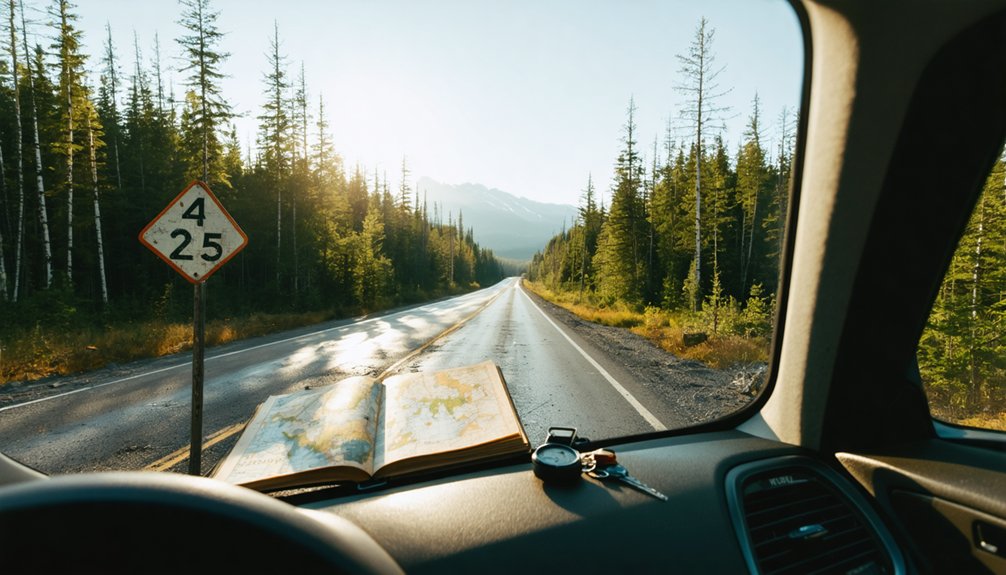
From Fairbanks, you’ll head north on the Elliott Highway — a roughly 20-mile run that takes you from the city’s edge into the kind of open, sky-heavy terrain that reminds you why Alaska earns its reputation.
Scenic views unfold fast, so stay sharp and present.
Essential driving tips before you roll out:
- Top off your tank in Fairbanks — fuel stops disappear quickly
- Check road conditions through Alaska 511 before departing
- Pack recovery gear — a shovel, traction boards, and tow strap
- Download offline maps since cell coverage drops hard outside the city
- Start early to maximize daylight and avoid afternoon weather shifts
Olnes sits quietly off the highway, waiting.
The drive itself sets the tone — wide, raw, and unapologetically Alaskan.
What to Bring for a Day Trip to Olnes
Before you hit the Elliott Highway, pack essentials like water, snacks, a first-aid kit, and a paper map since cell service is unreliable this far north of Fairbanks.
You’ll want to prep your vehicle with a spare tire, jumper cables, and extra fuel, as services thin out quickly beyond the city limits.
Seasonal conditions can shift fast in interior Alaska, so layer your clothing and check road and weather reports the morning of your trip rather than the night before.
Essential Supplies To Pack
Venturing out to Olnes means leaving behind the last reliable amenities roughly 20 miles back in Fairbanks, so you’ll want to pack with that buffer in mind.
Remote exploration demands smart safety precautions, and respecting this site’s historical significance means coming prepared rather than depending on infrastructure that vanished decades ago.
- Extra fuel and a basic tool kit
- High-calorie snacks and at least two liters of water per person
- A physical map or downloaded offline GPS route
- Layered clothing suited for Alaska’s unpredictable temperature swings
- A camera to document crumbling structures that won’t stand forever
Toss everything into a waterproof bag.
The Elliott Highway rewards adventurers who treat it seriously and punishes those who don’t.
Vehicle Preparation Tips
Driving the Elliott Highway to Olnes demands a mechanically sound vehicle, and a quick pre-trip inspection can mean the difference between a memorable adventure and an expensive roadside emergency.
Before you roll north from Fairbanks, prioritize vehicle maintenance — check your tire pressure, fluid levels, and brakes. Alaska’s remote highways punish neglect fast. Toss a spare tire, jumper cables, and a basic tool kit into your trunk. Road safety depends on preparation, not luck.
Verify your fuel tank is full, because service stations thin out dramatically past Fairbanks. Inspect your windshield for cracks that cold temperatures will quickly expand.
Your vehicle isn’t just transportation out here — it’s your lifeline across 20 miles of wild, unforgiving Alaskan highway connecting you to Olnes’ haunting, beautiful silence.
Seasonal Weather Considerations
Alaska doesn’t care about your comfort, and Olnes — sitting 20 miles north of Fairbanks along the Elliott Highway — will remind you of that quickly.
Weather patterns shift fast up here, turning a clear morning into a frozen, muddy mess by afternoon. Seasonal activities demand respect for conditions that can flip without warning.
Pack smart before you roll out:
- Layered clothing for temperature swings of 30°F or more
- Waterproof boots for muddy trails and creek crossings
- Emergency blanket and fire-starting kit
- High-calorie snacks and extra water
- Printed maps since cell service disappears fast
You’re chasing history through raw Alaskan wilderness.
Own that freedom by arriving prepared, not desperate. The road rewards the ready.
The Best Stops to Add Near Olnes on Your Drive
Nothing compares to padding out an Olnes ghost town visit with a few well-chosen stops along the Elliott Highway—a route that rewards curious travelers with raw, untamed stretches of interior Alaska.
Chatanika sits nearby, carrying its own mining history and local legends tied to dredging operations that once reshaped the landscape. You’ll find weathered machinery and remnants that speak louder than any museum exhibit ever could.
Push further north toward Livengood, where the road thins and civilization fades into boreal silence. Each stop deepens your understanding of what drew prospectors into this unforgiving country.
Pack your own food and water, keep your fuel topped off, and move at your own pace—this highway doesn’t rush you, and neither should you.
Frequently Asked Questions
Can You Camp Overnight Near the Olnes Ghost Town Site?
Ready to sleep under Alaska’s vast, wild skies? You can camp near Olnes, but always check local camping regulations first. Explore nearby attractions along the Elliott Highway corridor before settling into your adventurous overnight stay!
Are There Any Guided Tours Available for Visiting Olnes?
No formal guided adventures exist for Olnes, but you’ll uncover rich historical insights by exploring independently. Chart your own course through weathered structures, breathing in Alaska’s untamed spirit as you piece together this fascinating ghost town’s story yourself.
Is Photography of the Remaining Olnes Structures Legally Permitted?
The knowledge base doesn’t confirm photography regulations for Olnes, so you’ll want to verify locally. Still, capture the historical significance of these weathered structures — they’re calling your adventurous spirit to document Alaska’s raw, untamed past freely!
Did Nels Olnes Himself Ever Permanently Settle in the Town?
Like many prospectors chasing fortune, Nels Olnes didn’t permanently settle here — he moved on. Yet his Nels Olnes history shaped Olnes town significance forever. You’re literally standing where his restless, freedom-seeking spirit sparked an entire community.
Are There Any Local Events or Festivals Held Near Olnes?
You won’t find organized local traditions or seasonal activities near Olnes. It’s a raw, untamed wilderness where you’ll embrace solitude over festivals—your adventure here writes its own story amid Alaska’s hauntingly beautiful, forgotten landscapes.
References
- https://www.sketchesofalaska.com/2012/05/old-outhouse-at-olnes-has-unique.html
- https://www.thealaskalife.com/blogs/news/alaska-ghost-towns-youve-probably-never-heard-of
- https://www.youtube.com/watch?v=TC_KPrhDByY
- https://live.laborstats.alaska.gov/sites/default/files/trends/may24art2_0.pdf
- https://en.wikipedia.org/wiki/List_of_ghost_towns_in_Alaska
- https://www.youtube.com/watch?v=GNjMpM6b58o
- https://www.youtube.com/watch?v=Cz0IGc2Uy0E