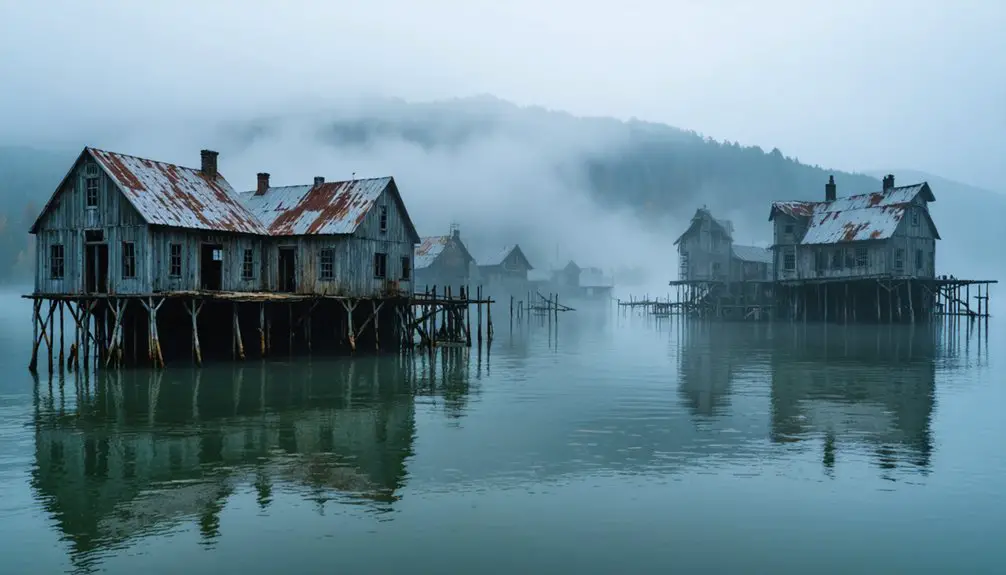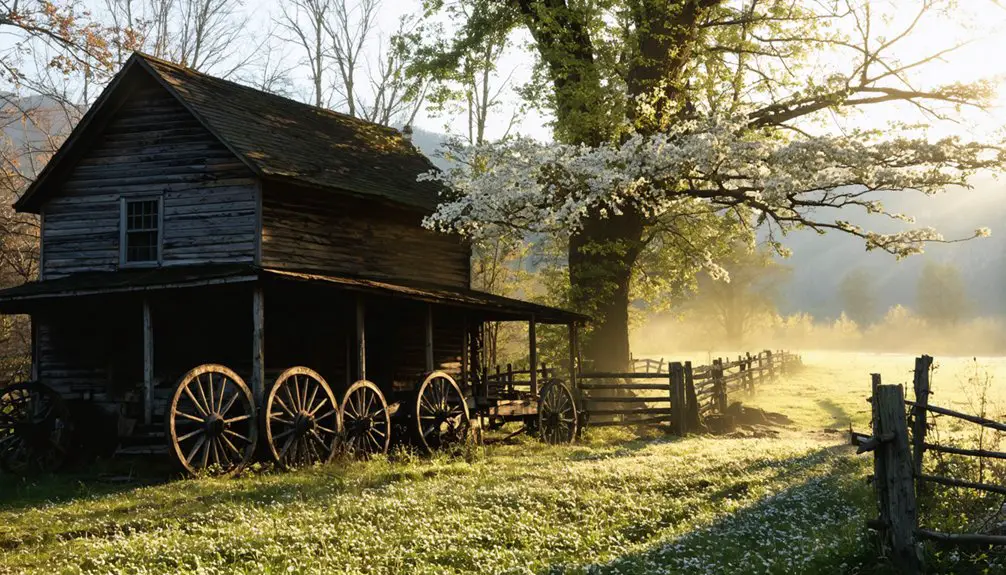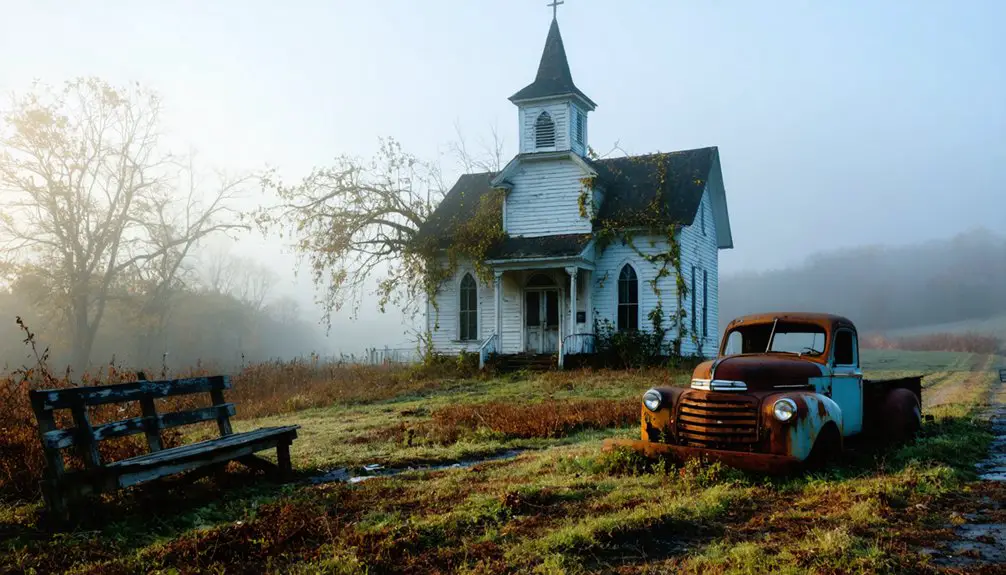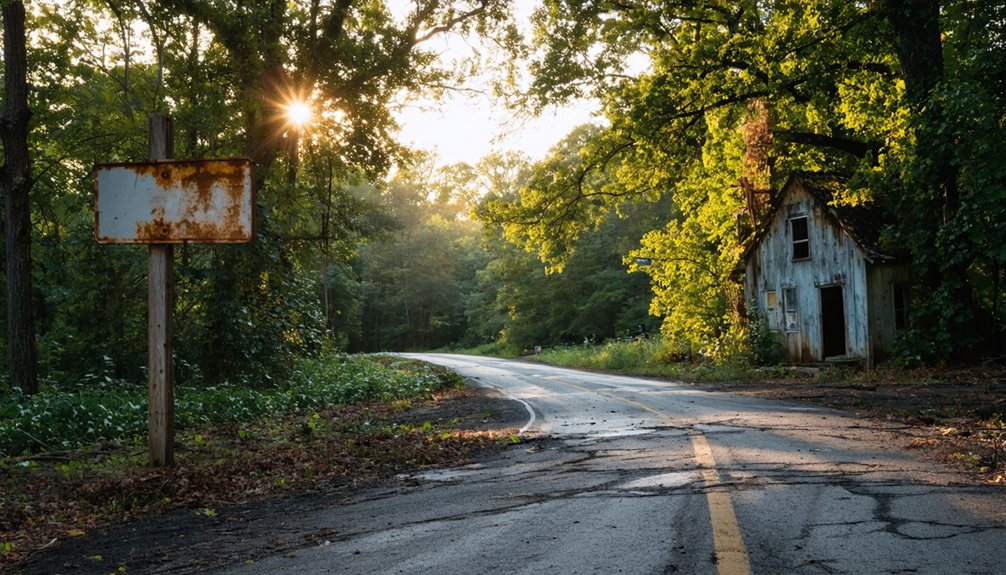
Planning a ghost town road trip to Elkmont, Tennessee puts you face-to-face with nearly 70 crumbling structures hidden behind a Great Smoky Mountains campground. You’ll explore remnants of a once-thriving logging hub that wealthy Knoxville families transformed into an elite summer retreat before the national park claimed it all. Visit during fall foliage or firefly season for the most unforgettable experience. Keep going to uncover everything you need to plan your perfect Elkmont adventure.
Key Takeaways
- Elkmont Ghost Town, located behind Elkmont Campground in the Great Smoky Mountains, Tennessee, preserves approximately 70 early 20th-century historic structures.
- Access Elkmont via Fighting Creek Gap Road from Gatlinburg, with no admission fees and open exploration encouraged behind the campground.
- Visit during late May to mid-June for firefly viewing or mid-October to early November for stunning fall foliage.
- Pack sturdy hiking boots, a flashlight, printed maps, water, snacks, and a first aid kit for safe exploration of remote structures.
- Nearby attractions include Laurel Falls Trail, Clingmans Dome, Meigs Falls, and Townsend Wye, enriching your overall road trip experience.
What Is Elkmont, Tennessee’s Ghost Town Story?
Tucked away behind Elkmont Campground in the Great Smoky Mountains, Tennessee’s most fascinating ghost town tells a story that spans logging booms, elite social clubs, and a gradual slide into abandonment.
Elkmont history begins in the 1840s when settlers claimed the upper Little River Valley. By 1901, the Little River Lumber Company had purchased 86,000 acres, transforming the area into a thriving logging operation.
Wealthy Knoxville families soon discovered the region, establishing exclusive retreats like the Appalachian Club and Wonderland Club.
When Great Smoky Mountains National Park formed in 1934, residents negotiated lifetime leases, but most expired by 1992. By 2001, the final resident departed, leaving 70 historic structures to decay.
Today, you can freely explore this ghost town’s haunting remnants and uncover its layered past.
How Elkmont Went From Lumber Camp to Resort Town
What began as a rugged lumber camp carved out of the Tennessee mountains eventually transformed into one of the region’s most coveted summer retreats.
Elkmont’s lumber history traces back to 1901, when the Little River Lumber Company acquired 86,000 acres and built a railroad to haul timber down to Tuckaleechee Cove.
That same railroad became the vehicle for resort transformation, carrying wealthy Knoxville families into the Smokies for weekend escapes.
Who Were the Wealthy Families That Turned Elkmont Into a Summer Paradise?
Once the railroad opened the door, Elkmont didn’t stay a lumber camp for long. Wealthy benefactors from Knoxville quickly recognized the valley’s potential, transforming it into an exclusive mountain retreat.
By 1910, Little River Lumber sold land to the Appalachian Club, where elite vacationers built private hunting and fishing cabins. Then in 1919, a group of prominent businessmen purchased the Wonderland Hotel, establishing the Wonderland Club alongside it.
These two private social clubs became the heartbeat of Elkmont’s golden era. Powerful families claimed their summer escapes here, returning season after season to enjoy cool mountain air and pristine wilderness far from city life.
You’re fundamentally walking through their abandoned paradise when you explore Elkmont today — a world built for privilege, now open to everyone.
How Did the National Park Turn Elkmont Into a Ghost Town?
When the Great Smoky Mountains National Park was established in 1934, it forced Elkmont’s residents to make a tough choice: sell their properties at full value and leave, or accept discounted lifetime leases and stay temporarily.
Most families chose the leases, clinging to their beloved summer retreats until those agreements expired in 1992, after which the National Park Service left roughly 70 historic buildings to deteriorate without maintenance.
Park Establishment Displaces Residents
The establishment of Great Smoky Mountains National Park in 1934 didn’t just reshape the landscape — it reshaped lives.
The park’s impact on Elkmont’s community was immediate and deeply personal. Residents faced a stark choice: sell their properties at full value and relocate, or accept discounted lifetime leases and stay temporarily.
Many chose the leases, clinging to the homes and memories they’d built. But those leases carried an expiration date. By 1992, most had run out, triggering widespread resident displacement.
Without maintenance, the cabins deteriorated rapidly. The final holdout left in 2001, and just like that, a thriving summer community became silence.
You’re not just walking through abandoned buildings when you visit — you’re walking through someone’s surrendered freedom.
Leases Expire, Buildings Abandoned
As the last leases expired in 1992, the National Park Service inherited roughly 70 historic buildings it hadn’t planned to keep. That leases history left these structures in bureaucratic limbo — too significant to ignore, too costly to maintain.
The government’s initial response leaned toward demolition, which would’ve erased decades of Appalachian resort culture overnight.
Without residents protecting them, the cabins deteriorated rapidly. Roofs sagged, porches collapsed, and vegetation swallowed entire structures. What had once been a thriving mountain escape became a genuine ghost town frozen in neglect.
Building preservation advocates pushed back hard, arguing these structures deserved better than bulldozers. Their persistence paid off.
Which Historic Buildings Can You Still Explore at Elkmont?
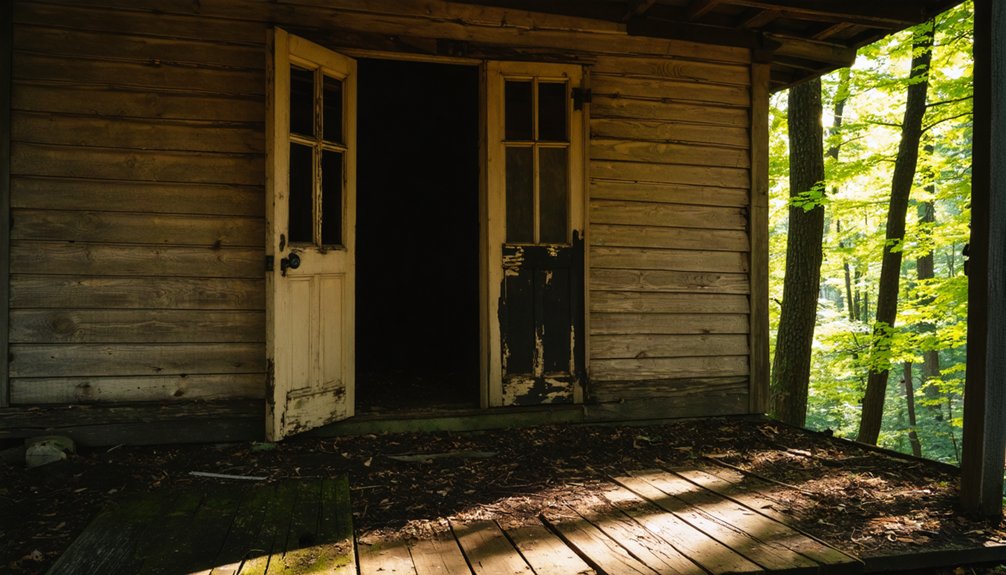
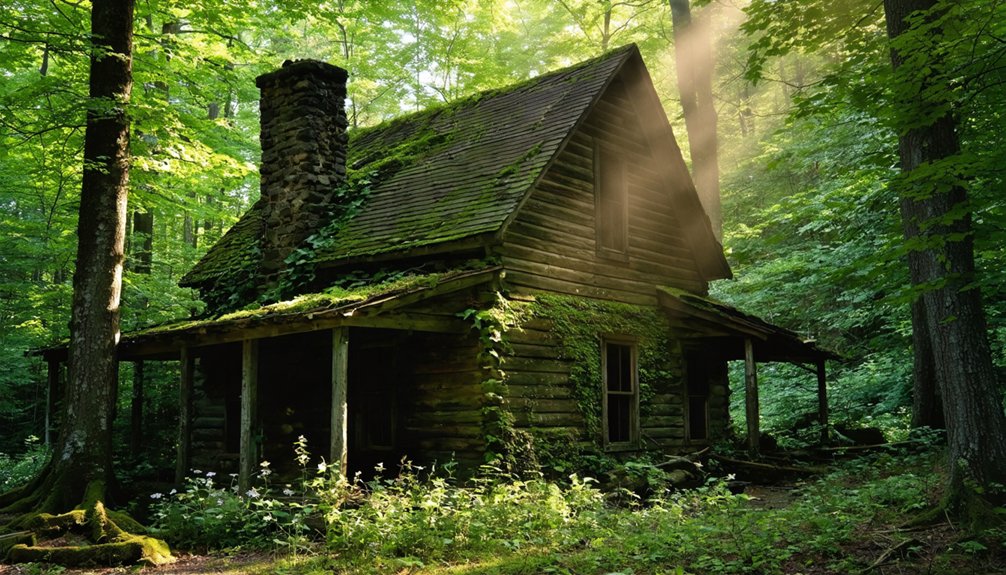
Wandering behind Elkmont Campground, you’ll discover a hauntingly beautiful collection of abandoned structures frozen in time. The Elkmont Historic District preserves roughly 70 buildings representing early 20th-century Appalachian resort culture.
You can explore the remnants of two private social clubs — the Appalachian Club and the Wonderland Club — alongside dozens of weathered vacation cabins. The Wonderland Hotel stands as the district’s crown jewel, its deteriorating frame telling stories of wealthy Knoxville families who once escaped here every summer.
Historic preservation efforts gained momentum after the 1994 National Register of Historic Places listing, saving much of the Elkmont architecture from demolition.
Today, ongoing restoration continues breathing life back into these forgotten structures, giving freedom-loving explorers an authentic, unfiltered glimpse into Tennessee’s fascinating resort past.
How to Get to Elkmont Ghost Town
Now that you know what awaits you at Elkmont, getting there’s surprisingly straightforward. You’ll find this legendary ghost town near the Sevier-Blount County line, tucked along the Little River in the Great Smoky Mountains.
From Gatlinburg, take Fighting Creek Gap Road toward Townsend. Watch for the Elkmont Campground sign — your gateway to free ghost town exploration.
Park your vehicle and head behind the campground, where Elkmont history unfolds through crumbling cabins, abandoned resort buildings, and overgrown pathways.
No admission fees, no guided tours required — just your curiosity and a sense of adventure.
Whether you’re driving from Knoxville or making it part of a broader Smokies road trip, Elkmont rewards those who seek authentic, unfiltered history beyond the typical tourist trail.
What Is the Best Time of Year to Visit Elkmont?
If you’re chasing the magical synchronous firefly display, plan your visit in late May to mid-June, when the park holds a ticketed lottery for viewing access.
Fall foliage typically peaks between mid-October and early November, painting the historic ruins in brilliant reds and golds that make for stunning exploration.
To avoid the summer crush, you’ll want to arrive early on weekday mornings or shift your trip to the quieter shoulder seasons of spring and fall.
Firefly Season Peak Timing
Understanding firefly behavior helps you plan smarter. These insects follow strict seasonal patterns tied to temperature and humidity, meaning peak activity shifts slightly each year.
Rangers typically announce exact peak dates weeks in advance, so you’ll want to monitor the National Park Service website closely.
Elkmont’s ghost town atmosphere intensifies after dark when thousands of synchronized flashes illuminate forgotten structures.
You’ll need a free permit for evening viewing events, so secure yours early — spots disappear fast.
Fall Foliage Viewing Windows
Elkmont’s magic doesn’t end when firefly season fades — autumn delivers an entirely different spectacle worth planning around.
Peak fall colors typically arrive mid-October through early November, painting the surrounding Smokies in deep crimson, burnt orange, and golden yellow. The abandoned cabins and overgrown resort ruins take on a hauntingly beautiful character framed by changing leaves, making the ghost town feel even more atmospheric.
You’ll want to pair your visit with scenic drives along Little River Road, one of the most breathtaking corridors in the entire park during this season.
Arrive early on weekdays to beat crowds — fall draws significant park traffic. Cooler temperatures make hiking between historic structures genuinely comfortable, and lower foliage opens sightlines to architectural details you’d miss during summer’s dense greenery.
Avoiding Crowded Summer Months
Summer might seem like the obvious time to visit Elkmont, but it’s actually the season you’ll want to avoid. Packed campgrounds and congested trails suffocate the ghost town legends that make this place so compelling.
Historical preservation efforts become harder to appreciate when you’re shoulder-to-shoulder with crowds.
Choose smarter windows instead:
- Spring (April–May): Wildflowers bloom alongside quiet, accessible trails
- Early fall (September): Mild temperatures with minimal tourist congestion
- Weekdays year-round: Dramatically thinner crowds regardless of season
- Winter (December–February): Stark, eerily beautiful atmosphere perfect for ghost town exploration
Visiting outside peak summer gives you genuine freedom to wander abandoned cabins, read interpretive signs, and absorb Elkmont’s haunting history without distraction.
What to Pack for Exploring Elkmont’s Abandoned Cabins

Since you’ll be venturing through overgrown paths and crumbling structures, packing the right gear makes all the difference between a rewarding exploration and a miserable one. Sturdy hiking boots protect your ankles on uneven terrain, while long pants shield your legs from brush and debris surrounding the cabin architecture you’ve come to discover.
Bring a flashlight or headlamp to illuminate darkened interiors where Elkmont legends whisper through deteriorating walls. Pack water, snacks, and a first aid kit since you’re far from convenient services. A camera captures the haunting beauty of decaying woodwork and forgotten craftsmanship.
Bug spray is non-negotiable during warmer months. Finally, carry a printed map because cell service is unreliable here. You’re stepping into history — arrive prepared and leave nothing behind.
What Else to See Near Elkmont on Your Smokies Trip?
While Elkmont anchors your ghost town adventure, the surrounding Smokies pack enough wonders to fill several days of exploration.
You’re positioned perfectly to chase nearby hikes and local attractions that reward curious, independent travelers.
From Elkmont, every trail, waterfall, and overlook in the Smokies sits within easy reach of the curious traveler.
- Laurel Falls Trail – One of the most popular paved hikes in the park, leading to a stunning 80-foot waterfall just minutes from Elkmont.
- Clingmans Dome – Drive to the highest point in the Smokies for panoramic views stretching into seven states.
- Meigs Falls – A roadside waterfall along Little River Road that demands a spontaneous stop.
- Townsend Wye – A peaceful swimming hole where two river branches meet, perfect for unwinding after a full day of exploration.
Frequently Asked Questions
Is There an Entrance Fee to Explore Elkmont’s Historic Ghost Town?
“The best things in life are free!” You won’t pay a dime exploring Elkmont history. Entrance policies allow you to freely wander the abandoned cabins and historic remnants behind Elkmont Campground’s sign anytime.
Are Pets Allowed When Exploring Elkmont’s Abandoned Cabins and Historic District?
The knowledge base doesn’t specify pet-friendly policies for Elkmont’s Historic District. Before exploring with pets, you’ll want to check directly with Great Smoky Mountains National Park for their current pet guidelines and restrictions.
Can You Stay Overnight Inside Elkmont’s Historic Ghost Town Area Itself?
You can’t stay overnight in Elkmont’s ghost town accommodations itself, but 70 historic buildings await your daytime exploration! Immerse yourself in Elkmont history by camping nearby and venturing through this hauntingly beautiful, preserved district during daylight hours.
Is Elkmont Ghost Town Accessible for Visitors With Mobility Limitations?
Elkmont’s terrain presents challenges, but you’ll find mobility options available near the campground entrance. While accessibility features are limited on uneven historic paths, you can still explore visible cabin remnants and absorb the hauntingly beautiful atmosphere from accessible areas.
Are Guided Tours Available Specifically for Elkmont’s Abandoned Historic Buildings?
Ironically, Elkmont history doesn’t offer formal guided experiences — you’re gloriously free to explore its abandoned cabins independently! Wander behind Elkmont Campground at your own pace, discovering haunting remnants of wealthy families’ forgotten summer paradise without anyone directing your adventure.
References
- https://www.visitmysmokies.com/blog/smoky-mountains/about-elkmont-ghost-town/
- https://hikinginthesmokymountains.com/blog/elkmont-ghost-town-restoration/
- https://gatlinburghaunts.com/elkmont-tennessees-ghost-town/
- https://smokymountains.com/park/blog/elkmont-ghost-town-everything-need-know/
- https://www.youtube.com/watch?v=fhx4rv3iW-s
- https://www.visitmysmokies.com/blog/smoky-mountains/things-didnt-know-history-elkmont-ghost-town/
- https://www.atlasobscura.com/places/elkmont-historic-district
- https://en.wikipedia.org/wiki/Elkmont