To road trip to Palermo, Kansas, head eight miles southeast of Troy into Doniphan County’s river landscape. This ghost town once supported 180 residents before the railroad killed its river commerce in 1872. Today, you’ll find scattered barn frames, a quiet cemetery, and open land where a thriving community once stood. Pack sturdy boots, bring water, and plan for spring or fall travel — there’s far more history here than first meets the eye.
Key Takeaways
- Palermo sits eight miles southeast of Troy, Kansas, along the Missouri River at Walnut Creek’s mouth in Doniphan County.
- Bring a reliable vehicle, sturdy boots, water, and a camera; spring or fall offers the best visiting conditions.
- The cemetery and deteriorating barns are the primary remaining features worth exploring at the largely vanished townsite.
- Palermo thrived as a riverfront commercial hub until the 1872 railroad arrival redirected trade, leading to its 1904 abandonment.
- Combine your visit with nearby Doniphan County ghost towns using a detailed county map to maximize your historical road trip.
Where Is Palermo, Kansas and How Do You Get There?
Tucked eight miles southeast of Troy, Kansas, Palermo sits along the Missouri River at the mouth of Walnut Creek in Doniphan County’s Marion Township.
Following Palermo directions from Troy is straightforward — head southeast and let the river landscape guide you toward this forgotten settlement.
Following old roads southeast from Troy, the Missouri River bottomlands will pull you naturally toward Palermo’s forgotten ground.
You’ll appreciate the historical significance of this location once you arrive. Early settlers chose this spot deliberately, recognizing the strategic commercial advantage of a riverfront position before railroads reshaped everything.
The Missouri River wasn’t just scenery — it was the economic lifeline that made Palermo viable.
A 1979 Volkswagen Bus has made this journey successfully, so standard vehicles handle the route well.
Pack your curiosity, keep your eyes open for deteriorating barns, and remember you’re traveling toward a community that once housed 180 souls.
How Palermo, Kansas Rose and Fell With the River Economy
When Frank Mahan accepted the role of first postmaster in 1855, Palermo was already positioning itself as a serious commercial hub along the Missouri River.
Its location at Walnut Creek’s mouth made river commerce natural and profitable, supporting blacksmiths, druggists, wagon makers, and physicians by 1868.
That peak year brought 180 residents and a thriving local economy.
Then the Burlington and Missouri River Railroad arrived in 1872, initially boosting grain markets but ultimately redirecting commercial patterns away from riverfront trade.
Town decline accelerated steadily.
The post office closed in 1904 after 49 years of continuous operation, signaling the end of organized community life.
What the river once built, changing transportation routes quietly dismantled, leaving you today with little more than a cemetery and deteriorating barns to explore.
What’s Still Standing at the Palermo, Kansas Ghost Town Site?
Standing at the Palermo site today, you’ll find the town’s long collapse written plainly across the landscape. Most original structures are gone, leaving only scattered historical remnants to hint at what once stood here.
Deteriorating barns still punctuate the terrain, their weathered frames offering a raw, unfiltered glimpse into Palermo’s past.
Cemetery exploration remains your most rewarding stop. The documented graveyard preserves the names and stories of early settlers who built this riverfront community from nothing.
Walk those grounds carefully, and you’ll feel the weight of 180 lives once lived here.
Beyond the cemetery, expect minimal infrastructure and little else. The Missouri River and time have claimed most of Palermo’s story, leaving only silence, open land, and those stubborn barn frames standing against the Kansas sky.
What to Expect When You Visit: Terrain, Timing, and What to Pack
Palermo sits eight miles southeast of Troy, and getting there means traversing rural Kansas roads that demand a reliable vehicle and a decent sense of direction.
The terrain features rolling countryside, soft shoulders, and uneven ground near the riverfront where Walnut Creek meets the Missouri River. Wear sturdy boots, bring water, and pack a camera. The cemetery and deteriorating barns reward curious explorers who come prepared.
For timing tips, visit during spring or fall when temperatures stay manageable and vegetation doesn’t obscure the remaining structures.
Summer heat hits hard, and overgrown grass makes navigation frustrating. Arrive early to maximize daylight, since limited infrastructure means no artificial lighting exists on-site.
Tell someone your plans before you go — you’re exploring an isolated, forgotten place, and that freedom deserves a safety net.
Ghost Towns Near Palermo Worth Combining Into One Trip
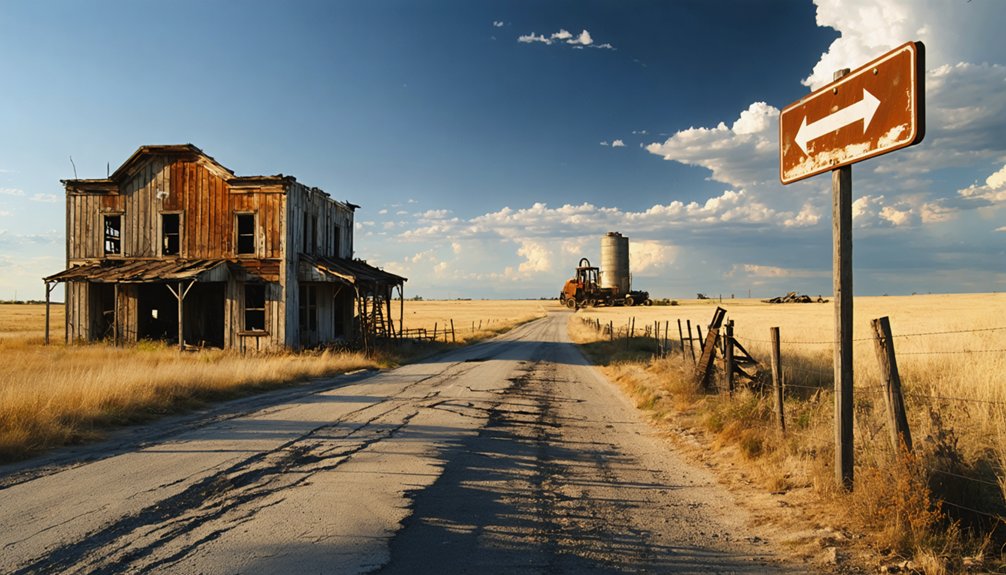
Northeast Kansas quietly holds more ghost towns than most road trippers realize, and combining a few into one loop makes the drive to Palermo far more rewarding.
Doniphan County alone shelters several forgotten settlements worth tracking down alongside nearby historical sites that flesh out the region’s riverfront past. You’ll find that ghost town attractions across this stretch of Kansas share similar stories — rapid growth, railroad disruption, and eventual abandonment.
Research Troy’s local historical resources before you leave; they’ll point you toward additional sites within striking distance. Carrying a detailed county map helps you connect destinations efficiently without backtracking.
Each stop adds context to Palermo’s story, transforming a single-site visit into a layered journey through the people and commerce that once defined northeastern Kansas.
Frequently Asked Questions
Who Was the First Postmaster Appointed When Palermo Was Established?
Frank Mahan’s your key figure in Palermo’s postmaster history! When the town was established in 1857, he’s appointed as the first postmaster, marking a moment of real Palermo significance in Kansas’s frontier heritage.
How Long Did Palermo’s Post Office Operate Before Permanently Closing?
You’ll find Palermo’s Postal History spans an impressive 49 years, operating from 1855 until its 1904 closure. Closure Reasons tied directly to regional economic shifts and railroad development, which gradually redirected commerce away from this once-thriving riverfront community.
What Was Palermo’s Peak Recorded Population During Its Most Prosperous Years?
Brace yourself for Palermo’s jaw-dropping “metropolis” — you’ll find its peak population trends reached a whopping 180 residents in 1868! That’s the historical significance you’ve been chasing, proving freedom-seekers thrived in small numbers.
Which Railroad Company Initially Boosted Then Contributed to Palermo’s Decline?
The Burlington and Missouri River Railroad initially gave Palermo’s economy a powerful boost in 1872, but you’ll discover its railroad impact ultimately triggered economic decline, redirecting commerce elsewhere and stripping the town of its once-vibrant commercial lifeline.
What Vehicle Was Documented Exploring the Palermo Ghost Town Site?
You’d be rolling through this ghost town exploration in a classic 1979 Volkswagen Bus — the perfect abandoned-spirit vehicle that proves you don’t need anything fancy to uncover Palermo’s fascinating, forgotten history yourself.
References
- https://www.youtube.com/watch?v=cApROIIoTuY
- https://legendsofkansas.com/doniphan-county-extinct-towns/
- https://thewanderingpigeon.com/2015/10/03/day-of-kansas-ghost-towns/
- https://www.youtube.com/watch?v=alC1wDdSVvg
- https://www.hhhistory.com/2019/05/ghost-towns-of-kansas.html
- https://www.legendsofamerica.com/doniphan-kansas/
- https://www.youtube.com/watch?v=8dtIPX7pIqI
- https://en.wikipedia.org/wiki/List_of_ghost_towns_in_Kansas