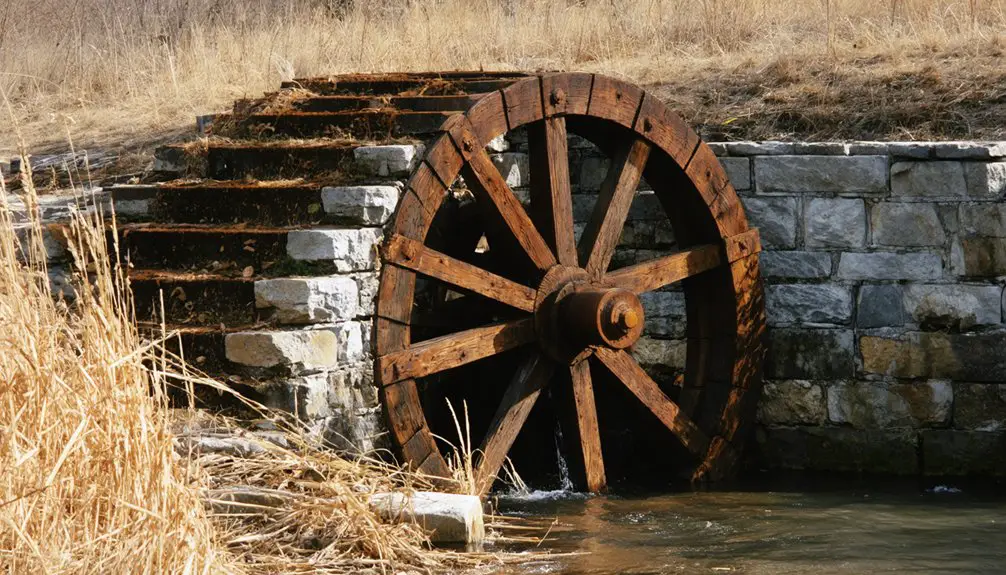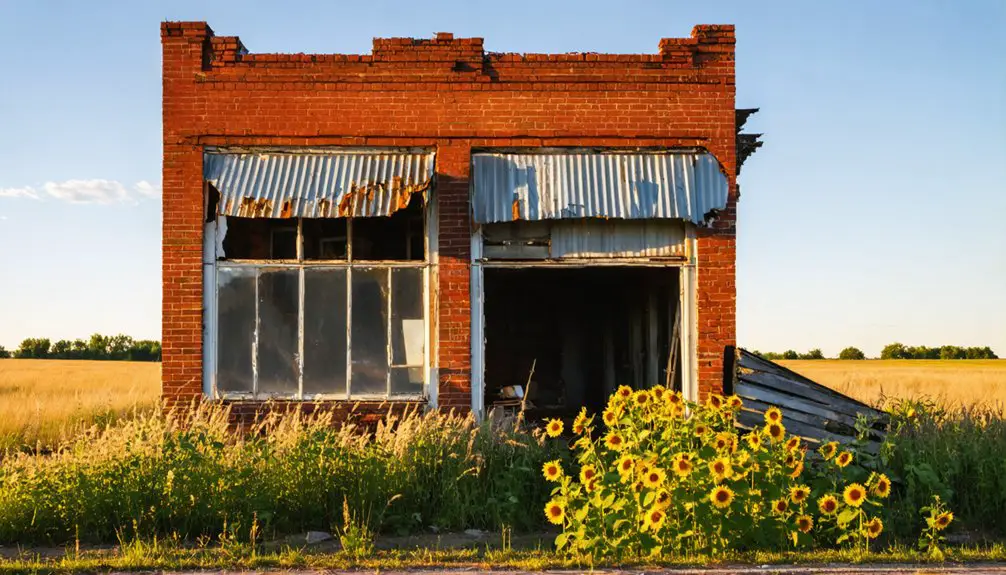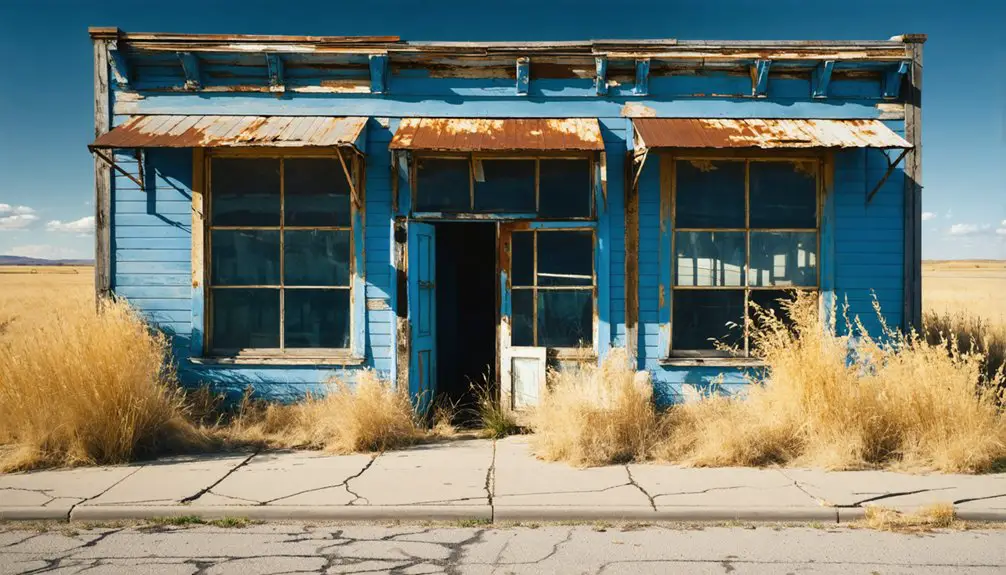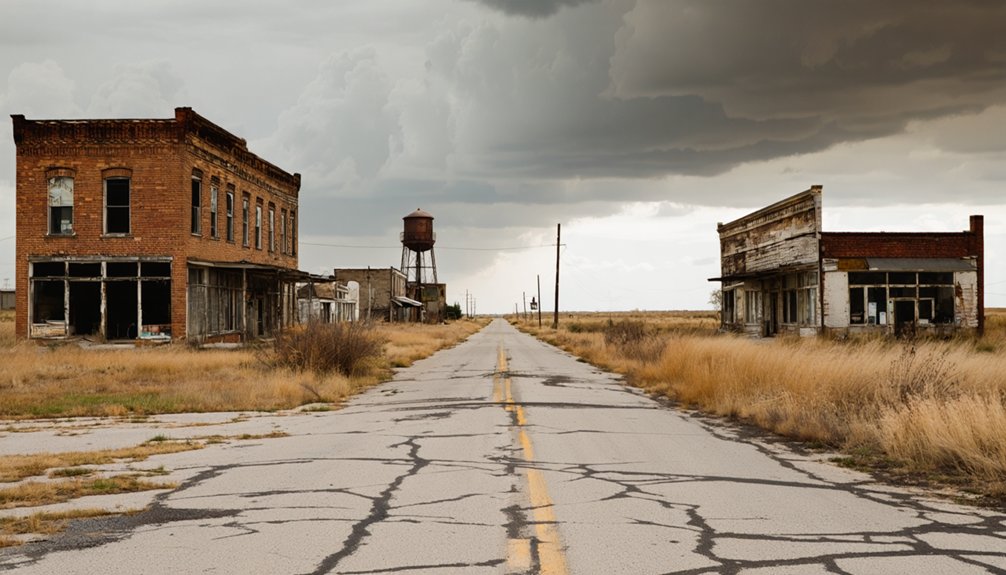
Planning a ghost town road trip to Springfield, Kansas puts you right in the heart of southwestern prairie history. You’ll explore a town that fought hard for its county seat title, won a Supreme Court battle, and still faded into open grassland. Springfield anchors a drivable loop through Seward County’s four ghost towns, including Arkalon, Fargo Springs, and Woods. Stick around — there’s a lot more to uncover about this forgotten frontier.
Key Takeaways
- Springfield, Kansas, a ghost town in Seward County, emerged from a fierce county seat battle against rival Arkalon in the late 1800s.
- The surrounding area features a drivable loop connecting four ghost towns: Springfield, Woods, Fargo Springs, and Arkalon.
- Woods Store remains a standing structure worth photographing, while Fargo Springs and Springfield offer only open prairie remnants.
- Visit during spring or fall for comfortable temperatures, start early to avoid strong winds, and check road conditions beforehand.
- Bring extra water, fuel, and offline maps, as cell service is limited and services are scarce throughout the route.
What Was Springfield, Kansas?
Springfield, Kansas, was a small but fiercely ambitious town that rose to prominence in the late 1800s amid one of southwestern Kansas’s most contentious county seat battles.
Understanding Springfield origins means tracing a community that refused to surrender its identity without a fight. Rival town Arkalon challenged Springfield’s claim to the county seat, pushing citizens to take their case all the way to the Kansas Supreme Court.
After ten months of hard-fought litigation, Springfield won. But victory didn’t guarantee survival. A devastating feud with nearby Fargo Springs drained both towns of resources and resolve.
Eventually, Springfield collapsed entirely, leaving nothing but open prairie behind. Today, it stands as one of Kansas’s 6,000-plus ghost towns — a symbol of bold ambition meeting an unforgiving frontier.
How Springfield Lost Its County Seat Battle
When you dig into Springfield’s history, you’ll find the county seat battle hinged on a dirty little trick — “soapbox” ballots that threw the legitimacy of the election into serious question.
Rather than accepting defeat, Springfield’s citizens fought back, taking their case all the way to the Kansas Supreme Court.
The legal battle stretched across 10 grueling months before Springfield finally secured its county seat rights — a victory that, despite the odds, proved the town’s fierce determination.
Soapbox Ballots Dispute
At the heart of Springfield’s turbulent history lies one of Kansas’s most contentious political scandals: the soapbox ballots dispute. When Springfield fought to claim the county seat, officials discovered ballots stuffed into soapboxes rather than legitimate voting containers.
This ballot controversy ignited fierce outrage among Springfield’s citizens, who refused to accept a corrupted result that could strip their town of political power.
Rather than surrender, Springfield’s residents took their fight directly to the Kansas Supreme Court. For ten grueling months, they battled through litigation, determined to expose the fraud and reclaim what they believed was rightfully theirs.
Their persistence paid off — the court ruled in Springfield’s favor, securing the county seat designation. That victory, however, proved fleeting, as deeper conflicts would soon seal the town’s fate.
Supreme Court Legal Battle
Winning the Kansas Supreme Court battle over soapbox ballots gave Springfield its moment of triumph, but that victory couldn’t protect the town from what came next.
After 10 months of fierce litigation, Springfield secured its county seat rights — a ruling carrying real legal implications for how Kansas frontier towns settled territorial disputes. You’d think that win would cement Springfield’s future, but the historical significance of this case cuts deeper than victory.
The Supreme Court decision resolved one fight while another brewed with Fargo Springs, a conflict that ultimately drained both towns completely. Springfield’s hard-won legal status couldn’t survive the resource battles that followed.
That courthouse triumph became a hollow achievement, leaving you standing today on empty prairie where a once-defiant town fought everything and ultimately lost everything.
Where Springfield Sits on the Kansas Prairie
Springfield rests in the southwestern corner of Kansas, tucked into Seward County’s wide-open prairie where the wind rarely lets up and the horizon stretches endlessly in every direction.
Its prairie geography placed it squarely in the middle of fierce rivalries with nearby towns like Arkalon and Fargo Springs, all competing for dominance in the same raw, unforgiving landscape. That historical significance still echoes across the empty fields today.
Springfield stood at the center of bitter prairie rivalries, its ghost now drifting across the same unforgiving fields.
You’ll find Springfield sitting close to Woods, Fargo Springs, and Arkalon, making it a natural anchor point for a clustered ghost town loop you can tackle in a single day.
Remote prairie roads connect these sites, and the isolation hits you fast once you’re out there, surrounded by nothing but flatland, sky, and silence.
What’s Left to See in Springfield Today?
What remains of Springfield today is, honestly, not much—but that absence is part of what makes the place so striking.
You won’t find preserved buildings or polished historic landmarks here. Instead, you’ll stand in open prairie landscapes where an entire town once fought fiercely for survival and lost.
The county seat victory meant nothing in the end—Springfield still collapsed. What you’re really seeing is the raw result of that collapse: wind, grass, silence, and scattered remnants that reward a sharp eye.
Look for structural traces and any historical markers indicating where civic life once centered.
Bring a camera and your curiosity. Springfield doesn’t hand you anything obvious, but if you’re the kind of traveler who finds meaning in desolation, this stop will absolutely deliver.
The Four Ghost Towns Surrounding Springfield in Seward County
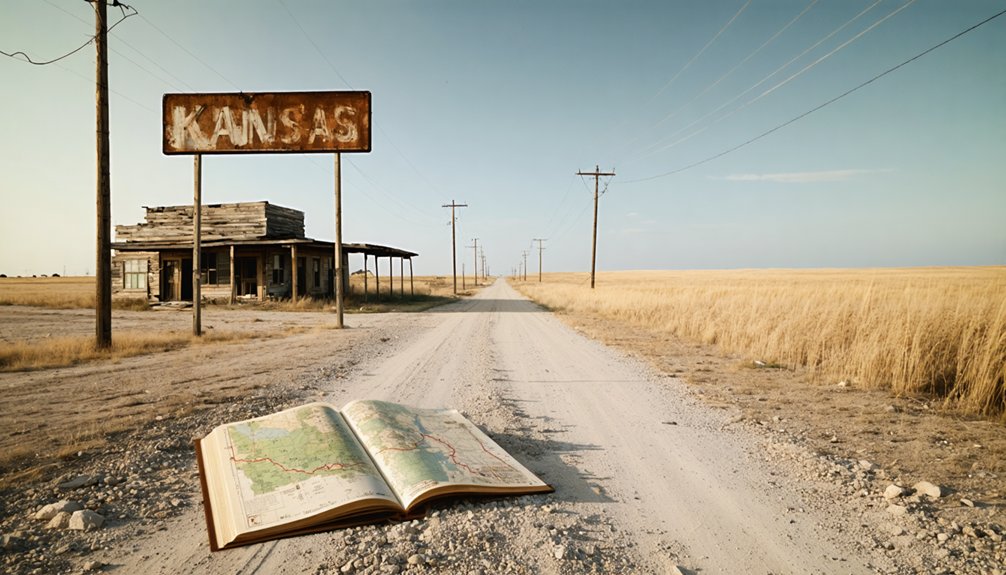
Leaving Springfield’s open prairie behind doesn’t mean the ghost town experience ends—it actually multiplies. Seward County packs four true ghost towns into one drivable loop, making it a dream destination for serious ghost town exploration.
Start at Woods, where an intact store still stands—a rare, tangible connection to prairie history.
Then push toward Fargo Springs, Springfield’s old rival, now equally abandoned after their bitter resource battles left both communities in ruins.
Arkalon comes next, platted May 10, 1888, and once thriving as a railroad stop before fading into silence.
Each town adds a distinct chapter to the same regional story.
You’re not just visiting ruins—you’re tracing the interconnected collapse of an entire frontier era across a single afternoon’s drive.
How to Build a One-Day Springfield Ghost Town Loop
Planning a one-day Springfield ghost town loop is straightforward if you start early and map your stops in sequence.
Begin at Woods, where the standing store gives you an immediate, tangible connection to the past. From there, push toward Springfield’s desolate prairie setting, letting the isolation fuel your appreciation for ghost town legends buried beneath the Kansas wind.
Continue to Fargo Springs, where the ruins reflect both towns’ collapse, then finish at Arkalon, platted in 1888 and rich with railroad history.
Keep prairie exploration efficient by traveling remote roads in sequence rather than backtracking. Respect private land boundaries throughout the route.
Bring water, snacks, and a reliable map since cell service isn’t guaranteed. An early start guarantees you comfortably cover all four sites before sunset.
Other Ghost Towns Near Springfield Worth the Detour
While you’re out exploring Springfield’s desolate remains, you’d be shortchanging yourself by skipping the nearby ghost towns that round out this southwestern Kansas loop.
You can stop first at Woods, where an actual standing store still greets you like a rare survivor from another era, then push on to Fargo Springs, whose ruins tell the brutal story of a resource war that swallowed both towns whole.
Cap the route at Arkalon, platted in May 1888, where a brief railroad boom once promised everything before the prairie swallowed it just as quietly.
Woods’ Standing Store
A short detour from Springfield leads you to Woods, where one of southwestern Kansas’s rare surviving ghost town structures still stands—an old store that’s weathered decades of prairie wind and abandonment.
Unlike most ghost towns in the region, Woods gives you something tangible to photograph and explore. The Woods Store stands as a quiet reminder of a community that once bustled with daily life before time and circumstance erased nearly everything else.
Walking around it, you’ll feel the weight of history pressing through weathered wood and faded walls. It’s the kind of place that rewards those willing to drive remote prairie roads without guarantees of dramatic ruins.
Among southwestern Kansas ghost towns, Woods offers a rare, grounded moment—proof that something always survives if you’re willing to look.
Fargo Springs Ruins
Fargo Springs lost everything in its bitter fight with Springfield over the county seat, and what’s left today barely hints at the town that once stood here.
Both sides poured resources into the conflict until neither could recover, leaving Fargo Springs completely abandoned. That shared destruction is what makes Fargo Springs history so compelling during ghost town exploration — you’re standing where two communities fundamentally canceled each other out.
When you visit, expect open prairie and scattered remnants that demand your imagination.
There’s no guided tour, no signage holding your hand — just raw, windswept land telling a silent story.
Pair your stop here with Springfield and Arkalon to fully grasp how fiercely these southwestern Kansas towns fought for survival, and how completely that fight consumed them.
Arkalon’s Railroad Past
Just a short drive from Springfield, Arkalon carries a different kind of ghost town story — one rooted in railroad ambition rather than courthouse warfare.
The Arkalon Town Company platted this settlement on May 10, 1888, building its identity around railroad significance rather than political conflict. That railroad connection fueled rapid town development, drawing settlers who believed the rails would secure Arkalon’s future indefinitely.
They were wrong.
The prosperity proved short-lived, and Arkalon eventually joined Springfield and Fargo Springs in abandonment.
Today, you’ll find remnants that whisper of that brief, ambitious era. Pairing Arkalon with your Springfield visit gives you a fuller picture of how southwestern Kansas towns rose and collapsed for entirely different reasons — courthouse battles, resource feuds, and broken railroad dreams all converging in one desolate, fascinating stretch of prairie.
Best Time to Drive the Springfield Ghost Town Route
When planning your drive through Springfield and the surrounding southwestern Kansas ghost towns, timing can make or break the experience. The best seasons are spring and fall, when temperatures stay manageable and prairie roads remain passable.
Summer heat turns brutal fast, and winter storms can strand you on remote dirt roads with zero help nearby.
Start early regardless of season. Wind picks up considerably by midday across the open plains, making exploration uncomfortable and photography difficult.
A few essential driving tips: check road conditions beforehand, fuel up before heading into remote areas, and download offline maps since cell service disappears quickly out there.
Respect private land boundaries you’ll encounter along the route. Freedom means responsibility here.
Go prepared, go early, and this desolate stretch of Kansas history won’t disappoint.
What to Know Before You Drive to Springfield, Kansas
Before you load up the car and head toward Springfield, there are a few practical realities you’ll want to square away. Much of the surrounding land is privately owned, so respect posted no-trespassing signs without exception.
Remote prairie roads can turn rough after rain, making a reliable vehicle essential.
Cell service grows scarce the deeper you push into southwestern Kansas, so download maps beforehand. Carry extra water and fuel, since services thin out quickly near Seward County’s desolate stretches.
Ghost town legends draw curious travelers, but prairie preservation depends on visitors leaving sites undisturbed. Don’t remove artifacts or damage remaining structures.
Arriving informed keeps the experience rewarding and protects what little survives. Springfield rewards the prepared traveler with raw, unfiltered history on open Kansas plains.
Frequently Asked Questions
Can You Camp Overnight Near Springfield or the Surrounding Ghost Towns?
You’ll want to check local camping regulations before pitching a tent near these remote ghost towns. Private land’s common, so respect boundaries, stay alert to local wildlife, and embrace the untamed prairie freedom!
Are There Guided Tours Available for the Southwestern Kansas Ghost Town Loop?
Like a lone tumbleweed rolling free, you’ll find no formal guided tour options for this ghost town history loop — you’re the navigator here, charting your own raw, windswept path through southwestern Kansas’s abandoned past.
What Photography Equipment Works Best for Capturing Desolate Prairie Ghost Towns?
For ghost town photography, you’ll want a wide-angle lens to capture sprawling prairie landscape tips like isolation and vastness. Bring a tripod for windy conditions, and use golden hour lighting to make desolate ruins dramatically come alive.
Is Springfield, Kansas Accessible by Standard Vehicle or Requiring Four-Wheel Drive?
You’ll reach Springfield via remote prairie roads in a standard vehicle, but you’d better prepare for rough road conditions. Four-wheel drive isn’t required, though higher vehicle recommendations suggest ground clearance helps navigate desolate southwestern Kansas terrain confidently.
Are There Any Annual Events or Gatherings Held Near Springfield’s Historical Site?
Like tumbleweeds across the plains, opportunities here are scarce — no historical reenactments or local festivals mark Springfield’s site. You’ll find only solitude and raw prairie freedom waiting, making your personal exploration feel uniquely yours.
References
- https://thewanderingpigeon.com/2015/10/03/day-of-kansas-ghost-towns/
- https://fhsuguides.fhsu.edu/kansasheritage/sewardcounty
- https://everafterinthewoods.com/abandoned-ghost-towns-in-kansas-that-still-hold-stories-of-the-past/
- https://johnsoncoks.cottonhills.net/historic-records/old-towns.html
- https://www.youtube.com/shorts/DneifJ2n5Zs
- https://www.youtube.com/watch?v=Pf5n1PX1g3M