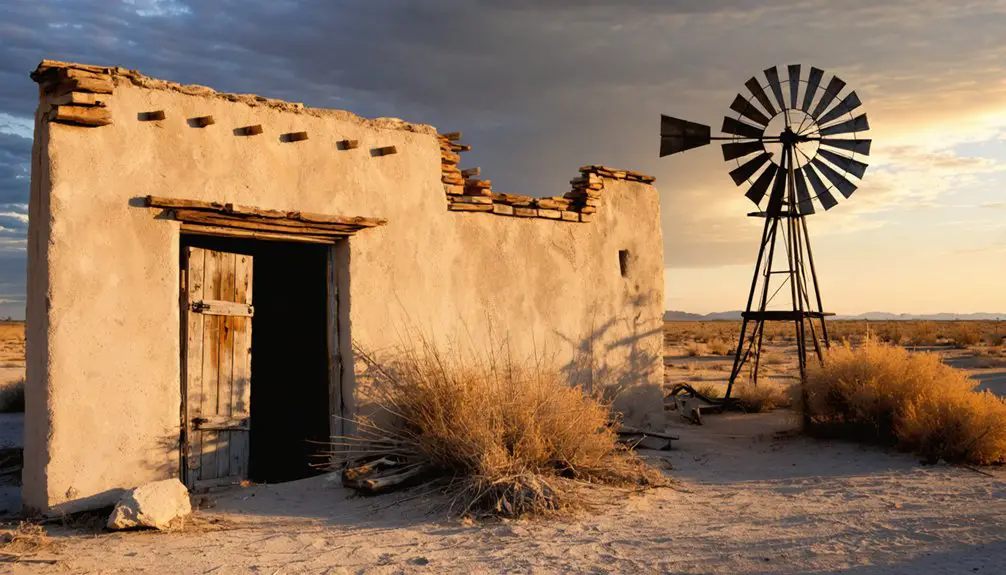
You’ll find Palm Valley’s ghost town remnants along U.S. Route 79 in Round Rock, where Anna Palm’s 1853 Swedish settlement left weathered limestone markers and a relocated Lutheran church as evidence, indications, or emblems of frontier determination. Visit between March and November when temperatures hover around 61°F to 84°F, bringing sturdy boots, extra water, and your camera to capture Swedish-inscribed gravestones in Old Settler’s Park. The coordinates 30°32′36″N 97°37′16″W guide you to this intriguing destination, where authentic historic sites reveal fascinating stories about the remarkable woman who financed fellow immigrants’ journeys and shaped this Williamson County community.
Key Takeaways
- Use GPS coordinates 30°32′36″N 97°37′16″W to reach Palm Valley via U.S. Route 79 through Williamson County.
- Visit March through November when temperatures range from 61°F to 84°F for comfortable exploration conditions.
- Explore the 1872 Palm Valley Lutheran Church, historic cemetery, and relocated Palm House on East Main Street.
- Pack sturdy boots, double water supplies, sunscreen, first-aid kit, camera, and headlamp for ghost town adventures.
- Expect limited parking due to ghost town status; plan transportation and timing accordingly before arrival.
Getting to Palm Valley requires following U.S. Route 79 through Williamson County, where freedom meets frontier history. You’ll navigate Central Texas terrain at 709 feet elevation, with coordinates 30°32′36″N 97°37′16″W guiding modern GPS systems. Route accessibility proves straightforward along this historic highway corridor, though the ghost town’s integration into Round Rock means you’ll cross municipal boundaries seamlessly.
Visitor parking options remain limited given the site’s ghost town status—plan accordingly. The Palm House Museum provides structured access to preserved structures, but you won’t find commercial lots or designated spaces. Area code 512 connects you to local resources if needed. Central Time Zone considerations affect daylight hours, especially for photography enthusiasts. Texas Historic Landmark markers help orient unfamiliar travelers, transforming your journey into authentic exploration rather than ordinary tourism.
Anna Palm’s Swedish Settlement: The Story Behind the Ghost Town
Upon arrival, you’ll discover that Palm Valley’s weathered landscapes hold the remarkable legacy of Anna Palm, a Swedish widow who transformed Central Texas wilderness into Scandinavia’s first permanent foothold in the Lone Star State.
After her husband’s death in 1848, Anna’s multigenerational leadership began when she relocated with five sons to establish this settlement in 1853. She actively recruited fellow Swedes, financed their journeys, and became “like a mother to young newcomers.” Her cultural preservation efforts included requesting cemetery land in 1863, which sparked the 1870 Swedish Lutheran Church Association’s formation.
From Swedish widow to Texas matriarch: Anna Palm financed immigrant journeys and mothered a community into existence through sheer determination.
- Standing where Anna once welcomed frightened immigrants with nothing but hope
- Touching weathered headstones bearing Swedish surnames she personally recruited
- Walking land her sons purchased for $490—now priceless heritage
- Imagining her defiant choice: widow-turned-community-architect
- Experiencing authentic frontier independence through Scandinavian determination
Historic Sites You Can Still Visit Today
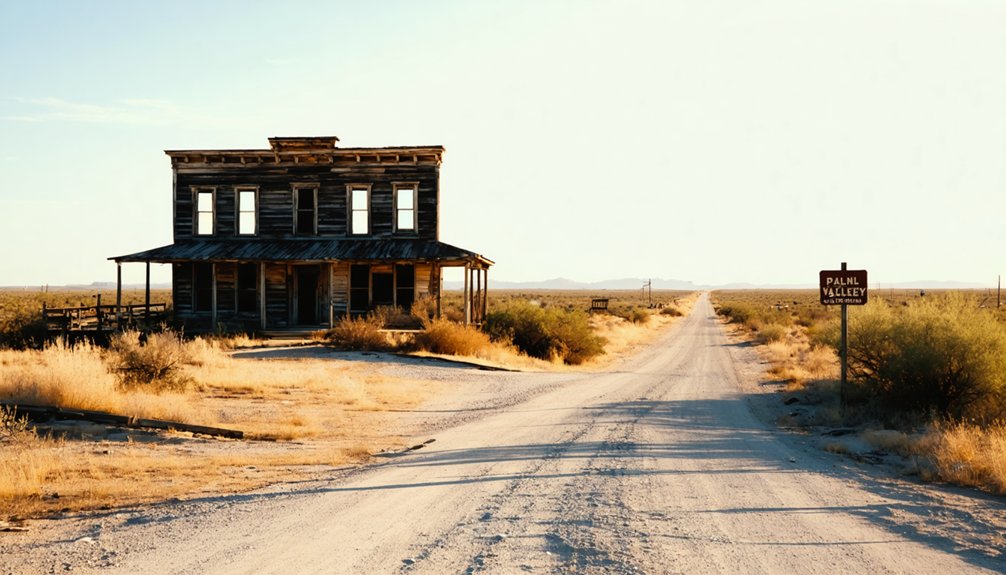
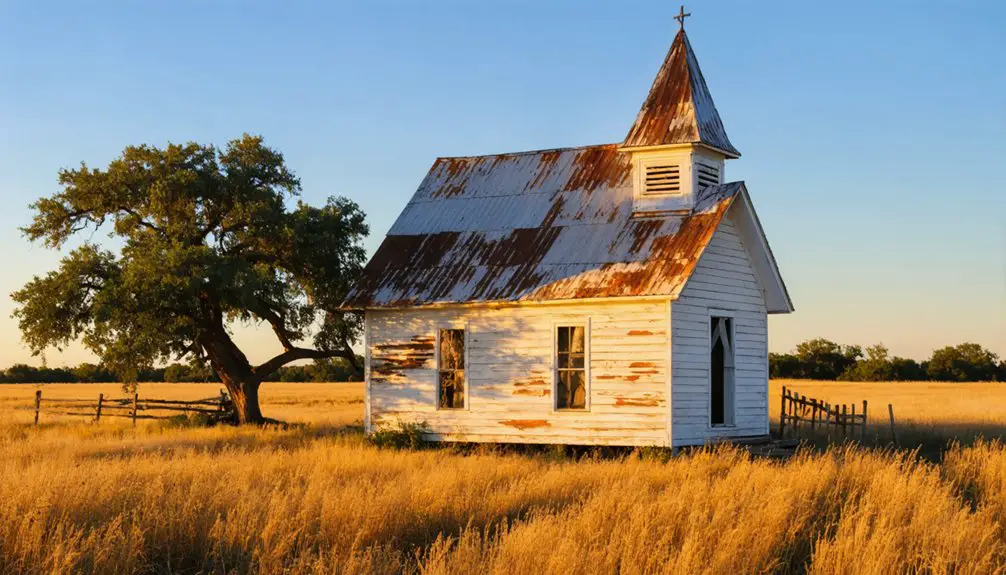
Walking through modern Round Rock, you’ll find Anna Palm’s Swedish settlement scattered across three tangible sites that refuse to disappear into suburban sprawl. The 1872 Palm Valley Lutheran Church stands proudly in Old Settler’s Park, its white frame walls weathered but defiant. You’ll discover the cemetery beneath that massive oak where Anna’s son rests, its Swedish-inscribed markers evidence of preservation efforts that earned it landmark status in 1970.
Downtown at 212 East Main Street, the relocated Palm House catches your eye—a Scandinavian farmhouse frozen in time, though you can’t enter since its 2019 closure. Old Settler’s Park itself wraps you in cultural significance, where Anna’s grandchildren’s donated land became public space. Each location marks your freedom to touch history directly, no velvet ropes required.
Best Time to Explore Palm Valley and Nearby Attractions
Your timing matters when pursuing ghost town remnants in central Texas heat. March through November deliver ideal weather conditions for exploration, with spring and fall offering the sweetest windows. You’ll find hiking opportunities most rewarding when temperatures hover between 61°F and 84°F rather than summer’s brutal 95°F peaks.
Choose your season strategically:
- March mornings promise crisp starts before warm afternoons illuminate weathered structures
- November’s escape from oppressive heat lets you roam freely without constant water stops
- February’s mild 75°F highs support all-day wandering through abandoned buildings
- Summer demands relentless sun protection that restricts your spontaneous exploration
- Spring landscapes burst with unexpected color against desolate architecture
Winter months require light layering but reward you with solitude. Summer’s extreme conditions challenge even experienced adventurers, making shoulder seasons your liberation from constraints.
What to Bring for Your Ghost Town Adventure
Since Palm Valley’s abandoned structures offer no shade or supplies, packing deliberately separates memorable exploration from miserable retreat. Your equipment recommendations start with water—bring twice what you’d normally carry. Desert sun amplifies dehydration beyond typical expectations.
Essential packing includes sturdy boots for traversing debris-scattered floors, leather gloves for steadying yourself against weathered wood and rusted metal, and a wide-brimmed hat. Don’t forget your camera and extra batteries; crumbling doorways and peeling paint create exceptional shots.
A first-aid kit handles inevitable scrapes, while sunscreen prevents regrettable burns. Pack a headlamp for exploring darker interiors where windows have collapsed. Bring snacks—proper fuel sustains your wandering spirit. These packing essentials transform challenging terrain into liberating adventure, letting you roam abandoned spaces without cutting your exploration short.
Frequently Asked Questions
Are There Any Restaurants or Food Options Near Palm Valley?
Like discovering oases in desert landscapes, you’ll find abundant local eateries along Palm Valley Boulevard. Schlotzsky’s, Culver’s, and Chick-fil-A offer diverse menus, drive-thru freedom, and extended hours. Food trucks occasionally appear, enriching your dining adventure.
Can You Take Photographs Inside the Palm Valley Lutheran Church?
You’ll need to contact Palm Valley Lutheran Church directly about photography restrictions before your visit. While the church interior details aren’t publicly documented, staff at (512) 255-3322 can clarify their policies and respect any sacred space guidelines they’ve established.
Is Palm Valley Suitable for Families With Young Children?
Yes, Palm Valley’s excellent A+ safety rating makes it ideal for families with young children. You’ll find scenic photography locations around the historic 1872 church, though family-friendly activities are limited due to its ghost town status.
Are There Guided Tours Available for Palm Valley Historical Sites?
You’ll discover freedom through self-guided tours at Palm Valley’s historical sites. The 1872 Lutheran Church and cemetery welcome independent exploration, with historical markers guiding your journey through Swedish immigrant heritage at your own adventurous pace.
Where Can Visitors Find Overnight Accommodations Near Palm Valley?
You’ll discover overnight stays in nearby Harlingen, just minutes away, featuring vacation rental properties and bed and breakfast options alongside major hotel chains. Budget-friendly motels, extended-stay suites, and charming local inns provide freedom to explore at your pace.