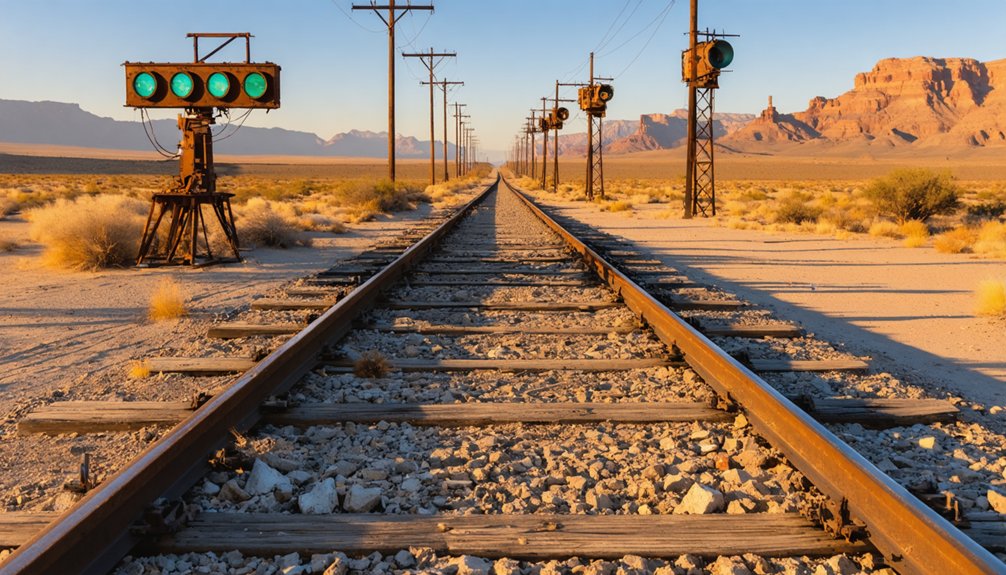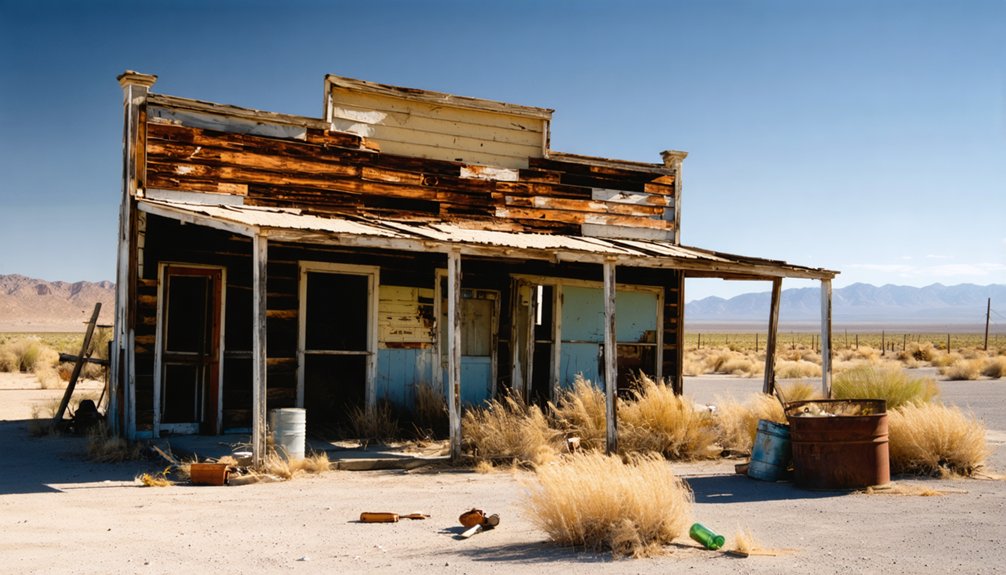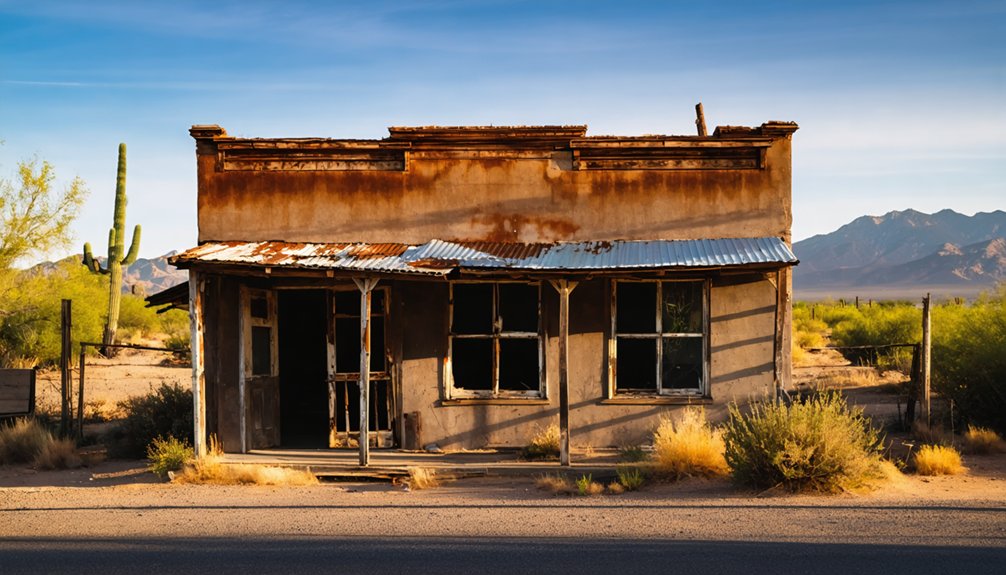
Paradise, Arizona puts you at the doorstep of some of the Southwest’s most hauntingly preserved ghost towns. You’ll find crumbling storefronts in Gleeson, silent ruins in Courtland, and mining history frozen in time at Pearce. Tombstone and Fairbank are short drives away, making a three-day Cochise County loop surprisingly achievable. Pack water, wear sturdy shoes, and bring a paper map since GPS isn’t reliable out here. There’s far more to uncover ahead.
Key Takeaways
- Paradise, Arizona, near the Chiricahua Mountains, serves as an ideal base for exploring nearby ghost towns like Gleeson, Courtland, and Pearce.
- A three-day itinerary covering Willcox, Pearce, Gleeson, Courtland, Fairbank, and Tombstone minimizes backtracking while maximizing historical exploration.
- High-clearance vehicles are recommended for unpaved desert roads leading to Gleeson and Courtland; always check road conditions beforehand.
- Since Paradise lacks lodging, base yourself in Willcox, Tombstone, or Bisbee for convenient access to surrounding ghost towns.
- Pack water, sun protection, sturdy shoes, a paper map, first-aid kit, and tire repair kit for safe desert ghost town travel.
Why Paradise, Arizona Makes the Perfect Ghost Town Base
Tucked against the rugged slopes of the Chiricahua Mountains in southeastern Arizona, Paradise isn’t just a quirky name on a map — it’s a genuinely strategic launching point for one of the Southwest’s richest ghost-town corridors.
From here, you’re positioned to explore desert landscapes scarred by pick axes, wagon ruts, and boom-and-bust dreams. The region’s mining heritage runs deep, connecting you to towns that once roared with silver fever before falling silent.
The desert floor still bears the scars of silver fever — pick axes, wagon ruts, and dreams that burned bright before going silent.
Short drives branch toward Willcox, Tombstone, and Cochise County’s forgotten settlements, each carrying its own historical significance and local legends worth chasing.
You won’t waste hours backtracking across empty highways. Instead, you’ll move efficiently through a concentrated stretch of frontier history, piecing together a vanished world one crumbling foundation at a time.
What’s Left to See at Gleeson, Courtland, and Pearce
Scattered across the desert southeast of Tombstone, the ghost towns of Gleeson, Courtland, and Pearce each offer something different — a collapsed storefront, a crumbling foundation, a restored jail — but together they sketch a vivid portrait of the region’s short-lived mining fever.
Each stop rewards curiosity differently:
- Gleeson ruins include a nearly collapsed general store and a restored jail now serving as a small museum.
- Courtland foundations are all that remain after mine closures in 1920 ended a town of 2,000.
- Pearce history traces a classic late-1800s boom-and-bust mining arc.
- Courtland even has a local resident offering tours and turquoise mine access by reservation.
You’re not chasing polish here — you’re chasing what the desert chose to keep.
How Far Is Paradise From Tombstone and Fairbank?
How far does Paradise sit from the rest of southern Arizona’s ghost-town circuit? Not far enough to slow you down. Tombstone distance from Paradise runs roughly 70 miles west, an easy drive through open Chihuahuan desert that rewards you with sweeping basin views along the way.
You’ll roll through Willcox before dropping south toward Cochise County’s historic core. Fairbank access comes naturally on the same corridor. Tucked near the San Pedro River, Fairbank sits about 60 miles from Paradise, reachable via Highway 80 after you’ve walked Tombstone’s dusty boardwalks.
Linking both stops into a single day keeps your route tight and your windshield pointed toward something worth seeing. Southern Arizona hands you this freedom — wide roads, short gaps, and ghost towns stacked close enough to hit them all.
The Best 3-Day Ghost Town Loop Through Cochise County
You can build a smart 3-day loop through Cochise County by anchoring each day around a cluster of ghost towns that sit within short drives of each other.
Starting from Paradise, your route can sweep west toward Willcox, south through Pearce and Courtland, and on to Gleeson and Fairbank before swinging into Tombstone.
Mapping your daily mileage in advance keeps you from backtracking across the same desert stretches and gives you enough time to actually step out and explore each site.
Mapping Your Daily Route
Once you’ve settled into Paradise as your base camp, the real adventure begins with a three-day loop through Cochise County that’s built for efficiency and discovery.
Each day targets a distinct corridor, keeping backtracking minimal and exploration maximal.
Structure your loop around these four anchors:
- Day 1: Willcox and Pearce, where historical significance runs deep through late-1800s mining booms.
- Day 2: Gleeson, Courtland, and Fairbank, tracing local legends tied to frontier collapse and railroad culture.
- Day 3: Tombstone and the San Pedro River valley for preserved history and regional context.
You’ll move through desert terrain, occasional dirt roads, and scattered ruins.
Check road conditions before each leg, confirm museum hours, and keep fuel topped off.
Remote freedom comes with real responsibility.
Must-Stop Ghost Towns
Each stop on this loop earns its place not just for historical value, but for the raw, atmospheric quality it delivers in person.
Gleeson history surfaces through its collapsed general store and restored jail-turned-museum, where local legends still echo off crumbling walls.
Push further into the desert exploration corridor and Courtland ruins greet you with scattered foundations reclaimed almost entirely by the Sonoran landscape. Arizona landscapes don’t soften here — they swallow everything human hands abandoned.
Pearce mining heritage tells a sharper story, with a late-1800s boom compressed into visible remnants worth your time.
Travel tips worth remembering: check road conditions before any dirt-road approach and confirm reservation-based tours in advance.
Historic preservation varies by site, but every ghost town on this road trip delivers something unscripted and completely yours to discover.
What Roads Lead to These Ghost Towns: and What to Drive
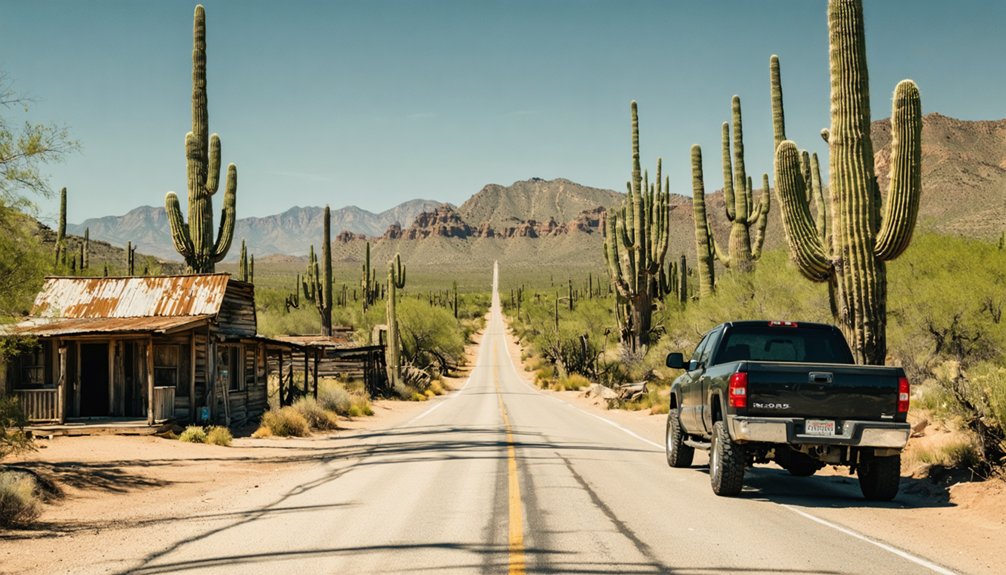
Getting to these ghost towns is half the adventure, and the roads themselves tell part of the story. Expect a mix of paved scenic routes and rugged dirt tracks where road conditions can shift fast.
Pack accordingly and check conditions before heading out:
- Gleeson and Courtland sit off unpaved desert roads best handled with a high-clearance vehicle.
- Fairbank is accessible via paved roads near the San Pedro River.
- Pearce connects easily from Highway 191 south of Willcox.
- Tombstone anchors the route on well-maintained state highways.
You’re not just driving to destinations — you’re threading through open desert, mountain foothills, and abandoned landscapes.
Give yourself time to stop, look around, and let the silence of these forgotten places actually land.
Which Ghost Towns Are Worth a Detour Off the Pavement?
Not every ghost town rewards the effort of leaving pavement behind, but a few in southeastern Arizona absolutely do.
Gleeson history comes alive through its collapsed general store and restored jail-turned-museum.
Courtland ruins rise from the desert floor like scattered bones—foundations and crumbling walls that ghost town access via dirt road makes feel genuinely earned.
Pearce mining heritage draws you toward a late-1800s boom-and-bust story still readable in what’s left standing.
Fairbank railway structures preserve a rare railroad-era settlement near the San Pedro River.
You’ll find Tombstone tourism anchoring the region with paved ease, but the surrounding Cochise heritage runs deeper off the main roads.
Pair these stops with open desert scenery, and you’ve built something worth every unpaved mile.
Which Ghost Towns Require Reservations or Have Limited Hours?
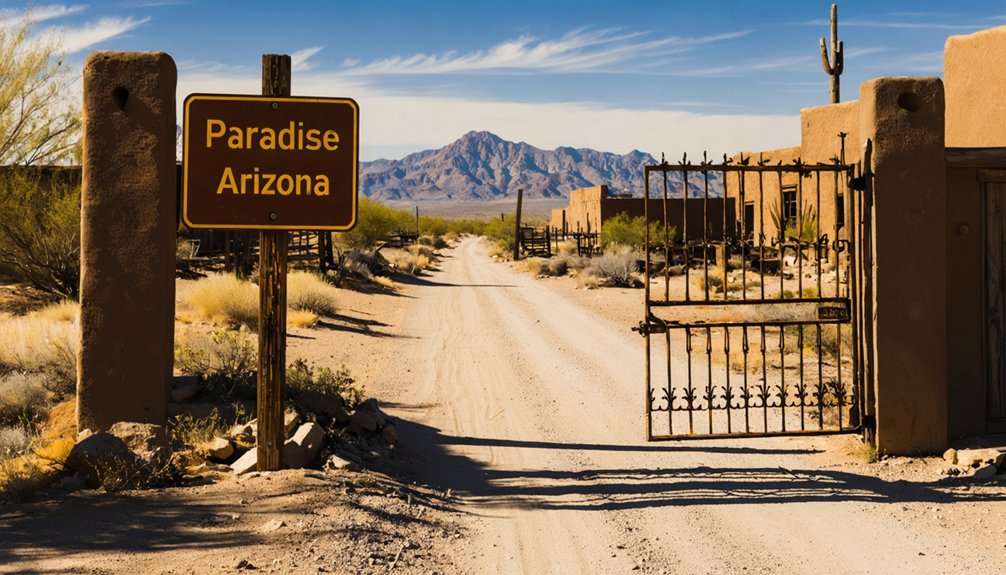
Some ghost towns in southeastern Arizona run on schedules that’ll turn a spontaneous detour into a missed stop if you haven’t planned ahead. Know before you go:
- Courtland has reservations required for tours of the ghost town and nearby turquoise mine — call ahead or miss it entirely.
- Vulture City operates Thursday through Sunday, 9 a.m. to 5 p.m., with guided tours and reenactments during seasonal hours.
- Gleeson’s jail museum keeps informal hours, so arrival timing isn’t always predictable.
- Fairbank follows National Park Service access guidelines, meaning seasonal hours can shift depending on staffing.
A quick phone call or website check before leaving Paradise keeps your itinerary moving and your freedom intact — no wasted miles, no locked gates.
Closest Lodging Options to Paradise for Multi-Night Stays
Because Paradise sits deep in the Chiricahua Mountain foothills with no lodging of its own, you’ll need to anchor your multi-night base in one of the small towns within reasonable driving distance.
Willcox offers the most practical lodging options, with motels and inns that put you close to nearby attractions like Pearce and Courtland.
Willcox keeps you grounded, with solid lodging and quick access to ghost towns like Pearce and Courtland.
Tombstone draws travelers who want atmosphere alongside a bed, combining historic hotels with walkable saloons and preserved storefronts.
Bisbee, further south, delivers boutique lodging inside a former copper-mining city full of character.
Each town functions as a launchpad, letting you push out each morning into open desert roads and return each evening without sacrificing comfort.
Choose your base by which ghost towns cluster closest to your daily route.
Want More Days? Ghost Towns Within an Hour of the Loop
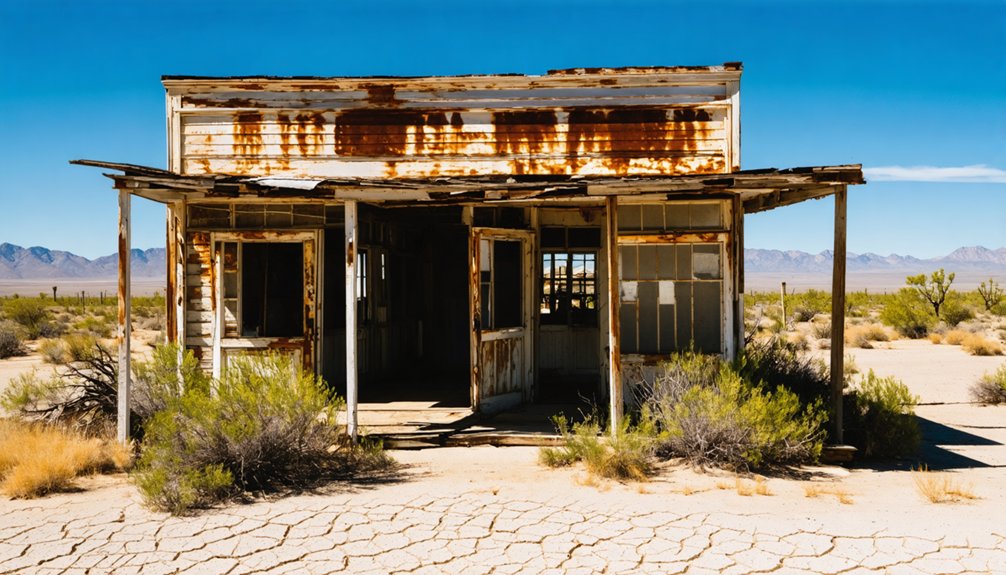
Once you’ve locked in your base town, stretching your trip by a day or two opens up ghost towns that sit just beyond the core loop but reward the extra miles.
These hidden gems connect through scenic routes that deliver as much payoff as the destinations themselves.
- Vulture City near Wickenburg offers weathered buildings and original mining equipment.
- Two Guns east of Flagstaff holds eerie ruins of trading posts and a roadside zoo.
- Chloride northwest of Kingman ranks among Arizona’s oldest continuously inhabited mining towns.
- Castle Dome City near Yuma features over 50 restored buildings from an 1878 boomtown.
Each stop adds real texture to your trip.
Check seasonal hours and road conditions before heading out, since remote sites don’t always keep predictable schedules.
What to Bring for Ghost Town Sites Without Services
Ghost towns along this route don’t come with convenience stores, cell service, or emergency help nearby, so packing smart separates a smooth outing from a miserable one.
These ghost town essentials keep you self-sufficient: carry more water than you think you’ll need, especially during warmer months when desert heat turns ruthless fast.
Add a paper map or downloaded offline route since GPS drops out regularly along dirt-road stretches near Gleeson and Courtland.
Your packing tips checklist should include sun protection, sturdy closed-toe shoes for uneven rubble, a first-aid kit, snacks, and a portable phone charger.
A flashlight helps inside darker structures.
Dirt roads can surprise you, so a basic tire repair kit earns its trunk space.
Prepare thoroughly, and you’ll move freely through each site without worry.
Frequently Asked Questions
Are Pets Allowed at Ghost Town Sites in Southeastern Arizona?
Pet policies vary by site, so you’ll want to check ahead. Ghost town etiquette means keeping pets leashed, respecting fragile ruins, and leaving no trace as you roam these wild, untamed historic landscapes freely.
Is Cell Service Reliable Along the Ghost Town Trail Near Tombstone?
Ready to roam free? Don’t count on cell service reliability along the Ghost Town Trail. Ghost town connectivity is spotty at best, so you’ll want to download maps, notify someone of your plans, and embrace the off-grid adventure.
Can Children Safely Explore Ruins at Courtland and Gleeson?
Children can safely explore Courtland and Gleeson with your supervision. You’ll find crumbling ruins perfect for child safety awareness and hands-on historical education. Watch your footing, stay alert, and you’ll create unforgettable, freedom-filled desert adventures together.
Are There Entrance Fees at Any Cochise County Ghost Towns?
Most Cochise County ghost town fees don’t apply—you’ll roam Gleeson and Courtland freely. However, Courtland’s tour reservation may carry a cost, so you’ll want to confirm pricing before you hit the open desert road.
What Is the Best Time of Year to Visit Southeastern Arizona Ghost Towns?
With temperatures soaring past 100°F in summer, you’ll want to visit during the best months of October through April. Weather considerations favor cooler, drier days that let you explore crumbling ruins comfortably and freely.
References
- https://www.yelp.com/search?find_desc=Ghost+Towns&find_loc=Paradise+Valley,+AZ
- https://www.roadtripsforfamilies.com/6-arizona-ghost-town-road-trip-destinations/
- https://southernarizonaguide.com/from-paradise-az-to-the-wonderland-of-rocks-a-3-day-road-trip/
- https://www.desertsun.com/story/desert-magazine/2016/12/06/road-trip-yuma-arizona-ode-old-west/95045942/
- https://www.experiencescottsdale.com/stories/post/ghost-towns-in-arizona/
- https://www.youtube.com/watch?v=km3_kVera6E
- https://www.visitarizona.com/like-a-local/arizonas-ghost-town-getaways
- https://www.youtube.com/watch?v=nqIwe-5ScFQ
- https://www.facebook.com/groups/1015226416005740/posts/1275218333339879/
- https://en.wikipedia.org/wiki/List_of_ghost_towns_in_Arizona