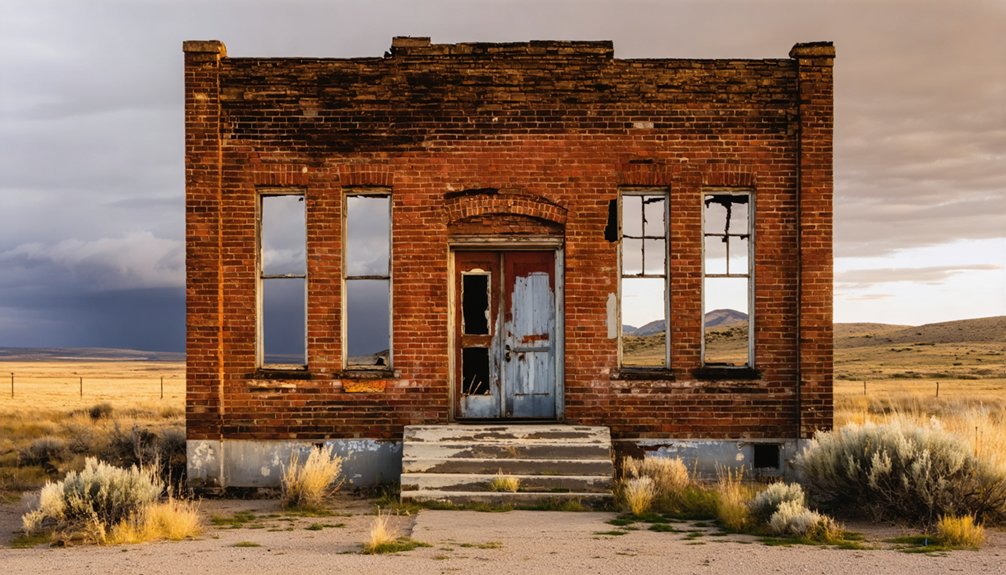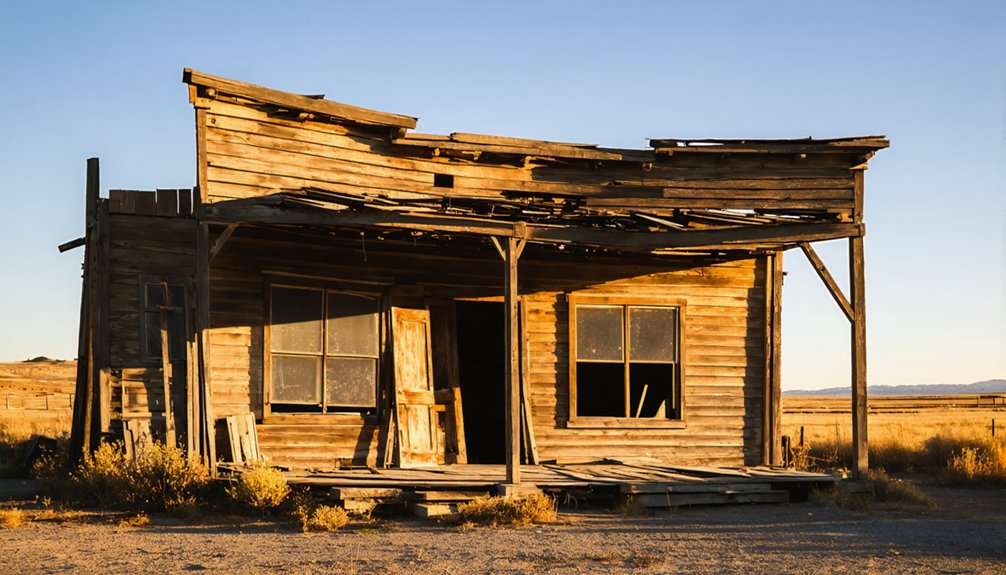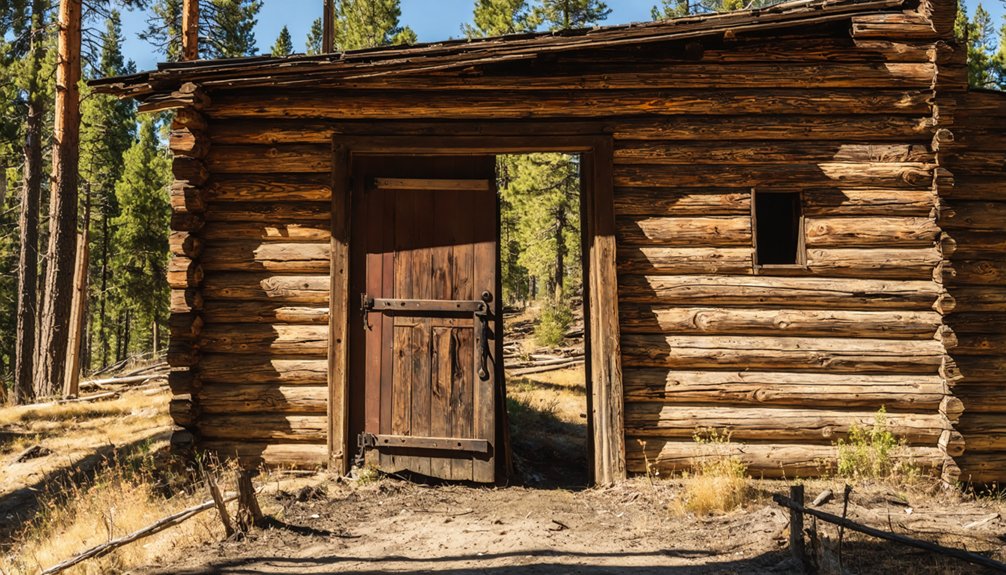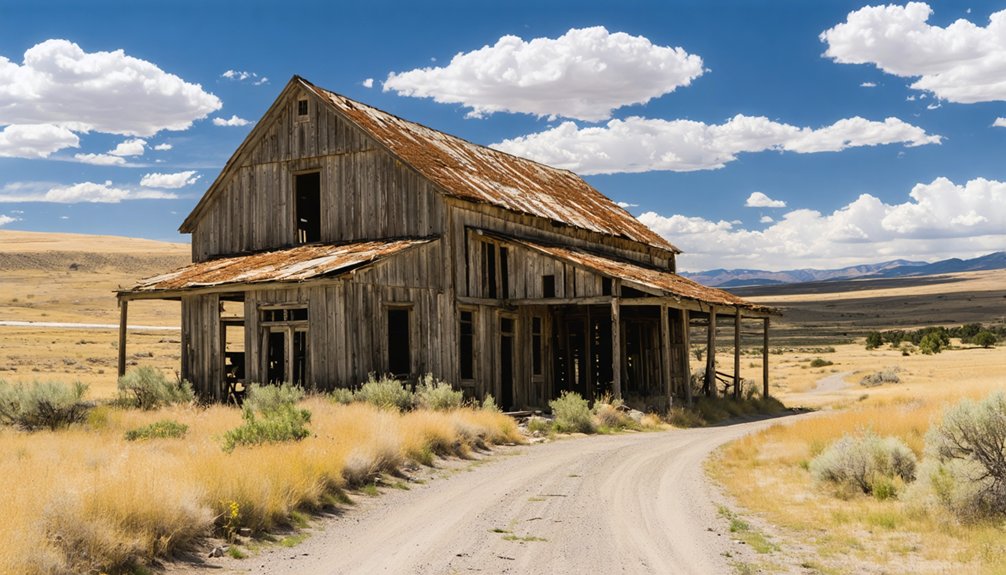
Planning a ghost town road trip to Pardee, Idaho means heading to mile marker 58.7 on Highway 12, where a 3.5-mile trail leads you back in time. You’ll find the last standing water tower, scattered foundations, and mining-era artifacts that tell a fascinating story of a community that thrived in the 1890s and vanished by 1910. Pack your water filter, lace up your boots, and get ready — there’s far more to this forgotten town than meets the eye.
Key Takeaways
- Pardee, Idaho, is a ghost town near Highway 12 at mile marker 58.7, accessible via a 3.5-mile single-track trail.
- Only a water tower remains, alongside scattered foundations and artifacts from the mining depot and general store.
- Visit during summer months, as the campground closes in late fall and road conditions can affect accessibility.
- Pack essential hiking gear, including water purification tablets, sturdy boots, snacks, and a camera for documenting artifacts.
- Nearby attractions include Clearwater River fishing, wildlife viewing, and scenic drives along Highway 12 for a complete trip.
The Mining Boom That Built Pardee, Idaho
When gold, silver, and copper deposits were discovered along the Clearwater River in the 1890s, Pardee, Idaho transformed almost overnight from untouched wilderness into a bustling mining settlement.
Resource extraction drove everything here — mining techniques evolved rapidly as investors like Philadelphia capitalist Alfred Day Pardee poured capital into operations like the Tri-Metallic Mine.
The economic impact was immediate, pulling over 300 residents into a thriving community life built around general stores, a post office, and shared ambition.
Local legends even claim President Grover Cleveland made a 45-mile horseback journey to visit the town.
Yet despite heavy speculation, no miner struck it rich. By 1910, Pardee had folded completely.
Today, ghost town preservation efforts keep this freedom-seeker’s destination alive, inviting you to walk where determined miners once carved their dreams from Idaho’s rugged terrain.
What’s Left of Pardee, Idaho Today?
When you arrive at Pardee today, you won’t find much standing — but the single remaining water tower rises above the landscape as a haunting reminder of what once thrived here.
You can still trace the town’s footprint through scattered foundations and debris from the mining depot and general store.
If you look closely, the earth itself tells the story, with remnants hiding just beneath the surface where hundreds once lived and worked.
Standing Structures Today
Though time has stripped Pardee down to little more than memories and rubble, one structure still stands to remind you that a thriving community once called this remote Idaho hillside home: a lone water tower. This weathered sentinel carries enormous historical significance, quietly marking the spot where over 300 residents once built their lives around mining dreams.
Beyond the water tower, you’ll find scattered foundations and debris from the mining depot and general store among the other abandoned structures dotting the hillside.
These remnants won’t overwhelm you with grandeur, but they’ll spark your imagination. Run your hand across a crumbling foundation and you’re touching the bones of a town that burned bright and vanished fast.
Pardee doesn’t need polished exhibits to tell its story — the land speaks for itself.
Scattered Foundations Remain
Beyond the water tower, the rest of Pardee tells its story in fragments. You’ll find scattered foundations and debris where the mining depot and general store once stood, each remnant quietly marking where workers once lived and traded.
These foundational remnants aren’t glamorous, but they carry real historical significance — they’re physical proof that a thriving community of over 300 people once carved out a life here.
As you walk the site, you’re fundamentally reading the town’s bones. Outlines of structures emerge from the earth, giving you a tangible sense of Pardee’s former layout.
Metal detecting enthusiasts frequent the area, and it’s easy to understand why — artifacts from the mining era still surface here, connecting you directly to the late 19th and early 20th century settlement.
How to Get to the Pardee Ghost Town Site
Reaching the Pardee ghost town site is straightforward, but you’ll want to plan your route before heading out.
Head to Highway 12 and look for mile marker 58.7 near the upper Clearwater River, northwest of Kamiah, Idaho. From there, you’ll access a 3.5-mile single-track trail that any standard 2WD vehicle can handle, making ghost town accessibility easier than you might expect.
The round trip hike gains 876 feet in elevation, so pack water since you’ll need to purify any creek sources along the trail.
The effort is absolutely worth it given the site’s historical significance as a once-thriving mining settlement.
Visit during summer months, as the campground closes in late fall, and spring runoff can complicate access considerably.
The Grover Cleveland Legend and Pardee’s Oral History
One of Pardee’s most engaging stories claims that U.S. President Grover Cleveland secretly visited the town to meet a mistress, traveling by train before riding 45 miles on horseback to reach the remote site.
You’ll hear this legend repeated by locals and history enthusiasts alike, keeping it alive as part of the town’s irresistible mystique.
The Bethmann family, whose financial backing helped fund the Tri-Metallic Mine, adds another layer to Pardee’s oral history, their name woven into the community’s memory long after the town itself disappeared.
Cleveland’s Legendary Secret Visit
Among Pardee’s most intriguing historical footnotes is a persistent local legend claiming U.S. President Grover Cleveland secretly visited the town to meet a mistress.
Cleveland’s visit allegedly involved an extraordinary journey:
- Traveling by train toward Central Idaho
- Dismounting and riding horseback for 45 rugged miles
- Arriving near the railroad tracks running alongside the Clearwater River
- Meeting secretly away from public scrutiny
Presidential secrets rarely survive history unchanged, and you’ll find this legend impossible to verify yet difficult to dismiss entirely.
The story captures exactly what makes ghost town exploration so compelling — you’re standing where whispered history once played out.
Whether true or folklore, Cleveland’s legendary detour adds a provocative human dimension to Pardee’s already fascinating past.
Bethmann Family Oral Legacy
Threads of local oral history weave tightly around the Bethmann family, whose financial backing of the Tri-Metallic Mine cemented their reputation as central figures in Pardee’s short but eventful life.
Their Bethmann legacy isn’t buried in dusty archives alone — it lives through generations of storytellers who’ve kept the mining influence alive in regional memory.
Harry Bethmann’s investment decisions shaped the economic rhythm of the entire settlement, drawing workers and speculators alike into the canyon.
When you visit Pardee today, you’re walking ground where those decisions played out in real time.
Talking with locals or joining guided tours during Custer Days often surfaces personal accounts connecting the Bethmann name to specific mine shafts, business dealings, and community dynamics that no written record fully captures.
What to Pack for Your Pardee Ghost Town Visit
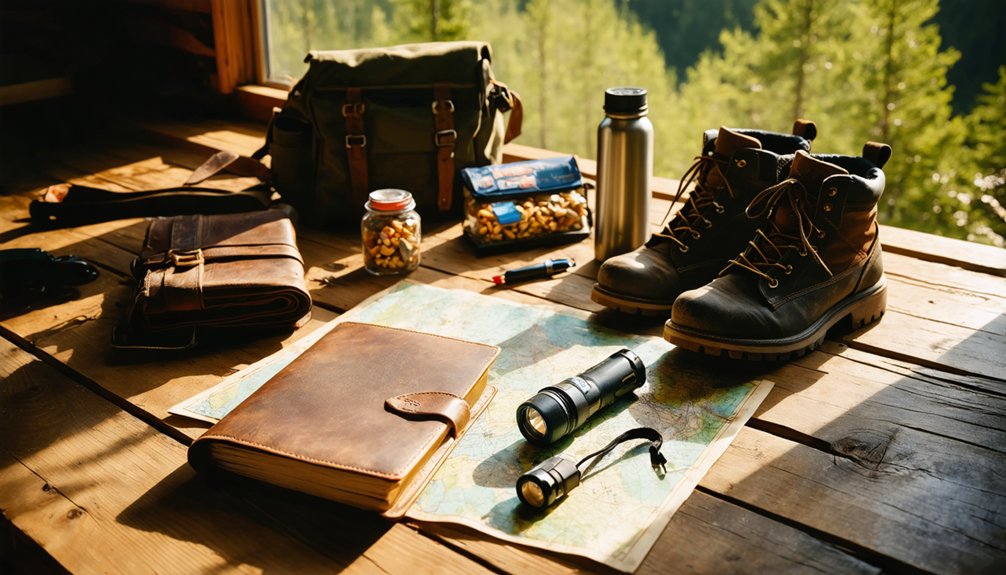
Since the trail to Pardee climbs 876 feet over 3.5 miles of single-track terrain, you’ll want to pack with both comfort and practicality in mind.
The creek at the trail’s summit offers water, but you’ll need purification gear. Here are your hiking essentials:
The creek at the summit provides water, but purification gear is non-negotiable before every sip.
- Water filter or purification tablets — don’t rely solely on what you carry up
- Sturdy hiking boots — uneven foundations and debris demand ankle support
- Camera or sketchbook — document historical artifacts like scattered mining-era remnants responsibly
- Snacks and a light daypack — keep your hands free for exploring
When Is the Right Time to Visit Pardee, Idaho?
When you plan your trip to Pardee matters as much as how you pack for it. Timing your visit around the best seasons makes a real difference in what you’ll experience on that 3.5-mile trail.
Summer offers the most accessible weather conditions, with the Custer Days event held every second Saturday in July giving you guided tours of the historic site.
Spring runoff brings dramatic scenery, but muddy trails can slow your progress considerably.
Fall delivers cooler temperatures and fewer crowds, making it ideal if you prefer solitude among the scattered foundations and relics.
Avoid late fall and winter entirely, as campground access closes completely.
Whatever season you choose, check road conditions along Highway 12 near mile marker 58.7 before you head out.
Where to Camp and Stay Near Pardee, Idaho
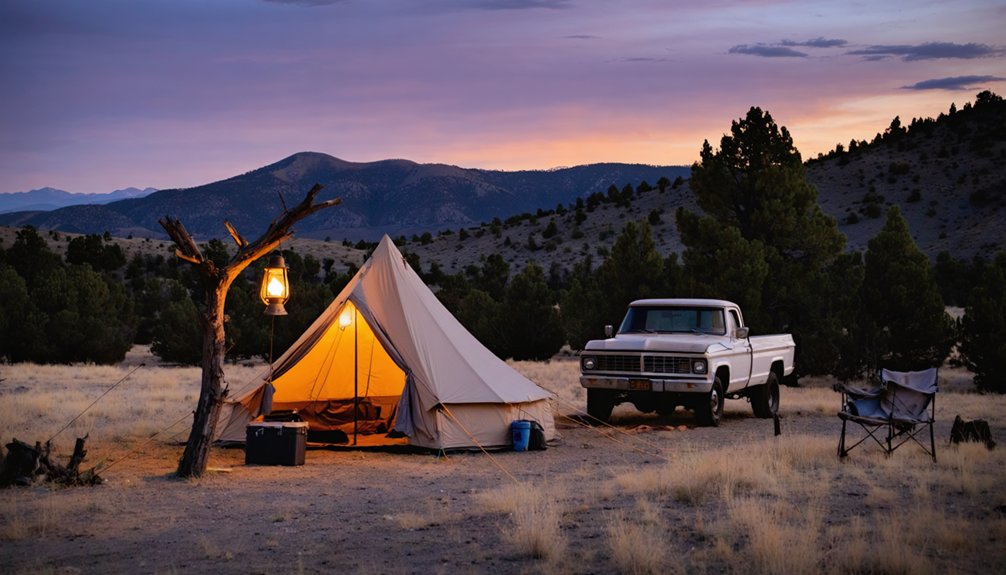
Staying close to the trailhead makes your Pardee trip far more manageable, and a nearby campground puts you right at the base of that 876-foot elevation climb.
Campground amenities in the area keep things simple but functional, giving you everything you need before hitting the trail. Nearby attractions along Highway 12 add extra value to your stay.
Here’s what to expect when setting up camp near Pardee:
- Trailhead proximity — cuts your morning drive to almost nothing
- Creek water access — available at the top, so pack your purification gear
- Seasonal availability — campgrounds close in late fall, so plan for summer or early spring
- Nearby attractions — the Clearwater River corridor offers fishing, wildlife viewing, and scenic drives
Frequently Asked Questions
Who Was Alfred Day Pardee and Why Was the Town Named After Him?
Alfred Day Pardee was a Philadelphia capitalist and coal investor whose heavy mining investments shaped Pardee’s History. You’ll find Alfred’s Legacy lives on — the town proudly carries his name because he funded its foundational mining operations.
How Many People Lived in Pardee Before It Became a Ghost Town?
Over 300 people once called Pardee home, making its Pardee population history surprisingly vibrant! You’d be amazed how this ghost town significance grew so fast, yet by 1910, you’d have found it completely abandoned.
Is Metal Detecting Allowed at the Pardee Ghost Town Site Today?
Metal detecting regulations at Pardee aren’t fully clear, but you’ll find enthusiasts actively exploring the site’s artifact-rich grounds. Given its historical significance, always check with local authorities before you start detecting there.
When Was the Pardee Townsite Officially Platted and Formally Established?
You’ll find that Pardee history confirms the town layout took shape when organizers officially platted the townsite on March 1, 1902, with formal establishment following shortly after on April 20, 1902—giving you clear historical anchoring.
Which Organization Currently Manages the Pardee Historic Ghost Town Site?
You’ll find the Land of the Yankee Fork Historical Association handles ghost town management at Pardee. This nonprofit champions historical preservation, keeping the site’s rich mining legacy alive so you can explore it freely today.
References
- https://dustywindshield.wordpress.com/2023/04/07/ghost-towns-along-the-clearwater-river-highway-12/
- https://www.ghosttowns.com/states/id/pardee.html
- http://www.windowontheclearwater.com/2015/trivia484.html
- https://www.alpinerunningguides.com/post/old-pardee-road-trail
- https://en.wikipedia.org/wiki/List_of_ghost_towns_in_Idaho
- https://history.idaho.gov/wp-content/uploads/2018/08/0064.pdf
- https://bloximages.newyork1.vip.townnews.com/idahocountyfreepress.com/content/tncms/assets/v3/editorial/6/35/635e3c6a-5589-11e9-a6af-47ffb3598302/5ca3cc21971d3.pdf.pdf
- https://www.ghosttowns.com/states/id/idalpha.html
- https://www.pbs.org/video/outdoor-idaho-gold-rush-days-ghost-towns/
- https://kids.kiddle.co/Pardee