Planning a ghost town road trip to Fleming, Michigan means stepping into the forgotten remains of a lumber boomtown that collapsed when the white pine disappeared. You’ll navigate unpaved roads about 40 miles from Lansing, exploring abandoned foundations, railroad remnants, and a vanished post office. Pack sturdy boots, a compass, and plenty of water since cell service is unreliable out here. Everything you need to make this trip unforgettable is just ahead.
Key Takeaways
- Fleming, Michigan, is located roughly 40 miles from Lansing, accessible via unpaved roads requiring a high-clearance vehicle for safe navigation.
- Visit during summer or fall for the best access and scenic views of Fleming’s abandoned foundations and railroad remnants.
- Pack sturdy boots, a first aid kit, printed map, compass, water, snacks, and insect repellent due to isolated conditions.
- Watch for structural hazards like unstable wooden frames, hidden foundation pits, and rusted metal fragments while exploring the ruins.
- Extend your road trip by visiting nearby ghost towns like Deward and Lumberman’s Monument to trace Michigan’s timber history.
What Made Fleming, Michigan a Boom Town in the 1800s
Fleming, Michigan didn’t grow by accident — it rose on the back of one of the most powerful economic forces of the 19th century: white pine. The lumber industry turned this patch of northern Michigan into a living, breathing town almost overnight.
Loggers, mill workers, and railroad employees flooded in, drawn by steady work and the promise of opportunity. You can picture the energy — sawmills running, trains loading, a post office buzzing with commerce.
Community dynamics formed fast when survival depended on cooperation. Fleming hit roughly 150 residents at its peak, a modest but vibrant hub built entirely around extracting and transporting timber.
It wasn’t glamorous, but it was alive — and understanding that boom makes the silence you’ll find there today hit even harder.
How Fleming Collapsed When the Timber Ran Out
When the white pine ran out, Fleming didn’t fade slowly — it collapsed. Timber depletion hit fast and hard, stripping the town of its entire reason to exist. The sawmills shut down permanently, the railroads rerouted to more profitable centers, and the post office closed as families packed up and left.
When the white pine ran out, Fleming didn’t fade — it collapsed, stripped of every reason to exist.
The economic impact was total — no industry meant no jobs, no residents, and no future. What had once been a thriving lumber stop became an empty clearing within a single generation.
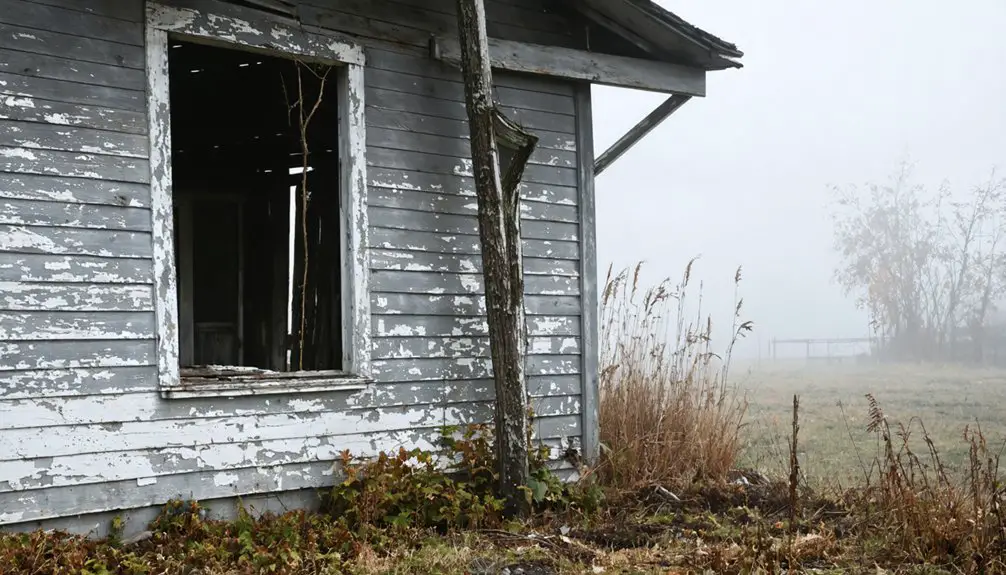
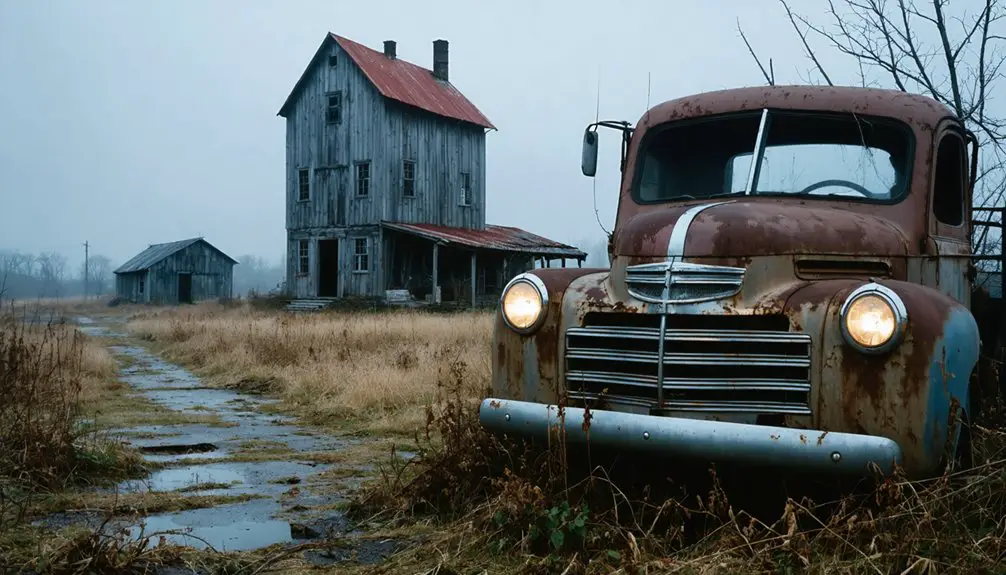
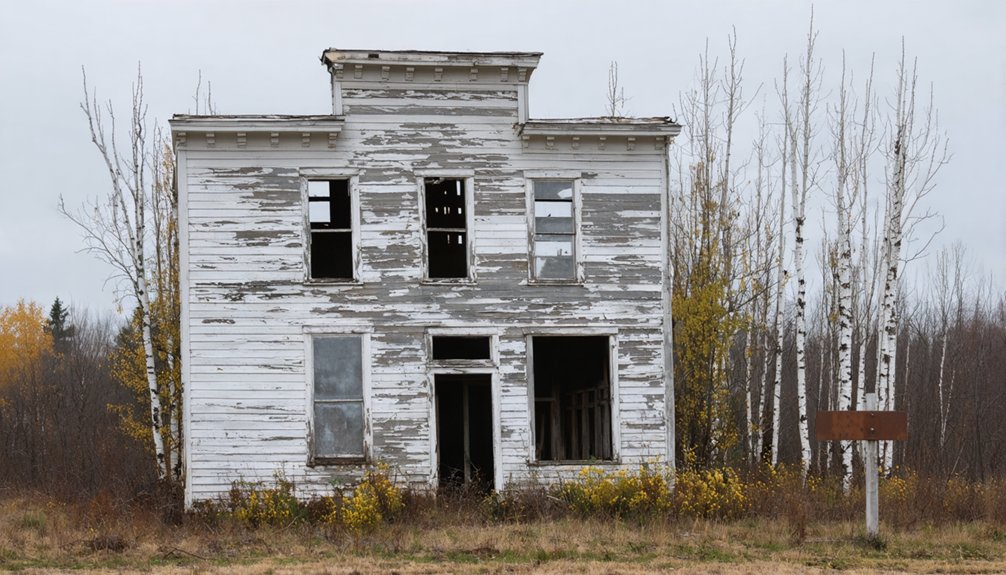
You can still see that story written across the landscape today. Abandoned foundations, weathered wooden frames, and crumbling ruins mark where ambition once stood.
Fleming’s collapse wasn’t unique — it mirrored hundreds of Michigan communities that lived and died by the lumber boom.
What Ruins and Landmarks You Can Still See at Fleming Today
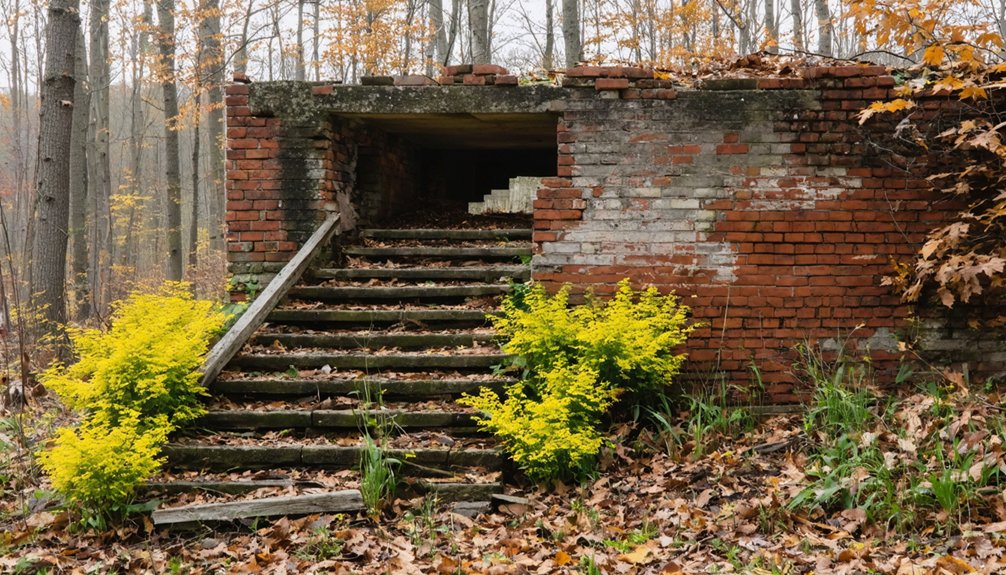
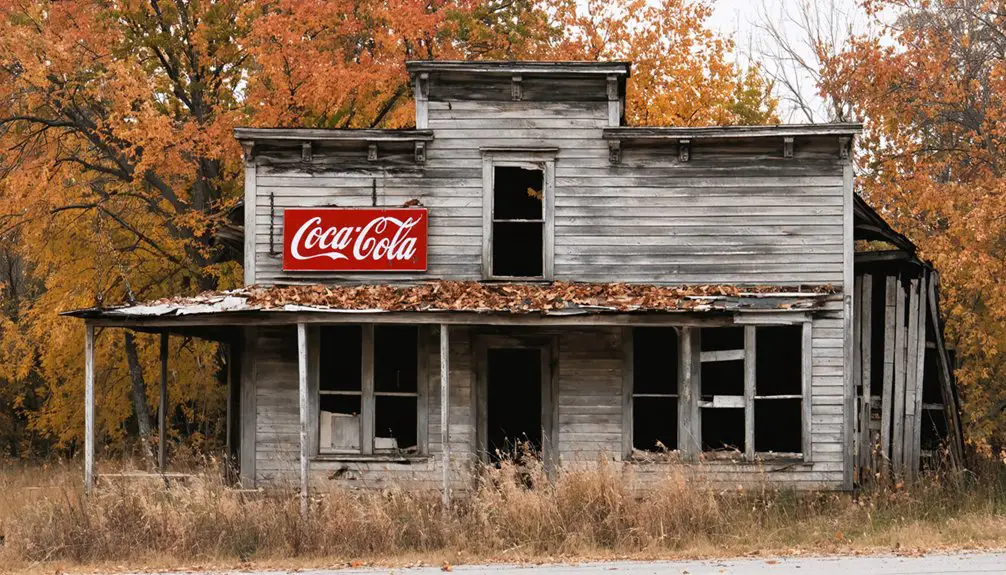
What’s left of Fleming tells a vivid story if you know where to look. Scattered across the overgrown site, you’ll find abandoned foundations where homes and commercial buildings once stood, their outlines still sharp enough to spark your imagination.
The ruins of the old railroad station remain visible, along with fragments of weathered wooden frames pushing through dense vegetation.
Near the town center, you can spot remnants of the original post office building, a powerful reminder of Fleming’s historical significance during Michigan’s lumber era.
This ruins exploration rewards curious visitors willing to navigate unpaved access roads. No formal trails guide you here — just raw history waiting to be discovered.
Fleming doesn’t need polished signage to make an impression; the silence and decay speak for themselves.
How to Get to Fleming, Michigan
If you’re heading to Fleming, you’ll find it tucked in northern Michigan, roughly 40 miles from Lansing, near the small communities of Alcona and Amble.
The roads leading to the site are unpaved, so you’ll want a high-clearance vehicle to handle the rough terrain without trouble.
Plan your route carefully before you go, since the area’s isolation means you won’t find gas stations or services nearby once you leave the main roads.
Driving Routes To Fleming
Getting to Fleming, Michigan requires a bit of planning, since the site sits in the northern part of the state roughly 40 miles from Lansing and the final stretch of road leading to it’s unpaved.
You’ll want a high-clearance vehicle before you head out, as the access roads can get rough. From Lansing, head north and take advantage of Michigan’s scenic routes, weaving through forested landscapes that still echo the state’s legendary lumber era.
Along the way, you’ll pass local attractions near communities like Alcona and Amble, making it easy to break up your drive.
Give yourself extra time, embrace the open road, and enjoy the journey as much as the destination itself.
Road Conditions And Access
Once you’ve left the paved roads behind, the real adventure to Fleming begins. The access roads leading to this ghost town are entirely unpaved, rutted, and unforgiving, so you’ll need a high-clearance vehicle to navigate them safely.
Road safety isn’t optional here — soft ground, overgrown vegetation, and hidden debris make low-riding cars a liability.
For smart exploration tips, arrive during dry weather when the dirt roads are most stable. Wet conditions turn these trails into muddy traps that can strand even prepared travelers.
Bring a paper map or downloaded offline GPS, since cell service is unreliable in this remote, forested stretch of northern Michigan.
Tell someone your plans before heading out. Fleming rewards the self-reliant adventurer who respects the terrain.
Best Time of Year to Visit Fleming

If you’re planning a trip to Fleming, you’ll find summer the most accessible season, as the unpaved access roads are far easier to navigate in dry conditions.
Come fall, the surrounding forests put on a spectacular show of color that transforms the ruins into an almost cinematic landscape.
Whatever you do, avoid making the trek in winter — the remote roads become treacherous, and the site’s historical details are buried under snow, making exploration difficult and potentially dangerous.
Summer Offers Ideal Conditions
Summer transforms Fleming’s overgrown landscape into its most accessible and visually striking version, making it the ideal season for a ghost town visit. Warm temperatures dry out the unpaved access roads, making navigation far easier for your high-clearance vehicle. You’ll move freely through the ruins without battling mud or ice-slicked terrain.
The longer daylight hours give you maximum time to explore abandoned foundations, weathered frames, and railroad remnants without rushing. Summer activities like photography and historical sketching become genuinely rewarding when golden light filters through the surrounding forest canopy.
You’ll also encounter Fleming’s local wildlife thriving in the reclaimed landscape — deer, birds, and small mammals have made the ghost town their own. Embrace the quiet wildness; it makes the experience feel truly untamed and unhurried.
Fall Colors Enhance Views
Although summer earns its praise, fall transforms Fleming into something altogether more haunting and beautiful. As October arrives, fall foliage blankets the surrounding forest in deep amber, crimson, and gold, wrapping the abandoned ruins in colors that sharpen their ghostly character.
You’ll find that weathered wooden frames and crumbling foundations look dramatically different against a backdrop of burning autumn leaves.
The scenic vistas you’ll encounter along unpaved access roads become genuinely striking during peak foliage weeks, typically mid to late October. Cooler temperatures make walking the site far more comfortable, and the thinning canopy actually improves visibility, revealing structural remnants that summer vegetation conceals.
If you want Fleming at its most atmospheric, fall gives you both natural spectacle and an eerie, unforgettable stillness.
Avoid Winter Road Challenges
Winter turns Fleming’s already challenging access roads into genuinely hazardous terrain, so you’ll want to plan your visit well outside the coldest months.
Snow and ice transform the unpaved routes into treacherous paths where even high-clearance vehicles struggle for traction. Road maintenance doesn’t reach remote ghost town sites like Fleming, meaning drifts accumulate unchecked and frozen ground conceals hidden hazards beneath.
Prioritizing winter safety means recognizing when a destination simply isn’t worth the risk.
Spring through early fall gives you the accessibility and visibility you need to explore the ruins comfortably. You’ll move freely through the site, photograph the remnants clearly, and return home without incident.
Don’t let poor timing rob you of the experience Fleming’s fascinating history deserves.
What to Pack for a Safe Visit to Fleming

Visiting Fleming’s remote, overgrown ruins means you’ll need to pack smart before heading out. The unpaved access roads and dense vegetation demand essential gear that keeps you mobile and protected.
Bring sturdy, ankle-supporting boots to navigate uneven foundations and broken terrain safely. Pack a first aid kit, because you’re far from medical facilities once you leave nearby communities like Alcona or Amble.
Take safety precautions seriously by carrying a printed map and compass — cell service is unreliable in this forested area. Bring enough water for the full day, high-calorie snacks, and insect repellent to handle Michigan’s aggressive bugs.
A charged portable battery, flashlight, and weather-appropriate layers round out your kit. Prepare thoroughly, and Fleming rewards you with an unforgettable, unfiltered glimpse into Michigan’s lumber era.
Hazards to Watch for at Fleming’s Abandoned Structures
Once you step onto Fleming’s grounds, the abandoned structures demand your full attention because decayed wood, collapsed foundations, and rusted metal create serious injury risks at every turn.
You’ll want to assess structural integrity before approaching any standing wooden frames, since decades of Michigan winters have weakened them considerably. Don’t lean against walls or step onto elevated platforms without first checking for rot beneath your feet.
Watch for hidden foundation pits concealed by overgrown vegetation — they’re easy to miss and dangerous to fall into. Rusted metal fragments from the old railroad station can slice through clothing and skin without warning.
Your safety precautions should include scanning the ground continuously, avoiding shadowed areas where debris hides, and never exploring alone.
Scan the ground constantly, avoid shadowed debris fields, and always bring a companion into Fleming’s unpredictable ruins.
Fleming rewards careful visitors who respect its dangerous, beautiful decay.
Where to Stay Near Fleming After a Day of Exploring
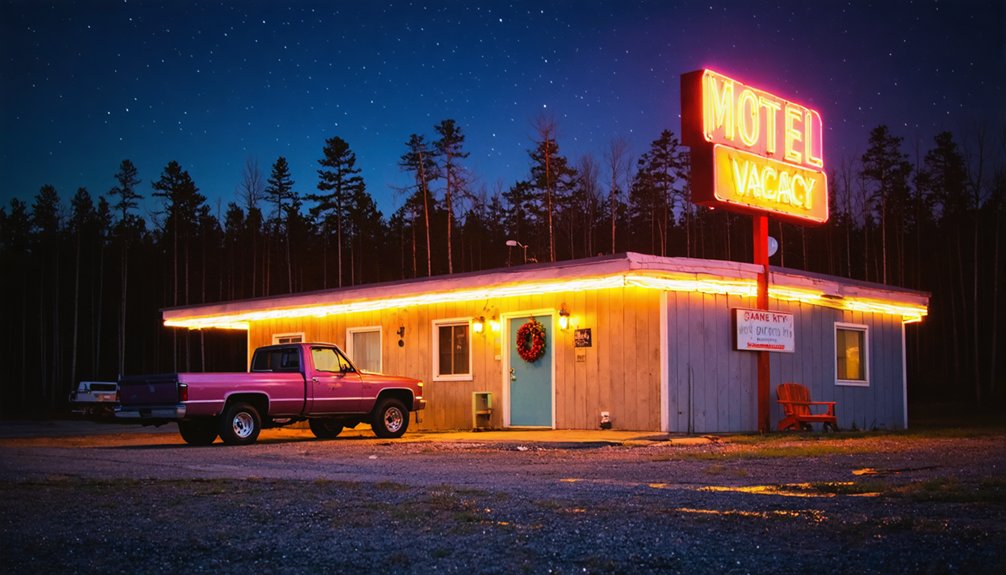
After a long day traversing Fleming’s overgrown ruins and crumbling foundations, you’ll need a comfortable base camp to recover before the drive home. Nearby communities like Alcona and Amble offer your best accommodation options, with small inns, cabins, and campgrounds suited for independent travelers who prefer flexibility over chain hotels.
These towns also provide local dining worth exploring — think roadside diners and family-owned spots serving hearty Midwestern meals that’ll fuel your next adventure.
If you’d rather sleep under the stars, several campgrounds sit within a short drive of Fleming’s forested site, giving you an immersive northern Michigan experience.
Book ahead during summer months, as outdoor enthusiasts crowd the region. Arriving prepared means you’ll spend less time scrambling and more time enjoying everything this remote corner of Michigan offers.
Nearby Ghost Towns to Pair With a Fleming Road Trip
If you’re already making the trek to Fleming, you might as well turn it into a full Michigan ghost town road trip.
The northern Lower Peninsula is dotted with forgotten lumber towns like Deward and Lumberman’s Monument area communities that pair perfectly with a Fleming visit.
Mapping out two or three stops lets you trace the full arc of Michigan’s boom-and-bust timber era in a single day.
Michigan Ghost Towns Nearby
Several ghost towns within Michigan’s northern region pair perfectly with a Fleming visit, letting you stretch a single-day road trip into a fuller exploration of the state’s vanished lumber era.
Each site carries its own ghost town history, giving you fresh context for understanding how quickly prosperity collapsed once the white pine disappeared. Nearby Alcona and surrounding abandoned settlements offer additional abandoned structures worth exploring, from crumbling foundations to weathered wooden frames swallowed by second-growth forest.
You’re free to move between sites at your own pace, piecing together a larger story about Michigan’s boom-and-bust timber economy. Bringing a detailed regional map helps you connect these locations efficiently, maximizing your time without missing hidden ruins tucked along unpaved back roads throughout this historically rich northern corridor.
Pairing Towns For Exploration
Building your Fleming road trip around a cluster of nearby ghost towns turns a short stop into a full day of historical discovery. Alcona and Amble sit close enough to pair naturally with Fleming, each carrying its own rustic charm and historical significance from Michigan’s lumber era.
Pack your map and explore these vivid remnants along the route:
- Crumbling stone foundations swallowed by decades of creeping forest undergrowth
- Weathered timber frames leaning against grey Michigan skies
- Overgrown rail corridors where locomotives once hauled white pine southward
- Forgotten town centers reduced to scattered debris and wild grass
You’ll cover real ground, connect genuine history, and experience Michigan’s ghost town landscape the way it deserves — unfiltered, unhurried, and entirely on your own terms.
Why Fleming Belongs on Every Michigan History Lover’s List
Fleming isn’t just a forgotten dot on a map — it’s a living classroom where Michigan’s lumber history speaks through crumbling foundations, weathered timber frames, and the ghostly outline of a railroad station that once hummed with industry.
Fleming’s legacy connects you directly to the timber industry that shaped an entire state, then vanished within a generation. You’ll walk ground where loggers, mill workers, and railroad crews once built something from nothing, driven by Michigan’s vast white pine forests.
When those forests disappeared, so did everything else. That raw, unfiltered story lives in every abandoned foundation you step around. If you love Michigan history, Fleming doesn’t just show you the past — it puts you inside it.
Frequently Asked Questions
Is Photography Permitted at Fleming’s Abandoned Ruins and Structures?
You’ll find no formal restrictions on abandoned photography at Fleming’s haunting ruins. Embrace ghost town exploration freely as you capture weathered wooden frames, crumbling foundations, and railroad remnants that whisper stories of Michigan’s extraordinary lumber past.
Are There Guided Tours Available Specifically for Fleming Ghost Town Visits?
You won’t find formal guided tours at Fleming, but you can embrace guided exploration on your own terms. Discover ghost town history independently, wandering freely through haunting ruins that tell Michigan’s fascinating lumber era story.
Was Fleming Ever Considered for Historical Preservation or Restoration Efforts?
Like sand slipping through fingers, Fleming’s historical significance hasn’t secured formal preservation efforts. You’ll find preservation challenges have kept restoration dreams unrealized — nature’s reclaimed this lumber ghost town, leaving only ruins for your adventurous exploration.
Did Fleming Have a School or Church During Its Peak Population?
The historical records don’t confirm a school or church in Fleming, but you can imagine how community life thrived there—Fleming history suggests loggers, mill workers, and families built tight-knit bonds during its peak.
Can Visitors Legally Remove Artifacts or Souvenirs Found at Fleming?
You shouldn’t remove artifacts from Fleming, as Michigan’s laws protect sites of historical significance. Respecting artifact preservation guarantees future visitors can experience the town’s rich lumber-era story. Leave everything as you find it!
References
- https://history.weld.gov/files/sharedassets/history/v/2/documents/county-150/weld-county-towns/flemmingsranch.pdf
- https://www.nailhed.com/2014/12/a-hole-in-forest.html
- https://promotemichigan.com/lost-love-found-spirits-in-nahma-the-heart-of-the-hiawatha
- https://en.wikipedia.org/wiki/List_of_ghost_towns_in_Michigan
- https://kids.kiddle.co/List_of_ghost_towns_in_Michigan
- https://books.google.com/books/about/Ghost_Towns_of_Michigan.html?id=3dzhAAAAMAAJ
- https://friendsofsleepingbear.org/area-history-articles/ghost-towns/
- https://www.youtube.com/watch?v=p5LxIBDpOG0
- https://www.youtube.com/watch?v=efbl1xO9kZI
- https://privatelandswildlife.com/ghost-towns-michigan/