Planning a ghost town road trip to Parker City, Illinois means stepping into a community that once held nearly 300 residents before railroad decline swallowed it whole. You’ll find old wells, crumbling homesteads, and weathered railroad beds scattered across Johnson County’s reclaimed landscape. The Tunnel Hill State Trail connects Parker City to four other forgotten towns nearby. There’s far more history hiding in this landscape than you’d expect at first glance.
Key Takeaways
- Parker City, a ghost town in Johnson County, Illinois, was once home to nearly 300 residents before railroad activity declined in the 1920s.
- Over 40 visible homestead sites, old wells, crumbling foundations, and weathered railroad beds remain for visitors to explore today.
- Pack sturdy boots, water, bug spray, a GPS-loaded phone, a camera, a walking stick, and a notebook for documentation.
- Walk the Tunnel Hill State Trail for historical context, scanning for subtle earth depressions and crumbling remnants along the route.
- Extend your road trip by visiting four nearby ghost towns—New Castle, Forman, Bender, and Rago—all connected by the same trail.
What Is Parker City, Illinois?
Parker City, Illinois, is a ghost town tucked away in Johnson County, a former settlement that once hummed with the activity of nearly 300 residents before fading into silence.
Named after George Washington Parker, a railroad president, this community rose and fell alongside the railway lines that once defined the region.
Named for a railroad president, Parker City’s fate was forever tied to the iron rails that built and buried it.
At its peak, you’d have found two hotels, two stores, barbershops, a post office, and roughly 40 houses scattered across the land.
Today, Parker City stands as one of Illinois’s most intriguing ghost towns, where old wells, crumbling homestead traces, and weathered roadbeds quietly tell its story.
If you crave exploration beyond the beaten path, this forgotten settlement offers a rare glimpse into a vanished way of life worth discovering.
How Parker City Went From 300 Residents to Zero
Once a thriving railroad community, Parker City’s collapse wasn’t sudden — it unraveled slowly, pulled apart by the same forces that built it. The ghost town history here is a familiar one: when the railways died, so did the reason to stay.
At its peak, nearly 300 residents filled roughly 40 homes, two hotels, two stores, and two barbershops. The railway impact was everything — it created jobs, movement, and purpose.
But as operations faded through the 1920s, people followed the work elsewhere. A 1922 collision between an Illinois Central steam locomotive and a gasoline speeder signaled the town’s fragility.
Which Railroad Built: and Killed: Parker City?
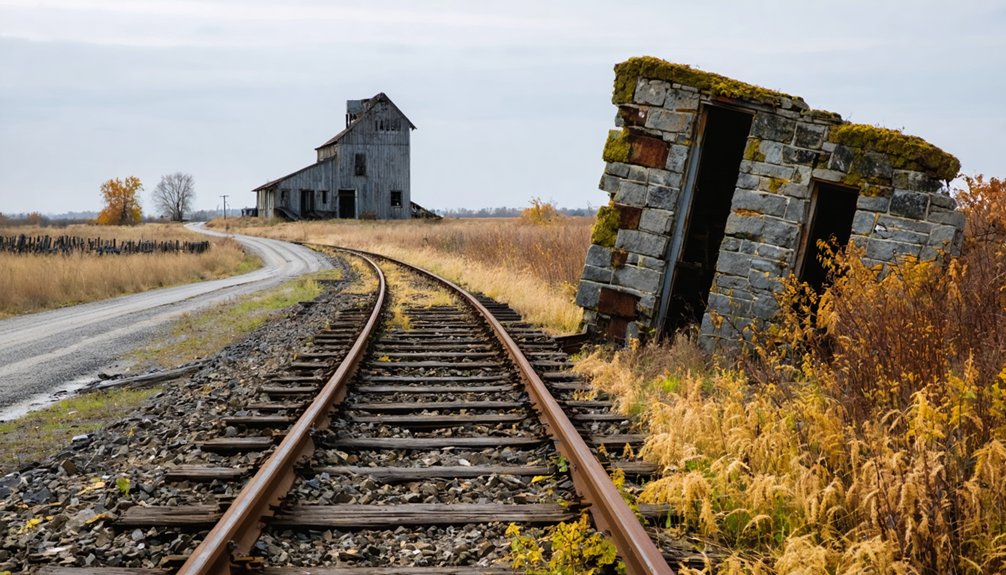
When you trace Parker City‘s origins, you’ll find the Cleveland, Cincinnati, Chicago and St. Louis Railway at its heart, with the town named after George Washington Parker, president of the St. Louis, Alton & Terre Haute Railroad.
At its peak, Parker City’s shared depot bustled with both Big Four and Illinois Central trains, keeping nearly 300 residents employed, fed, and connected to the wider world.
But as railway operations faded through the 1920s, Parker City faded with them, leaving behind only old wells, crumbling roadbeds, and the quiet ghost of a once-thriving railroad town.
Railroad Origins And Founding
Nestled in the heart of Johnson County, Illinois, the railroad built Parker City—and the railroad killed it. Its settlement history begins at the crossings of the Cleveland, Cincinnati, Chicago and St. Louis Railway, where opportunity once drew nearly 300 souls to this now-forgotten patch of earth.
The town’s railroad significance can’t be overstated—without those tracks, Parker City never exists.
George Washington Parker, president of the St. Louis, Alton & Terre Haute Railroad, lent his name to the settlement, cementing the bond between the town and the iron rails that defined it.
When you walk the old roadbeds today, you’re tracing the spine of a community that lived and died by the locomotive’s whistle. Freedom and commerce once rode those rails together.
Peak Railroad Operations
At its peak, two railroads claimed Parker City as their own—the Big Four and the Illinois Central shared a single depot, making this small Johnson County settlement a legitimate hub of regional commerce and movement.
That railroad significance translated directly into economic impact: nearly 300 residents, two hotels, two stores, two barbershops, and roughly 40 houses filled this once-thriving crossroads.
But the same railroads that built Parker City ultimately killed it. When operations declined through the 1920s, the town’s lifeline vanished.
The Illinois Central’s 1922 collision with a section gang gasoline speeder signaled darker days ahead. Without trains moving goods and people, businesses closed, residents left, and Parker City quietly faded.
You’re now visiting a place the railroad both created and abandoned.
Railway Decline And Abandonment
The Cleveland, Cincinnati, Chicago and St. Louis Railway built Parker City, and it ultimately destroyed it too. You’ll find this pattern repeated across Johnson County — settlement patterns here followed the rails completely. Where trains ran, towns thrived. When trains stopped, towns died.
By the 1920s, the railway impact on Parker City turned devastating. Traffic slowed, stops became fewer, and residents began drifting elsewhere for opportunity.
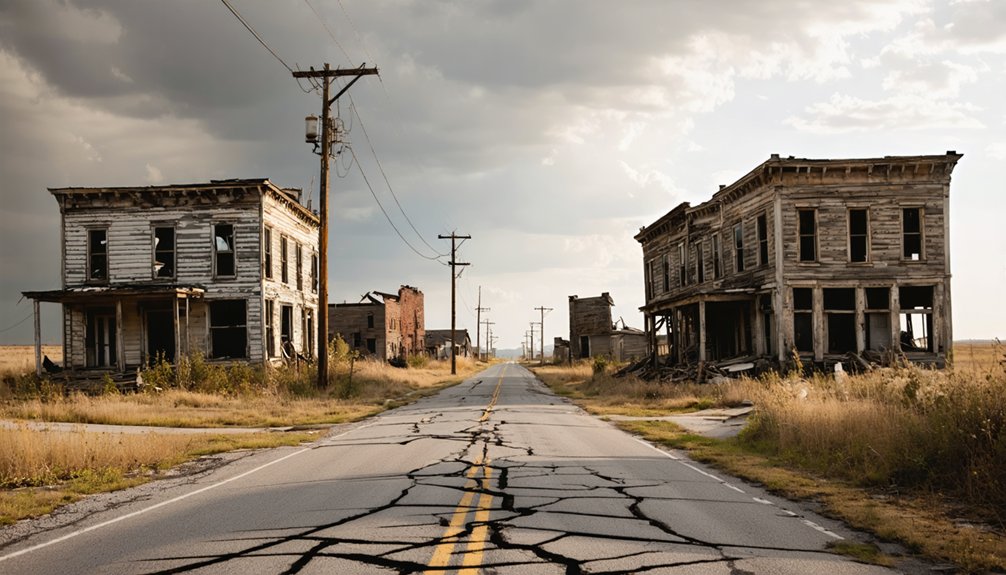
The shared depot between the Big Four and Illinois Central railroads grew quieter each year. Those two barbershops emptied out. The hotels lost their guests.
Of the seven communities that once lined this corridor, only five survived — and Parker City survived in name only, eventually losing every last resident. The rails gave this town life and took it away.
What’s Left to See at Parker City Today?
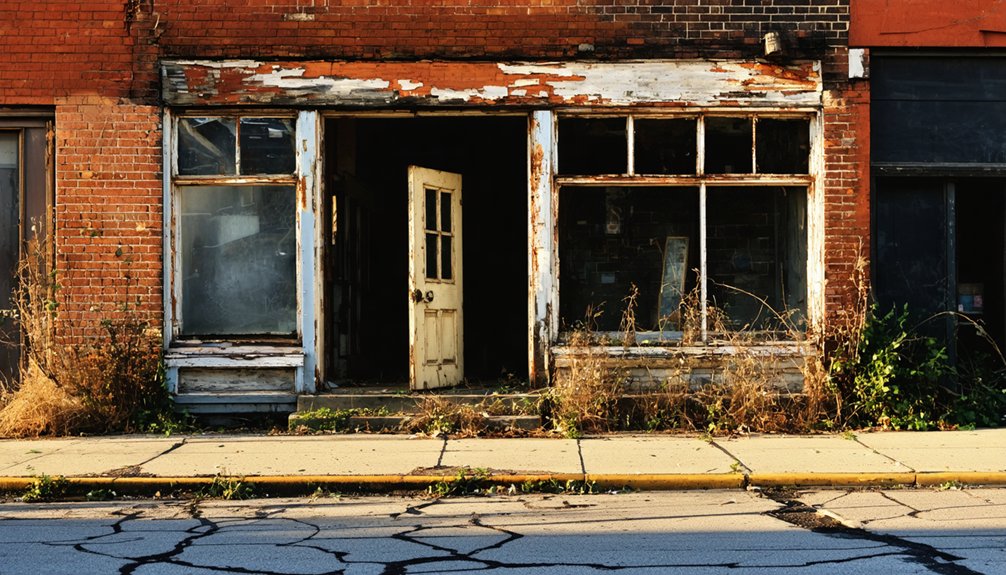
When you visit Parker City today, you’ll need a keen eye to spot what’s left, but the rewards are worth the search.
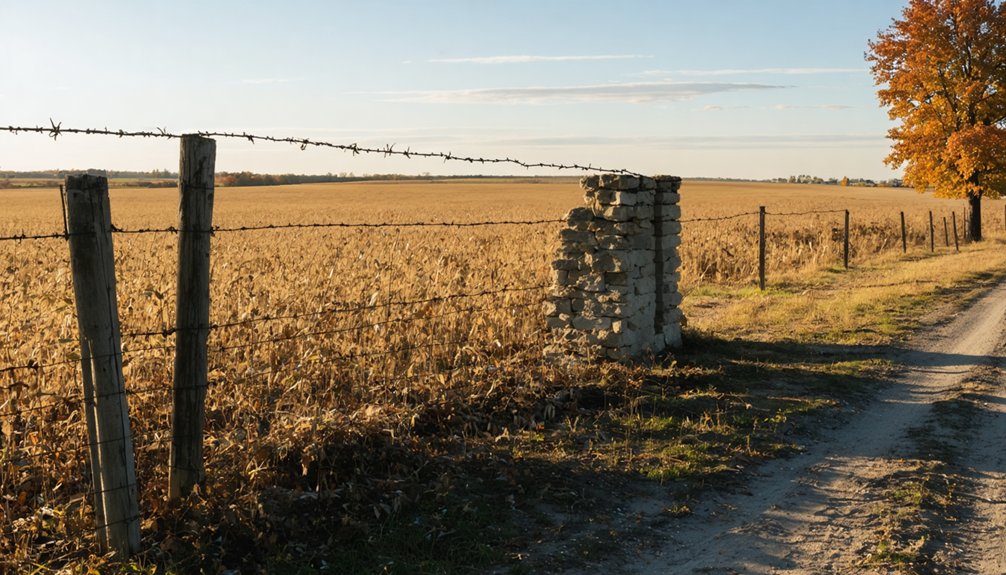
You can trace the old railroad beds cutting through the landscape, and you’ll find 40 or more homestead sites quietly reclaimed by nature.
Look for the old wells scattered across the area — they’re your most reliable markers for pinpointing where families once lived, cooked, and built their lives.
Visible Homestead Remains
Scattered across the overgrown landscape, Parker City’s remains whisper of a once-bustling village that housed nearly 300 residents.
You’ll find 40 or more old homestead sites marking where families once built their lives around the railroad. Each foundation trace carries real homestead history, connecting you directly to the people who shaped this forgotten corner of Johnson County.
The archaeological significance of these remnants can’t be overstated. Old wells serve as your most reliable markers, punctuating the landscape where houses once stood.
You’ll also spot old roadbeds cutting through the brush and faint traces of former structures if you look carefully enough. The site rewards patient explorers who take their time reading the land, piecing together Parker City’s story from what the earth still quietly holds.
Old Wells As Markers
Old wells stand as Parker City’s most dependable landmarks, anchoring you to spots where homes once hummed with daily life.
Their wells history stretches back to the settlement’s peak, when nearly 300 residents drew water daily to sustain families, businesses, and dreams built around the railroad.
Today, these sunken circles in the earth carry ghost town significance unlike anything else at the site. They don’t lie. Where a well exists, a home existed.
You can follow them like a quiet map, moving from one to the next, piecing together a neighborhood that time erased. Bring patience and walk slowly — the landscape rewards careful attention.
Each well pulls you deeper into Parker City’s story, connecting your present footsteps to lives long since departed.
Railroad Bed Traces
Two sets of former railroad beds cut through the landscape at Parker City, tracing the routes where the Big Four and Illinois Central once moved freight and passengers through Johnson County.
These subtle depressions in the earth are your most compelling clues during ghost town exploration, quietly preserving railroad history beneath layers of soil and vegetation.
Walk the raised embankments and you’ll feel the scale of what once existed here. Trains rolled through carrying commerce, connecting isolated communities to the wider world.
When those rails disappeared, Parker City’s purpose vanished with them. Today, the roadbeds stretch through the trees like faded memories, inviting you to follow their paths and imagine the steam, noise, and movement that once defined this forgotten Illinois settlement.
Read the land carefully — it tells everything.
How to Find Parker City in Johnson County, Illinois

Although Parker City has no current residents, you can still find the former settlement in Johnson County, Illinois, southwest of New Burnside and south of Creal Springs. The railroad impact that once shaped this community left behind clues you can follow today.
To uncover this ghost town history, look for old wells, weathered roadbeds, and traces of homesteads scattered across the landscape. More than 40 former house sites remain, though you’ll need a careful eye to spot them.
The crossings of the former Cleveland, Cincinnati, Chicago and St. Louis Railway mark the town’s original foundation. Walk the Tunnel Hill State Trail nearby for added context.
Parker City rewards patient explorers who appreciate discovering what railroads built—and what their absence eventually erased.
What to Bring When Searching for Traces of Parker City
Searching for traces of Parker City calls for a few practical essentials that’ll make the difference between a frustrating outing and a rewarding one. Pack sturdy boots since the terrain’s uneven and overgrown. Bring water, bug spray, and a charged phone with GPS loaded before you lose signal.
Sturdy boots, water, and a charged GPS-loaded phone are non-negotiables before stepping into Parker City’s wild terrain.
For ghost town exploration, a camera captures what your memory might miss — crumbling foundations, subtle depressions in the earth, and old wells that mark former homesteads. A walking stick helps you probe soft ground safely.
Historical artifacts occasionally surface here, so carry a small notebook to sketch or document what you find without disturbing the site.
Respect the land; you’re walking through someone’s former home. Go prepared, stay curious, and Parker City’ll reward your effort.
Other Ghost Towns to Visit Along the Tunnel Hill State Trail
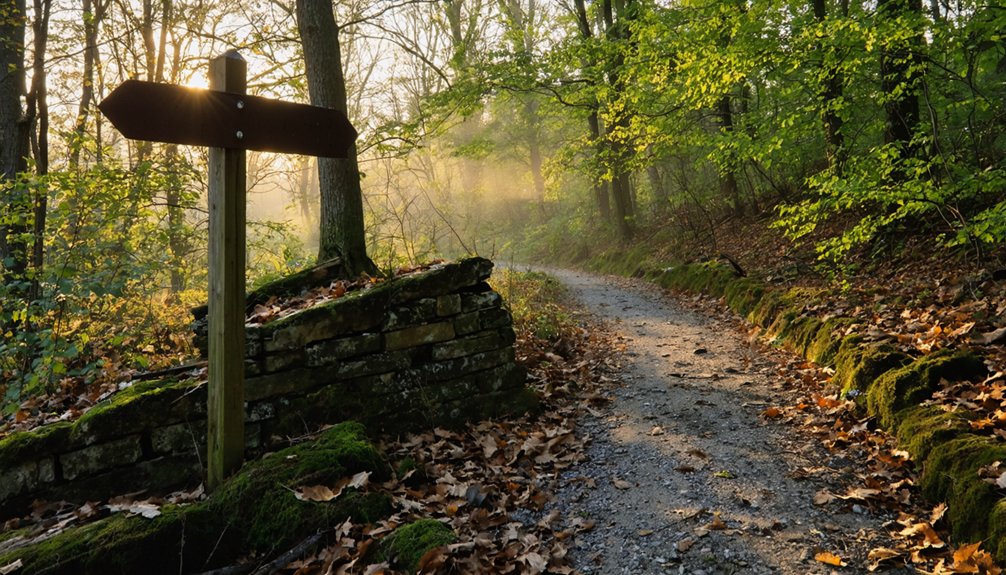
While Parker City draws ghost town hunters with its scattered wells and homestead traces, the Tunnel Hill State Trail connects you to four other vanished communities worth exploring: New Castle, Forman, Bender, and Rago.
Each settlement shares Parker City’s story — built around railroad energy, then quietly abandoned when the trains stopped running.
Stretching your road trip along this trail lets you piece together a broader picture of how seven thriving communities once lined these tracks, with only fragments surviving today.
You’ll walk the same ground where merchants, barbers, and railroad workers built their daily lives, now reclaimed by forest and silence.
These ghost towns reward the curious traveler willing to look closely. The trail makes reaching all five former settlements surprisingly straightforward on a single journey.
Should You Add Parker City to Your Illinois Road Trip?
Parker City won’t hand you its history easily, but that’s exactly why it earns a place on your Illinois road trip. This forgotten settlement rewards those willing to look past overgrown lots and fading traces of foundations.
Ghost town exploration here means reading the landscape — spotting old wells, imagining 40 houses full of life, and standing where two railroads once crossed.
Parker City significance lies in what it represents: a community that thrived, adapted, and quietly disappeared when the rails went silent. You’ll leave understanding how entire worlds vanish when infrastructure shifts.
If you crave open roads, forgotten stories, and the freedom to discover history on your own terms, Parker City deserves a stop. Pack your curiosity — it’s the only guide you’ll need.
Frequently Asked Questions
When Did Parker City’s Post Office Officially Open and Close?
Like sands through an hourglass, Parker City’s post office timeline began December 28, 1889, and closed October 31, 1941—a historical significance you’ll feel deeply, tracing this free spirit town’s forgotten, yet unforgettable, American story.
How Many Barbershops Operated in Parker City During Its Peak?
You’d find two barbershops thriving in Parker City during its peak, both always buzzing with men. Their barber history reflects the town’s vibrant economic impact, painting a nostalgic picture of a free-spirited, self-sufficient community you’d have loved exploring.
Who Was George Washington Parker, and Which Railroad Did He Lead?
You’ll find that George Washington Parker led the St. Louis, Alton & Terre Haute Railroad. His legacy shaped Parker City history, as railroad expansion fueled the town’s founding and named this once-thriving Illinois settlement after him.
How Many Hotels Existed in Parker City During Its Operational Period?
You’ll find that Parker City’s ghost town history included two hotels that once offered weary travelers warm hotel accommodations. It’s nostalgic imagining those bustling lodgings during the settlement’s peak, when nearly 300 free-spirited residents called this Illinois railroad town home.
What Caused the 1922 Railroad Accident Near Parker City?
You’ll find that an Illinois Central steam locomotive collided with a section gang gasoline speeder on November 27, 1922, marking a moment of railroad safety failure with deep historical significance that still echoes through Parker City’s nostalgic past.
References
- https://www.youtube.com/watch?v=ivop7TBcwu8
- https://www.youtube.com/watch?v=lth_H_-_EXk
- https://www.pa-roots.com/2025/08/12/beers-historical-record-chapter-17-parker-city/
- https://drloihjournal.blogspot.com/2022/09/lost-towns-of-illinois-parker-city-illinois.html
- https://www.ghosttowns.com/states/il/parkercity.html
- https://q985online.com/illinois-tunnel-hill-state-trail-haunted/
- https://sites.rootsweb.com/~iltttp/ghosttowns.htm
- https://en.wikipedia.org/wiki/List_of_ghost_towns_in_Illinois
- https://illinoisstateonline.com/ghost-towns-in-illinois/
- https://sites.rootsweb.com/~kspchs/parkercity.htm