Mustang Prairie in Falls County, Texas, is a ghost town where wild horses once roamed and post-Civil War settlers built new lives. You’ll find a historic cemetery and marker along Falls County Road 283, about six miles northeast of Bremond. Spring and fall offer the best conditions for your visit. Pack water, sturdy shoes, and offline maps. There’s more to this haunting landscape than first meets the eye.
Key Takeaways
- Mustang Prairie is located in Falls County, Texas, roughly six miles northeast of Bremond via Falls County Road 283.
- Visit during spring or fall to avoid extreme summer heat exceeding 95°F and unpredictable winter cold snaps.
- Download offline maps before traveling, as cell service is limited throughout the open prairie landscape.
- The site features a historic cemetery and marker; no buildings remain, so manage expectations accordingly.
- Respect preservation guidelines by staying on established paths, carrying out all belongings, and avoiding disturbance of cemetery markers.
What Is Mustang Prairie and Why Does It Matter?
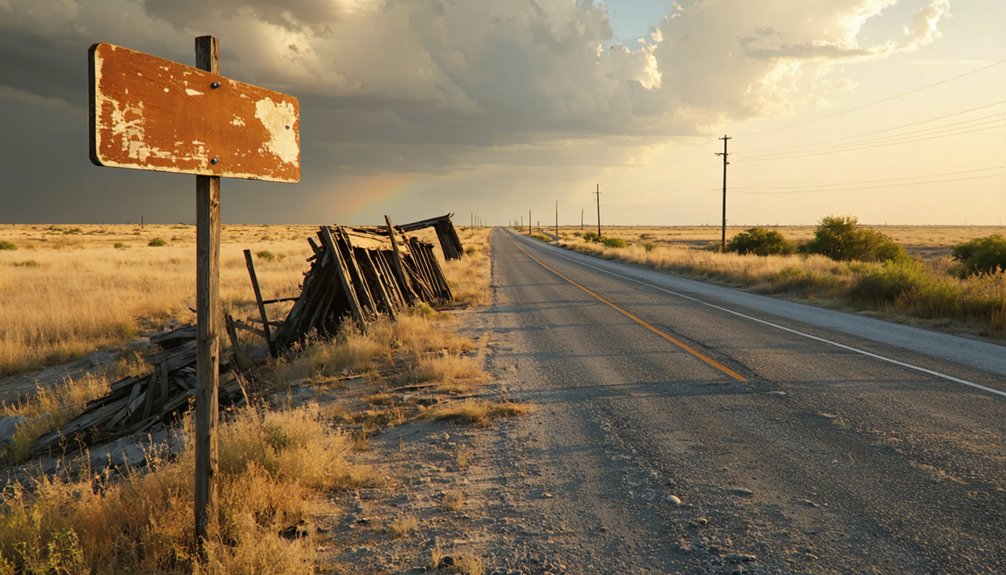
Tucked into the rolling prairies of Falls County, Texas, Mustang Prairie isn’t a town you’ll find on most maps — and that’s exactly what makes it worth finding. Its wild horse origins give it a name that still stirs something restless in you, conjuring images of untamed land before fences ever arrived.
After the Civil War, settlers pursuing fresh starts drove a quiet but determined historical migration here from Alabama, Tennessee, and Mississippi. By 1870, over 150 people had carved out lives on this open ground.
The town didn’t last, but its story did. A cemetery and historical marker still stand as honest proof that people chose this prairie deliberately — and chose it boldly. That’s a spirit worth chasing down a back road.
How to Get to Mustang Prairie, Texas
To reach Mustang Prairie, you’ll head northeast of Bremond along Falls County Road 283, following roughly six miles of open Texas prairie that once carried settlers westward from Alabama and Mississippi.
State Highway 14 serves as your primary landmark, placing the ghost town site about three miles southwest of Kosse.
Keep your eyes sharp as you navigate these local roads — the cemetery and historical marker are the only signs you’ve arrived somewhere that once mattered deeply to over 150 souls.
Starting Your Route
Getting to Mustang Prairie feels like retracing the footsteps of post-Civil War settlers who pushed into Falls County from Alabama, Tennessee, and Mississippi.
You’re not just traversing roads — you’re following a ghost town history that shaped an entire region’s identity.
Start by heading northeast from Bremond along Falls County Road 283, keeping State Highway 14 within reach as your directional anchor.
Kosse sits roughly 3 miles northeast, giving you a reliable landmark when the landscape opens into sprawling prairie.
Watch for prairie wildlife along the route — hawks circling overhead, deer grazing the tall grasses — reminders that this land breathes history.
The drive itself becomes part of the experience, pulling you deeper into open country where freedom feels less like a concept and more like a destination.
Key Road Landmarks
As you leave Bremond behind, Falls County Road 283 becomes your primary thread through the prairie, pulling you northeast toward a landscape that hasn’t changed much since 1870 settlers first crossed it.
Watch for State Highway 14 roughly three miles before Kosse — it’s your confirming landmark that you’re tracking correctly.
The ghost town attractions here aren’t flashy. You won’t find signs screaming for attention.
Instead, you’ll recognize the site by its quiet persistence: a cemetery standing where a community of 150 once built their lives, and historical markers that speak plainly about post-Civil War migration from Alabama, Tennessee, and Mississippi.
Let those markers anchor your understanding of what this empty prairie once held — and why people still drive out to find it.
Navigating Local Roads
Knowing where the landmarks sit is one thing — actually threading your way through Falls County’s back roads to reach them is another.
You’ll want to anchor your route to State Highway 14, then watch for Falls County Road 283, which carries you roughly six miles northeast of Bremond toward the site.
Road conditions on these rural stretches vary seasonally — drought-cracked caliche after dry summers, soft shoulders after heavy rains — so check local reports before you roll out.
Navigation tips worth keeping: download offline maps, since cell signals thin out fast on the prairie.
Kosse sits about three miles northeast, giving you a reliable reference point.
Trust the land’s open geometry — out here, the horizon itself guides you forward.
What’s Still Standing at Mustang Prairie Today?
When you arrive at Mustang Prairie today, you’ll find two quiet sentinels of a vanished world: a weathered cemetery and a historical marker.
The cemetery’s significance runs deep — each headstone represents a settler who journeyed from Alabama, Tennessee, or Mississippi seeking a fresh start on open Texas prairie. Stand among those graves, and you’re touching 1870 directly.
Each headstone is a doorway — step through, and suddenly it’s 1870 and Alabama soil still clings to their boots.
The historical marker nearby translates that silence into story, documenting the migration patterns and the wild horses that gave this place its name.
No buildings remain. No businesses operate. The roads, structures, and daily rhythms of 150 documented residents have dissolved completely into grassland.
What’s left is precisely enough — two anchors that let your imagination reconstruct everything the land has quietly swallowed since the late 19th century.
Nearby Stops Worth Adding to Your Route
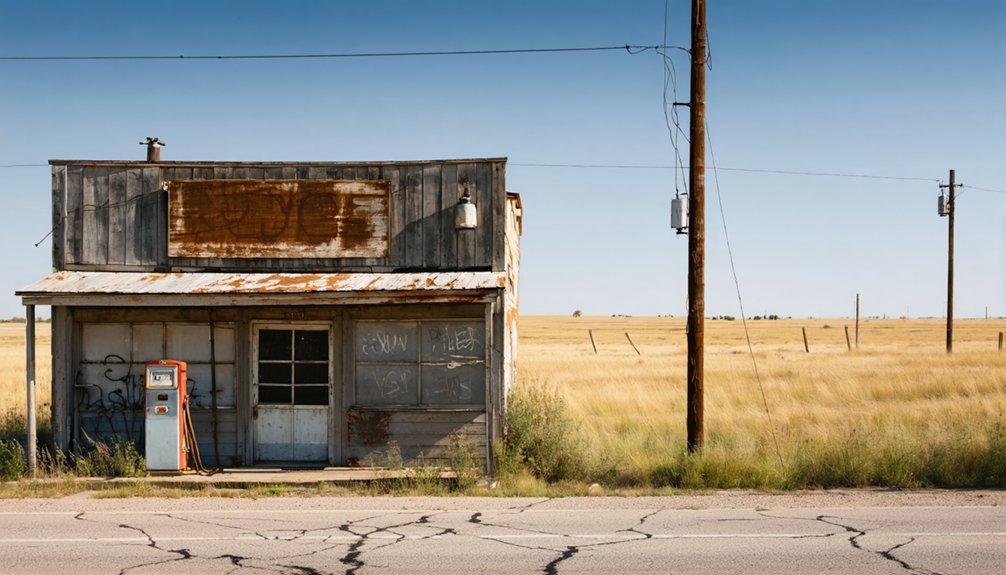
While you’re out exploring Mustang Prairie, you’d be foolish to skip Kosse’s historical downtown just 3 miles northeast, where 19th-century storefronts still whisper the ambitions of early Texas settlers.
Swing southwest toward Bremond’s heritage sites to trace the same migration corridors that funneled Alabama and Tennessee families onto these prairies after the Civil War.
String it all together with a cruise along Falls County’s scenic back roads, and you’ve got a route that turns a single ghost town stop into a full immersion in the region’s raw, post-war history.
Kosse’s Historical Downtown
Just a few miles up the road from Mustang Prairie, Kosse’s historical downtown offers a compelling detour that deepens the story of this part of Falls County.
You’ll find Kosse heritage woven into every corner, from preserved Kosse architecture to quiet streets echoing generations of Kosse culture.
Explore these four Kosse attractions that reward the curious traveler:
- Historic commercial buildings showcasing late 19th-century Kosse landmarks
- Local murals and monuments celebrating Kosse history and pioneer resilience
- Community gathering spaces reflecting authentic Kosse community traditions
- Seasonal Kosse events connecting visitors to living regional heritage
Walking these streets, you’ll sense the freedom of discovering a place the modern world hasn’t fully claimed — raw, real, and worth every mile you’ve driven.
Bremond Heritage Sites
Swing back southwest from Kosse and you’ll land in Bremond, roughly 6 miles from the Mustang Prairie site and well worth the added miles.
Bremond history runs deep, shaped by Czech and Polish immigrants who carved out a distinct cultural identity on the Texas prairie. Their influence still breathes through the town’s architecture, churches, and community traditions.
Exploring Bremond’s cultural heritage gives your road trip real dimension — you’re not just chasing ghost towns, you’re tracing the human impulse to stake claim on open land. Walk the streets, read the markers, and let the stories of those determined settlers sink in.
Bremond earns its place on your route as a living counterpoint to Mustang Prairie’s silent, abandoned landscape.
Falls County Scenic Drives
Falls County rewards the curious traveler willing to stretch the Mustang Prairie visit into a full day’s loop.
State Highway 14 threads through rolling prairie terrain, connecting ghost town history with open-road freedom you won’t forget.
Watch for local wildlife breaking across the grasslands at dawn or dusk — it’s genuinely stunning.
Add these stops to your route:
- Falls County Road 283 — your gateway corridor with scenic viewpoints across undeveloped prairie
- Kosse town center — a quiet, authentic Texas crossroads just 3 miles northeast
- Bremond’s historic district — post-Civil War architecture worth a slow walk
- Roadside prairie pullouts — spot deer, hawks, and native grasses framing the horizon
You’ll leave Falls County feeling like you’ve genuinely earned the miles.
Best Time to Visit Mustang Prairie
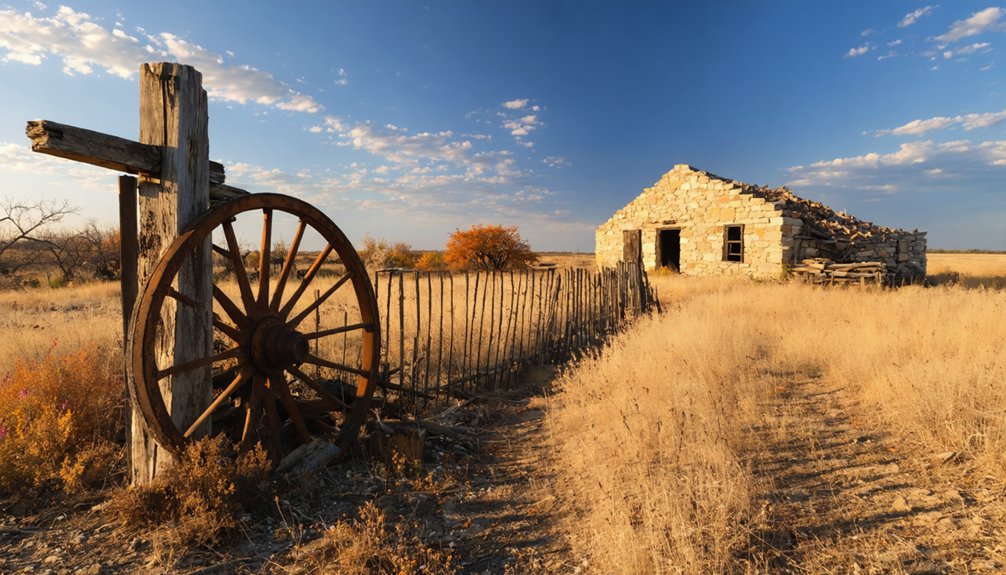
When you visit Mustang Prairie matters as much as why you visit. For the best seasons of ghost town exploration, aim for spring or fall.
March through May brings mild temperatures and wildflowers that transform the open prairie into something worth pulling over for. September through November cools the air after brutal summers that regularly push past 95 degrees, making outdoor wandering far more bearable.
Spring and fall earn their reputations out here — wildflowers, bearable heat, and room to actually breathe.
Avoid midsummer if you can. The heat’s relentless, and the dry conditions make the landscape feel punishing rather than poetic.
Winter visits are possible during mild stretches, though cold snaps can roll in unexpectedly.
Whatever season calls you out here, arrive with water, good boots, and a willingness to let the silence do the talking. The prairie rewards the prepared traveler.
What to Pack for Visiting Mustang Prairie
Once you’ve settled on your season, packing smart turns a rough prairie visit into a rewarding one. Mustang Prairie’s three climate zones and unpredictable Texas weather demand preparation. Follow these packing essentials before hitting Falls County Road 283:
- Sun protection — temperatures exceed 95°F in summer; bring sunscreen, a hat, and water.
- Layered clothing — winter cold snaps drop below 40°F unexpectedly.
- Sturdy footwear — uneven cemetery grounds and sparse vegetation require solid footing.
- Navigation tools — no operational infrastructure exists, so carry offline maps.
Visitor guidelines are simple: respect the cemetery, don’t disturb the historical marker, and leave nothing behind.
You’re walking ground where 150 settlers built something from nothing — honor that freedom they chased westward.
How to Respect and Preserve the Historic Site
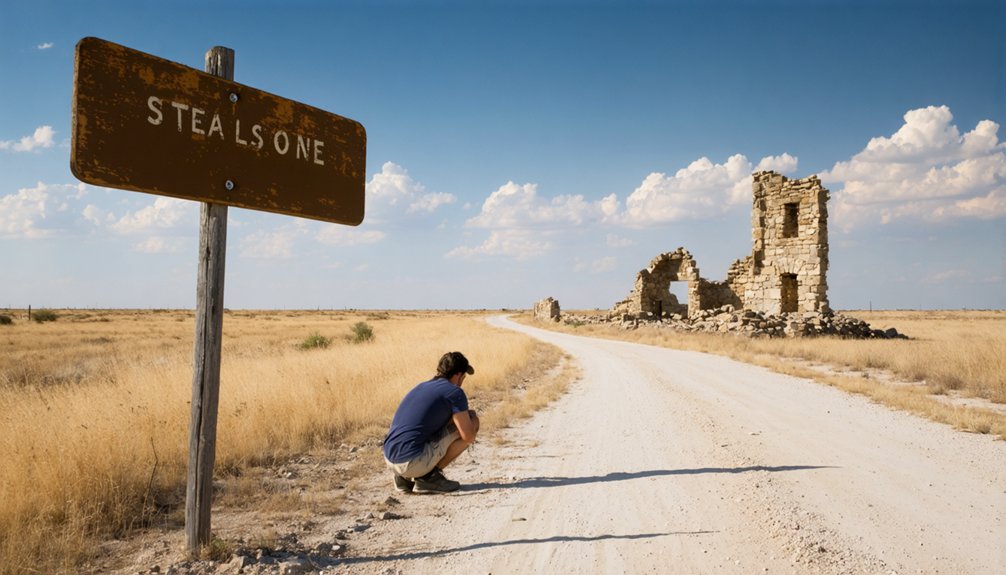
Stepping onto the grounds of Mustang Prairie means stepping into the living memory of 150 settlers who carved a community from raw Texas prairie after the Civil War.
You’re walking where Alabama, Tennessee, and Mississippi families built something from nothing — respect that.
Practice solid site etiquette: don’t touch or climb the cemetery markers, carry out everything you bring in, and stay on established access paths along Falls County Road 283.
Preservation efforts depend entirely on visitors like you treating the cemetery and historical marker as sacred ground rather than a backdrop for social media.
Places like this survive only when visitors choose reverence over content creation.
Photograph freely, but disturb nothing.
The freedom to explore places like Mustang Prairie exists only as long as travelers choose stewardship over carelessness.
Honor that responsibility.
Frequently Asked Questions
What States Did the Original Mustang Prairie Settlers Primarily Migrate From?
Like roots seeking water, they followed freedom’s call — you’ll find Mustang Prairie’s pioneer motivations trace back to Alabama, Tennessee, and Mississippi. These settlement patterns, forged between 1865–1870, carved bold new paths across Texas’s wild, untamed prairie.
How Many Residents Did Census Records Document in Mustang Prairie in 1870?
You’ll discover that census records documented over 150 residents in 1870, painting a vivid picture of historic demographics and population trends that’ll ignite your wanderlust for exploring Mustang Prairie’s beautifully untamed, freedom-filled past.
Why Was the Community Specifically Named Mustang Prairie by Early Settlers?
Early settlers named it Mustang Prairie because wild horses roamed freely across these vast lands. You’ll feel those settler motivations echoed in the untamed prairie ecology — a place where freedom wasn’t just desired, it galloped boldly before you.
When Did Mustang Prairie Begin Experiencing Population Decline Toward Urban Centers?
Once vibrant, Mustang Prairie began fading as population trends shifted during the late 19th century. You’ll find urban migration pulled residents away, trading wide-open prairie freedom for city life, leaving behind only whispers of a once-thriving community.
What Climate Zones Influence Ongoing Preservation Strategies at the Mustang Prairie Site?
Three distinct climate zones shape the climate impact on preservation techniques at Mustang Prairie. You’ll find varied precipitation patterns testing the site’s resilience, where hot summers, mild winters, and drought conditions continuously challenge efforts to protect this storied frontier legacy.
References
- https://atlas.thc.texas.gov/Details/5145011872/print
- https://www.ghosttowns.com/states/tx/mustangprarie.html
- https://www.thedailybeast.com/the-sordid-past-of-mark-cubans-new-texas-ghost-town-in-mustang-texas
- https://www.entrepreneur.com/business-news/photos-mark-cuban-owns-the-ghost-town-of-mustang-texas/468346
- https://www.texasescapes.com/CentralTexasTownsNorth/Mustang-Texas.htm
- https://www.journee-mondiale.com/en/mark-cuban-spent-2-million-on-a-ghost-town-in-2021-and-never-visited-it-once/
- https://www.businessinsider.in/thelife/news/i-visited-mark-cubanaposs-texas-ghost-town-and-aposmustangapos-was-more-barren-and-mysterious-than-i-ever-imagined/slidelist/106815648.cms
- https://www.wikiwand.com/en/articles/List_of_ghost_towns_in_Texas
- https://www.allacrosstexas.com/texas-ghost-town.php?city=Mustang
- https://www.statesman.com/story/news/local/2017/09/13/this-tiny-texas-town-with-a-boozy-sordid-history-is-yours-for-4-million/10394849007/