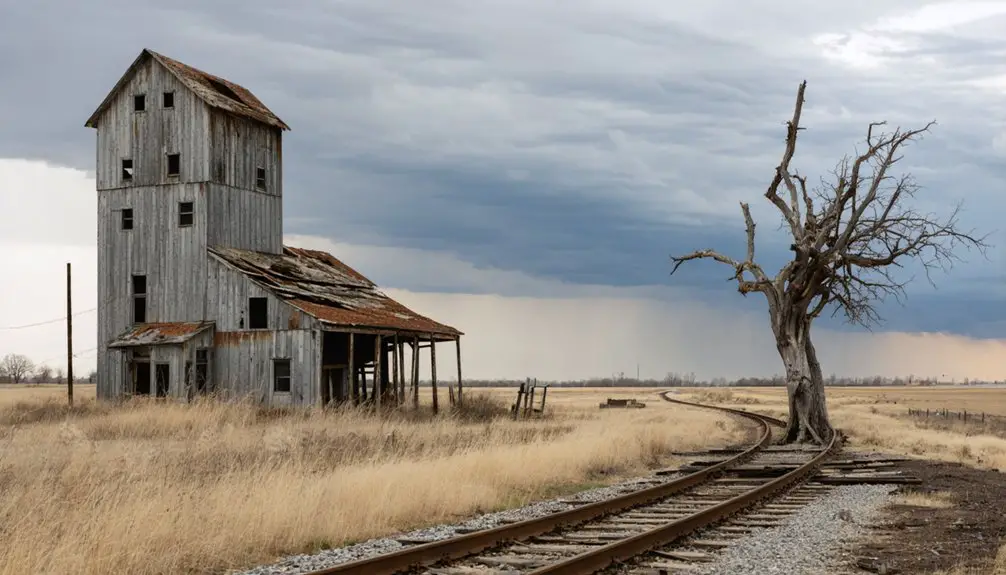
Planning a ghost town road trip to Philbrook, Minnesota means starting at a quiet stretch of Todd County Road 28, where a railroad community that once thrived in 1859 now leaves behind scattered foundations and open farmland. You’ll want to visit between May and September for the best road access and photography conditions. From Philbrook, you can extend your route southwest to Kimball, east to Spencer Brook, and finish at Forestville State Park — and there’s much more to uncover ahead.
Key Takeaways
- Philbrook, Minnesota, located on Todd County Road 28, serves as a natural anchor for a central Minnesota ghost town road trip.
- Visit between May and September for the best road access and photography conditions, especially during golden hour.
- Scattered foundations and open farmland mark the site where Philbrook thrived before its post office closed in 1964.
- Extend your route southwest to Kimball, then east to Spencer Brook, finishing at the preserved Forestville State Park.
- Plan your route in loops to efficiently cover multiple ghost towns while minimizing unnecessary backtracking.
How Philbrook Went From Railroad Stop to Ghost Town
When the Northern Pacific Railroad laid its tracks through Todd County, Philbrook was born as a promising rural stop called Riverside in 1859. Railroad history shaped everything here — settlers arrived, a post office opened in 1889, and the community evolved into a small but functioning hub.
A name change to Philbrook in 1890 resolved a duplicate post office conflict, signaling early growing pains.
But community evolution cut both ways. As larger towns absorbed commerce and farming centralized, Philbrook’s foundation quietly crumbled.
Saint James Catholic Church closed in 1962, the post office followed in 1964, and residents drifted elsewhere. No single disaster erased Philbrook — just the steady pull of progress leaving smaller stops behind.
Today, it stands as a quiet reminder of how quickly a railroad town can fade.
How To Get To the Philbrook Site on Todd County Road 28
Knowing Philbrook’s story makes the drive out there feel like more than just a scenic rural cruise — you’re retracing the same corridors that once connected this railroad stop to the wider world.
Traversing rural routes through Todd County is straightforward: head to Todd County Road 28 and look for the intersection near Red Pine Road. That’s your landmark. The site sits in section 33 of Villard Township, so a county map helps you orient yourself confidently.
You won’t find much — no bustling downtown, no restored depot — but the open farmland tells the story quietly.
While exploring local attractions in the area, consider pairing your visit with other central Minnesota ghost towns nearby. Pack water, fuel up beforehand, and embrace the freedom of an open rural road.
What Remains at the Philbrook Ghost Town Site Today
Arriving at the Philbrook site today, you’ll find a landscape that’s more absence than presence. The remnants found here whisper of historical significance, rewarding curious explorers willing to look closely.
Here’s what you’ll encounter:
- Todd County Road 28 – The same road that once connected this community still cuts through open farmland, offering your clearest orientation point.
- Scattered foundations – Subtle depressions and stone traces mark where structures once stood.
- Rural farmsteads – A few working farms nearby reflect the agricultural shift that gradually emptied the town.
- Open sky and silence – The absence itself becomes the experience, stretching across flat central Minnesota terrain.
Saint James Catholic Church closed in 1962, and the post office followed in 1964, leaving little behind but memory and countryside.
When Is the Best Time To Visit Philbrook and Nearby Ghost Towns?
Timing your visit to Philbrook and nearby ghost towns can make the difference between a rewarding exploration and a frustrating one. Late spring through early fall offers the clearest road access along Todd County Road 28, with May and September standing out as ideal months. You’ll avoid summer’s dense foliage, which can obscure remnants worth seeing.
For photography tips, arrive during golden hour — early morning or late afternoon light dramatically enhances weathered structures and open rural landscapes. Fall’s seasonal attractions are unbeatable, as Minnesota’s color-saturated foliage frames abandoned sites beautifully.
Avoid winter visits; snow buries details and rural roads become unpredictable. Weekdays keep crowds minimal, giving you uninterrupted exploration.
Pack layers regardless of season, since Todd County’s open terrain invites shifting weather that catches unprepared travelers off guard.
Which Ghost Towns Are Worth Adding to Your Philbrook Drive?
While you’re already making the drive to Philbrook along Todd County Road 28, it’s worth extending your route to include a handful of central Minnesota ghost towns that reward curious explorers.
- Kimball Ghost town — Wander streets where mid-1800s settlers once built ambitious lives, now swallowed by overgrown lots and silence.
- Spencer Brook — Tucked in Isanti County, this forgotten settlement offers weathered remnants surrounded by quiet farmland.
- Forestville — A preserved ghost town inside a state park, where restored buildings let history breathe again.
- Villard Township surroundings — Drive the backroads near Philbrook’s old Northern Pacific Railroad section, spotting abandoned farmsteads that tell their own quiet stories.
Each stop adds depth, turning your single-destination drive into a genuinely rewarding Minnesota exploration.
How To Build a Ghost Town Road Trip Route Starting From Philbrook
Philbrook makes a natural anchor for your ghost town route since Todd County Road 28 already puts you in the heart of central Minnesota’s forgotten communities. Start here, absorb the rural history embedded in this quiet unincorporated stretch, then build outward.
Head southwest toward Kimball to explore its mid-1800s ghost town attractions, where early settlement patterns mirror Philbrook’s own gradual fade. Then push east into Isanti County to walk Spencer Brook’s remnants.
Cap your route with a stop at Forestville State Park, where preserved pioneer infrastructure gives you a tangible contrast to the emptiness you’ve been driving through.
Plan your mileage in loops rather than straight lines so you’re never backtracking far, and you’ll cover central Minnesota’s forgotten landscape efficiently and on your own terms.
Frequently Asked Questions
Was Philbrook Ever Officially Incorporated as a Minnesota Town?
No, Philbrook never achieved official incorporation. You’ll find its Philbrook history reflects an unincorporated community with modest town demographics, quietly thriving via railroad access before gradually fading into Todd County’s rural landscape without formal municipal status.
Are There Any Guided Ghost Town Tours Available in Todd County?
Like hidden treasure, Todd County’s ghost towns await your discovery! No formal guided tours exist, but you can uncover local history by connecting with Todd County Historical Society for self-guided adventures through Philbrook’s forgotten landscapes.
What Wildlife or Nature Can Visitors Expect Around the Philbrook Site?
You’ll spot diverse wildlife sightings like deer, birds, and foxes roaming Todd County’s rural landscape. Explore nature trails winding through forests and wetlands, where central Minnesota’s untamed beauty surrounds Philbrook’s quiet, forgotten grounds.
Are There Any Lodging Options Near Philbrook for Overnight Road Trippers?
Like a traveler’s compass pointing north, you’ll find local accommodations in nearby Staples or Long Prairie. These towns offer cozy stays while you explore nearby attractions, making your Todd County ghost town adventure perfectly comfortable overnight.
Did Any Notable Historical Figures Ever Live in Philbrook?
The records don’t highlight any notable residents with significant historical impact in Philbrook. You’re exploring a quiet, agrarian ghost town where everyday settlers shaped its story, not famous figures—making your discovery feel uniquely personal and free.
References
- https://minnesotasnewcountry.com/this-story-of-a-central-minnesota-ghost-town-is-pretty-incredible/
- https://www.youtube.com/watch?v=5bCG6B2rzZY
- https://www.forgottenminnesota.com/2017/06/01/2017-05-spencer-brook-nearly-a-ghost-town/
- https://kids.kiddle.co/List_of_ghost_towns_in_Minnesota
- https://en.wikipedia.org/wiki/Philbrook
- https://www.youtube.com/watch?v=Naciyj05E1Y