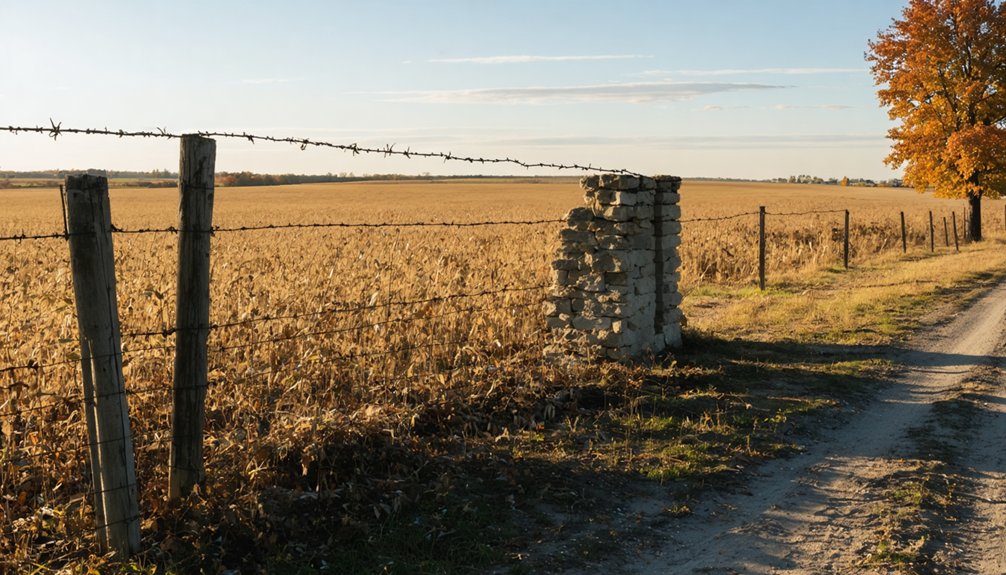
Planning a ghost town road trip to Piankashawtown starts about 4 miles north-northwest of Albion, Illinois, in Edwards County. You’ll navigate gravel roads that roughly trace the old Buffalo Trace trail, so bring sturdy boots, printed coordinates (38°25′52″N 88°05′45″W), and a physical map since cell service is spotty. There are no standing structures left, just open farmland hiding centuries of Piankashaw history beneath the soil. Keep exploring to uncover everything this forgotten landscape has to offer.
Key Takeaways
- Piankashawtown is located approximately 4 miles north-northwest of Albion, Illinois, near Section 16, town one south, range ten east.
- Expect gravel and unpaved muddy roads en route; bring a physical map or offline GPS due to spotty cell service.
- No structures remain at the site, which is now open farmland, though farmers have discovered historical artifacts like weapons and tools.
- Pack sturdy boots, water, a compass, and printed coordinates (38°25′52″N 88°05′45″W) before visiting the remote site.
- Combine your visit with nearby ghost town Palmyra, also in Edwards County, for a fuller Buffalo Trace historical road trip.
What Was Piankashawtown and Why It Disappeared
Tucked away in Edwards County, Illinois, Piankashawtown was once a thriving Piankashaw Indian village that sat along the ancient Buffalo Trace trail, a well-worn path connecting Vincennes, Kaskaskia, and St. Louis.
Buffalo, explorers, priests, hunters, traders, and soldiers all traveled this route, making the village a place of genuine importance.
Piankashaw history tells us the settlement remained significant as late as 1815. That year, Indian removal forced the Piankashaw people 30 to 40 miles northward, effectively erasing the community from the landscape.
Without its people, the village couldn’t survive. Settlers moved in, farmers plowed up weapons and tools left behind, and nature reclaimed what remained.
Today, you’ll find no buildings, no markers — just quiet agricultural land holding centuries of forgotten stories beneath its soil.
How to Get to the Piankashawtown Site From Albion, Illinois
Finding the Piankashawtown site means heading about 4 miles north-northwest of Albion, Illinois, through the rural roads of Edwards County.
You’ll want to start from Albion’s town center and steer northwest, roughly following the path of the old Buffalo Trace trail that once connected Vincennes, Kaskaskia, and St. Louis.
Road conditions out here are typical of rural Illinois farmland — expect gravel stretches and unpaved sections that can get muddy after rain.
Road conditions are classic rural Illinois — gravel stretches, unpaved sections, and mud-prone paths after any significant rainfall.
A few travel tips worth keeping in mind: bring a physical map or download offline GPS data before you go, since cell service gets spotty.
The site sits near Section 16, town one south, range ten east. There are no modern markers, so you’re heading toward open agricultural land where the village once stood.
What’s Actually Left at Piankashawtown Today?
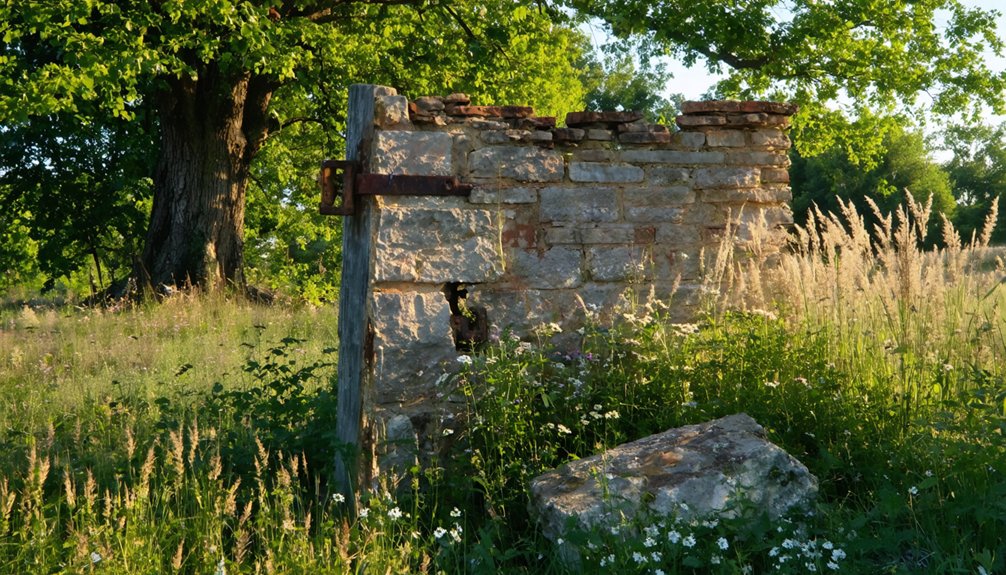
Once you arrive at the Piankashawtown site, don’t expect to find any standing structures, markers, or visible remnants of the village — it’s fundamentally open farmland now. The land has been under cultivation for generations, and farmers have long since turned the soil that once supported a thriving Piankashaw community.
That agricultural activity, however, has revealed the site’s historical significance in tangible ways. Artifacts found by plowing farmers include weapons, guns, and various implements that confirm this was once a village of considerable importance. Early settlers documented these discoveries extensively.
The Buffalo Trace trail that connected this settlement to Vincennes, Kaskaskia, and St. Louis remained visible into the 1880s, though those traces have since disappeared.
What you’re standing on holds far more history than its quiet surface suggests.
Which Ghost Towns Connect to the Same Buffalo Trace Trail?
Where does the Buffalo Trace trail lead beyond Piankashawtown? This ancient corridor once connected Vincennes, Kaskaskia, and St. Louis, threading through settlements that’ve since vanished just like Piankashawtown itself.
The Buffalo Trace connections run deep across Illinois, linking communities that shared the same fate — abandoned, forgotten, and swallowed by farmland.
Edwards County alone holds Palmyra as a companion ghost town worth exploring on your route. The historical significance of this trail stretches far beyond any single settlement. Buffalo, priests, soldiers, traders, and explorers all walked this same path you’re tracing today.
You’re not just visiting one lost town — you’re following a ghost highway that once defined an entire region.
Every mile reveals another layer of a civilization that moved, disappeared, and left only faint impressions behind.
What Should You Bring to Make the Piankashawtown Visit Worth It?
Knowing where the trail leads is only half the journey — showing up prepared is what separates a rewarding visit from a frustrating one.
Pack your ghost town essentials: sturdy boots for uneven agricultural terrain, a compass, printed coordinates (38°25′52″N 88°05′45″W), and water. Cell service out here isn’t guaranteed.
Come prepared: boots, compass, printed coordinates, and water. Cell service is unreliable — don’t count on it.
Bring a camera to document the landscape where Piankashaw Indians once built a significant village before their 1815 removal. A field notebook helps you record observations about terrain contours that might hint at former settlement patterns.
You won’t find historical artifacts displayed anywhere — farmers long ago plowed them up — but understanding that history sharpens what you’re seeing. The land itself tells the story if you’re paying attention.
Frequently Asked Questions
Are There Any Guided Tours Available for Piankashawtown Ghost Town Visits?
No official guided tours exist for Piankashawtown, but you’ll discover ghost town history through self-guided exploration. You can roam Edwards County’s rural roads freely, uncovering traces of this ancient Piankashaw settlement on your own remarkable adventure.
Is the Piankashawtown Site on Private or Publicly Accessible Land?
Like untamed land calling to free spirits, Piankashawtown’s historic significance sits on private agricultural land. You’ll find no public access guaranteed, yet ghost town legends of plowed-up weapons remind you freedom once thrived here.
What Is the Best Time of Year to Visit Piankashawtown?
Spring or fall offer the best season to visit Piankashawtown. You’ll enjoy milder weather considerations, avoiding summer’s oppressive heat and winter’s muddy rural roads, giving you the freedom to explore Edwards County’s agricultural landscape comfortably.
Are Metal Detectors Allowed at the Piankashawtown Archaeological Site?
Sure, just waltz right in with your metal detector — history won’t mind! But seriously, you’ll want to check Illinois’ metal detecting regulations first, as Piankashawtown’s historical significance demands you respect proper archaeological site protocols before digging.
Can Artifacts Found Near Piankashawtown Legally Be Kept by Visitors?
You can’t legally keep artifacts you find near Piankashawtown. Artifact ownership laws and legal considerations under the Archaeological Resources Protection Act mean discovered items belong to the government, so you’ll want to report your finds instead.
References
- https://en.wikipedia.org/wiki/Piankashawtown
- https://drloihjournal.blogspot.com/2022/09/lost-towns-of-illinois-piankashawtown-illinois.html
- https://www.youtube.com/watch?v=pLnLSAREPA0
- https://www.youtube.com/watch?v=z9kIKzVlz6I
- https://en.wikipedia.org/wiki/List_of_ghost_towns_in_Illinois
- https://drloihjournal.blogspot.com/p/lost-towns-of-illinois-series.html
- https://storymaps.arcgis.com/stories/6ea7c4b9b0594c039c2792d5be7456c9