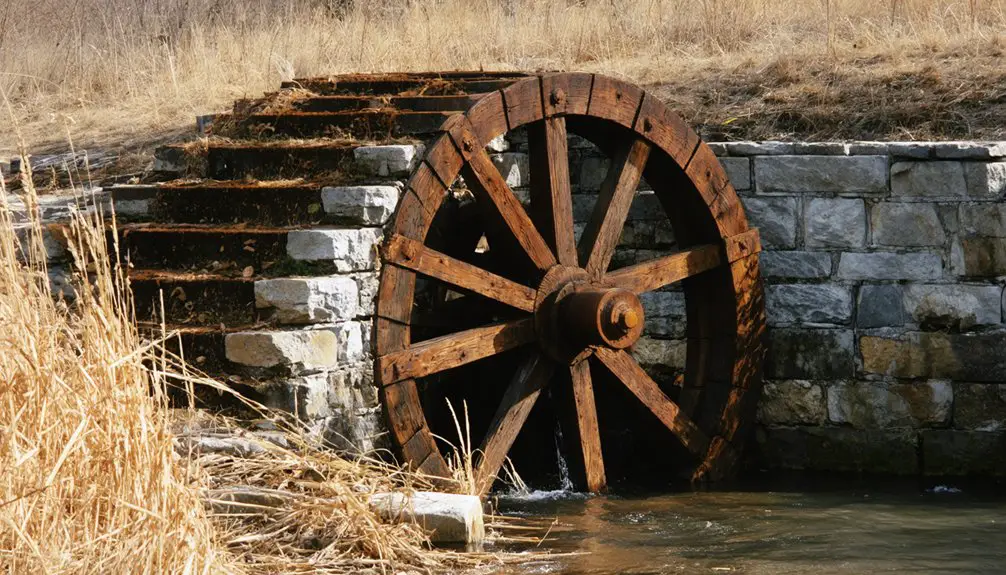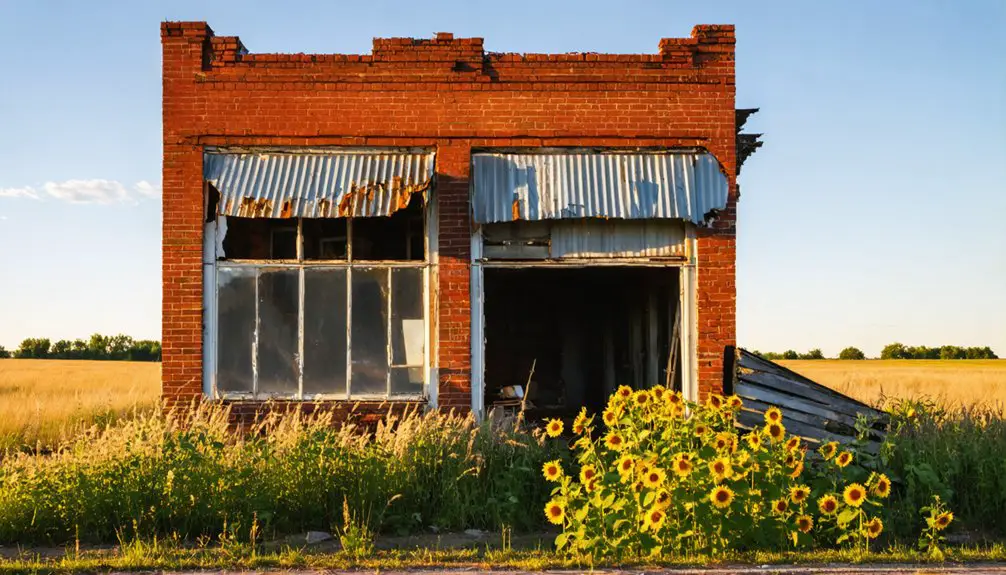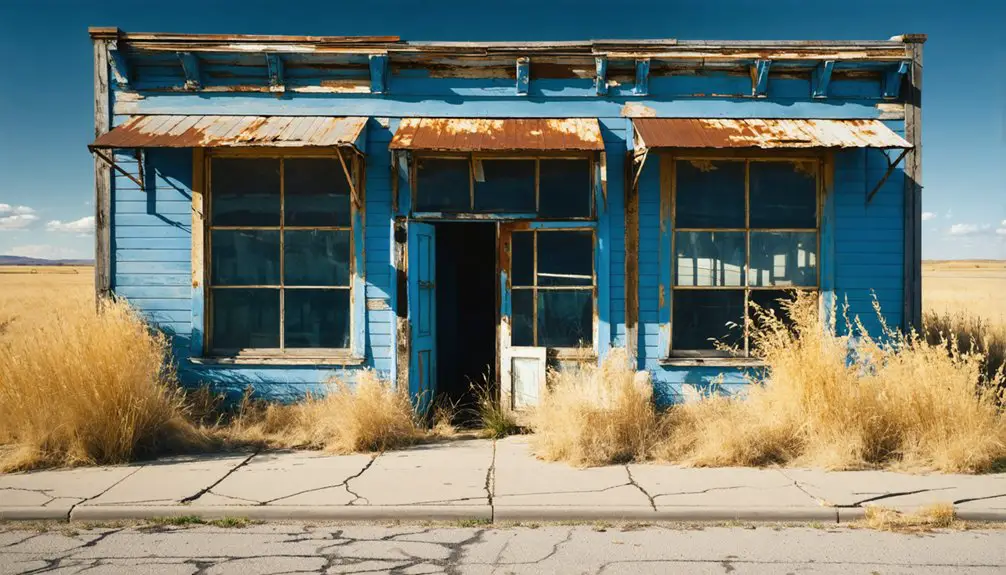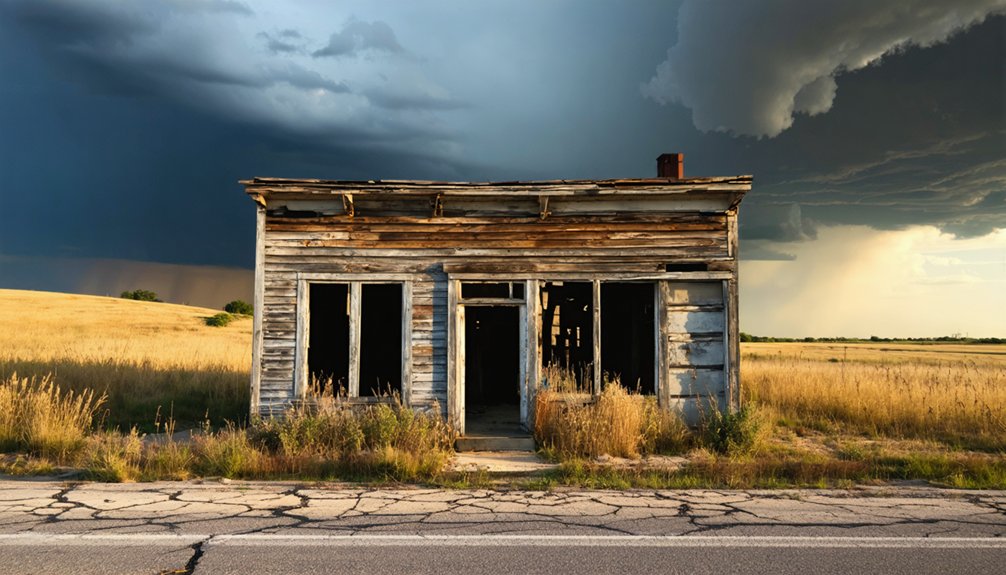
Planning a ghost town road trip to Skiddy, Kansas means following the old Missouri, Kansas & Texas Railway corridor to a town that quietly faded after the 1880s. You’ll find a weathered grain elevator, an 1882 Baptist Church, and crumbling foundations scattered across the prairie. Spring and fall offer the best conditions for exploring, and nearby ghost towns like Delavan and Burdick make perfect additions to your route. There’s far more history here than first meets the eye.
Key Takeaways
- Skiddy, Kansas, founded in 1869, features remnants like a grain elevator, 1882 Baptist Church, and crumbling foundations worth exploring.
- Visit nearby ghost towns Delavan, Six Mile, and Burdick in a single-day loop for a comprehensive historical experience.
- Late September through early November offers ideal weather, stunning fall colors, and optimal road and photography conditions.
- Pack sturdy shoes, layered clothing, a rain jacket, and a physical map, as cell service is unreliable in rural areas.
- Avoid gravel roads after heavy rain; consider a four-wheel-drive vehicle for navigating Geary County’s unpredictable rural terrain.
How a Railroad Town Named After a New York Magnate Became a Kansas Ghost Town
When you roll through the quiet stretch of central Kansas where Morris and Geary Counties meet, it’s hard to imagine that the near-empty settlement of Skiddy was once a bustling railroad town with hotels, general stores, and a thriving Baptist congregation.
W.E. Tomlinson and settlers from Pennsylvania and New Jersey founded it in 1869, naming it after Francis Skiddy, the New York railroad magnate who bankrolled the Missouri, Kansas & Texas Railway. Its railroad history made it the first train stop south of Junction City, complete with a water tower serving steep grades.
But economic decline hit hard after the 1880s. Growth stalled, farming shifted, and the railroad lost its grip. By 1953, even the post office closed, leaving Skiddy to fade into ghost town silence.
What’s Still Standing in Skiddy, Kansas Today?
Despite the decades of silence that have settled over Skiddy, a handful of structures still anchor the town’s story to the present.
You’ll spot the grain elevator standing beside the old Missouri, Kansas & Texas Railway tracks, a quiet sentinel over faded commerce. The 1882 Baptist Church, later repurposed as the post office, still holds its ground, carrying ghost stories and local legends within its weathered walls.
A grain elevator. A repurposed church. Silent witnesses to everything Skiddy once was.
West of the church, half-hidden in a grove of trees, a school-like building waits for curious explorers — its true purpose still unverified. Crumbling foundations and nearby cemeteries round out the landscape, each fragment whispering forgotten lives.
Walk these grounds, and you’re not just sightseeing — you’re reading a story that Kansas nearly let disappear entirely.
How to Get to Skiddy, Kansas
Tucked along the boundary between Morris and Geary Counties, Skiddy sits within easy reach of central Kansas road trippers willing to chase the quiet.
Follow the old Missouri, Kansas & Texas Railway corridor south from Junction City, and you’ll find yourself rolling into Skiddy’s remnants before you know it. The railroad impact on this stretch of Kansas is still visible in the landscape, with grain elevators standing beside forgotten tracks.
Pair your stop with nearby Delavan, Six Mile, or Burdick for a fuller day of exploration. Alcove Spring and Santa Fe Trail markers also sit within striking distance.
Understanding Skiddy history means traveling the same routes that once carried settlers, freight, and ambition through these plains. Drive it yourself, and you’ll feel exactly what that meant.
What You’ll Actually See When You Arrive in Skiddy
When you pull into Skiddy, you’ll immediately notice the grain elevator standing tall beside the old Missouri, Kansas & Texas Railway tracks, a quiet reminder that this town once bustled with railroad activity.
The 1882 Baptist Church, later repurposed as the town’s post office, still holds its ground and gives you a tangible connection to the community that once thrived here.
Walk the area and you’ll spot the weathered tracks and surrounding infrastructure that hint at Skiddy’s former role as the first train station south of Junction City.
Standing Structures Still Visible
Skiddy doesn’t offer much, but what remains tells a quiet, honest story about the town it used to be.
You’ll spot the grain elevator first, standing tall beside the old Missouri, Kansas & Texas Railway tracks. It’s weathered but upright, a working relic against an open Kansas sky.
Walk a little further and you’ll find the 1882 Baptist Church, one of Skiddy’s most compelling abandoned buildings, carrying real historical significance as a structure that later served as the town’s post office.
West of the church, tucked inside a grove of trees, sits a school-like building whose exact purpose nobody’s confirmed.
These aren’t polished landmarks with information plaques. They’re raw, unrestored survivors, and that’s exactly what makes exploring them feel worth the detour.
Railroad Remnants Nearby
The railroad’s presence in Skiddy isn’t subtle — you’ll notice it almost immediately. The grain elevator standing beside the old Missouri, Kansas & Texas Railway tracks tells a quiet but powerful story of railroad history and economic impact on this once-thriving settlement.
Francis Skiddy’s financial backing built this line, turning the town into the first water stop south of Junction City, where steam engines paused to tackle the demanding grades ahead. That practical necessity gave Skiddy its early purpose and identity.
Today, the tracks and elevator remain as honest reminders of what once drove commerce through this stretch of central Kansas. Walk the area freely, take your photos, and let the silence do the talking — this landscape hasn’t forgotten what railroads once meant to communities like this one.
Best Time to Visit Skiddy and What to Bring
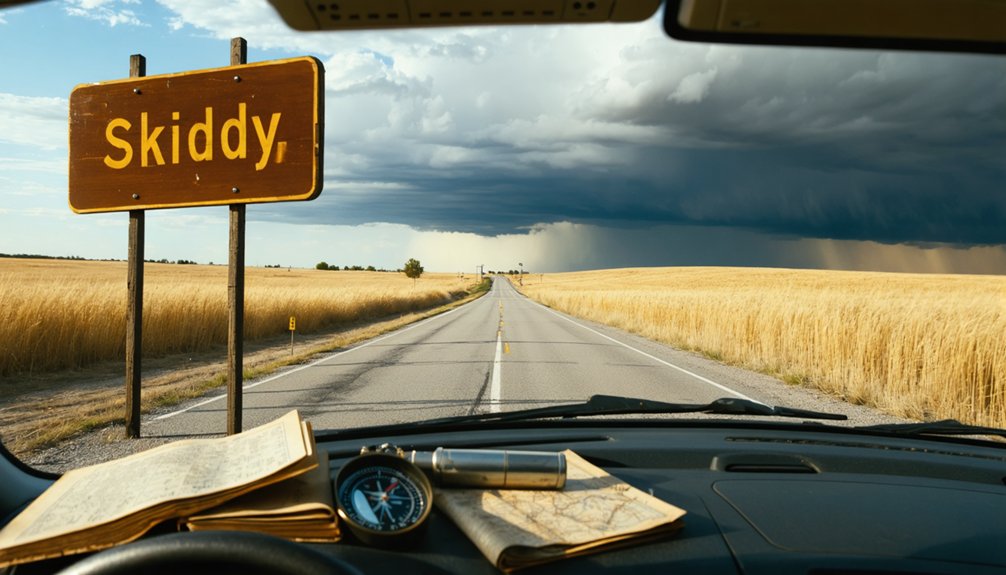
Spring and fall offer the best conditions for exploring Skiddy, when mild temperatures make walking the grounds comfortable and the light hits the old grain elevator and 1882 Baptist Church just right for photos.
You’ll want to pack sturdy shoes, water, a camera, and a paper map since cell service out in central Kansas can be unreliable.
Watch the weather closely before you go, as dirt and gravel roads in the area can turn slick and impassable after heavy rain.
Ideal Visiting Seasons
Late spring and early fall are your best bets for exploring Skiddy, when mild temperatures and lower humidity make wandering around crumbling foundations and overgrown lots far more comfortable.
April through May offers blooming prairie landscapes and active local wildlife, giving the abandoned townsite an unexpectedly vibrant backdrop.
September and October bring cooler air and stunning fall colors that make photographing the 1882 Baptist Church and grain elevator genuinely rewarding.
Summer visits are possible but brutal — Kansas heat and humidity can turn a casual exploration into an exhausting ordeal.
Winter strips the vegetation back, revealing hidden structural details, though frozen ground and bitter winds limit your mobility.
Checking for any seasonal events in nearby Morris and Geary Counties lets you combine your ghost town adventure with broader regional discoveries.
Essential Gear To Pack
Packing smart makes the difference between a rewarding ghost town exploration and a miserable slog through Kansas prairie. Bring sturdy boots since you’ll navigate uneven ground near crumbling foundations and overgrown lots.
Kansas weather shifts fast, so layer your clothing and toss a rain jacket into your bag.
For photography tips, pack a wide-angle lens to capture the grain elevator against open skies and a polarizing filter to cut prairie glare.
Shoot during golden hour for dramatic shadows across the 1882 Baptist Church.
Your camping essentials should include water, sunscreen, insect repellent, and a basic first aid kit since services are nonexistent here.
Carry a physical map because cell coverage gets unreliable in Morris County’s rural stretches. A charged power bank keeps your camera and GPS running throughout the day.
Weather And Road Conditions
Kansas weather doesn’t negotiate, so timing your visit to Skiddy can make or break the experience.
Spring and fall offer the most comfortable weather patterns, with mild temperatures perfect for exploring crumbling foundations and aging structures.
Summer heat in central Kansas turns brutal fast, while winter brings icy, unpredictable roads that compromise road safety considerably.
Skiddy sits on the Morris and Geary County boundary, and rural county roads can turn dangerously muddy after rain.
Always check local forecasts before heading out, and avoid gravel roads immediately following heavy precipitation.
A four-wheel-drive vehicle gives you the flexibility you’ll want when conditions shift unexpectedly.
Late September through early November delivers golden light, dry roads, and cooler air — ideal conditions for photographing the grain elevator and 1882 Baptist Church without battling heat or mud.
Ghost Towns Worth Combining With a Skiddy Visit
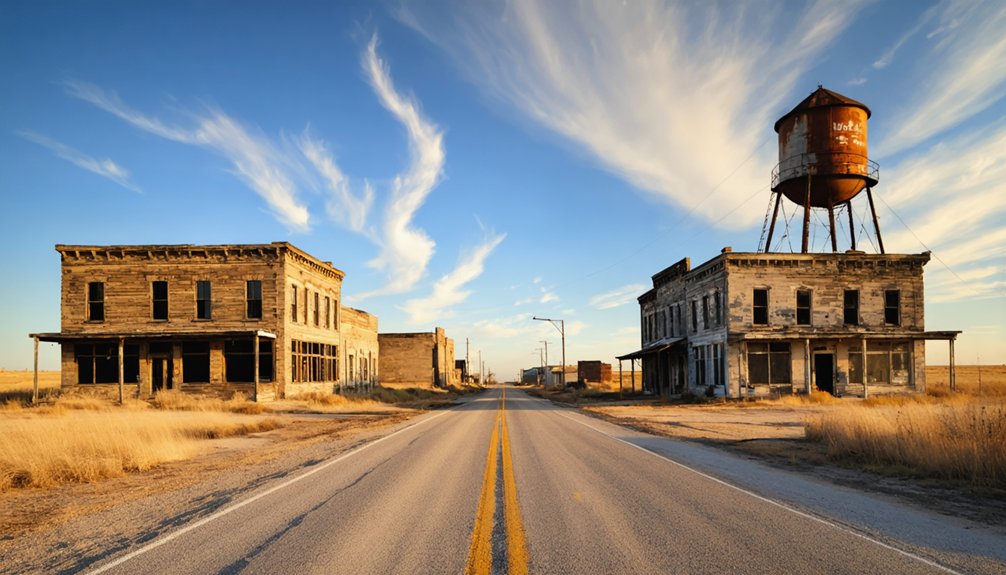
Since Skiddy sits in the heart of central Kansas, it pairs naturally with several other ghost towns scattered across the region. Delavan, Six Mile, and Burdick all sit within reasonable driving distance, making a single-day loop entirely doable.
Wreford and Pilsen offer another compelling route, connecting you to similar stories of railroad decline and abandoned communities.
For ghost town photography, the varying architecture across these stops gives you a richer visual narrative than any single site could deliver. You’re capturing layers of history in one trip.
Alcove Spring, though not a ghost town, adds meaningful context to the Santa Fe Trail era.
Alcove Spring breathes life into Santa Fe Trail history, grounding your ghost town journey in a deeper regional story.
These combined visits deepen your appreciation for historical preservation efforts across the region and make your road trip far more rewarding.
Historic Kansas Sites and Santa Fe Trail Stops Near Skiddy
The Santa Fe Trail cuts through this part of Kansas like a thread connecting centuries, and if you’re already making the drive to Skiddy, you’d be foolish not to follow it a little further.
Alcove Spring sits nearby, one of Kansas’s most significant historic landmarks, where westward emigrants once rested and carved their names into stone. You’ll still find those carvings today.
The trail history embedded in this region runs deep — wagon ruts, river crossings, and forgotten campsites dot the landscape between Morris and Geary Counties.
Pair these stops with Skiddy’s railroad remnants and you’ve built yourself a genuinely layered road trip, one that moves through Indigenous land, pioneer migration, and agricultural collapse all within a single afternoon’s drive.
Before You Go: Safety at Abandoned Sites
Ghost town structures have stood without maintenance for decades. Floors, stairs and roof timbers fail without warning, and a building that looks solid from outside may not hold your weight. Stay out of standing structures unless the site is actively maintained and open to visitors.
Mine workings are the more serious hazard. Vertical shafts can be hundreds of feet deep, are often unfenced, and may be hidden by brush or capped with rotted boards. Never enter an adit, tunnel or shaft: abandoned workings can hold oxygen-poor or toxic air that gives no warning before you lose consciousness.
Enclosed spaces with rodent droppings carry a risk of hantavirus, which is contracted by breathing contaminated dust. Do not sweep or stir up dust inside old cabins and outbuildings.
Cell coverage at these sites is usually poor or absent. Tell someone your route and expected return time, and carry more water than you think you need.
Frequently Asked Questions
Why Was Skiddy Temporarily Renamed Camden in 1879?
You’ll find Skiddy’s temporary identity as Camden stems from an unfulfilled town hall promise in March 1879. This name change carries historical significance, reminding you that broken commitments once reshaped this free-spirited Kansas community’s very identity.
Who Was Francis Skiddy, and Why Was the Town Named After Him?
You’ll find that Francis Skiddy was a New York railroad magnate who funded the Missouri, Kansas & Texas Railway. His financial backing earned him a town legacy, with settlers naming Skiddy, Kansas in his honor.
Did Skiddy Ever Have a School, and Where Was It Located?
You’ll uncover one of Kansas’s most mysterious school history secrets — a hidden school-like building tucked west of the church in a grove of trees, its community impact and true purpose still unverified today.
When Did Skiddy’s Post Office Officially Close Its Doors?
You’ll find that Skiddy’s post office history ended on October 31, 1953, when its doors officially closed. Closure reasons tie directly to significant depopulation, marking a somber milestone in this once-thriving railroad town’s quiet fade into ghost town status.
How Many Residents Did Skiddy Have During Its Peak Population?
You’ll find that Skiddy’s peak population reached around 120 residents in the early 1880s. After that, this ghost town never grew again, and you can witness the haunting effects of population decline throughout its abandoned streets.
References
- https://legendsofkansas.com/skiddy-kansas/
- https://www.youtube.com/watch?v=Q2rQk20qnKo
- https://www.legendsofamerica.com/ks-ghosttowns/
- https://www.youtube.com/watch?v=YQHVP21sYC8
- https://www.onlyinyourstate.com/trip-ideas/kansas/kansas-ghost-town-road-trip
- https://legendsofkansas.com/kansas-ghost-town-list/
- https://www.travelks.com/kansas-magazine/articles/post/exploring-kansas-forgotten-roads/
- https://www.youtube.com/watch?v=Aa-_f4ThouQ