Planning a ghost town road trip to Pisek, Texas means heading off Farm to Market Road 1291 to explore what’s left of a once-thriving Czech and German immigrant community built around the Missouri, Kansas and Texas Railway. You’ll find scattered foundations, overgrown rail beds, and historical markers telling the story of a town that faded after 1941. Pack water, wear sturdy shoes, and visit in spring or fall—there’s far more to this forgotten settlement than you’d expect.
Key Takeaways
- Pisek is located about three miles from Lone Oak via County Road 1291, following the old Katy Railroad right-of-way as a landmark.
- Pack water, sunscreen, sturdy shoes, and a paper map, as facilities are absent and cell service may be unreliable.
- Spring and fall offer the best visiting conditions, with comfortable temperatures, wildflowers, and scenic vegetation.
- The site features railroad remnants, scattered foundations, and historical markers narrating Pisek’s Czech and German immigrant heritage.
- Nearby ghost towns like Alleyton, Frelsburg, and Nada make excellent additions for a fuller Colorado County road trip.
What Is Pisek, Texas and Why Do People Still Come Here?
Tucked away in northern Colorado County, Pisek, Texas is a ghost town that once thrived as a tight-knit community of Czech and German immigrants who settled along the Missouri, Kansas and Texas Railway in the late 19th century. They built a life rooted in agriculture, local cuisine, and community events that reflected their rich cultural heritage.
After 1941, residents gradually moved toward Lone Oak, leaving behind only traces of foundations and railroad right-of-way. Yet people still come here. You’ll find a rawness and authenticity that polished tourist destinations can’t offer.
It’s a place where history feels tangible beneath your feet. If you crave open roads, honest stories, and the freedom to explore Texas on your own terms, Pisek belongs on your map.
The Czech and German Immigrants Who Built Pisek Along the Railroad
When Czech and German immigrants arrived in northern Colorado County during the late 19th century, they didn’t just settle the land — they organized their lives around the Missouri, Kansas and Texas Railway, using it to ship crops, receive supplies, and connect with neighboring communities.
They built Pisek from the ground up, shaping a tight-knit agricultural community that reflected their immigrant stories and traditions.
Their cultural heritage ran deep, influencing everything from farming practices to community gathering spots. You can still sense that determination when you visit the site today.
These weren’t passive settlers — they were builders who carved purpose out of open Texas land. Understanding their contributions gives your road trip genuine historical weight, transforming a simple visit into a meaningful encounter with early immigrant Texas life.
How Pisek Went From a Railroad Town to a Ghost Town?
Pisek’s decline didn’t happen overnight — it unraveled gradually as the forces that once sustained it began working against it. Shifting farming practices reduced dependence on the Missouri, Kansas and Texas Railway, cutting the town’s economic lifeline.
As transportation patterns evolved, residents found Lone Oak more practical, and by 1941, most had relocated. Farm to Market Road 1291 replaced the railroad as the primary route, pulling daily life further away from Pisek’s original core.
What you’ll find today are quiet remnants — foundations, rail right-of-way traces, and reclaimed land — each carrying real cultural significance for understanding Czech and German settlement in Texas.
Historical preservation efforts occasionally mark the site, ensuring Pisek’s story isn’t entirely swallowed by time. Walking this ground, you’re reading a chapter of Texas history written in absence.
What You’ll Still Find at the Pisek Site Today?
When you visit the Pisek site today, you’ll still spot the old railroad right-of-way cutting through the overgrown landscape, a quiet reminder of the Missouri, Kansas and Texas Railway that once defined the town.
Scattered foundations peek through the vegetation, giving you a tangible sense of where buildings once stood and lives were lived.
Keep an eye out for historical markers nearby that help you piece together the story of this forgotten Czech and German settlement.
Visible Railroad Right-Of-Way
Though little remains of the once-thriving Czech and German settlement, Pisek still holds onto one of its most defining features — the visible railroad right-of-way that once connected this small community to the broader Missouri, Kansas and Texas Railway line.
Walking this corridor puts you directly inside living railroad history and the immigrant stories that shaped early Texas.
Look for these four key features along the right-of-way:
- Worn rail bed impressions — subtle depressions marking where trains once rolled
- Weathered wooden posts — remnants of original line infrastructure
- Cleared vegetation corridors — nature’s outline of the former track path
- Scattered ballast stone — original gravel used beneath the rails
You’re fundamentally tracing the footsteps of Czech and German settlers who built their lives around this line.
Old Foundations And Remnants
Beyond the railroad right-of-way, scattered foundations and structural remnants quietly tell the rest of Pisek’s story. As you explore this ghost town, you’ll notice concrete slabs and stone outlines marking where homes and community buildings once stood. These remnants ground you in the reality of what Czech and German settlers built here generations ago.
Walk carefully through the overgrown terrain, and you’ll spot partially buried railroad remnants embedded in the soil alongside foundation edges. Vegetation has reclaimed most of the land, but sharp eyes catch details others miss — a broken post, a sunken perimeter, a weathered pile of stones.
There’s no guided path, so you move freely at your own pace, piecing together Pisek’s quiet history through every fragment the earth hasn’t yet swallowed.
Historical Markers Nearby
Scattered along the edges of the Pisek site, historical markers and informational signs offer the clearest window into what once stood here. They connect you directly to the cultural heritage and immigration stories that shaped this corner of Colorado County. Don’t rush past them—each one rewards careful reading.
Here’s what to look for:
- Settlement plaques detailing Czech and German immigrant arrivals along the Missouri, Kansas and Texas Railway
- Railroad heritage signs marking the former Katy Railroad right-of-way boundaries
- Agricultural history panels explaining how early residents farmed and traded goods
- Community origin markers referencing Pisek’s alternate names, including Lone Oak and Sandy Point
Photograph every marker you find. These installations carry decades of preserved history you won’t discover anywhere else nearby.
How To Get To Pisek From Lone Oak and Nearby Towns?
If you’re starting from Lone Oak, you’ll find Pisek just a short drive away via County Road 1291, which serves as the primary access route to the ghost town site.
You can follow the old Katy Railroad right-of-way as a navigational landmark, keeping an eye out for the remnants that signal you’re approaching the former settlement.
Nearby towns along the route offer good stopping points to fuel up before heading out, since Pisek itself has no facilities waiting for you on arrival.
Driving From Lone Oak
Reaching Pisek from Lone Oak is straightforward, as the ghost town sits just three miles away via County Road 1291. You’ll follow a route steeped in railroad heritage and agricultural history, making the short drive itself part of the experience.
Here’s how to make the most of your approach:
- Start at Lone Oak’s center and head toward County Road 1291 heading west.
- Watch for the BNSF railroad right-of-way, marking the former Katy Railroad corridor.
- Park off the main road near the railroad right-of-way for safe, easy access.
- Arrive during daylight hours to spot foundations, old rail posts, and vegetation-covered remnants clearly.
The drive takes under ten minutes, but the layers of history you’ll uncover make it absolutely worthwhile.
Nearby Town Access Routes
While the short drive from Lone Oak makes Pisek easily accessible, you don’t have to start your journey there. Several nearby towns offer convenient entry points, each adding its own flavor to your road trip experience.
From Columbus, head north along County Road 1291, stopping to sample local cuisine at small-town diners along the way. Eagle Lake and Weimar also provide straightforward routes into Colorado County’s back roads, connecting you to Pisek’s ghost town remnants without complicated navigation.
Each approach rewards you with open Texas landscapes and glimpses of historical preservation efforts scattered throughout the region.
Whether you’re coming from the east or west, Farm to Market Road 1291 ultimately becomes your final corridor, delivering you directly to Pisek’s forgotten railroad right-of-way.
Best Time of Year To Visit Pisek?
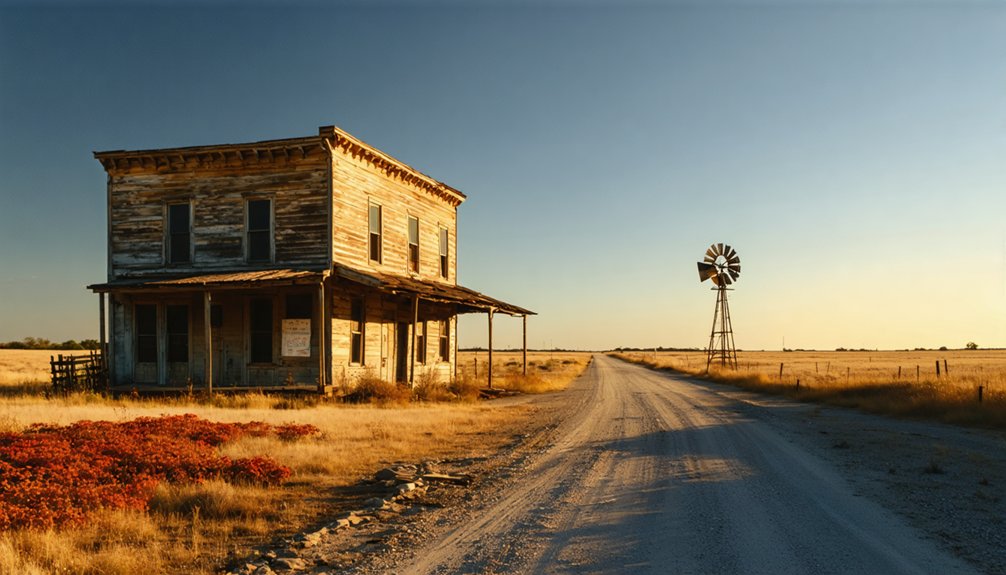
Spring and fall offer the best conditions for exploring Pisek, when mild temperatures make it comfortable to walk the old railroad right-of-way and examine the remaining foundations. You’ll encounter vibrant local flora and active wildlife sightings during these seasons, making each visit uniquely rewarding.
- Spring (March–May): Wildflowers bloom across reclaimed settlement areas, and migratory birds pass through regularly.
- Fall (September–November): Cooler air and golden vegetation create ideal walking and photography conditions.
- Summer (June–August): Intense Texas heat makes visits challenging; arrive early morning if you must go.
- Winter (December–February): Sparse vegetation actually improves visibility of foundations and railroad remnants, though cold winds can be harsh.
Plan your timing wisely, and Pisek rewards you with genuine solitude and raw historical atmosphere.
What To Bring Before You Drive Out to Pisek?
Since Pisek offers no formal facilities, you’ll want to pack smart before heading out. Bring plenty of water, snacks, and sunscreen since there’s nothing available on-site.
Pack water, snacks, and sunscreen before visiting Pisek — no facilities exist on-site to keep you comfortable.
If you’re sampling local cuisine from nearby Lone Oak before the drive, pack any leftovers — you won’t find refreshments at the ghost town.
Wear sturdy walking shoes since the terrain’s uneven and vegetation has reclaimed much of the former settlement. Carry a camera to capture remnants of historic architecture, including old foundations and railroad right-of-way sections still visible across the landscape.
A paper map or downloaded offline route helps since cell service may be unreliable along County Road 1291.
Bring a flashlight too, and always plan to arrive during daylight hours for the safest, most rewarding experience.
Other Colorado County Ghost Towns To Visit While You’re Out There
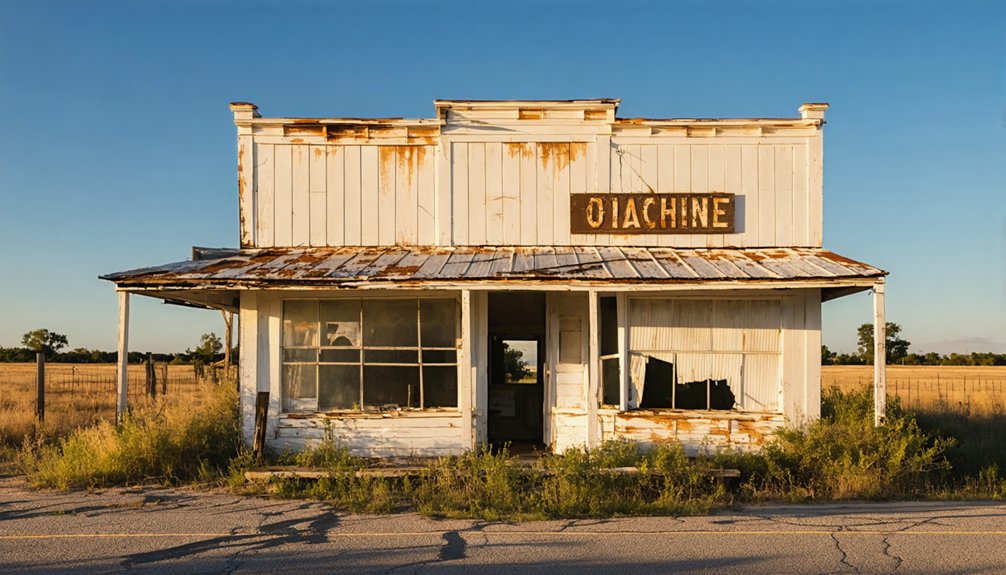
Colorado County hides more forgotten settlements beyond Pisek, making it worth extending your road trip before heading home. Pack snacks featuring local cuisine from nearby towns to fuel your exploration, and keep your eyes open for wildlife observation opportunities along the rural backroads.
- Garwood – A quiet stop with historical railroad ties similar to Pisek’s own past.
- Nada – A Czech immigrant settlement that shares cultural roots with Pisek’s heritage.
- Frelsburg – A German-founded community offering preserved landmarks and old church grounds.
- Alleyton – One of Colorado County’s oldest settlements, rich with Civil War-era history and scenic surroundings.
Each location adds depth to your journey, giving you a fuller picture of how immigrants shaped this Texas region.
Frequently Asked Questions
Is There an Entry Fee to Visit the Pisek Ghost Town Site?
Over 90% of Texas ghost towns are free to explore! You don’t pay an entry fee at Pisek—it’s one of those rare historical preservation gems and tourist attractions where your freedom to roam costs nothing.
Are Pets Allowed When Visiting the Pisek Ghost Town Location?
No official pet policies or animal restrictions exist for Pisek’s open site, so you’re free to bring your furry companion! Just keep them leashed, stay safe, and explore this historic ghost town together responsibly.
Can You Legally Take Artifacts or Relics Found at Pisek?
You shouldn’t remove artifacts without checking local artifact regulations first. Texas relic collection rules protect historical sites, so respect the land, leave what you find, and preserve Pisek’s fascinating heritage for future explorers to discover and enjoy.
Is the Pisek Site Privately Owned or Open to the Public?
The knowledge doesn’t confirm if Pisek’s privately owned or publicly accessible, so you’ll want to verify before visiting. You can still explore historic preservation efforts and enjoy photography opportunities while respecting any posted boundaries you encounter.
Are There Any Nearby Accommodations for Overnight Stays Near Pisek?
Like a pioneer’s campfire lighting the frontier, you’ll find nearby camping sites and local dining options around Lone Oak, offering the freedom to rest, refuel, and reconnect before exploring Pisek’s timeless, windswept remnants.
References
- https://texasghosttours.com/2025/04/22/haunted-highways/
- https://discovertexasoutdoors.com/places/pisek-texas-a-ghost-town-born-of-railroads-and-czech-heritage/
- https://www.tripadvisor.com/Attractions-g28964-Activities-c47-t14-Texas.html
- https://www.texasescapes.com/CentralTexasTownsSouth/Pisek-Texas.htm
- https://en.wikipedia.org/wiki/Pisek
- https://dallasexpress.com/state/road-trip-across-texas-explore-13-of-the-spookiest-ghost-towns/
- https://texashillcountry.com/hill-country-ghost-town-road-trip/
- https://placeandsee.com/pisek-texas-united-states
- https://www.texasescapes.com/Texas-Ghost-Towns-A-to-Z.htm
- https://www.youtube.com/watch?v=IECzqQ-jIEM