Port Sullivan, Texas, is a ghost town that’s equal parts haunting and historic. You’ll find the crumbling concrete locks of the Brazos River, a weathered cemetery with 99 graves, and the echoes of a cotton port that once peaked at 1,423 residents before railroads bypassed it in the 1870s. Visit in spring or fall for the best conditions. Plan your route from Hearne, and there’s far more to this forgotten river town than first meets the eye.
Key Takeaways
- Port Sullivan, founded in 1835, was Texas’s northernmost steamboat stop on the Brazos River, peaking at 1,423 residents before railroad bypasses caused rapid decline.
- Key sites include the Port Sullivan Cemetery with 99 graves, abandoned concrete locks, a historic marker near Highway 79 bridge, and Brazos River bluffs.
- Visit during spring or fall for mild temperatures; avoid summer’s extreme heat and humidity for comfortable outdoor exploration.
- From Hearne, travel 6 miles north on Highway 6, then west on F.M. 485; call Charles King at (254) 697-8963 for guided tours.
- Combine your visit with nearby Hearne, Calvert, and the Milam County Museum in Cameron for broader regional historical context.
What Makes Port Sullivan Worth the Drive?
Though it’s easy to dismiss a ghost town with nothing left standing, Port Sullivan defies that logic. Founded in 1835, this once-thriving cotton port peaked at 1,423 residents before railroads stripped it of purpose.
Port Sullivan once held 1,423 souls. The railroad took them all.
You’ll find freedom here — no crowds, no admission fees, just open land and honest history.
Walk the Port Sullivan Cemetery, where local legends rest beneath weathered stones, including Thomas J. Anderson, Texas’s first Mason. Examine the abandoned concrete locks, ruins of a failed navigation dream built decades too late.
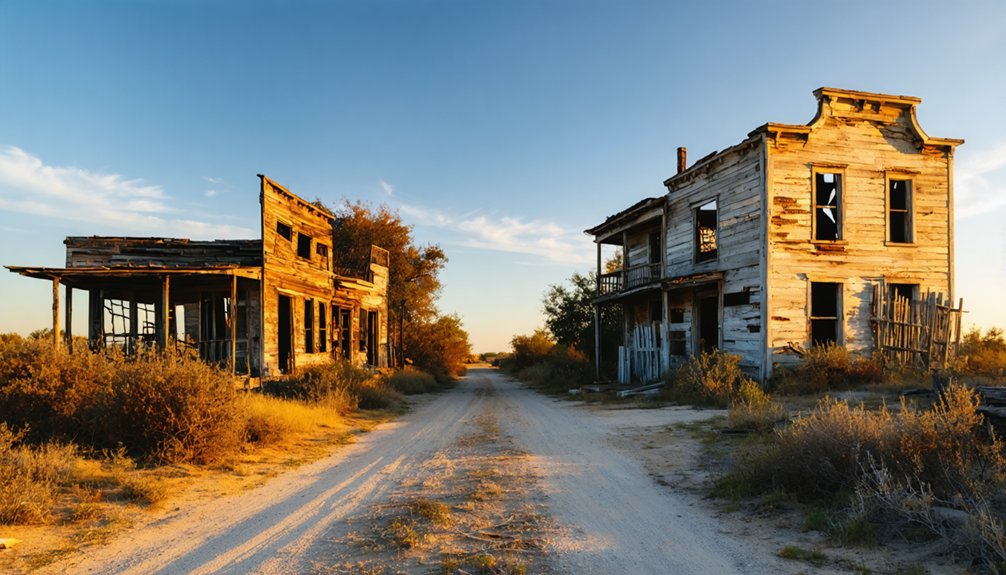
Though no historic architecture survives intact, the landscape itself tells the story — a western Brazos River bluff that once hosted steamboats, merchants, and ambition.
Port Sullivan rewards curious travelers who prefer raw, unfiltered history over polished tourist attractions.
How Port Sullivan Went From Steamboat Capital to Ghost Town
Once you understand Port Sullivan’s rise, its fall hits harder — in the 1850s, this was the northernmost steamboat stop on the Brazos River, and cotton trade made it one of Texas’s most crucial inland ports.
When railroad lines bypassed the town in the 1870s, nearby Hearne and Calvert claimed that commerce, and Port Sullivan’s population cratered from 1,423 to just 123 within a decade.
The Civil War hadn’t killed it, but Reconstruction did, leaving behind little more than silence and a cemetery by the 1890s.
Steamboat Trade Dominance
How did a thriving river port transform into a forgotten stretch of Texas countryside? When you picture Port Sullivan in its prime, you’re seeing a place where river commerce ruled everything.
Founded in 1835, it commanded the Brazos River’s northernmost navigable point, making it an essential hub along trade routes connecting inland Texas to coastal markets.
Railroad Bypass Triggers Decline
When the railroad lines bypassed Port Sullivan in the 1870s, the town’s fate was sealed almost overnight. River commerce, once the lifeblood of this thriving settlement, suddenly meant nothing. Merchants packed up, families relocated, and the bustling energy that had defined one of Texas’s most promising early settlements simply evaporated.
You can almost feel the silence descending as you research this era. By 1880, the population had collapsed from 1,423 to just 123 residents. Nearby Hearne and Calvert, now connected by rail, absorbed everything Port Sullivan had built.
The town that survived the Civil War couldn’t survive economic irrelevance. Freedom of movement, ironically, destroyed it — people followed opportunity elsewhere, leaving behind only memory, a cemetery, and crumbling concrete locks along the Brazos.
Reconstruction Seals Fate
The railroad’s arrival in nearby towns didn’t just slow Port Sullivan — it strangled it. Reconstruction brought no relief. With river commerce dying and political instability gripping Texas, residents couldn’t rebuild what war and economic abandonment had already broken.
You can almost feel the exodus — families loading wagons, merchants shuttering storefronts, dreams dissolving into river mud.
By 1880, the population had collapsed from 1,423 to just 123 souls. The 1890s swallowed what remained.
Hearne and Calvert, flush with rail money, inherited Port Sullivan’s future.
What’s left today stands as a quiet monument to historic preservation — a cemetery holding 99 graves, crumbling concrete locks, and a historical marker.
The town didn’t just fade; it surrendered, leaving you to piece together its story through silence.
What’s Left to See at Port Sullivan Today?
Although little remains of what was once a thriving river town, Port Sullivan still offers a handful of haunting remnants worth your time. You’ll find the cemetery standing as the most powerful historical landmark on the site, holding 99 documented graves, including that of Thomas J. Anderson, Texas’s first Mason. Local legends echo through those weathered headstones if you’re willing to listen.
Wander further and you’ll discover the abandoned concrete locks built by the U.S. Army Corps of Engineers in the 1910s-1920s — silent ruins of an ambitious river navigation project that never paid off.
A historic marker near the Highway 79 bridge anchors the experience. These fragments won’t take long to explore, but they’ll stay with you considerably longer than the drive out.
The Port Sullivan Cemetery and Who’s Buried There
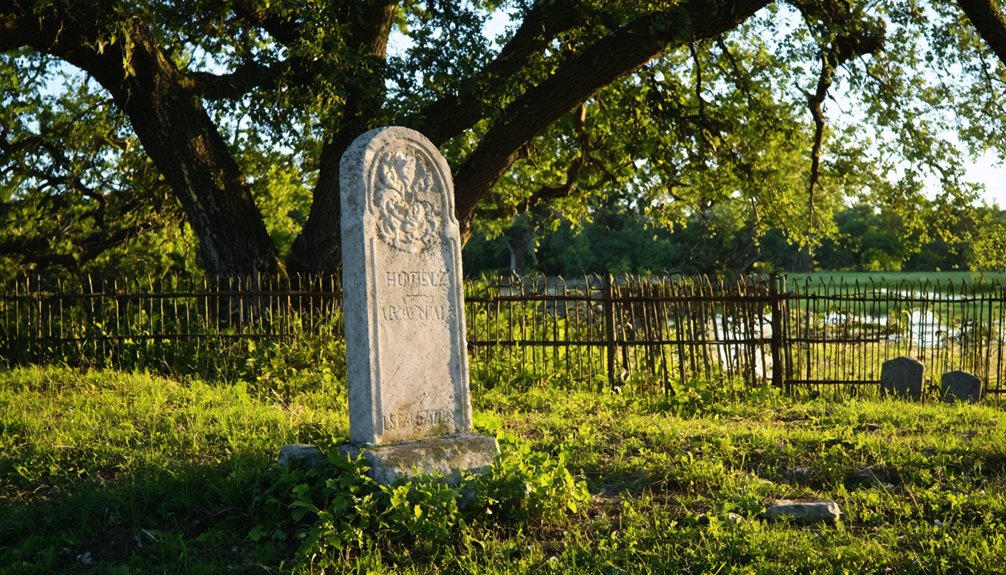
Of all the remnants scattered across Port Sullivan’s forgotten landscape, none speaks more plainly to the town’s lost liveliness than its cemetery. You’ll find 99 documented graves here, each headstone quietly defying time’s erasure.
Though the historical architecture of the town itself crumbled long ago, the cemetery preserves the human story behind it.
Local legends surrounding Thomas J. Anderson make this site especially compelling. Anderson, Texas’s first Mason, rests here permanently, connecting you directly to the republic’s earliest fraternal history.
Walking these grounds, you’re tracing the lives of cotton merchants, ferry operators, and frontier families who built something remarkable — then watched railroads pull their world apart.
The cemetery doesn’t just mark death; it marks ambition, community, and an entire civilization that railroads quietly erased.
The Abandoned Brazos River Locks at Port Sullivan
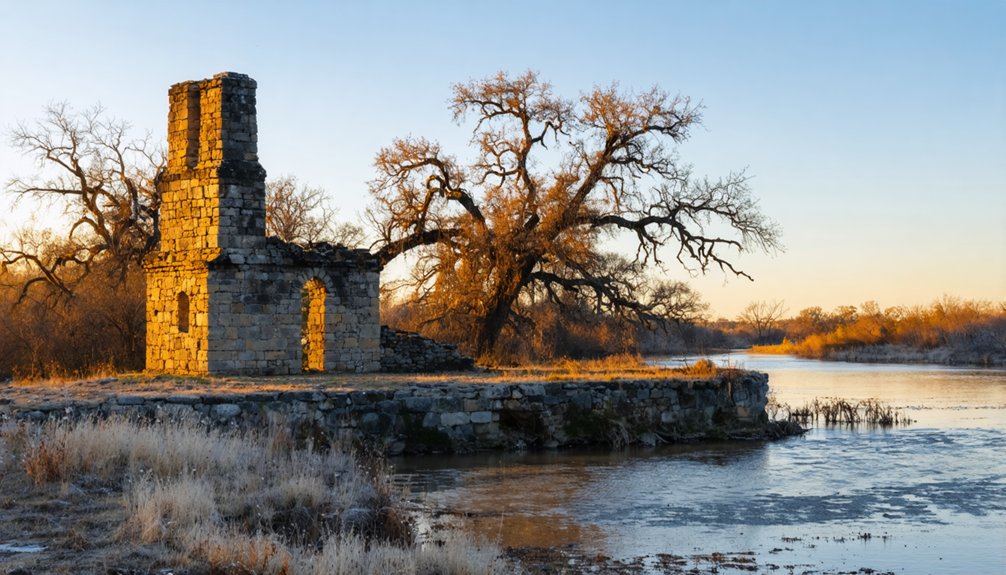
Standing at the water’s edge near Port Sullivan, you’ll encounter the crumbling concrete locks the U.S. Army Corps of Engineers constructed in the 1910s and 1920s. These ruins tell a story of ambitious river navigation dreams that arrived decades too late.
Before the Civil War, steamboats pushed northward along the Brazos, making Port Sullivan their furthest inland stop, fueling a thriving cotton economy. That commerce collapsed when railroads bypassed the town in the 1870s.
Engineers later attempted to resurrect Brazos river navigation through these locks, but the project ultimately failed. Today, the abandoned concrete structures stand half-swallowed by vegetation, silent monuments to two separate eras of broken promise.
You’re free to explore them, touching history that refuses to completely disappear beneath the Texas landscape.
Best Time of Year to Visit Port Sullivan
You’ll find Port Sullivan most welcoming in the mild temperatures of spring and fall, when the Brazos River bottomlands glow with wildflowers or amber foliage rather than summer’s punishing heat.
Winter visits carry their own haunted charm, stripping the trees bare and revealing the old cemetery and crumbling locks with stark, ghostly clarity.
The museum in Milam County runs Tuesday through Friday from 9 a.m. to 4 p.m., so plan your trip accordingly and call Charles King at (254) 697-8963 to arrange a guided tour before you make the drive.
Ideal Visiting Seasons
Though Port Sullivan’s historic marker and cemetery welcome visitors year-round, the sweet spot for exploring this Brazos River ghost town falls between October and April, when Central Texas temperatures stay mild and manageable. Summer heat can punish you on open, shadeless grounds, making the cemetery walk and abandoned concrete locks feel grueling rather than contemplative.
Fall visits carry a particular magic — cooling air, quieter roads, and golden light filtering through the bluff’s remaining trees. You’ll wander more freely, connecting with local legends tied to the river’s old steamboat routes and cotton trade.
Spring brings wildflowers that soften the ruins beautifully.
Preservation efforts ongoing at the site mean conditions improve seasonally, so visiting during drier months keeps pathways accessible and the cemetery grounds easier to navigate respectfully.
Weather Considerations For Travelers
Weather shapes your Port Sullivan experience more than almost any other factor. Texas heat turns summer visits into grueling ordeals, making spring and fall your smartest windows for exploring what remains of this once-thriving river town.
March through May offers mild temperatures perfect for wandering the cemetery where Texas’s first Mason rests quietly among weathered stones.
Fall brings cooler air and golden light that makes photographing the abandoned concrete locks feel almost cinematic. You’ll appreciate the atmospheric quality those autumn shadows cast across ruins that whisper of steamboat days and cotton fortunes lost.
Avoid July and August entirely. The brutal humidity mirrors the town’s Reconstruction-era despair.
Winter visits work in a pinch, though nearby Hearne’s local cuisine tastes considerably better after comfortable outdoor exploration rather than a cold, rushed retreat.
Special Events And Closures
Since Port Sullivan has no formal events calendar, your visit planning hinges almost entirely on the museum’s operating hours: Tuesday through Friday, 9 a.m. to 4 p.m. Call ahead at (254) 697-8963 to arrange a tour with Charles King, who’ll reveal local legends surrounding this once-thriving river town.
The historic landmarks — the cemetery, abandoned locks, and roadside marker — remain accessible year-round, giving you freedom to wander on your own schedule. However, holiday weekends occasionally affect museum availability, so don’t assume it’s open without confirming first.
Summer heat and potential river flooding can restrict access to lower-lying areas near the Brazos. Spring and fall offer the clearest conditions for exploring the grounds, letting you absorb Port Sullivan’s haunting, quiet history without weather working against you.
How to Get to Port Sullivan From Hearne?
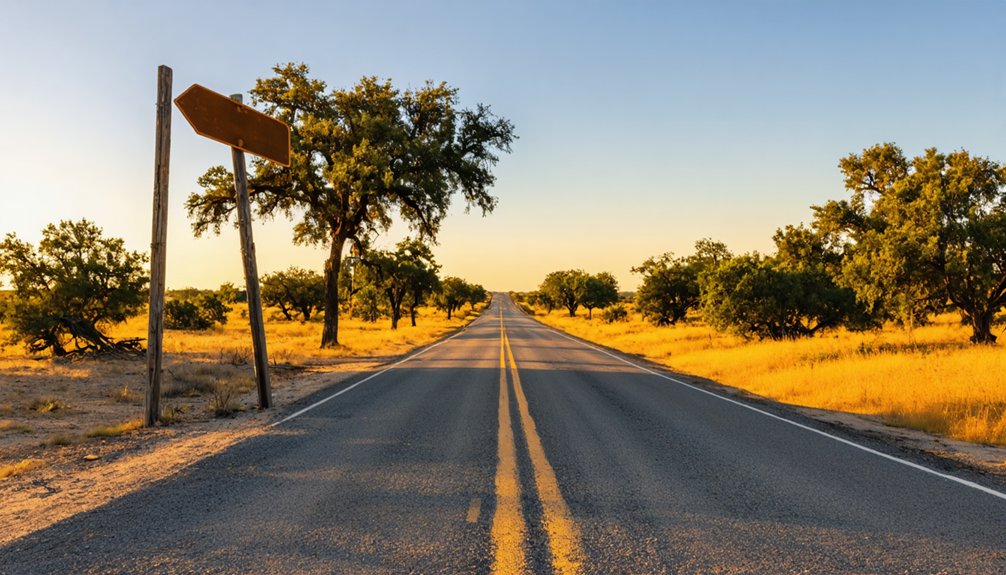
Once you’ve made your way to Hearne, reaching Port Sullivan is a straightforward six-mile journey into a quietly haunting past. Head north on Highway 6, then turn left onto F.M. 485, driving west until the landscape opens into something older and slower.
Six miles from Hearne, a quiet turn onto F.M. 485 leads somewhere older — and much slower.
You won’t find local cuisine or cultural festivals here — Port Sullivan traded those comforts for silence long ago. What you’ll discover instead is a western bluff overlooking the Brazos River, where steamboats once docked and cotton merchants once prospered.
The historic marker near the Highway 79 bridge signals your arrival. Park, walk, and let the cemetery’s 99 documented graves speak for themselves.
This is freedom in its rawest form — wide open land, forgotten history, and no crowds between you and the past.
Nearby Stops Worth Pairing With Your Port Sullivan Visit
After walking Port Sullivan’s quiet grounds, the towns that outlived it make for a compelling next stop. Hearne and Calvert both flourished once the railroad bypassed Port Sullivan, and you’ll feel that contrast sharply.
Calvert, in particular, rewards curious travelers with its historical architecture — Victorian storefronts frozen mid-era, whispering about cotton wealth that never returned. Local legends around these parts run deep, from Reconstruction-era feuds to forgotten merchants who watched their rivals thrive simply because train tracks curved their way.
The Milam County Museum in Cameron connects these dots with artifacts and context you won’t find roadside. Pair these stops intentionally — each town fills in a chapter Port Sullivan can’t tell anymore.
Together, they form one honest, unhurried story about Texas ambition meeting hard circumstance.
Frequently Asked Questions
What Are the Museum’s Operating Hours and Contact Details for Tours?
You’ll find the museum open Tuesday through Friday, 9 a.m. to 4 p.m. Call (254) 697-8963 to arrange a tour with Charles King, where historic artifacts and local legends of Port Sullivan’s nostalgic past await your discovery.
Who Founded Port Sullivan, and What Year Was It Established?
Augustus W. Sullivan literally carved this town’s historical origins from the Texas wilderness in 1835, sparking town development that’d make your free spirit soar. You’re tracing a bold founder’s dream along the Brazos River’s untamed banks.
Can Visitors Access the Historic Marker and Cemetery Year-Round?
You can explore this historic site year-round, with visitor access open whenever wanderlust calls. Walk freely among 99 graves, touch weathered stones, and feel Port Sullivan’s forgotten soul whispering through the Texas wind anytime you arrive.
How Many Graves and Memorials Are Documented in the Cemetery?
You’ll find 99 documented graves and memorials breathing life into Port Sullivan’s cemetery history. Each memorial significance echoes a forgotten era, connecting you to souls who once shaped this free, vibrant river town’s proud, nostalgic legacy.
Who Should Visitors Contact to Arrange a Guided Museum Tour?
Call Charles King at (254) 697-8963 to arrange your tour. Explore freely, uncover nostalgic history, then discover local dining options and nearby accommodation choices, letting you roam Port Sullivan’s storied past on your own terms.
References
- https://www.tshaonline.org/handbook/entries/port-sullivan-tx
- https://en.wikipedia.org/wiki/Port_Sullivan
- https://www.ghosttowns.com/states/tx/portsullivan.html
- http://www.milamcountyhistoricalcommission.org/newspaper_114.php
- https://www.facebook.com/groups/1784294158550093/posts/4243233692656115/
- https://en.wikipedia.org/wiki/List_of_ghost_towns_in_Texas
- http://www.brazosgeography.org/port-sullivan-texas.html
- https://kids.kiddle.co/Port_Sullivan
- https://www.youtube.com/watch?v=Zd8-gKw-5Hc
- http://www.milamcountyhistoricalcommission.org/info_sought_158.php