To plan your Port Tampa ghost town road trip, head south from Tampa on Dale Mabry Highway, turn right on Interbay Boulevard, and follow the old railroad corridor nine miles to the Interbay Peninsula. You’ll find original historic homes, a renovated bank-turned-library, and echoes of a port that once moved 136,000 tons of goods through 205 ships. Budget a full morning, visit in winter or spring, and keep exploring — there’s far more layered history waiting ahead.
Key Takeaways
- Port Tampa, founded in 1887, was a thriving port city that declined after 1910, transitioning into a quiet suburban ghost town.
- From Tampa, drive nine miles south on Dale Mabry Highway, turn right on Interbay Boulevard, then left at the railroad tracks.
- Historic homes, a renovated bank building, and remnants of railroad tracks preserve Port Tampa’s architectural and industrial legacy.
- Nearby attractions include Fort Dade on Egmont Key, Ybor City’s cigar district, and the ruins of the Sulphur Springs Hotel.
- Visit during winter or spring for ideal weather; budget a full morning and consider combining with an Egmont Key ferry trip.
What Made Port Tampa Florida’s Forgotten Boomtown?
When Henry Plant extended his railroad line to the tip of the Interbay Peninsula in 1887, he didn’t just build a depot — he conjured an entire city from a strip of Florida coastline locals called Passage Point.
The economic factors aligned perfectly: trains rolled directly onto the dock, steamships carried passengers onward, and by 1891, 205 ships were moving 136,000 tons of goods through the port.
Community development followed fast — cigar factories, worker housing, and stores filled the streets. Cultural influences brought travelers, commerce, and even Teddy Roosevelt through town.
Cigar smoke, commerce, and even Teddy Roosevelt himself once passed through these streets.
But transportation shifts proved fatal. As travelers rerouted through Tampa by boat after 1910, Port Tampa lost its strategic advantage.
What once roared with industry quietly faded into the suburb you’ll explore today.
How to Get to Port Tampa From Tampa Bay
Starting from Tampa, you’ll head south on Dale Mabry Highway toward MacDill Air Force Base, following the same general corridor that once carried trolley passengers on a nine-mile ride to the Interbay Peninsula.
Turn right on Interbay Boulevard, then left at the railroad tracks — those tracks aren’t just landmarks; they’re ghostly echoes of the very line Henry Plant laid down in 1887 to connect his railroad terminus to the steamboat docks.
Once you spot the renovated bank building now serving as a library, you’ve found the heart of what remains of Port Tampa’s old downtown.
Starting Point In Tampa
From Tampa, getting to Port Tampa is a straightforward nine-mile drive south down Dale Mabry Highway toward MacDill Air Force Base — the same route that once carried a trolley line connecting the city to the Interbay Peninsula.
This starting point carries real historical significance; in the 1890s, travelers made this same journey to board Henry Plant’s steamships at one of Florida’s busiest ports.
You’ll turn right on Interbay Boulevard, then left at the old railroad tracks — ghost infrastructure marking where commerce once thundered through.
The route itself becomes part of the experience, tracing corridors that once moved 136,000 tons of goods annually.
Starting here grounds your trip in context before you even reach Port Tampa’s remaining streets.
Key Roads To Take
Three turns are all it takes to reach what’s left of Port Tampa from central Tampa. Head south on Dale Mabry toward MacDill Air Force Base, then turn right on Interbay Boulevard.
When you hit the railroad tracks, turn left. Road conditions are manageable on standard 2WD, so no special vehicle is required.
You’ll pass a renovated bank building now serving as a library — one of the area’s quiet nods to its historical significance.
Keep going until the old downtown reveals itself on your left. Original homes still line these streets, remnants of a community that once processed 136,000 tons of goods in a single year.
The former wharf sits beyond, swallowed by industry, but the bones of Port Tampa’s ambitious past remain visible if you know where to look.
Finding The Old Downtown
Once you’ve made that final left at the railroad tracks, the old downtown of Port Tampa begins to take shape around you. A renovated bank building, now serving as a library, signals your arrival and anchors the historic architecture still standing along these quiet streets.
Original homes line the blocks, many tied to local legends about the workers, cigar factory employees, and travelers who once filled this peninsula with purpose. Teddy Roosevelt himself reportedly stayed here, lending the area an almost mythic quality.
Continue past the library toward the former wharf area, now swallowed by industry, where Plant’s grand hotels and steamboat docks once defined an era. The bones of this place remain — you just have to know where to look.
What’s Left to See in Port Tampa’s Historic District?
Despite the passage of time, Port Tampa’s historic district still holds enough remnants of its boomtown past to make the detour worthwhile. You’ll find original homes lining the streets, their historic architecture quietly testifying to the era when 205 ships docked here annually.
The renovated bank building, now a library, anchors the downtown core and remains one of the area’s most recognizable survivors.
Walk the streets where Teddy Roosevelt once stayed, and you’ll feel the weight of local legends pressing through the ordinary suburban landscape.
What you won’t find are the grand St. Elmo and Port Tampa Inn hotels or the original wharf — industry consumed those long ago.
Still, enough remains standing to reward curious explorers willing to read between the lines of what’s left behind.
What Ghost Towns and Historic Sites Are Near Port Tampa?
If Port Tampa’s faded glory leaves you hungry for more, you’re in luck—the surrounding region offers several compelling ghost sites worth exploring.
You can catch a ferry from Fort De Soto Park to Egmont Key, where Fort Dade’s crumbling ruins stand sentinel at Tampa Bay’s entrance.
Closer inland, Ybor City’s historic cigar factories and the deteriorating Sulphur Springs Hotel give you a vivid sense of Tampa’s booming, then busted, past.
Fort Dade On Egmont
Fort Dade on Egmont Key sits at the mouth of Tampa Bay, and you can reach it by ferry from Fort De Soto Park.
Built to defend Tampa Bay during the Spanish-American War, Fort Dade‘s history stretches back to 1898, when soldiers garrisoned here guarded the channel against enemy ships.
Today, nature has swallowed most of the fortifications, with jungle vines creeping over crumbling concrete batteries and broken pathways leading nowhere.
Ghost stories surround the island, fed by its isolation and the eerie silence of abandoned structures half-hidden by subtropical growth.
You’ll wander past rusting gun mounts and hollow barracks foundations, imagining the soldiers who once stood watch here.
It’s a raw, unhurried experience that rewards anyone willing to make the crossing.
Ybor City Historic District
A few miles northeast of Port Tampa, Ybor City’s historic district pulls you into a world built on tobacco, immigration, and industrialized ambition.
Cuban, Spanish, and Italian immigrants shaped Ybor culture into something fiercely independent, rolling cigars by hand while *lectores* read aloud to factory floors. That cigar legacy still breathes through the brick-lined streets, preserved factory buildings, and mutual aid society halls that once served workers who needed no government safety net.
You’ll walk past structures that survived economic collapse, urban renewal threats, and decades of neglect.
Today, the district operates as a National Historic Landmark, letting you explore its defiant past on your own terms. It’s raw history you can actually touch, standing exactly where ambition and immigrant grit built something lasting.
Sulphur Springs Hotel Ruins
Pull yourself away from Ybor City’s brick corridors and head north to Sulphur Springs, where a different kind of ambition crumbled far less gracefully.
The Sulphur Springs Hotel once anchored a bustling resort community, drawing visitors who believed the natural springs held restorative powers. That hotel history reads like a familiar Florida story — rapid boom, abrupt abandonment.
Today, the water tower still pierces the skyline, a lone sentinel marking where crowds once gathered.
The surrounding ruins carry that particular silence of places that expected permanence and got none. You can walk the area, photograph the decay, and feel the weight of broken promises embedded in every weathered surface.
It’s unglamorous, unrestored, and exactly the kind of honest ruin that rewards curious travelers willing to look closely.
How to Plan a Port Tampa Ghost Town Day Trip
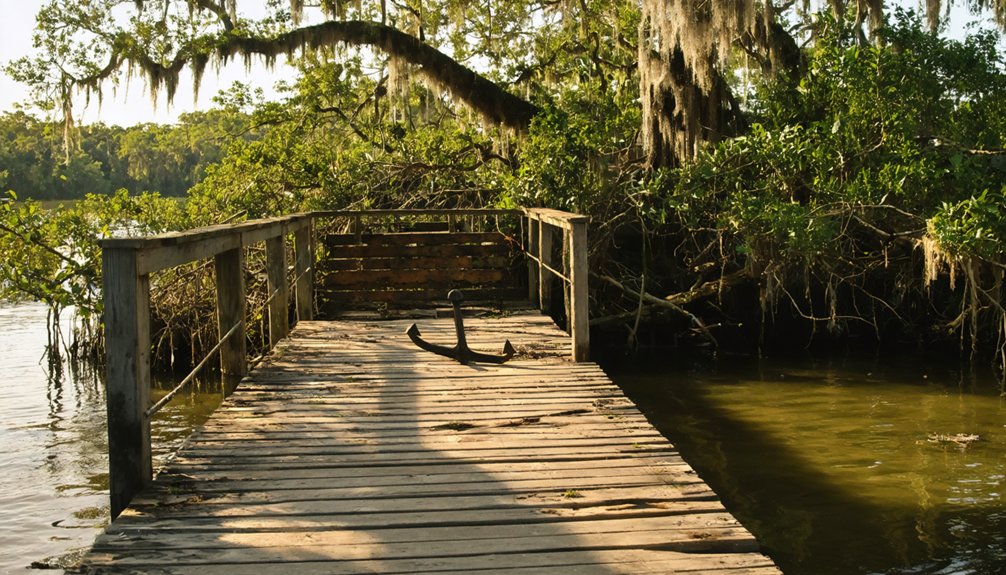
Port Tampa packs a surprising amount of history into a single day trip, making it an easy add-on to any Tampa itinerary.
Take Dale Mabry south toward MacDill Air Force Base, turn right on Interbay, and follow the railroad tracks into what remains of the old downtown. The roads are 2WD accessible, and the climate stays fine year-round, so you can visit anytime.
Follow Dale Mabry south, turn right on Interbay, and let the railroad tracks guide you the rest of the way.
Pair your stop with a ferry ride from Fort De Soto Park to Egmont Key, where Fort Dade’s ruins invite ghost stories and local legends of their own.
Budget a full morning for Port Tampa‘s original homes and library, then push toward the former wharf before heading to Ybor City’s cigar factory district to round out the day.
Best Time to Visit Port Tampa Florida
Florida’s Gulf Coast humidity can turn a casual history walk into an ordeal, but Port Tampa sidesteps that concern almost entirely. You can visit any time of year without sacrificing comfort or access, since roads stay dry and the compact downtown remains walkable across all best seasons.
Winter months offer cooler temperatures and thinner crowds, letting you move through original residential streets without interruption.
Spring delivers pleasant breezes off Tampa Bay, making the former wharf area particularly atmospheric. Check Tampa’s local festivals calendar before scheduling your trip, since nearby Ybor City events occasionally draw traffic toward the Interbay Peninsula.
Summer works if you start early and finish before noon. Ultimately, Port Tampa rewards whenever you show up and decide to explore on your own terms.
What to Know Before You Drive Out to Port Tampa
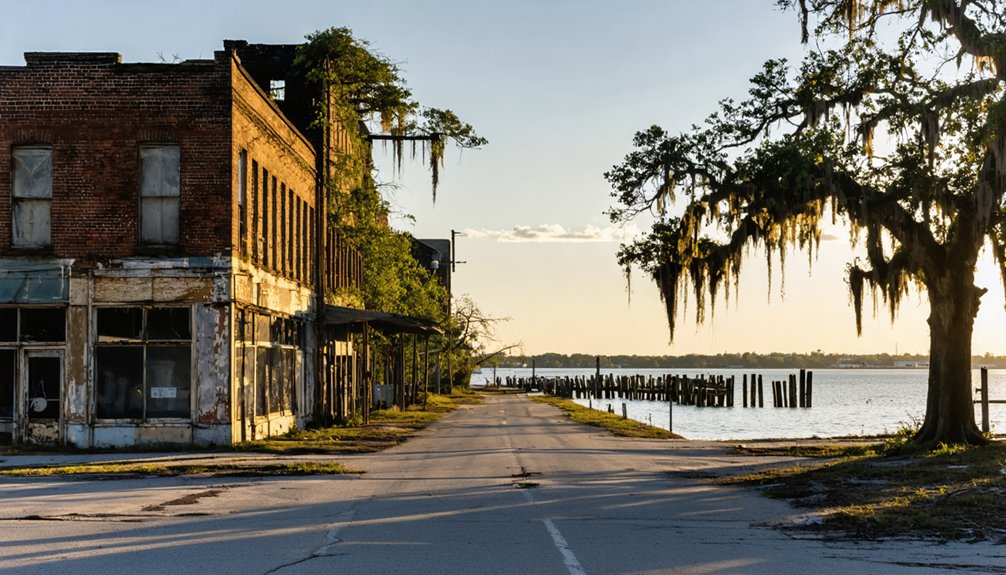
Before you head out, know that Port Tampa sits on the Interbay Peninsula in Hillsborough County, reachable entirely on paved two-wheel-drive roads with no special vehicle required.
The climate stays agreeable year-round, so you’re free to plan this trip whenever the road calls. Follow Dale Mabry south toward MacDill Air Force Base, turn right on Interbay, then left at the railroad tracks.
You’ll discover the old downtown, original homes, and a renovated bank building now serving as a library. The historical significance here runs deep, from Henry Plant’s railroad empire to Teddy Roosevelt’s presence.
Local legends and quiet streets replace the vanished wharf and grand hotels. Combine your visit with nearby Egmont Key’s Fort Dade for a fuller experience of this forgotten Florida coastline.
Frequently Asked Questions
Can You See Port Tampa’s Original Railroad Tracks Still in Place?
You won’t find Port Tampa’s original railroad tracks still in place. This ghost town’s railroad history has largely vanished, though you can follow the old route and feel the freedom of retracing Henry Plant’s legendary line.
Are There Guided Ghost Town Tours Available Specifically for Port Tampa?
No dedicated guided tours exist for Port Tampa’s ghost town history, but you’ll uncover local legends independently by exploring original downtown structures, historic homes, and sites where Teddy Roosevelt once stayed during this fascinating forgotten community.
Was Port Tampa Ever Considered for Annexation Into the City of Tampa?
Like a fish that slipped the net, Port Tampa’s annexation history shows it resisted full absorption into Tampa’s local governance, though it gradually faded from an independent town into Tampa’s suburban embrace.
Did Any Famous Figures Besides Teddy Roosevelt Pass Through Port Tampa?
You’ll find that beyond Teddy Roosevelt, Port Tampa’s historic visitors and notable residents included countless travelers and merchants who passed through Henry Plant’s bustling railroad terminus, shaping this remarkable freedom-filled gateway to the Gulf.
Are There Any Annual Events or Festivals Held in Port Tampa Today?
Once vibrant with steamships, Port Tampa’s now quiet streets don’t host notable annual celebrations or local traditions documented in historical records. You’ll find its ghost town charm more rewarding than any festival could offer today.
References
- https://www.ghosttowns.com/states/fl/porttampa.html
- https://www.youtube.com/watch?v=OWy7bai2Hws
- https://www.tripadvisor.com/ShowUserReviews-g34678-d109448-r184148378-Ybor_City-Tampa_Florida.html
- https://www.florida-backroads-travel.com/florida-ghost-towns.html
- https://www.facebook.com/familydestinationsflorida/posts/take-a-ghostly-trail-road-trip-to-mysterious-abandoned-places/122222355416091021/
- https://abandonedfl.com/city/central-florida/tampa/
- https://www.thetravel.com/unique-history-of-fort-dade-abandoned-town/
- https://www.pinterest.com/pin/port-tampa-ghost-town–222506037824158588/
- https://www.tampabay.com/tampa-bay-is-a-stop-on-the-haunted-florida-road-trip/2297487/
- https://floridatrailblazer.com/category/ghost-towns/