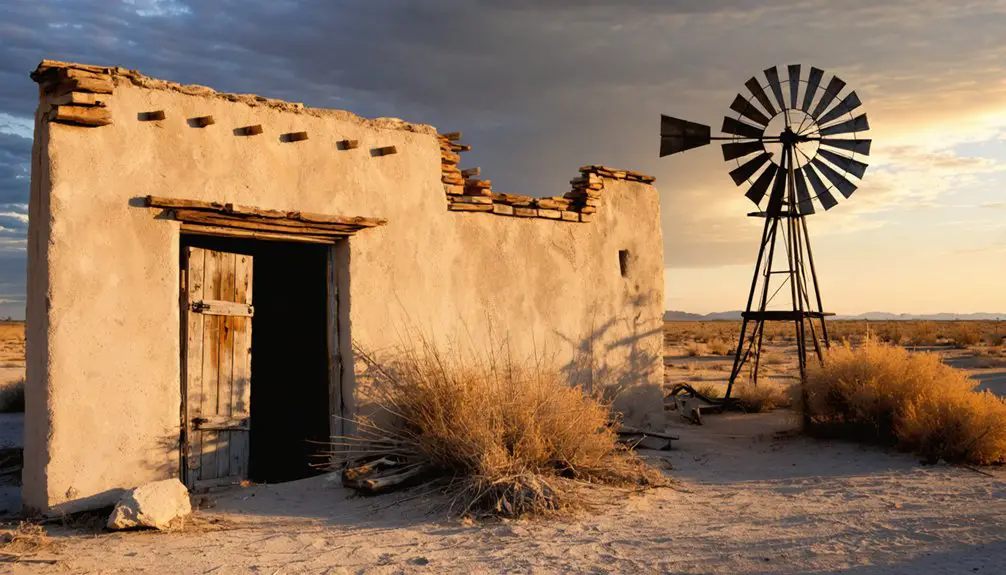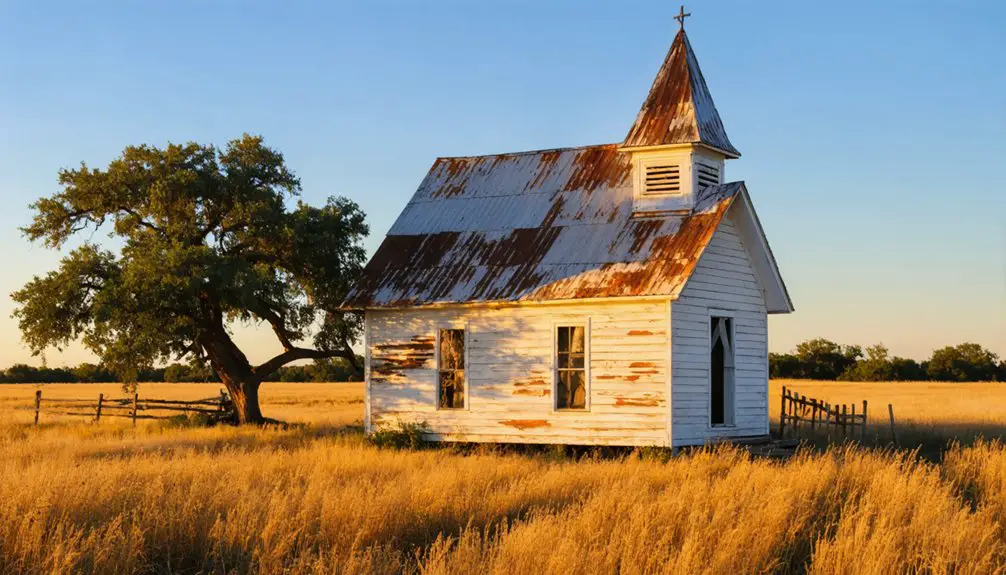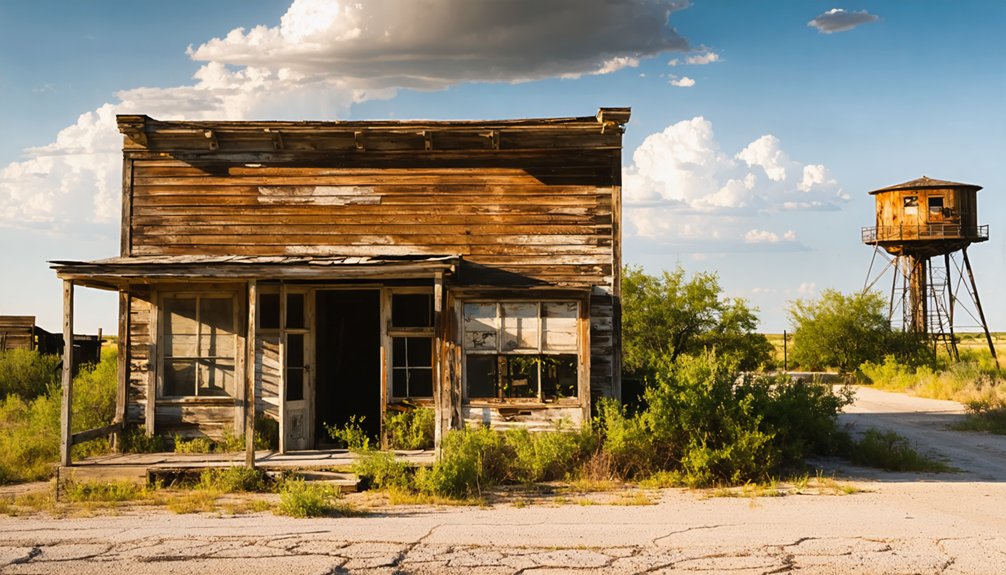
Planning a ghost town road trip to Porterville, Texas means venturing deep into Loving County’s desert landscape, where a once-thriving health colony now exists as little more than a bare highway strip near the Pecos River. Founded in 1905, Porterville rose and fell within decades, defeated by water shortages and crop failures before oil lured its residents away to nearby Mentone. Secure your supplies, download offline maps, and keep exploring — there’s far more to this haunting story than meets the eye.
Key Takeaways
- Porterville, Texas, located in Loving County near the Pecos River, is a ghost town founded in 1905 and abandoned by the 1930s.
- The nearest town, Mentone, serves as your base; secure fuel and supplies there before heading into the remote desert area.
- Visit during fall (October–November) or spring (March–April) to avoid extreme summer temperatures exceeding 100°F.
- Pack at least one gallon of water per person daily, sturdy boots, sunscreen, snacks, and offline GPS maps for unreliable cell service.
- The 1909 church relocated to Mentone is the sole surviving Porterville structure, offering historical context before exploring the ghost town site.
What Was Porterville, Texas?
Once a promising health colony in the remote desert of West Texas, Porterville started as the vision of Dr. Phil Porter, a Michigan physician who traveled southwest seeking desert health benefits. Founded in 1905 in Loving County near the Pecos River, the town embodied a pioneering spirit, quickly developing a hotel, blacksmith shop, post office, and two general stores.
Affordable farmland drew settlers enthusiastic to build independent lives in the open West.
The promise of affordable land called dreamers westward, eager to carve out something entirely their own.
But the Pecos River couldn’t sustain widespread agriculture, and crop failures slowly drained the population. When oil transformed nearby Mentone in the early 1930s, remaining residents left, and Porterville became a ghost town.
Today, you’ll find little more than a highway strip where that bold desert health dream once stood.
Why Porterville Became a Ghost Town
Porterville’s downfall came from two compounding blows that stripped the town of its reason to exist.
The first was the Pecos River’s failure to deliver enough water for sustainable farming. Settlers had arrived dreaming of irrigated fields, but the agricultural challenges proved insurmountable. Crops failed, hope dried up, and the population decline began steadily pulling families away.
Then came the knockout punch. When oil discoveries ignited nearby Mentone in the early 1930s, the economic gravity shifted completely. Residents didn’t hesitate — they packed up and chased opportunity.
Even the 1909 church relocated to Mentone in 1931, a symbolic final departure.
You’re left with a town that faced nature’s limitations and lost residents to fortune elsewhere, leaving nothing but a bare highway strip behind.
What’s Left to See in Porterville Today?
So what does all that history leave behind for the modern visitor? Honestly, Porterville remnants are razor-thin, but that’s part of ghost town exploration’s raw appeal.
Here’s what you’ll encounter:
- A bare highway strip cutting through empty desert, where a once-bustling town with hotels and shops simply vanished into scrubland.
- Silence and open sky stretching endlessly across Loving County’s sparse terrain, giving you an unfiltered sense of West Texas isolation.
- The 1909 church in nearby Mentone, relocated in 1931, standing as Porterville’s sole surviving structure and most tangible connection to the past.
You won’t find museums or markers here.
You’ll find freedom, emptiness, and a landscape that tells the whole story without saying a word.
How Do You Get to Porterville, Texas?
You’ll find Porterville tucked deep in Loving County, one of Texas’s most remote stretches of desert terrain near the Pecos River.
To reach it, you’ll navigate sparse West Texas highways where landmarks are few and services are even fewer, so fuel up and plan ahead before heading out.
Your best anchor point is Mentone, the nearest developed town, which ironically absorbed many of Porterville’s former residents — and even its 1909 church — during the oil boom of the 1930s.
Locating Porterville’s Remote Area
Tucked deep in the remote expanse of Loving County, West Texas, Porterville sits near the Pecos River in some of the most desolate terrain the state has to offer.
If you crave desert solitude and historical significance, this forgotten settlement delivers both. Navigate local highways through barren West Texas landscape, where the horizon stretches endlessly and civilization fades fast.
Expect these defining features as you approach:
- Vast, empty desert terrain stretching miles in every direction
- A bare highway strip marking where a bustling town once thrived
- The distant shimmer of the Pecos River cutting through arid flatlands
Mentone serves as your nearest reference point.
Keep your fuel tank full, your GPS ready, and your sense of adventure sharp before heading out.
Few roads in Texas feel as stripped of modern life as the ones threading through Loving County toward Porterville’s ghost town remnants. Your highway navigation through this barren stretch demands preparation, not improvisation.
Desert driving here means sparse signage, minimal traffic, and long gaps between fuel stops, so tank up before leaving Mentone.
From Mentone, follow local highways southwest toward the Pecos River corridor where Porterville once stood. You won’t find dramatic markers announcing your arrival — just a fading highway strip cutting through open desert.
Keep your GPS loaded with offline maps since cellular signals drop unexpectedly. Pack extra water, check tire pressure, and embrace the isolation.
This landscape doesn’t punish the prepared traveler — it rewards them with raw, unfiltered West Texas freedom that few ever experience.
Nearest Landmark: Mentone
Mentone serves as your launching pad for reaching Porterville, sitting just a short drive from where the ghost town once hummed with settlers and farming ambition.
Mentone history runs deep, growing from the same oil boom that pulled Porterville’s last residents away in the early 1930s.
Mentone attractions are modest but meaningful:
- Stand beside the 1909 church, physically hauled from Porterville to Mentone in 1931, carrying those pioneering walls with it.
- Absorb the county seat’s stark, wide-open character — Loving County averages four square miles per person.
- Use Mentone’s sparse services to fuel up before pushing toward Porterville’s barren highway strip.
You’ll feel the desert’s unfiltered freedom the moment you leave Mentone’s limits heading toward what remains.
What to Pack Before Visiting Porterville
Visiting Porterville means venturing deep into one of Texas’s most remote and unforgiving desert landscapes, so you’ll want to pack smart.
Desert survival depends on preparation, and your packing essentials should reflect that reality. Bring plenty of water — at least one gallon per person daily — plus high-energy snacks, sunscreen, and a wide-brimmed hat. The West Texas sun hits hard, especially across Loving County’s barren terrain.
You’ll also want sturdy boots for walking rough ground, a paper map since cell service is unreliable, and a fully charged phone for emergencies.
Pack a basic first-aid kit and keep your gas tank full before leaving Mentone. There’s nothing out here except open desert, highway remnants, and freedom — and that’s exactly the point.
What’s the Best Time of Year to Visit?
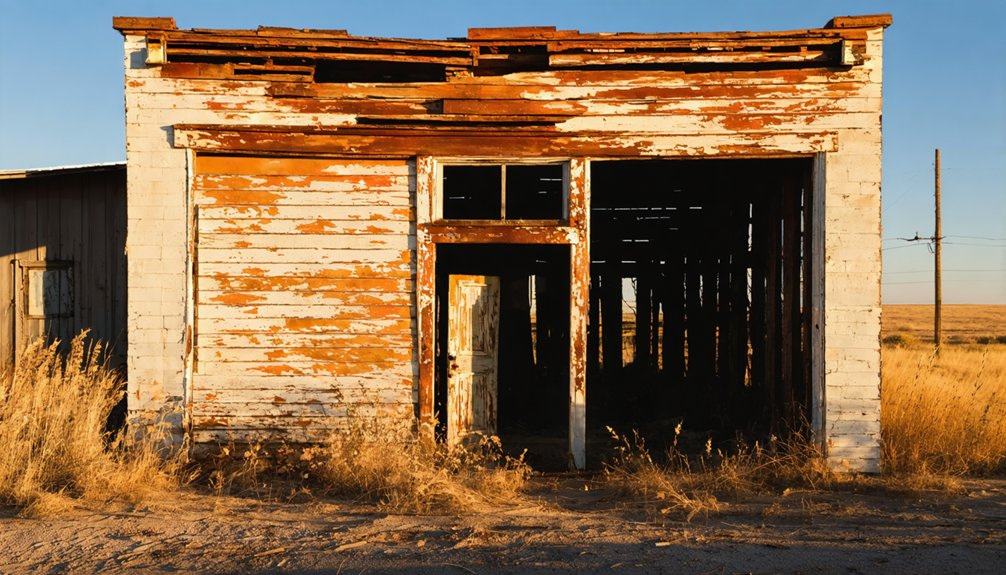
When you visit Porterville matters almost as much as how you prepare. West Texas’s brutal weather conditions can make or break your ghost town experience. Choose your timing wisely to enjoy the freedom of open desert exploration.
The best seasons for visiting are:
- Fall (October–November): Crisp desert air, golden light hitting the barren highway strip, temperatures hovering comfortably in the 60s–70s.
- Winter (December–February): Stark, cold solitude with dramatic skies stretching endlessly over Loving County’s empty landscape.
- Spring (March–April): Mild warmth returns, wildflowers occasionally dot the roadsides, making the drive toward Mentone surprisingly scenic.
Avoid summer entirely. Temperatures routinely exceed 100°F, turning remote Loving County into an unforgiving furnace with zero shade or services available.
Ghost Towns and History Sites Near Porterville
Once you’ve locked in your travel window, it’s worth stretching the trip beyond Porterville itself — because Loving County and the surrounding West Texas region hold more forgotten history than most people realize.
Mentone, your nearest stop, houses Porterville’s 1909 church, a relocated relic worth seeing for its ghost town preservation story alone. The Permian Basin oil sites nearby add industrial historical significance to your route.
Mentone holds Porterville’s relocated 1909 church — a ghost town preservation story worth the detour.
Push further into Hudspeth or Parker Counties and you’ll encounter additional ghost towns scattered across the desert. Each site layers onto a broader picture of boom-and-bust cycles that shaped West Texas.
The Texas State Historical Association’s resources can help you map these stops efficiently, giving your road trip real depth rather than a single roadside detour.
Frequently Asked Questions
Who Originally Founded Porterville Before It Was Renamed?
In 1905, Dr. Phil Porter’s Founding Families shaped Porterville’s Historical Influence — he originally named it Juanita! You’ll discover this Michigan doctor sought the Southwest desert’s health benefits, driving him to establish this remarkable health colony.
What Historical Publications Document Porterville’s Early Settlement?
You’ll find Porterville’s early settlers documented in the Permian Historical Annual, specifically volumes 4 (1964) and 7 (1967). These historical archives capture the town’s fascinating origins, giving you an authentic glimpse into its pioneering past.
Was Porterville Ever Known by a Different Name Before?
Yes, you’ll find that Porterville’s ghost town history begins under a different name — it was originally called Juanita! Exploring its name origins reveals how Dr. Phil Porter’s arrival transformed this remote Texas settlement’s identity forever.
What Is Porterville’s Official GNIS Feature Identification Number?
With four square miles per man historically, you’ll find Porterville’s official GNIS feature ID is 2033952. Exploring this ghost town history fuels your road trip tips — it’s a beautifully desolate, freeing West Texas adventure awaiting you.
Did Dr. Porter Have Any Medical Background or Professional Credentials?
The knowledge doesn’t confirm Dr. Porter’s medical training or professional experience beyond his “Dr.” title. You’ll find he sought the Southwest desert’s health benefits, suggesting personal wellness motivations drove his bold, freedom-seeking journey to found Porterville.
References
- https://www.texasescapes.com/WestTexasTowns/PortervilleTexas.htm
- https://www.tshaonline.org/handbook/entries/porterville-tx
- https://kids.kiddle.co/Porterville
- http://genealogytrails.com/tex/bigbend/loving/history_towns.html
- https://www.youtube.com/watch?v=j1vcl01ulo8
- https://en.wikipedia.org/wiki/List_of_ghost_towns_in_Texas
- https://www.ghostsandgetaways.com/ghost-towns