You can road trip to Preston, Texas, one of the Lone Star State’s most enchanting ghost towns — but bring your swimsuit, because it’s been submerged beneath Lake Texoma since 1944. Founded in 1837, Preston thrived as a Red River trading post and cattle trail hub before the railroad bypassed it, triggering a rapid collapse. Visit near Pottsboro during drought periods to spot historic graves and foundations emerging from the water. There’s far more to this story than meets the eye.
Key Takeaways
- Preston, Texas, founded in 1837, thrived as a Red River trading post and cattle trail hub before being abandoned by 1870.
- The town’s decline followed the Missouri, Kansas & Texas Railroad bypassing Preston, collapsing its commerce and stage lines.
- Preston now lies submerged beneath Lake Texoma, flooded since 1944, making it a unique underwater ghost town destination.
- During drought periods, historic cemeteries, gravestones, and foundation outlines emerge along the shoreline near Pottsboro, Texas.
- Combine your visit with nearby historic sites for a fuller experience, as direct public access to Preston remains limited.
Preston, Texas: The Ghost Town Buried Under Lake Texoma
Beneath the surface of Lake Texoma lies Preston, Texas — a ghost town that once stood as the most important settlement in north Texas. Founded in 1837 as a Red River trading post, Preston thrived as a cattle trail crossing, stagecoach hub, and frontier commerce center.
Beneath Lake Texoma’s surface lies Preston, Texas — a ghost town that once reigned as north Texas’s most vital frontier settlement.
By 1850, it commanded the region’s economic and cultural heritage, drawing hundreds of settlers, travelers, and traders.
Then the railroad bypassed it. Business collapsed, residents left, and by 1870, Preston was largely abandoned.
In 1944, Lake Texoma finished what economic decline started — permanently submerging the town site.
Yet historical mysteries endure. During droughts, water levels drop, exposing an old cemetery where gravestones surface like whispers from the past.
Preston didn’t just disappear; it sank.
How Preston Became the Most Important Town in North Texas
Before railroads stitched the frontier together, rivers ruled commerce — and Preston knew exactly how to exploit that advantage. Holland Coffee established this Red River trading post in 1837, and the Preston Economy exploded as settlers, traders, and cattle drivers converged on this strategic crossing.
By 1850, Preston stood as north Texas’s most essential hub, fueled by four key advantages:
- River crossing — the Red River’s natural ford moved people and goods efficiently
- Cattle Trails — the Shawnee trail funneled massive herds directly through town
- Stage terminus — the Butterfield Overland route made Preston its division point by 1858
- Population surge — 500 residents supported hotels and a racetrack by 1884
You’re looking at a town that earned its dominance mile by mile.
How the Railroad Killed Preston Almost Overnight
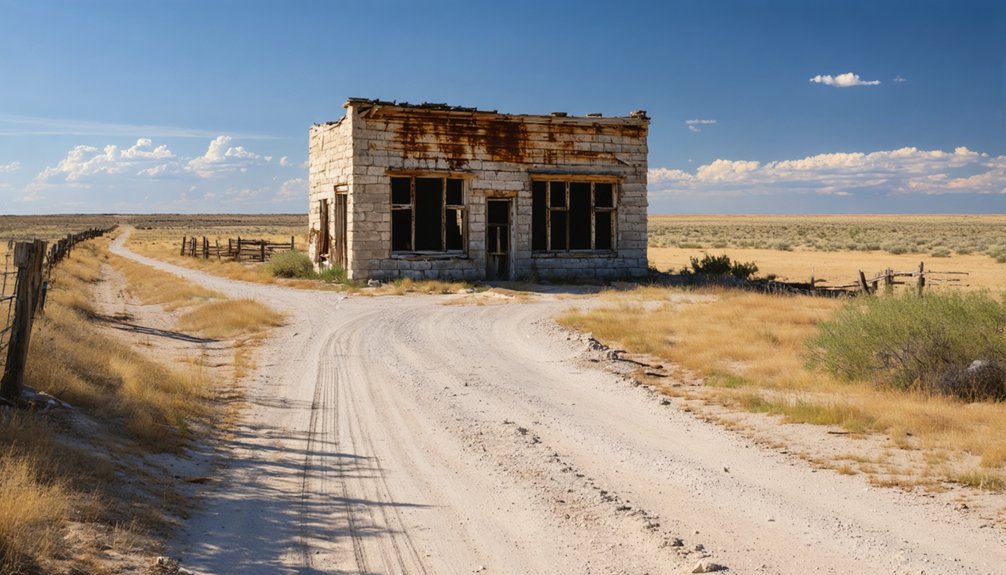
Preston’s dominance didn’t collapse gradually — it got blindsided. When the Missouri, Kansas & Texas Railroad pushed through north Texas, it bypassed Preston entirely, routing east of town instead. That single decision triggered devastating Economic Shifts almost overnight.
Think about what that meant practically. The travelers stopped coming. The cattle drives rerouted. The stage lines followed the iron rails, not the old river crossings. Every business that depended on that steady flow of traffic suddenly had no reason to exist.
The Railroad Impact was swift and merciless. By 1870, the original town sat largely abandoned. A new Preston community eventually developed elsewhere within the bend, but it never recaptured the energy or importance of what came before.
The railroad didn’t just redirect commerce — it erased Preston’s identity entirely.
Sophia Coffee: Preston’s Confederate Spy
While the railroad was dismantling Preston’s commercial future, the town had already produced one of the Civil War‘s more fascinating characters.
Sophia Suttonfield Aughinbaugh Coffee married founder Holland Coffee in 1839 and turned Glen Eden mansion into a Confederate intelligence hub.
Sophia’s espionage operation worked brilliantly through deception:
- She entertained Union officers at Glen Eden, located 2 miles west of the trading post.
- She extracted military intelligence through social gatherings.
- She funneled information directly to Confederate forces.
- She survived the war entirely, living until 1897.
You won’t find Glen Eden standing today — Lake Texoma swallowed it.
But Sophia’s remarkable story endures in historical records, proving that Preston’s legacy extends far beyond cattle drives and commerce.
Where Is Preston, Texas: and Can You Still Visit It?
Where exactly do you go to visit a town that no longer exists above water? Preston, Texas now rests beneath Lake Texoma, permanently submerged since 1944.
Head near Pottsboro, Texas, and you’ll find yourself as close as anyone can get to this lost settlement.
Ghost town exploration here requires patience and timing. During drought periods, dropping water levels occasionally expose the historic cemetery, revealing gravestones that connect you directly to Preston history. It’s an eerie, unforgettable sight.
The Army Corps of Engineers purchased surrounding land in the late 1930s, so public access remains limited.
Your best preparation involves researching current lake levels before visiting. Historical markers and Texas State Historical Association records also help you piece together Preston’s remarkable story before you hit the road.
What the Preston Ghost Town Actually Looks Like Today
Standing at the edge of Lake Texoma near Pottsboro, you’re fundamentally staring at Preston’s rooftops — or where they’d be if the water weren’t swallowing them whole. Since 1944, the lake’s covered everything.
Stand at Lake Texoma’s edge near Pottsboro and you’re essentially staring at Preston’s rooftops — submerged since 1944.
But drought periods reveal something remarkable:
- Gravestones resurface from the historic cemetery, making cemetery preservation an ongoing, water-dependent reality.
- Foundation outlines occasionally emerge, sketching Preston’s original street grid.
- Historical markers near Pottsboro anchor the town’s story above the waterline.
- Shoreline artifacts sometimes wash up, offering tangible fragments of 1800s settlement life.
You won’t walk Preston’s streets or duck inside its hotel.
What you’ll experience instead is a ghost town that breathes with the water level — disappearing and reappearing on its own schedule, completely indifferent to your plans.
When Is the Best Time to Visit the Preston Ghost Town?
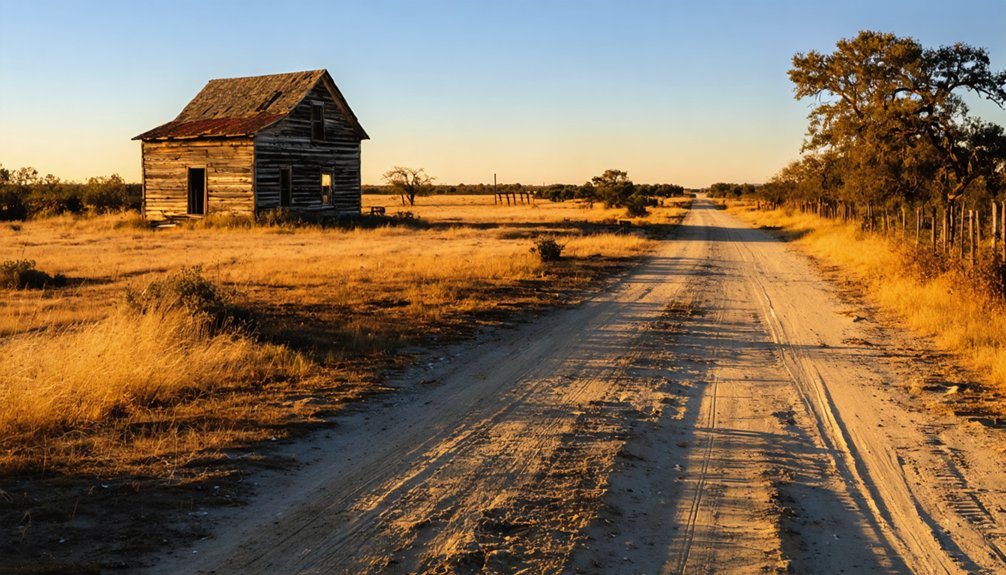
When you visit matters enormously here, because Preston’s visibility is dictated entirely by Lake Texoma’s water levels rather than opening hours or seasonal tourism calendars.
Drought periods offer your best chance of glimpsing the cemetery’s exposed gravestones, making extended dry spells more valuable than any particular best seasons on the calendar.
That said, ideal weather conditions in late spring and early fall give you comfortable temperatures for exploring the shoreline near Pottsboro without battling Texas summer heat.
Check the U.S. Army Corps of Engineers’ real-time lake level data before you go — a lower-than-average water level dramatically increases what you’ll actually see.
Flexibility is your greatest tool here; Preston rewards the spontaneous traveler who watches the forecast and moves when conditions align.
Historic Sites Near Preston Worth Combining Into One Trip
Since you’re already making the drive to Pottsboro, pairing Preston’s ghost town with nearby historic sites turns a single-purpose outing into a full day of layered Texas history.
The region rewards curious travelers who dig deeper.
Combine your Preston stop with these nearby destinations:
- Eisenhower Birthplace State Historic Site – Denison, Texas, just 20 minutes away, preserving the 34th president’s modest origins.
- Hagerman National Wildlife Refuge – Stunning lakeside landscapes bordering Lake Texoma’s northern shores.
- Fort Washita – An 1842 military post in Durant, Oklahoma, directly connected to Preston’s frontier era.
- Grayson County historical markers – Scattered throughout Sherman and Denison, documenting the region’s cattle trail and settlement heritage.
Each stop adds essential context that makes Preston’s ghost town story feel complete.
Frequently Asked Questions
Who Founded Preston, Texas, and When Was It Established?
Holland Coffee and Silas Colville founded Preston’s History in 1837 as a Red River trading post. You’ll discover this remarkable Town Development began at Washita Bend, shaping north Texas’s early frontier legacy forever.
What Native American Tribes Lived in the Preston Area Before European Settlement?
Before Europeans arrived, you’d have walked land the Caddo called home, rich with tribal history and cultural significance. The Five Civilized Tribes later settled nearby, while Comanche and Kiowa nations roamed freely westward.
Was Holland Coffee’s Murder Ever Solved or Connected to Specific Individuals?
You’ll find Holland Coffee’s murder remains one of history’s intriguing unsolved cases — his 1846 death isn’t definitively connected to specific individuals, making this murder mystery as haunting as Preston’s submerged ghost town streets.
Did the Army Corps of Engineers Relocate Any Residents Before Flooding Preston?
The Army Corps of Engineers bought all surrounding land in the late 1930s, so you’d have faced resident displacement before the flooding impact submerged Preston forever when Lake Texoma started filling in 1944.
Are There Any Artifacts Recovered From the Submerged Preston Town Site?
You won’t find official records of artifacts discovery from Preston’s submerged history, but during droughts, you can explore the exposed cemetery, where you’ll discover gravestones rising from Lake Texoma’s retreating waters, connecting you to Preston’s past.
References
- https://www.tshaonline.org/handbook/entries/preston-tx-grayson-county
- https://www.texasescapes.com/CentralTexasTownsNorth/Preston-Texas.htm
- https://theforgottensouth.com/cheapside-texas-ghost-town-history/
- https://www.tshaonline.org/handbook/entries/preston-tx-wharton-county
- https://en.wikipedia.org/wiki/Preston
- https://www.ghosttowns.com/states/tx/preston.html
- https://texashistory.unt.edu/ark:/67531/metapth61101/m1/153/
- https://cedarbayoumarina.com/four-ghost-towns-under-lake-texoma/