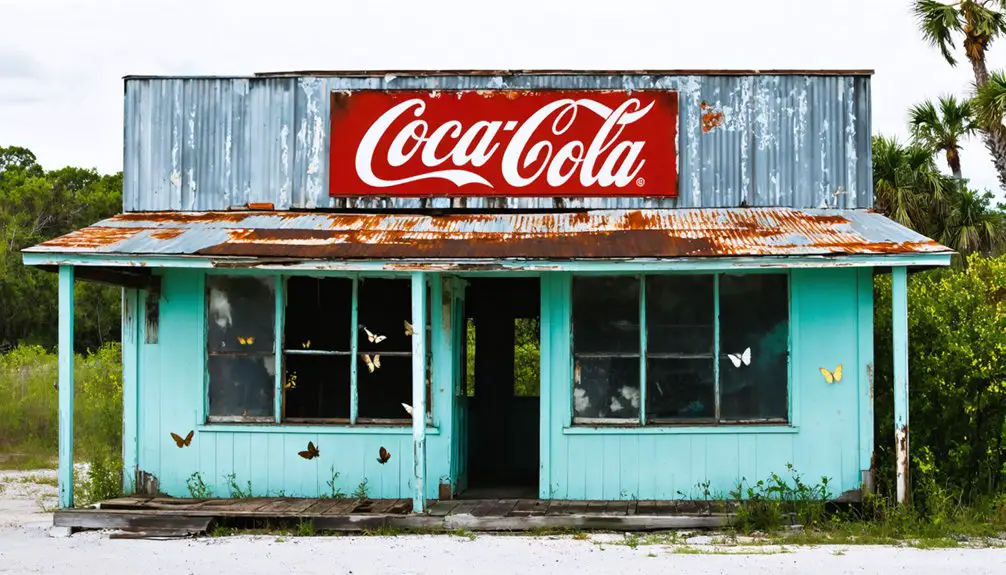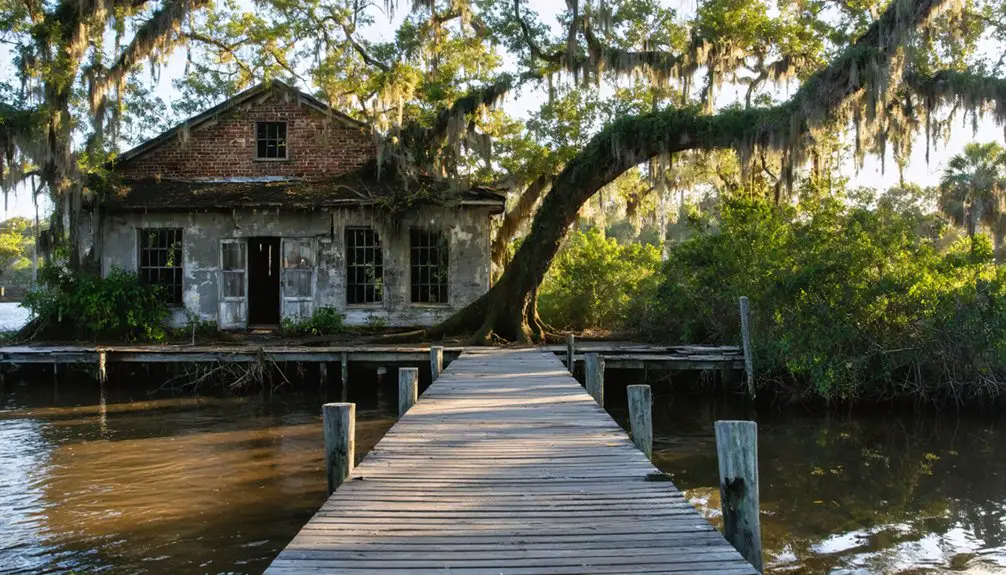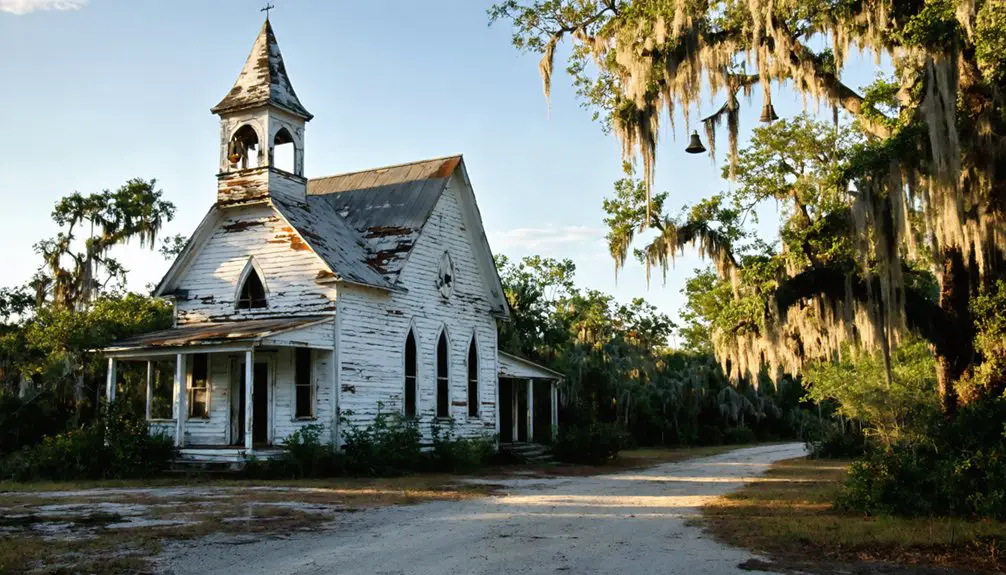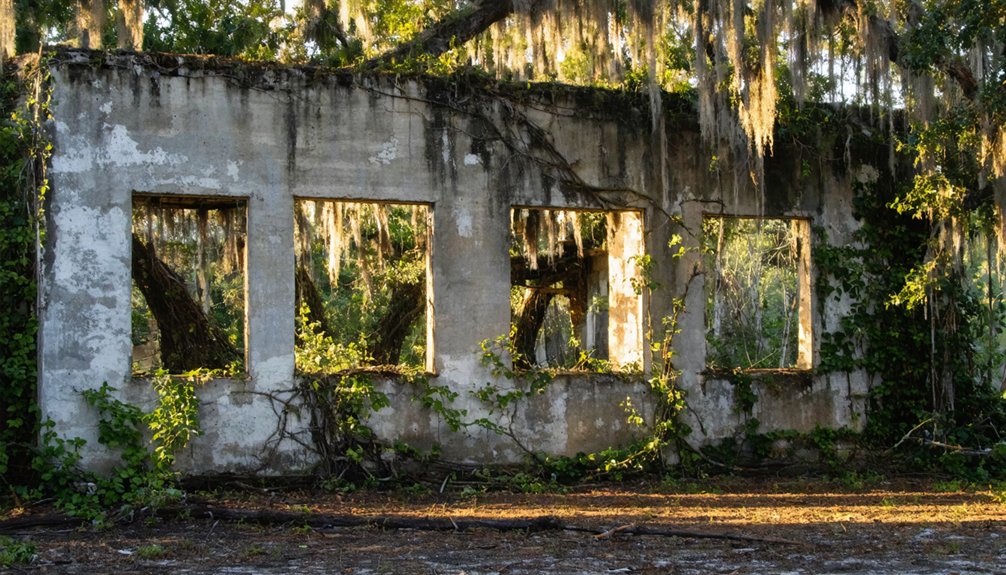
Planning a ghost town road trip to Providence, Florida means heading north on Price Creek Road into Columbia County, where an 1832 pioneer settlement now exists as little more than a cemetery and scattered foundations. Pack sturdy shoes, insect repellent, and plenty of water since cell signals can be unreliable out here. Visit in fall or spring to avoid brutal summer heat. There’s far more history buried in this quiet corner of North Florida than you’d expect, and the story only gets richer from here.
Key Takeaways
- Providence, Florida, established in 1832, served as a county seat before economic collapse left only a cemetery and few structures standing.
- The 1894–95 freezes devastated citrus crops, triggering store closures, population exodus, and the town’s eventual abandonment by 1922.
- Key sites include the Old Providence Baptist Church and Cemetery, where the oldest grave marker dates to 1855.
- Access the site via Price Creek Road heading north into Columbia County; standard 2-wheel drive vehicles are sufficient.
- Visit in fall (October–November) or spring (March–April), pack insect repellent, water, and a paper map due to unreliable cell signals.
What Is the Ghost Town of Providence, Florida?
Once a thriving pioneer settlement, Providence, Florida, now stands as a quiet ghost town tucked away in North Florida’s Columbia County. Established in 1832, it served as a county seat encompassing land that would later become Columbia, Bradford, and Union Counties. Its historical significance runs deep — early pioneer life here meant drug stores, mercantile shops, blacksmith trades, and one of North Florida’s first U.S. Post Offices.
You’ll find that Providence wasn’t just a dot on a map. It was a fully functioning community built by determined settlers with names like Ward, Weeks, and Wilkerson.
Back-to-back freezes in 1894-95 devastated the citrus crops, triggering a rapid exodus. Today, only a cemetery and a few structures remain, quietly marking where a bold community once stood.
How Providence, Florida Grew Into a Thriving Frontier Town
When you trace Providence’s roots back to 1832, you’ll find one of North Florida’s earliest established communities, built by pioneering families with names like Ward, Weeks, Wilkerson, and Gay, who carved their lives from the land under programs like the Armed Occupation Act of 1842.
You can picture the town at its peak — streets lined with drug stores, mercantile shops, and blacksmith operations, all supported by a post office that ranked among the first in the region.
Early Settlement Foundations
Tucked into the rural landscape of North Florida, Providence took root in 1832 as one of the region’s earliest communities, quickly earning its place as the county seat over a sprawling territory that would eventually become Columbia, Bradford, and Union Counties.
Families carrying names like Ward, Weeks, Wilkerson, and Gay carved out homesteads, building a pioneer heritage rooted in faith, farming, and determination.
Settlement challenges were real — dense wilderness, limited resources, and geographic isolation tested everyone who stayed.
The Armed Occupation Act of 1842 offered 160 acres to settlers willing to commit five years of residency, attracting ambitious families ready to trade comfort for freedom.
They farmed the land, cultivated citrus groves, and gathered together, transforming raw frontier into something worth calling home.
Economic and Community Growth
From those early homesteads, Providence grew into something far more than a cluster of farms. By 1884, economic opportunities had transformed this frontier settlement into a self-sufficient community where you’d find everything you needed to build a free life.
The town’s infrastructure reflected genuine community resilience:
- Commerce – Three general stores, a post office, and mercantile establishments kept goods flowing to pioneer families.
- Industry – A grist mill and two sawmills processed the land’s raw resources into usable materials.
- Services – Two churches and a practicing doctor provided spiritual grounding and physical care.
You wouldn’t have lacked for much here. Providence had become a legitimate frontier town, sustaining its residents through agriculture, trade, and shared determination to thrive on Florida’s untamed northern landscape.
How the 1894–95 Freezes Destroyed Providence, Florida
When you consider what ended Providence’s promising run, you can trace it back to two brutal freezes that struck back-to-back in 1894 and 1895, wiping out crops virtually overnight.
Farmers who’d built their livelihoods around citrus had no choice but to pack up and push south, chasing warmer ground where they could replant and survive.
With the agricultural base gone, stores shuttered, train service dwindled, and the post office closed — leaving a once-thriving frontier town to quietly fade into silence.
Crops Devastated Overnight
Two back-to-back freezes in 1894 and 1895 fundamentally wiped Providence, Florida off the map overnight.
The agricultural history of this thriving community ended when temperatures plummeted and destroyed everything farmers had built. Crop resilience simply couldn’t withstand nature’s brutal one-two punch.
Consider what settlers lost almost instantly:
- Citrus groves that took years to mature were completely killed to the roots.
- Food crops supporting families and local commerce froze beyond recovery.
- Economic stability built on agricultural production collapsed without a single harvest season.
You’d have woken up to blackened fields where flourishing groves once stood.
Farmers faced an impossible choice — rebuild on frozen ground or follow the warmth southward. Most chose to leave, taking Providence’s future with them.
Farmers Fled Southward
Hundreds of Providence’s farmers packed what they could and headed south, chasing warmer climates where citrus could still grow. This agricultural migration wasn’t a gradual drift — it was a near-total exodus. Families who’d built homes, cleared land, and planted roots over decades simply walked away.
Citrus cultivation had been Providence’s economic backbone, and once the freezes killed that industry, nothing held settlers in place. You can almost picture the wagon trails heading toward Central and South Florida, where groves could survive.
Stores shuttered without customers. Train service dropped off dramatically. The post office closed. The town’s entire commercial network collapsed because the people who sustained it were gone, chasing the only livelihood they’d ever known — just somewhere warmer and further south.
Town’s Economic Collapse
The back-to-back freezes of 1894–95 didn’t just damage Providence’s crops — they dismantled the entire economic structure the town had spent decades building. Agricultural decline triggered a devastating chain reaction across every economic factor sustaining the community:
- Stores shuttered as purchasing power evaporated alongside destroyed harvests.
- Train service declined sharply, cutting Providence’s commercial lifeline to outside markets.
- The post office closed, signaling the town’s official economic surrender.
Once farmers fled southward, merchants had no customers left to serve.
Businesses that survived decades of frontier hardship couldn’t outlast two consecutive winters of total crop loss.
By 1922, even the church was listed as defunct.
Providence didn’t fade gradually — it collapsed swiftly, leaving only cemeteries and scattered foundations behind.
What’s Left to See in Providence Today?
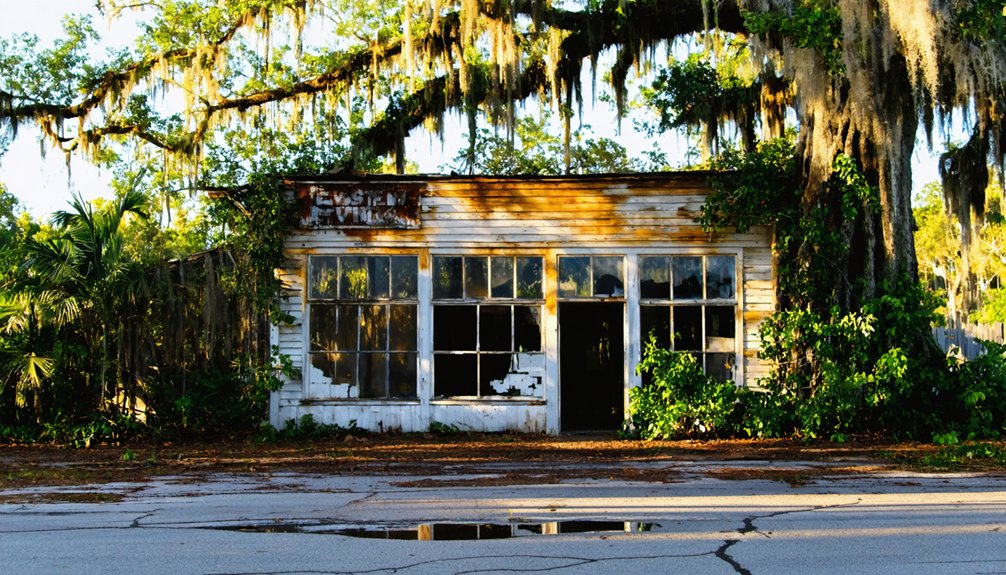
What remains of Providence today is modest, but still worth the detour. You won’t find museums or markers celebrating pioneer legends, but the land itself carries a quiet weight.
Head north on Price Creek Road into Columbia County, and you’ll reach Old Providence Baptist Church and its adjacent cemetery, where the oldest grave dates to 1855. These weathered stones are the closest thing to historical artifacts you’ll encounter here.
A feed store and family-owned grocery still operate nearby, representing the settlement’s last functional breath. Nothing original survives from the earliest days, but the cemetery preserves something raw and real.
You can reach the site easily by two-wheel drive, making this forgotten corner of North Florida surprisingly accessible for anyone chasing America’s abandoned past.
Old Providence Baptist Church and Cemetery: What You’ll Find
If you head north on Price Creek Road into Columbia County, you’ll find the Old Providence Baptist Church and Cemetery waiting quietly at the edge of history.
The congregation first gathered in a log cabin built in 1855, and the oldest grave marker in the adjacent cemetery dates to that same founding year.
Together, these remnants offer you a rare, tangible connection to the pioneers who built Providence from the ground up.
Cemetery’s Oldest Grave Marker
Among the cemetery’s most poignant discoveries is its oldest grave marker, dating back to 1855—the same year pioneers raised the original log cabin that served as their first meeting place.
This grave marker significance runs deep, connecting you directly to Providence’s earliest chapter. The cemetery symbolism here speaks volumes: these stones represent lives built on courage, faith, and frontier determination.
As you walk among the markers, consider what each one reveals:
- Community roots — settlers who transformed raw wilderness into an organized, thriving settlement
- Shared sacrifice — families who endured hardship together, bound by faith and proximity
- Lasting legacy — physical proof that Providence existed long before Florida’s modern landscape erased nearly every other trace
These stones outlasted everything else.
Log Cabin Church Origins
Those grave markers standing since 1855 connect directly to another founding moment that same year—the raising of the log cabin that became Old Providence Baptist Church.
When pioneers needed a gathering place, they built one with their own hands, stacking timber into a structure that anchored the entire church community through its earliest decades.
That log cabin heritage represents exactly what frontier settlers valued: self-reliance, shared purpose, and faith strong enough to build around.
You’re standing where families carved meaning out of raw Florida wilderness, long before roads made travel easy or stores made survival comfortable.
The congregation grew steadily, eventually outgrowing those original walls.
Reaching The Site
Reaching Old Providence Baptist Church means heading north on Price Creek Road into Columbia County, where the site waits at the end of a route any standard 2-wheel drive vehicle can handle.
You won’t need specialized equipment to access this window into Pioneer Life and Historical Significance.
What you’ll discover once you arrive:
- Old Providence Baptist Church – the congregation’s enduring symbol, originally anchored by a log cabin built in 1855
- The adjacent cemetery – where the oldest grave dates to 1855, offering a direct, sobering connection to the earliest settlers
- Preserved foundations – no original structures survive, but conservation efforts protect what little physical evidence remains
Come prepared to read the landscape carefully, because the land itself tells the story now.
How to Get to Providence, Florida
Getting to Providence, Florida is straightforward, and you won’t need a four-wheel drive to do it. Head north on Price Creek Road into Columbia County, where modern paved roads carry you directly to this site of remarkable historical significance.
The journey itself feels fitting — you’re retracing paths once traveled by pioneers whose legacy shaped North Florida’s earliest communities.
Once you arrive, you’ll find the Old Providence Baptist Church and Cemetery waiting quietly along the roadside. A feed store and family-owned grocery represent the only surviving functional structures still standing.
Park your vehicle, step out, and let the pioneer legacy sink in. The cemetery, the church, and the surrounding landscape tell a story that no museum could replicate — raw, real, and completely accessible to any freedom-seeking road tripper.
Other North Florida Ghost Towns Worth the Detour
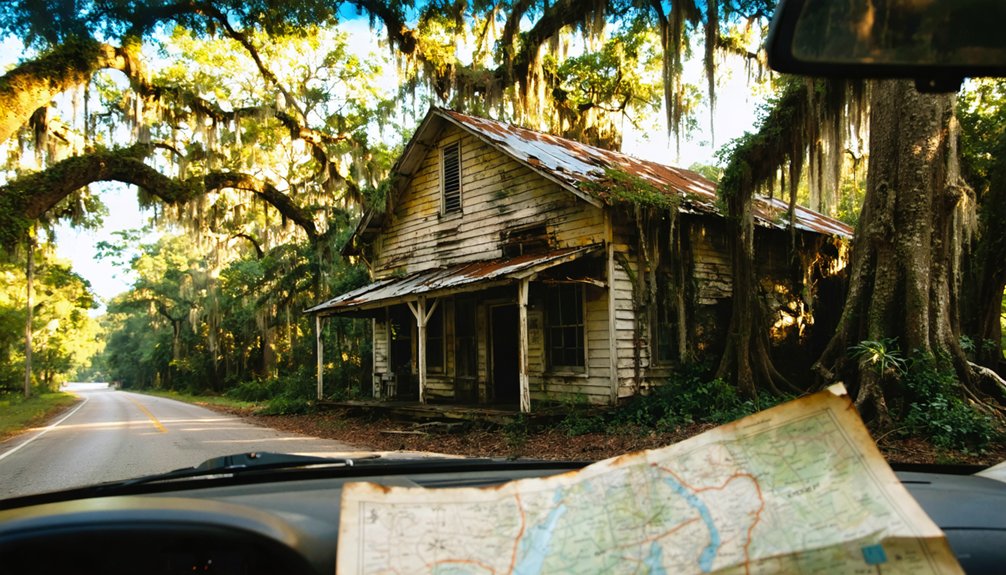
While Providence deserves every mile you put on your odometer, North Florida hides a string of other ghost towns that’ll reward the curious traveler willing to wander off the main highway.
Each stop offers a raw glimpse into pioneer lifestyle and scattered historical artifacts that connect you directly to Florida’s forgotten past.
- Bellamy – A once-thriving agricultural community reduced to crumbling foundations and overgrown cemetery plots.
- Fort Call – A former military outpost where earthworks and burial grounds tell stories of frontier survival.
- New Zion – A neighboring settlement sharing spiritual roots with Providence, accessible via unpaved back roads.
Pack water, fuel up, and treat these detours as chapters in the same compelling story.
What to Pack for a Ghost Town Road Trip
Exploring crumbling cemeteries and overgrown settlement sites demands more preparation than your average Sunday drive, so pack smart before you pull out of the driveway.
These road trip tips will keep you comfortable and capable in remote territory. Your packing essentials should include sturdy closed-toe shoes, insect repellent, sunscreen, and plenty of water since Providence sits in Florida’s unforgiving heat.
Bring a paper map as backup because cell signals disappear fast in rural Columbia County. A charged camera, portable battery pack, and a small first aid kit round out your core supplies.
Wear breathable, light-colored clothing to combat both heat and ticks. Toss a snack bag in the car, and you’re ready to explore Florida’s forgotten frontier on your own terms.
When Is the Best Time to Visit Providence, Florida?
Once you’ve got your bag packed and your boots laced, timing your visit will make or break the experience at Providence. The best seasons to explore this ghost town are fall and spring, when Florida’s heat backs off and nature trails surrounding Price Creek Road become genuinely walkable.
- Fall (October–November): Cooler temperatures reveal historical markers and photography spots without brutal humidity limiting your exploration.
- Spring (March–April): Wildflowers frame the cemetery grounds, offering cultural insights into pioneer life while nearby attractions remain uncrowded.
- Avoid Summer: Oppressive heat and afternoon storms restrict access to outdoor remnants.
Travel tips worth remembering: arrive early for soft morning light across the cemetery, research local events beforehand, and respect the preserved grounds that connect you directly to Florida’s forgotten pioneer heritage.
How to Visit North Florida Ghost Towns Without Causing Damage
Visiting ghost towns like Providence demands a mindset that balances curiosity with responsibility, because the fragile remnants you encounter—weathered gravestones, crumbling foundations, aging church grounds—can’t recover from careless handling.
Ghost town preservation depends entirely on visitors who treat these spaces with genuine respect.
Follow these principles for respectful exploration:
- Stay on established paths rather than trampling unmarked burial areas
- Never touch or reposition gravestones, even ones that appear stable
- Photograph instead of collecting — leave every artifact exactly where you find it
- Pack out everything you bring in, including food wrappers and water bottles
- Keep noise minimal out of respect for both the location’s history and nearby residents
Your freedom to explore these sites tomorrow depends on how responsibly you treat them today.
Frequently Asked Questions
Were Any Providence Settlers Connected to Other North Florida Ghost Towns?
Yes, you’ll find Pioneer connections linking Providence settlers to nearby communities! Circuit riders served New Zion, Ft. Call, and Old Providence, suggesting shared Providence origins tied these North Florida ghost towns through faith and family networks.
Can Visitors Legally Metal Detect or Collect Artifacts at Providence Cemetery?
Carefully consider cemetery sanctity before you search — metal detecting regulations protect Providence’s precious past. You shouldn’t collect artifacts here, as artifact preservation laws legally restrict removal, safeguarding sacred soil and the pioneering people resting within.
Did Any Providence Pioneer Family Descendants Still Live in the Area?
The knowledge doesn’t confirm whether descendants still live nearby, but you’ll likely uncover rich descendant stories and family heritage by connecting with local Columbia County historical societies who actively preserve Providence’s pioneer legacy.
Are There Any Documented Photographs or Sketches of Original Providence Buildings?
Sadly, you won’t find any documented photographs or sketches capturing Providence’s original architecture. Nothing remains to reveal its historical significance — those images, if they ever existed, have vanished like the town itself, lost forever to time.
Was Providence Ever Considered for Official Florida Historical Landmark Designation?
There’s no documented record of Providence receiving official Florida historical landmark designation, but you’ll find that ghost town history and preservation efforts keep this pioneer community’s memory alive through its remaining cemetery and local heritage.
References
- https://providenceghosttour.com/ghosts-of-providence-historical-paranormal/
- https://usghostadventures.com/providence-ghost-tour/
- https://theforgottensouth.com/pioneers-providence/
- https://www.ghosttowns.com/states/fl/providence.html
- https://cccourthouse.org/wp-content/uploads/2023/12/Ghost-towns-and-Cemeteries-of-Citrus-County.pdf
- https://en.wikipedia.org/wiki/List_of_ghost_towns_in_Florida
- https://www.youtube.com/watch?v=OtKF4m3MNFI&vl=en-US