Quartzburg sits just 24 miles north of Boise, making it an easy day trip into Idaho’s gold rush past. You’ll drive through Horseshoe Bend and into the Boise Basin, where two original structures still stand on private property — so you’ll need permission before exploring. Pair it with nearby ghost towns like Placerville and Idaho City for a full route. There’s far more to this forgotten hillside town than you’d expect.
Key Takeaways
- Quartzburg sits on private property, so contact Gold Hill Reclamation and Mining Company for access permission before planning your visit.
- The town is 24 miles north of Boise, passing through Horseshoe Bend, then 11 miles east into the Boise Basin.
- Visit during fall, spring, or summer, as winter snow makes roads dangerous and potentially impassable to the site.
- Nearby ghost towns like Idaho City, Placerville, Centerville, and Pioneerville create a rewarding full-day road trip itinerary.
- Only two original structures survive: the post office and general store, alongside mine tailings and scattered building foundations.
Why Quartzburg Is Idaho’s Most Underrated Gold Rush Ghost Town
While most Idaho history buffs flock to Boise Basin’s more celebrated ghost towns, Quartzburg sits quietly off the beaten path, holding secrets that rival any of its famous neighbors. Its historical significance runs deep — the Gold Hill Mine produced over 450,000 ounces of gold between 1863 and 1938, fueling an entire region’s dreams.
You won’t find crowds here. You’ll find authenticity. Quartzburg’s mining legacy shaped Idaho’s economic backbone during an era when freedom meant staking your claim and building something from nothing.
Watch the population decline unfold through census records — 152 residents in 1920, 181 in 1930 — then silence.
Two devastating fires. A mine closure. A forgotten post office. This ghost town didn’t just fade; it earned its quiet through decades of relentless, rugged history.
Can You Actually Visit Quartzburg? Access and Permission Explained
Quartzburg sits on 289 acres of private property, purchased in 2005, so you can’t simply roll up and wander freely through its surviving structures.
The Gold Hill Reclamation and Mining Company owns the land, meaning you’ll need permission before setting foot near the remaining post office and store. Reach out in advance, respect their boundaries, and you’ll honor both ghost town safety and historical preservation principles that keep fragile sites like this alive for future explorers.
The roads accessing Quartzburg are 2WD-friendly, making the journey itself straightforward from Placerville, just 2.5 miles east. Visit during fall, spring, or summer to avoid heavy snow.
Freedom here isn’t about ignoring rules — it’s about earning access to something rare, quietly standing where gold fever once burned white-hot.
How to Get to Quartzburg From Boise
From Boise, the drive to Quartzburg covers roughly 24 miles north — a short haul that punches well above its weight in scenery and history.
Head north toward Horseshoe Bend, then wind east into the Boise Basin along scenic routes that once carried gold-hungry prospectors chasing their fortunes.
Wind north, then east into the Boise Basin — tracing the same routes that once lured gold-hungry prospectors west.
You’ll pass through terrain steeped in historical significance — these same hills fed 30,000 to 40,000 souls during the 1860s boom.
From Horseshoe Bend, Quartzburg sits about 11 miles east, while travelers coming from Idaho City can approach from Placerville, just 2.5 miles away.
The roads are 2WD-friendly, so you don’t need a rugged rig — just a full tank and curiosity.
Fall, spring, and summer offer the best conditions before winter snow closes in.
How a Single Creek Discovery Launched the Boise Basin Gold Rush
Before you reach Quartzburg, it helps to understand the discovery that set everything in motion. In 1862, George Grimes and his party stumbled upon gold along Grimes Creek in the Boise Basin, triggering one of the American West’s most significant rushes toward freedom and fortune. That single gold discovery reshaped an entire region almost overnight.
The mining impact was staggering. Within years, 30,000 to 40,000 people flooded the basin, carving towns from wilderness and pulling wealth from the earth.
The Gold Hill Mine alone eventually yielded over 450,000 ounces of gold between 1863 and 1938.
When you walk Quartzburg’s quiet grounds today, you’re standing inside a story that began with one creek, one discovery, and thousands of restless souls chasing something real.
What Happened to the Gold Hill Mine?
The Gold Hill Mine drove Quartzburg’s entire existence, and its story follows a brutal but familiar arc. From 1863 to 1938, its gold mining operations pulled over 450,000 ounces from the earth, giving this ghost town its heartbeat and its historical significance.
You can almost feel the economic impact when you stand here — the weight of thousands of lives built around a single hole in a mountainside.
Then the vein ran thin. The 1941 Mining Act killed what little remained, prohibiting precious metal mining during wartime.
Today, the Gold Hill Reclamation and Mining Company still processes 180,000 tons of pre-1938 tailings on private land. Local legends linger, but the mine itself is silent — a reminder that freedom built on extraction has an expiration date.
How Two Fires Destroyed Quartzburg and What Survived
Quartzburg burned twice, and the second fire made sure almost nothing survived. The 1929 ghost town fires took most structures, but the 1931 blaze finished the job, erasing nearly everything that remained standing.
What survived tells the real story of historical preservation in a lawless frontier town:
- August 1929: Fire tore through Quartzburg, destroying most buildings
- 1931: A second fire burned everything remaining except two structures
- The post office and general store still stand today as sole survivors
- The mine’s mill burned in 1931, accelerating the town’s economic collapse
- Only ruins and memories remain where hundreds once lived and worked
You’re walking through what two fires couldn’t completely erase — a place that refused to vanish entirely.
What You Can Still See in Quartzburg Today
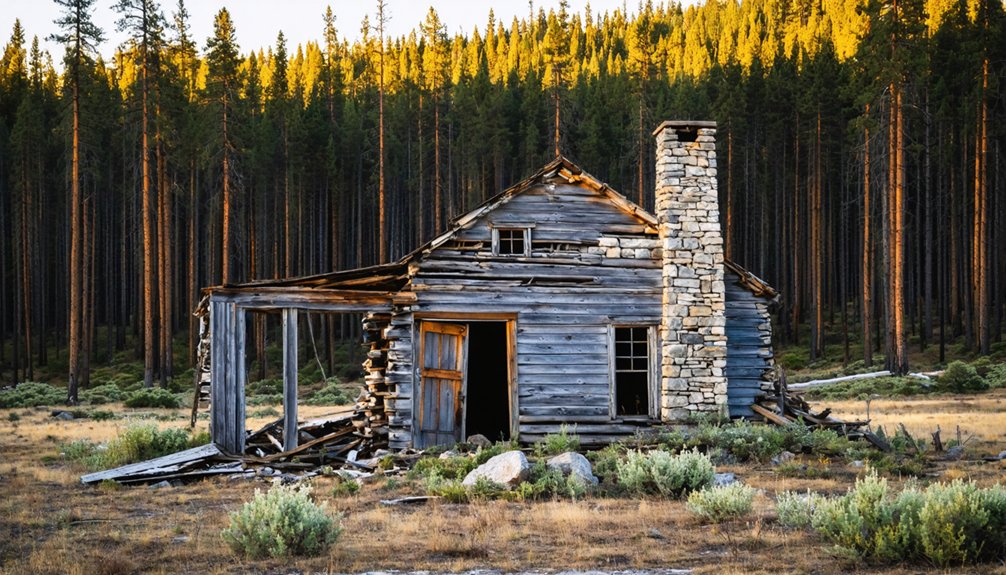
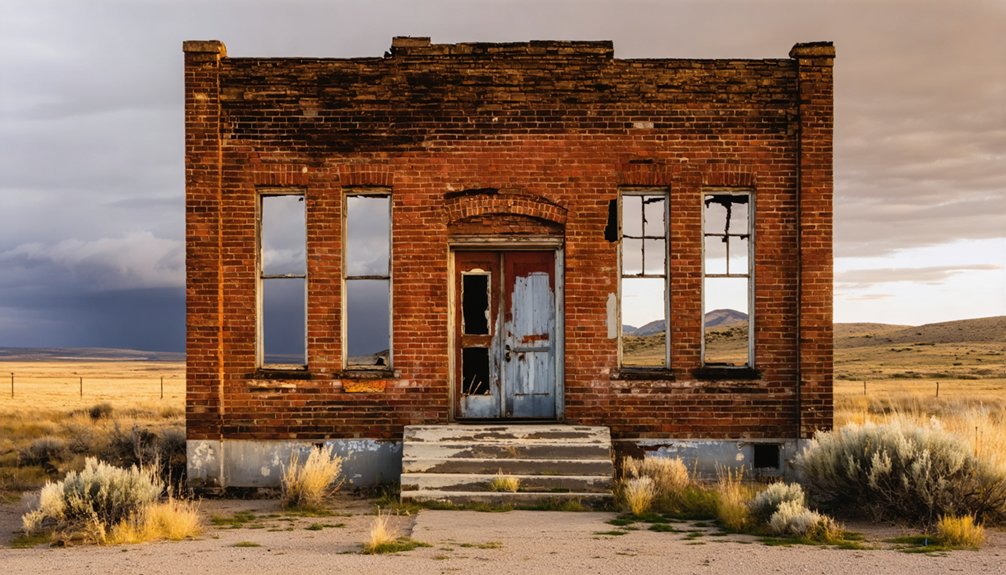
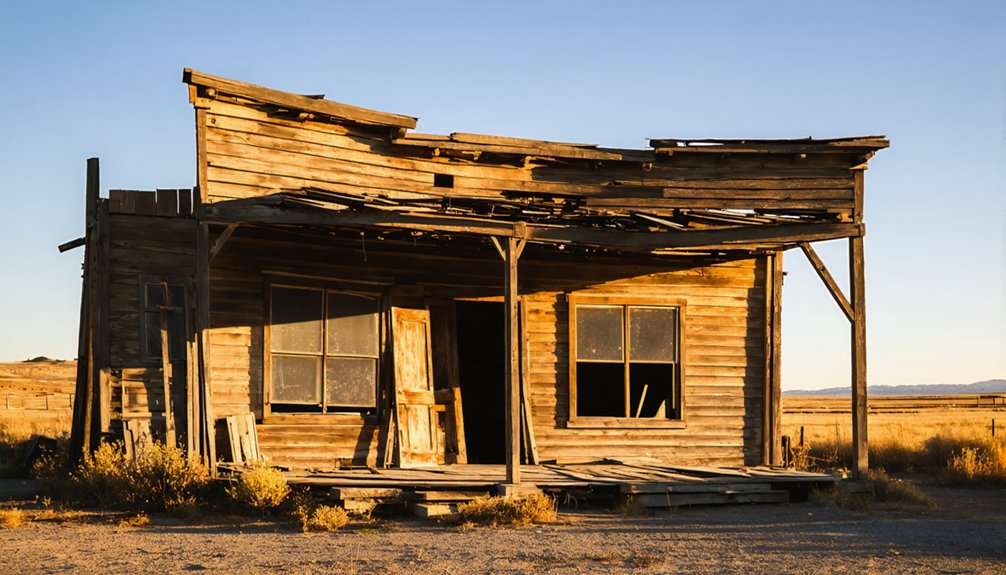
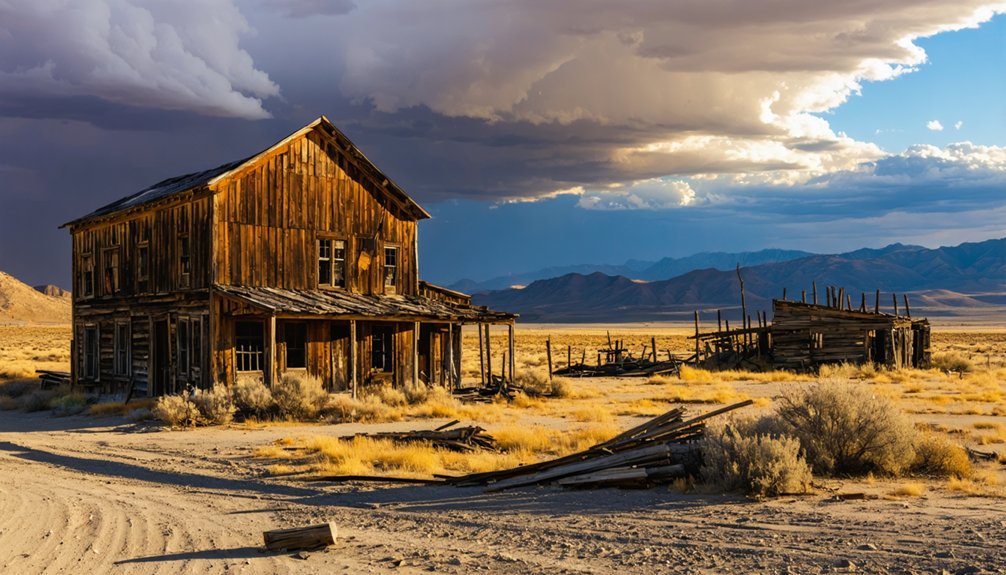
When you visit Quartzburg today, you’ll find only two structures standing against time: the old post office and the general store, both miraculously spared when the 1931 fire leveled everything else.
You can also explore the Gold Hill Mine site, though it’s private property owned by the Gold Hill Reclamation and Mining Company, so you’ll need permission before stepping foot on the grounds.
Active tailings processing continues there, as workers extract value from roughly 180,000 tons of pre-1938 ore, keeping the mine’s century-old story quietly alive.
Surviving Historic Buildings
After two fires tore through Quartzburg — one in 1929 and another in 1931 — only two buildings survived to tell the story: the old post office and the general store.
Their historic preservation speaks to their architectural significance amid decades of abandonment.
When you visit, here’s what you’ll encounter:
- The post office, which operated until 1940, stands as a rare surviving landmark
- The general store, weathered but intact, echoing frontier commerce
- Surrounding foundations marking where homes and businesses once stood
- Tailings and mining remnants from the legendary Gold Hill Mine nearby
- A landscape frozen in time, where silence replaced a once-thriving community of 181 residents
You’re walking through a place where history didn’t just happen — it stubbornly refused to disappear completely.
Gold Hill Mine Remnants
Beyond the two surviving buildings, the Gold Hill Mine‘s footprint still dominates the landscape — a brooding reminder that this quiet hillside once churned out over 450,000 ounces of gold between 1863 and 1938.
You’ll notice the tailings and earthworks that speak volumes about gold mining’s historical significance here, where community dynamics once revolved entirely around ore extraction. The economic impacts were staggering — this single operation sustained families, built a town, and shaped Boise Basin’s identity for generations.
Today, the Gold Hill Reclamation and Mining Company privately owns the site, actively processing roughly 180,000 tons of pre-1938 ore tailings. You can’t freely roam without permission, but standing at the boundary, you’ll feel the weight of everything this mountain once gave — and took.
Ongoing Tailings Processing
One of the most quietly striking things about Quartzburg today is that the mining story isn’t entirely past tense — the Gold Hill Reclamation and Mining Company is actively working through roughly 180,000 tons of pre-1938 ore tailings on-site.
Modern mining technology is breathing new life into tailings history, extracting what earlier methods missed.
What this means for your visit:
- You’re witnessing living industrial archaeology, not just ruins
- Pre-1938 extraction techniques left significant gold behind
- Current operations connect past and present mining eras
- The site sits on 289 acres of private property — permission required
- Active processing means the landscape constantly shifts
Respect the boundaries, but appreciate what you’re seeing: a century-old story still unfolding beneath your feet.
When Is the Best Time to Visit Quartzburg?
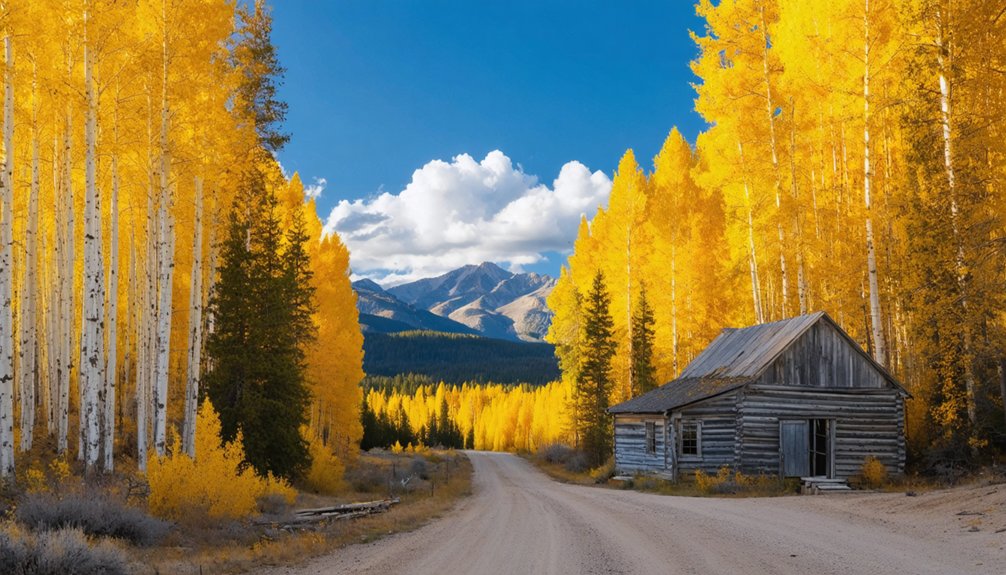
You’ll find Quartzburg most accessible and atmospheric during fall, spring, and summer, when the 2WD roads leading through Boise County’s rugged terrain are clear and manageable.
Winter brings heavy snow to this 4,675-foot elevation site, making roads treacherous and potentially impassable for standard vehicles.
Plan your visit around the shoulder seasons if you want the best combination of decent weather, open roads, and that particular golden-hour light that makes ghost town photography so rewarding.
Optimal Visiting Seasons Explained
Timing your visit to Quartzburg can make or break the experience, since the ghost town sits at 4,675 feet in the Idaho mountains where winter snow can close off access entirely.
Fall, spring, and summer deliver ideal weather for exploring the surviving post office and store on those quiet 289 acres of private land.
Plan your seasonal activities around these conditions:
- Spring: Snowmelt reveals the landscape’s raw beauty and opens 2WD roads
- Summer: Long daylight hours maximize exploration time across the Boise Basin
- Fall: Crisp air and golden foliage create an atmospheric, nostalgic backdrop
- Winter: Roads close; access becomes impossible without specialized equipment
- Year-round: Combine visits with nearby Placerville, Pioneerville, and Idaho City for a fuller gold rush story
Winter Weather Challenges
Winter closes Quartzburg off like a vault, burying the 2WD roads under snow and cutting off access to those last two surviving structures standing silent on 289 acres of private land.
Sitting at 4,675 feet elevation, Boise County winters hit hard and fast. Snow navigation becomes genuinely dangerous on these remote mountain roads, and you won’t find plows waiting to bail you out.
Winter preparedness isn’t optional here — it’s the price of admission for chasing this history. The same isolation that preserved Quartzburg’s ghost town character becomes your enemy when temperatures drop.
Save this one for fall, spring, or summer, when the roads open up and you can actually reach what little remains of the town that the 1929 and 1931 fires couldn’t finish off.
Road Conditions By Season
Once the snow releases its grip on the Boise Basin high country, Quartzburg’s 2WD roads open back up for fall, spring, and summer visits — the three seasons that actually let you reach the post office and store still standing on that 289-acre private spread.
Road safety depends on knowing what each season delivers.
- Spring: Muddy stretches after snowmelt; check conditions before rolling out
- Summer: Driest, most reliable access; ideal for combining Placerville and Idaho City stops
- Fall: Crisp, clear days before early snow; watch forecasts closely
- Winter: Roads close; don’t attempt without serious 4WD capability
- Year-round seasonal precautions: Always carry water, fuel, and a paper map — cell service disappears fast out here
Which Boise Basin Ghost Towns Are Worth Adding to Your Route?
While you’re already making the trek to Quartzburg, why not extend your journey through the Boise Basin‘s other storied ghost towns?
Each nearby settlement deepens your ghost town exploration with layers of mining history that shaped Idaho’s identity.
Placerville sits just 2.5 miles east, making it an effortless first stop.
Idaho City, the basin’s crown jewel, once rivaled Portland in population.
Centerville and Pioneerville round out the circuit, each carrying their own weathered character and forgotten streets.
Together, these towns form a connected web of 1860s gold rush heritage, all within a reasonable drive from Boise, just 24 miles south.
Woven together by gold rush history, these 1860s towns create an authentic Western time capsule just miles from Boise.
You won’t find this concentration of authentic Western history anywhere else in Idaho.
How to Build a Full Day Around Your Quartzburg Visit
Planning a full day around Quartzburg means treating the surrounding Boise Basin as one continuous story rather than a series of isolated stops.
Start early, move freely, and let mining history guide your route.
- Begin in Idaho City, just 24 miles from Boise, before crowds arrive.
- Drive north through Centerville and Pioneerville, pausing for ghost town photography at each remnant streetscape.
- Reach Quartzburg mid-morning when light hits the surviving post office and store.
- Stop in Placerville, only 2.5 miles east, for historical context.
- End near Horseshoe Bend, 11 miles west, as afternoon light fades.
You’re tracing a corridor where 30,000 to 40,000 people once chased gold.
That story deserves a full day, not a hurried glance.
Frequently Asked Questions
What Elevation Is Quartzburg Located at Above Sea Level?
You’ll find this ghost town’s elevation impact at 4,675 feet above sea level—where Idaho’s crisp mountain air once fueled gold rush dreams, and history’s restless spirit still calls to those who crave freedom’s open road.
How Many Ounces of Gold Did the Gold Hill Mine Produce?
Like veins of gold hidden in rock, you’ll uncover the Gold Hill Mine’s historical significance: it produced over 450,000 ounces of gold from 1863–1938, making it a monumental tribute to Idaho’s gold mining legacy.
When Did Quartzburg’s Post Office First Begin Operating?
Quartzburg’s postal service first opened its doors in 1874, connecting you to this storied ghost town history. For 66 years, it’d serve the community until closing in 1940, leaving only memories behind.
Who Originally Laid Out the Quartzburg Townsite and in What Year?
Forget modern city planners! David E. Coughanour’s 1864 townsite layout gave Quartzburg its historical significance. You’d appreciate how one visionary’s blueprint sparked a free-spirited mining community that you can still explore today.
How Many Acres of Private Property Does Quartzburg Currently Sit On?
Quartzburg sits on 289 acres of private property, so you’ll want to respect property boundaries and check local regulations before exploring. It’s a hauntingly beautiful piece of Idaho’s golden past waiting to be discovered.
References
- https://westernmininghistory.com/towns/idaho/quartzburg/
- https://motoidaho.com/articles/gold-mining-ghost-towns-near-boise/
- https://history.idaho.gov/wp-content/uploads/2018/08/0064.pdf
- https://yellowpinetimes.wordpress.com/2024/03/10/idaho-history-mar-10-2024/
- https://www.ghosttowns.com/states/id/quartzburg.html
- https://kids.kiddle.co/Quartzburg