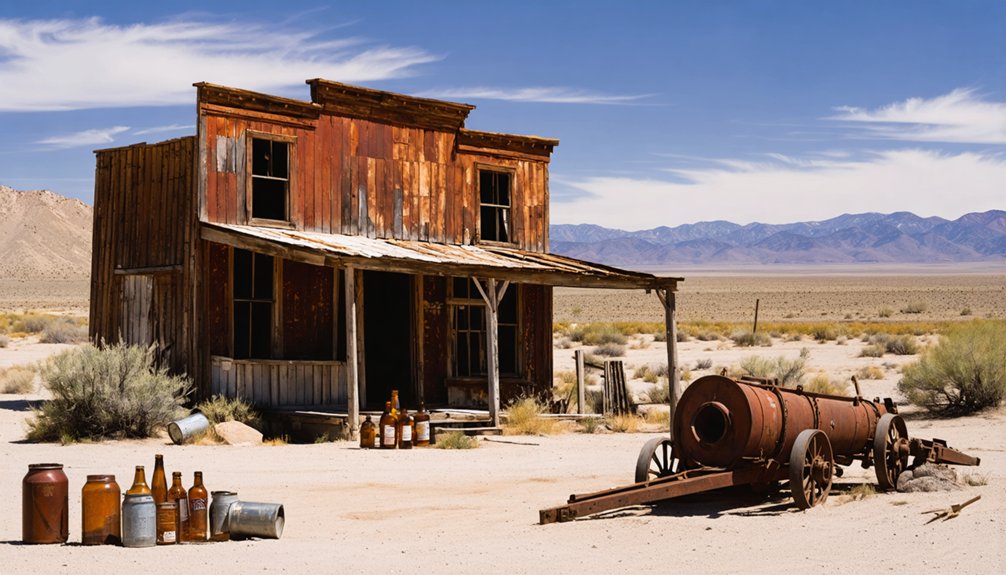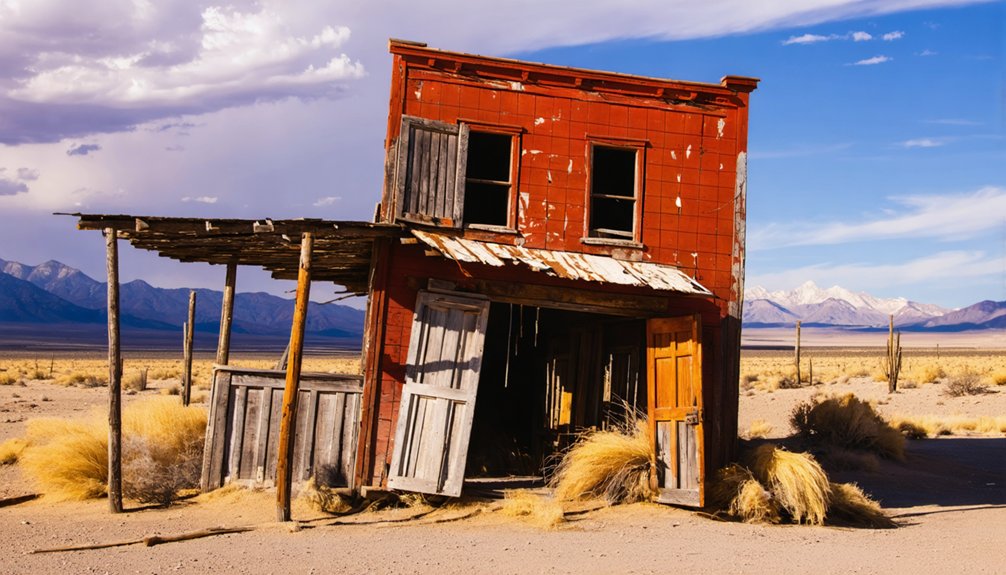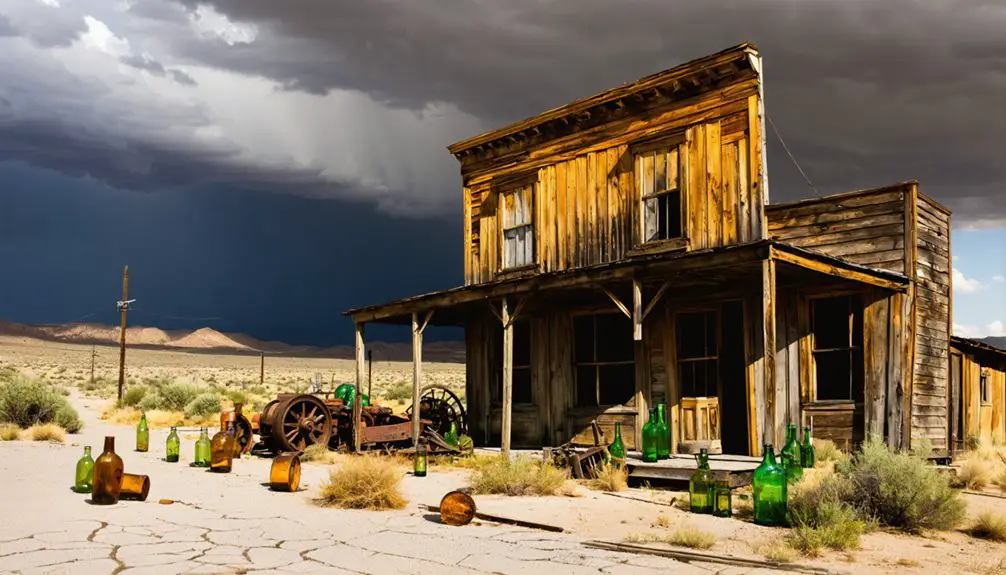
To plan your ghost town road trip to Osceola, Nevada, head three miles west of Great Basin National Park on Highway 50, where Nevada’s longest-lived placer mining town produced nearly $5 million in gold. You’ll find a historic cemetery, a crumbling brick storefront, and echoes of 1,500 souls who once chased fortune through high-desert silence. Bring water, respect private property boundaries, and stick to gravel-ready vehicles. There’s far more to this forgotten boomtown‘s story waiting just ahead.
Key Takeaways
- Osceola is located three miles west of Great Basin National Park, accessible via a clearly marked turnoff on US 93/50.
- The road to Osceola is high-desert gravel, making low-clearance vehicles unsuitable for the trip.
- Visitors can explore a historic cemetery, an old brick storefront, and one original remaining building on-site.
- Most of the townsite is private property, so staying on the road and respecting fenced boundaries is essential.
- Bring water, sun protection, and a camera, as no businesses or services are currently available in Osceola.
Why Osceola Is Nevada’s Most Underrated Ghost Town
When most people think of Nevada ghost towns, their minds jump to the Comstock Lode or the silver boomtowns scattered across the central desert—but Osceola tells a different story entirely.
Tucked into the base of the Snake Mountains near Great Basin National Park, this gold placer camp harbors hidden treasures and mining legends that most travelers drive right past on Highway 50.
Osceola produced nearly $5 million in gold, sustained 1,500 residents at its peak, and earned its place as Nevada’s longest-lived placer mining town—yet it rarely appears on anyone’s radar.
That obscurity is exactly what makes it worth your time. You’ll wander where genuine history happened, without the crowds, the gift shops, or the guardrails.
That’s the freedom this place quietly offers.
Osceola’s Gold Rush History and the $6,000 Nugget
Though the story of Osceola starts quietly—two prospectors, a 12-mile quartz vein, and a remote Nevada canyon in 1872—it builds into something far more dramatic.
John Versan’s 1877 placer gold discovery ignited a stampede, pulling 400 prospectors into the canyon before the decade closed. By 1882, 1,500 people called this high-desert camp home.
Four hundred prospectors. Five years. One canyon. By 1882, Osceola had become a thriving high-desert community of 1,500.
Then came the nugget legends. In 1886, miners unearthed a gold discovery so extraordinary it stopped the camp cold—a massive nugget valued at $6,000, some accounts placing it at 25 pounds.
That single find breathed years of life back into Osceola’s operations.
When you stand in that canyon today, you’re walking ground where fortune literally broke loose from a hillside. That feeling doesn’t fade easily.
What You Can Still See at Osceola Today
Osceola doesn’t offer much to the eye anymore, but what remains carries real weight. One original building still stands, fenced off and marked private, yet powerful in its stubborn survival.
An old brick storefront peers through the sagebrush, whispering of the 1,500 souls who once crowded these streets. The cemetery is your clearest window into Osceola’s past — walk it slowly and let the ghost town remnants speak.
Respect the private property markers throughout the townsite; view what you can from the road. Small-scale mining operations still quietly turn the earth nearby, keeping the mining heritage alive in a modest but meaningful way.
A few seasonal homes dot the landscape. No businesses, no services — just open sky, silence, and the weight of a place that gave Nevada nearly $5 million in gold.
How to Reach Osceola Ghost Town From Highway 50
Getting to Osceola is straightforward once you’re on US 93/50 in central Nevada. This directions guide couldn’t be simpler — watch for the clearly marked turnoff that leads you three miles west of Great Basin National Park‘s boundary.
You’re following the same desert corridors that drew nearly 1,500 gold-seekers to these Snake Mountain foothills over a century ago.
The scenic routes approaching Osceola reward patient travelers. Highway 50’s legendary loneliness actually works in your favor here, stripping away distraction and sharpening your senses before arrival.
Spring and Snake Valleys spread wide on either side, their cattle ranches and open land unchanged in spirit from the 1880s.
Park near the road’s edge, respect the private property markers, and let the ghost town reveal itself on its own terms.
Visiting Osceola: Road Conditions, Rules, and What to Bring
Once you’ve turned off Highway 50, the road to Osceola shifts quickly from pavement to the kind of high-desert gravel that rewards slow, deliberate driving — so leave the low-clearance vehicles behind if you can.
Road safety here means watching for loose rock, soft shoulders, and blind curves that demand your full attention.
Loose rock, soft shoulders, blind curves — this road asks for your attention and won’t accept anything less.
When you arrive, respect defines the experience. Most of the townsite sits on private property, so visitor etiquette isn’t optional — it’s essential.
Stay on the road, keep your eyes on the cemetery and the old brick storefront visible from public access points, and resist the urge to cross fenced boundaries.
Bring water, sun protection, and a camera. No services exist here.
What you’ll find instead is silence, history, and honest desert light.
Frequently Asked Questions
What Mines Were the Most Productive During Osceola’s Peak Mining Years?
During Osceola’s peak years, you’ll find the most productive mines were Cumberland, Crescent, Eagle, Verde, Stem-Winder, Guilded Age, and Saturday Night—each fueling the district’s legendary golden era and inspiring endless wanderlust for treasure seekers.
How Did the Same Family Cause Three Separate Fires in Osceola?
Coincidentally, fire causes and family history intertwine mysteriously here—records don’t detail *how* the same family sparked three separate blazes, but you’d find their accidental legacy shaped Osceola’s haunting, freedom-calling ruins you’re drawn to explore today.
Was the Famous Gold Nugget Ever Recovered or Preserved in a Museum?
The records don’t confirm the gold nugget discovery’s preservation in any museum. You’re left chasing its historical significance through legend alone—a thrilling mystery that’ll pull your wandering spirit deeper into Osceola’s untamed, golden past.
Are There Any Guided Tours Available for Visiting Osceola Ghost Town?
No guided tours exist, but you’ll uncover a million stories exploring on your own! Embrace guided exploration of Osceola’s rich local history independently — wander the cemetery, spot remaining structures, and let Nevada’s wild, untamed spirit fuel your adventure.
What Silver, Lead, and Tungsten Operations Existed Alongside Gold Mining?
You’ll discover that Osceola’s miners didn’t stop at gold — silver extraction, lead, and tungsten operations thrived alongside, using diverse mining techniques that collectively produced nearly $5 million, fueling dreams of untamed wealth across Nevada’s rugged frontier.
References
- https://travelnevada.com/ghost-town/osceola-ghost-town/
- https://www.roadtripryan.com/go/t/nevada/northern-nevada/osceola-ghost-town
- https://historical-markers-of-the-world.com/2024/11/13/osceola-ghost-town-historical-marker-ely-nevada/
- https://www.youtube.com/watch?v=hnITbtd8DNk
- http://exploringtheamericanwest.blogspot.com/2011/07/osceola-nevada-july-1-2011.html
- https://www.nvexpeditions.com/whitepine/osceola.php
- https://forgottennevada.org/sites/osceola.html
- https://www.nps.gov/grba/learn/historyculture/the-osceola-ditch.htm