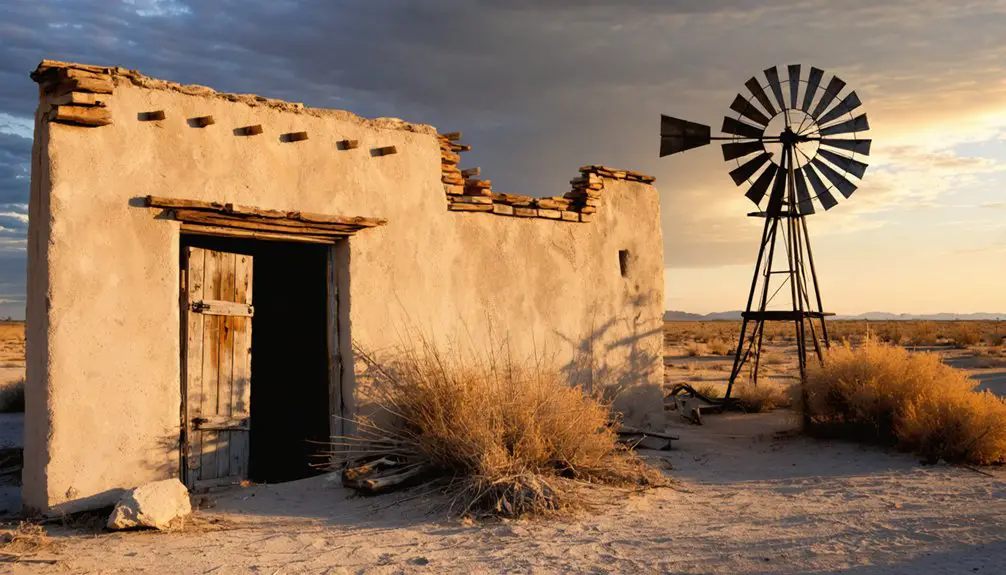
Planning a ghost town road trip to Quincy, Texas means venturing deep into Bee County’s private ranchland along Blanco Creek, where 10,500 acres once bustled with Kansas settlers and frontier ambition. Today, you’ll find crumbling house blocks, stubble fields, and faint foundations marking what’s left of this forgotten village. Since the John Quincy Ranch is privately held, you’ll need landowner permission before setting foot on the property. Keep going to uncover everything you need to make this remote adventure happen.
Key Takeaways
- Quincy, Texas, founded in 1839, evolved from a log house settlement into a 10,500-acre ranch before experiencing rapid decline.
- Remnants of “Little Quincy” include scattered house blocks, foundations, and stubble fields marking the former village layout.
- The entire John Quincy Ranch is privately owned; contact the O’Brien family for access permission before visiting.
- Pack a first-aid kit, snacks, written landowner permission, and appropriate outdoor attire for remote exploration conditions.
- Visit during golden hour with wide-angle and macro lenses; confirm drone regulations before capturing aerial perspectives.
The Rise and Fall of Quincy, Texas Ghost Town
Before Quincy, Texas became a forgotten stretch of stubble fields and crumbling house blocks, it had a story worth telling.
The town origins trace back to 1839, when Major Edmund Hall Dodd and his wife left Kentucky to build a log house in what’s now Bee County.
That early settlement history eventually gave way to the John Quincy Ranch, a sprawling 10,500-acre hacienda along Blanco Creek.
What Still Exists at the Original Village Site
When you walk the pastures of the old John Quincy Ranch today, you’ll notice stubble fields breaking through the ground where the original village once bustled with settlers and shopkeepers.
Crumbling house blocks, known locally as Little Quincy, stand as silent markers of the homes that Kansas families built after buying tracts from the Enterprise Land and Colonization Company.
These scattered foundations are all that remain of a town that rose quickly, drew hopeful settlers, and faded just as fast.
Remnants Of Old Foundations
Scattered across the pastures of the old John Quincy Ranch, stubble fields and weathered house blocks are nearly all that remain of what was once a promising South Texas settlement.
When you walk these grounds, you’re stepping into foundation exploration territory where history hides beneath the grass. The remnants locals call “Little Quincy” mark where homes, a drug store, and a post office once stood.
These scattered blocks carry real historical significance, quietly telling the story of Kansas families who arrived full of hope and a land company that couldn’t deliver on its promises.
You won’t find polished markers or guided tours here — just raw, unfiltered evidence of a community that rose fast and faded faster across Bee County’s open ranch land.
Stubble Fields Mark Village
Beyond those weathered house blocks, the stubble fields themselves tell an equally compelling story about what Quincy once was. As you walk the pastures, you’ll notice irregular patches where vegetation grows differently — that’s stubble significance at work, with altered soil composition revealing where structures, gardens, and pathways once existed.
This ghost town ecology fascinates anyone paying close attention. Decades of human settlement changed the land’s chemistry, and plants still respond to those buried layers of history.
Former yards and cleared lots produce distinct growth patterns that contrast sharply with surrounding native brush.
You’re fundamentally reading the village’s layout through the landscape itself. Ranch hands working the O’Brien property noticed these patterns for years, unknowingly mapping Quincy’s forgotten footprint with every season’s growth.
Can You Actually Visit the John Quincy Ranch?
If you’re hoping to walk the grounds of the John Quincy Ranch, you’ll need to secure permission first, since the entire 10,500-acre property remains privately held.
Without that access, you can still catch glimpses of the old village layout from surrounding pastures, where stubble fields and crumbling house blocks hint at the community that once thrived here.
Plan your visit carefully, respect the land boundaries, and reach out to the current owners before making the trip.
Private Land Access Challenges
Visiting the John Quincy Ranch isn’t as simple as punching coordinates into your GPS and hitting the road—the entire site sits on privately held land spanning over 10,500 acres in Bee County, Texas.
Private land access issues mean you can’t just roll up and wander freely through the pastures where stubble fields and old house blocks mark what’s left of this forgotten community.
The O’Brien family has held this ranch since at least 1958, and no public entry points are recorded.
If you’re serious about exploring Little Quincy’s remnants, you’ll need to contact the current landowners directly and secure permission before making the trip.
Without that step, you’re likely turning around at a fence line with nothing but a rural road view.
Ranch Entry Permission Required
So you know the land is private—but what does that actually mean for your road trip plans? It means ranch access isn’t guaranteed, and you can’t simply pull off the road and wander in.
The John Quincy Ranch spans over 10,500 acres, currently held by private landowners who control every entry point.
Permission requirements are real here. You’ll need to contact the landowners directly before visiting, and there’s no guarantee they’ll say yes.
No public trails, no welcome signs, no open gates exist to invite you in.
If you’re serious about seeing the stubble fields and old house blocks marking Little Quincy’s former village, start making calls early.
Respect the boundaries, do the legwork, and you might just earn access to this forgotten slice of Texas history.
Visible Remnants From Pastures
Stubble fields and crumbling house blocks are about all that remain of Little Quincy today, and even seeing those requires you to earn your access first.
Once you’re standing inside those pastoral landscapes, the historical significance of what once thrived here hits differently.
From the pastures, you’ll spot:
- Stubble patterns cutting through open grassland, outlining where streets and structures once organized daily life
- Old house blocks scattered across the property, locally called Little Quincy, marking former residential foundations
- Field irregularities revealing the ghost of a village that Kansas families once called home
No signage guides you.
No trail marks the path.
You’re reading the land itself, piecing together a community that boomed, faded, and surrendered itself back to south Texas soil.
How To Reach Quincy in Bee County
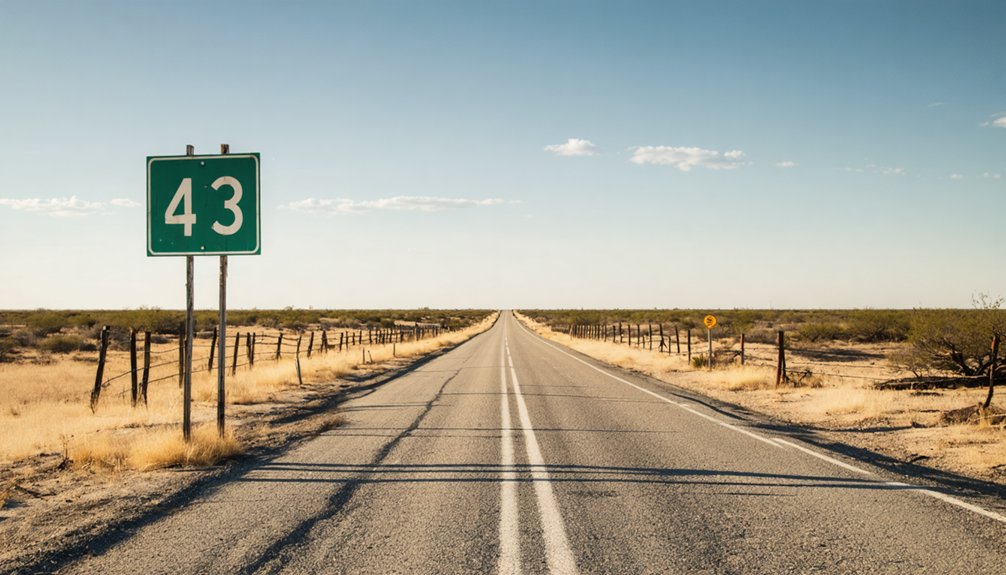
Reaching Quincy in Bee County means traversing deep into south Texas ranch country, where paved roads give way to private land stretching across more than 10,500 acres along Blanco Creek.
You’ll need permission from the current landowners before setting foot on the property, so plan ahead and make contact early.
Road conditions vary across this sprawling terrain, shifting from rough caliche tracks to open pasture, so bring a capable vehicle.
Watch for local wildlife along the way — deer, wild turkey, and other native species roam freely across this undisturbed landscape.
No GPS coordinates exist in recorded history for Quincy’s exact location, meaning you’ll rely on local knowledge and a keen eye for the stubble fields and old house blocks that mark where this forgotten community once stood.
Other Bee County Ghost Towns Worth Pairing With Quincy
While Quincy makes for a compelling destination on its own, Bee County holds enough forgotten history to fill an entire weekend of exploration.
Pair your visit with other ghost towns scattered across this south Texas landscape, where stubble fields and crumbling foundations tell stories of booms gone quiet.
- Blanco Creek corridor: Follow the creek’s path to uncover ranch remnants tied to the region’s earliest settlers.
- Former hacienda sites: Trace Spanish-era land holdings that predate Anglo settlement, connecting Bee County’s layered past.
- Abandoned irrigation settlements: Scout sites where syndicates once promised revival but ultimately faded, mirroring Quincy’s own story.
You’ll find that Bee County’s ghost towns reward the curious traveler willing to wander off paved roads and into open ranchland.
What To Bring for a Remote Ranch Ghost Town Visit
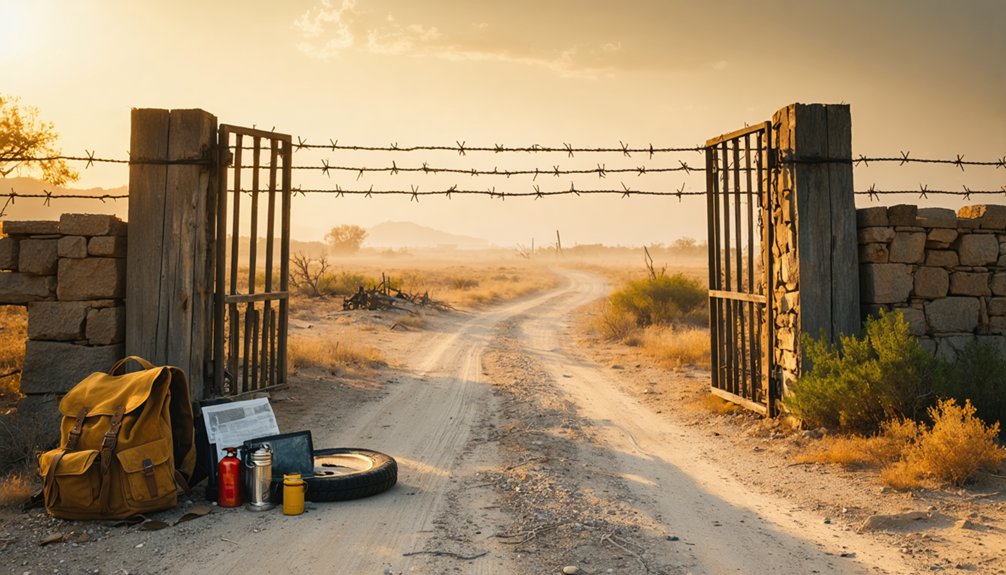
Exploring a remote ranch ghost town like Quincy demands preparation you won’t regret. Pack packing essentials like plenty of water, sunscreen, sturdy boots, and a detailed map since you’ll find zero facilities on this private land.
Bring a first-aid kit and snacks for extended exploration across vast pastures. Always carry written permission from the landowner before stepping onto the 10,500-acre ranch.
For photography tips, arrive during golden hour when soft Texas light highlights those stubble fields and crumbling house blocks dramatically.
A wide-angle lens captures the sprawling landscape, while a macro lens reveals fine details in old foundations. Bring extra batteries and memory cards since you’re miles from any store.
A drone, where permitted, offers stunning aerial perspectives of Quincy’s faded village footprint.
Frequently Asked Questions
Who Originally Owned the Land Before the John Quincy Ranch Existed?
Like roots beneath ancient soil, Juan and Augustin Moya originally held the land’s ownership, their large hacienda on Blanco Creek carrying deep historical significance before it transformed into what you’d know as John Quincy Ranch.
Which Kansas Families Were Among the First Settlers in Quincy?
You’ll find that Early Settlers shaping Quincy History included Kansas families like Bellesen, Halsell, Larson, Walker, South, Burt, Jackson, and Johnson, who boldly purchased tracts, embracing the freedom of wide-open Texas frontier land.
What Role Did the Bee County Irrigation Syndicate Play in Quincy?
You’ll find the Bee County Irrigation Syndicate attempted Quincy’s revival through irrigation impact and agricultural development, building a service station, clubhouse, and store. Unfortunately, their efforts couldn’t sustain the population, and the town’s decline continued despite their ambitious plans.
Who Held Ownership of the 10,500-Acre Ranch as of 1958?
John J. O’Brien and his son John Morgan controlled the ranch history and land ownership of that sprawling 10,500-acre property as of 1958, keeping Quincy’s secrets buried beneath their pastures.
What Was the Name of the Company That Initially Developed Quincy?
You’ll find that the Enterprise Land and Colonization Company kickstarted Quincy’s history and early development, actively transforming the former John Quincy Ranch into a promising new community, with N. King serving as vice president before 1892.
References
- https://www.ghosttowns.com/states/tx/quincy.html
- https://en.wikipedia.org/wiki/List_of_ghost_towns_in_Texas
- https://www.youtube.com/watch?v=EcKNorOzxtk
- https://texashillcountry.com/hill-country-ghost-towns-explore/
- https://www.ghostsandgetaways.com/blog-1/27-fascinating-ghost-towns-in-texas
- https://www.texasalmanac.com/places/quincy-0
- https://www.tshaonline.org/handbook/entries/quincy-tx
- https://www.texasescapes.com/SouthTexasTowns/QuincyTexas.htm
- https://www.texasescapes.com/TexasHillCountryTowns/Quihi-Texas.htm