Your ghost town road trip to Rattlesnake, Tampa puts you just 19 minutes from Downtown Tampa, where a World War I veteran once built the world’s only rattlesnake cannery and turned dangerous snake-handling into a thriving tourist destination. Today, concrete foundations and buried curb remnants hide along the Rattlesnake Nature Trail, waiting to be discovered. Parking is free, the history is fascinating, and there’s far more to this forgotten Florida town than you’d expect.
Key Takeaways
- Rattlesnake is a ghost town in South Tampa, once home to the world’s only rattlesnake cannery, making it a unique road trip destination.
- The town was built around George K. End’s rattlesnake enterprise, featuring a cannery, general store, restaurant, and live snake-handling demonstrations.
- The town declined after George K. End died from a rattlesnake bite, leading to the cannery and post office closing shortly after.
- Hidden remnants including concrete foundations, brick fragments, and old curb sections can be discovered along the Rattlesnake Nature Trail today.
- Rattlesnake is a 19-minute drive from Downtown Tampa via SR 92, with free parking available at the nearby Tampa Bay park lot.
What Was Rattlesnake, Tampa’s Forgotten Ghost Town?
Nestled in South Tampa’s bustling landscape lies the forgotten remnants of Rattlesnake, a peculiar ghost town with a story stranger than fiction. You’d never guess that this now-quiet corner of Hillsborough County once buzzed with rattlesnake canning operations and curious tourists seeking one-of-a-kind ghost town experiences.
Rattlesnake history traces back to the 1930s, when World War I veteran and taxidermist George K. End built a thriving business around the world’s only rattlesnake cannery. He earned official town status and a post office in 1937, drawing visitors with snake-handling demonstrations and canned rattlesnake meat.
Tragically, End died from a rattlesnake bite, triggering the town’s swift decline. By the 1950s, Tampa had annexed Rattlesnake entirely, erasing nearly every trace of its extraordinary existence.
How George K. End Built a Business Around Rattlesnakes
George K. End, a World War I veteran and taxidermist from Arcadia, turned his fascination with rattlesnakes into a one-of-a-kind enterprise by establishing the world’s only rattlesnake cannery in the 1930s.
You’d have found him processing snake meat for canned goods while marketing rattlesnake venom as a medicinal product, creating dual revenue streams that fueled the township’s growth.
To pull in curious visitors, End ran a live snake pit and hosted handling demonstrations, transforming a roadside curiosity into a legitimate tourist destination along SR 92.
End’s Rattlesnake Business Origins
When you think about unusual American entrepreneurial stories, few match what George K. End built in Tampa’s South district. A World War I veteran and skilled taxidermist, End combined his hands-on experience with rattlesnake history to launch something nobody had attempted before — a rattlesnake canning business.
Drawing from his Arcadia roots, he developed canning techniques that transformed wild, venomous reptiles into marketable meat products. He didn’t just sell canned snake meat, though. End also promoted rattlesnake venom’s supposed medicinal value, turning scientific curiosity into a sales pitch.
His background as a taxidermist gave him an edge — he understood animal anatomy intimately. This fearless, independent spirit drove him to carve out a completely unique niche in American commerce during the 1930s.
Canning And Venom Profits
At the heart of Rattlesnake Tampa’s identity sat a single, audacious enterprise — the world’s only rattlesnake cannery. George K. End didn’t just catch rattlesnakes; he turned them into profit from multiple angles.
Using specialized canning techniques, End processed rattlesnake meat into sellable tins, marketing an exotic product that curious travelers couldn’t resist. But the meat wasn’t his only revenue stream. End also practiced venom extraction, carefully harvesting potent snake venom and advertising its supposed medicinal value to customers keen for unconventional remedies.
You’re looking at a man who transformed a dangerous, niche skill into a full-blown tourist economy — complete with a general store, restaurant, and filling station.
Every rattlesnake on his property was fundamentally a walking revenue opportunity waiting to be realized.
Tourist Attractions And Demonstrations
Beyond the cannery’s commercial appeal, End engineered an entire spectator experience around his rattlesnakes that kept curious tourists coming back. He built a live snake pit where you could watch handlers work directly with venomous reptiles, creating snake handling demonstrations that drew crowds traveling along SR 92 toward the Gandy Bridge.
These tourist experiences extended well beyond watching snakes. You’d find a general store stocked with canned rattlesnake meat, a filling station, a restaurant, and a post office — fundamentally a self-contained roadside destination.
End also promoted rattlesnake venom’s supposed medicinal value, giving visitors an educational angle alongside the thrill. He transformed a simple cannery into a complete attraction, making Rattlesnake Township one of Florida’s most unusual and memorable stops during its brief existence.
Where Is Rattlesnake, Tampa Located?
If you’re planning a road trip to Rattlesnake, Tampa, you’ll find it nestled in the South Tampa district of Hillsborough County, right along SR 92 just before the Gandy Bridge on the south side.
The area’s boundaries stretch from Gandy Boulevard to the north, the South Florida Railroad to the east, Tyson Avenue to the south, and Old Tampa Bay to the west.
You’ll want to use ZIP code 33611 and area codes 813 or 656 when searching for this historic ghost town location.
South Tampa District Location
Rattlesnake, Tampa sits within South Tampa‘s district in Hillsborough County, nestled along SR 92 just before the Gandy Bridge on the south side.
You’ll find its precise coordinates at 27°53′20″N 82°31′26″W, bounded by Gandy Boulevard to the north, South Florida Railroad to the east, Tyson Avenue to the south, and Old Tampa Bay to the west.
This compact area carries ZIP code 33611 and operates under area codes 813 and 656.
Its history overview reads like something straight out of urban legends — a rattlesnake cannery township that once thrived here before getting absorbed into Tampa’s urban sprawl.
You’re exploring a place where a legitimate ghost town existed within a modern city, making it genuinely unlike any roadside destination you’ve visited before.
Nearby Landmarks And Boundaries
Tucked into the southwestern edge of Tampa’s urban grid, Rattlesnake sits where Gandy Boulevard forms its northern boundary, South Florida Railroad marks its eastern edge, Tyson Avenue closes it off to the south, and Old Tampa Bay stretches along its western side.
These urban boundaries once contained an entire township that existed completely on its own terms.
The Gandy Bridge nearby carries landmark significance, serving as your directional anchor when you’re steering toward the site along SR 92.
You’ll find the old township positioned just before the bridge on the south side of the road.
Old Tampa Bay’s western edge gives the location a natural, open feel that contrasts sharply with the surrounding urban sprawl — a quiet reminder that something unusual once thrived within these now-invisible lines.
What Happened to Rattlesnake, Tampa After End Died?
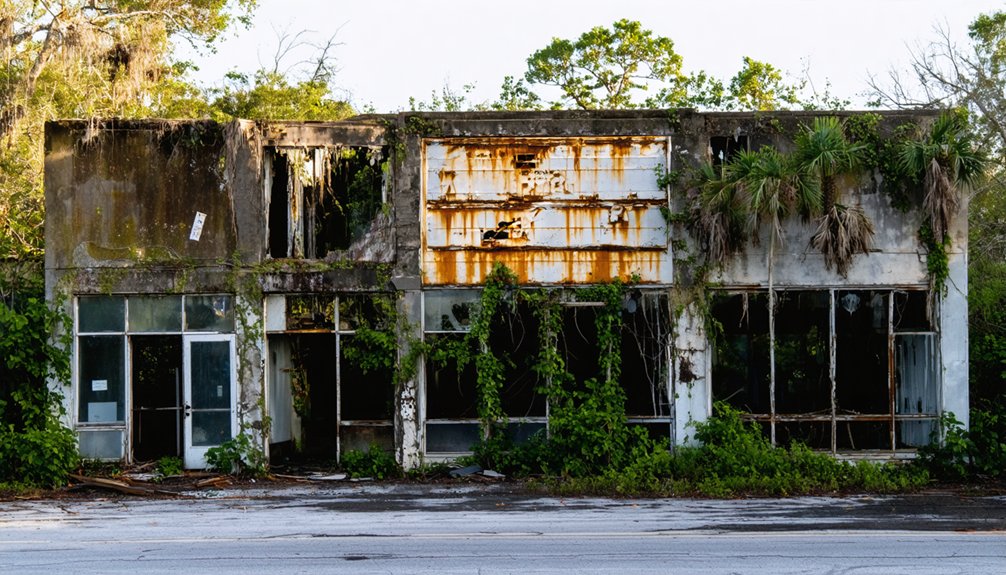
When George K. End died from a rattlesnake bite, the township he’d built from sheer determination began unraveling almost immediately.
The cannery shuttered, the snake pit went quiet, and the post office closed its doors.
Without its founder, Rattlesnake’s legacy couldn’t withstand the pressures of mid-century urban expansion sweeping across Florida’s Gulf Coast.
What Physical Remains Survive at Rattlesnake, Tampa Today?
Despite the urban sprawl that swallowed Rattlesnake whole, you’ll still find ghostly traces of the township hiding in plain sight. For urban exploration enthusiasts, these remnants offer a rare glimpse into Florida’s quirky past.
Head to the Tampa Bay park nature trail beside the Marine Patrol Station, where historical preservation efforts have kept these fragments accessible:
- Scattered concrete, brick, and block foundations buried beneath dense Florida brush
- Original city curbing still visible along the overgrown trail’s edges
- Rattlesnake Point, a named landmark preserving the township’s legacy on modern maps
You won’t find standing structures or dramatic ruins here. What remains is subtle, almost secretive, demanding sharp eyes and curiosity.
That quiet mystery is precisely what makes this forgotten corner of South Tampa worth exploring.
Hidden Remains To Find Along the Rattlesnake Nature Trail
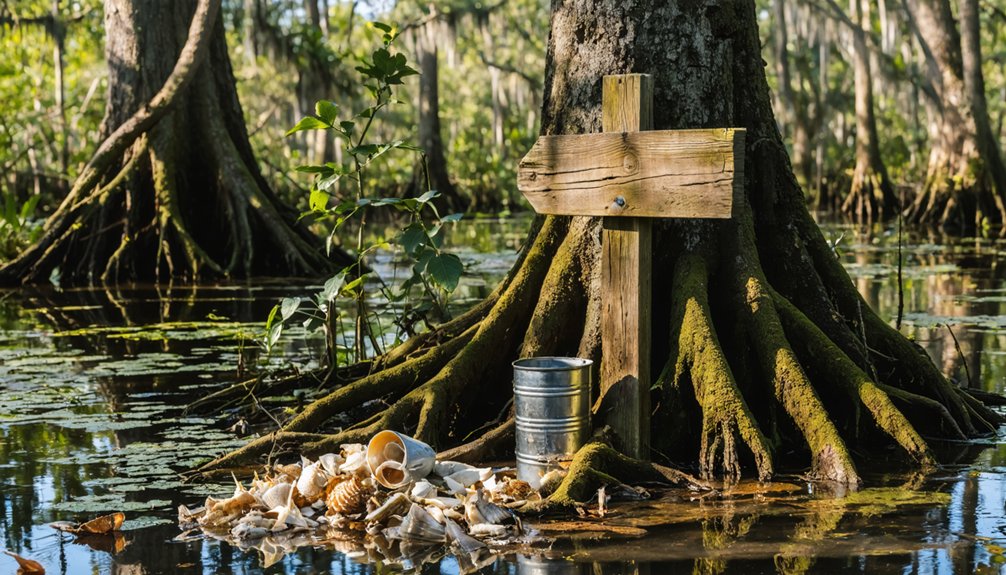
As you walk the nature trail at the Tampa Bay park, keep your eyes sharp for concrete and brick fragments half-buried in the surrounding brush.
You’ll spot hidden curb remnants tucked along the trail’s edges, silent markers of streets that once served a functioning township.
These scattered evidence spots are your best connection to Rattlesnake’s past, so take your time and look closely.
Concrete And Brick Fragments
Along the Rattlesnake Nature Trail, three types of structural remnants quietly survive beneath the overgrowth: concrete slabs, brick fragments, and city curb sections that once defined the streets and buildings of this vanished township.
As you explore, you’ll discover these concrete remnants and brick fragments hiding just off the path:
- Concrete slabs — foundation sections that once supported the cannery’s processing buildings.
- Brick fragments — scattered pieces from walls that housed George End’s rattlesnake enterprise.
- City curb sections — original street borders marking where Rattlesnake’s roads once ran.
Push carefully through the brush, and you’ll find history preserved in stone and mortar.
These aren’t museum exhibits — they’re raw, unguarded pieces of a forgotten world waiting for you to discover them on your own terms.
Hidden Curb Remnants
Buried beneath creeping roots and decades of overgrowth, the old city curb sections are among the most rewarding finds along the Rattlesnake Nature Trail.
These curb remnants serve as ghostly echoes of a functioning township that once had its own post office, streets, and identity. You’ll need to look carefully, since years of vegetation have swallowed most of what’s left.
Crouch low near the trail’s edges and scan the undergrowth — you’ll spot the unmistakable geometry of shaped concrete pressing through the soil. These fragments aren’t marked or celebrated, which makes discovering them feel genuinely earned.
They’re quiet proof that Rattlesnake wasn’t just folklore — it was a real place where people lived, worked, and built something worth remembering.
Don’t rush this section of the trail.
Nature Trail Evidence Spots
The Rattlesnake Nature Trail holds more than it shows at first glance, and knowing where to look makes all the difference between a pleasant walk and a genuinely compelling ghost town hunt.
Push past the obvious path edges and you’ll uncover real evidence of this vanished township. Focus your search on these three spots:
- Dense brush clusters — concrete and brick fragments hide where the cannery structures once stood.
- Low ground depressions — these mark former building foundations swallowed by decades of vegetation.
- Overgrown embankments — original block remnants surface here, especially after rain loosens surrounding soil.
Stay curious and move slowly. This ghost town doesn’t announce itself — it rewards the explorer willing to crouch, look sideways, and question every unusual shape hiding beneath the greenery.
How To Drive To Rattlesnake, Tampa
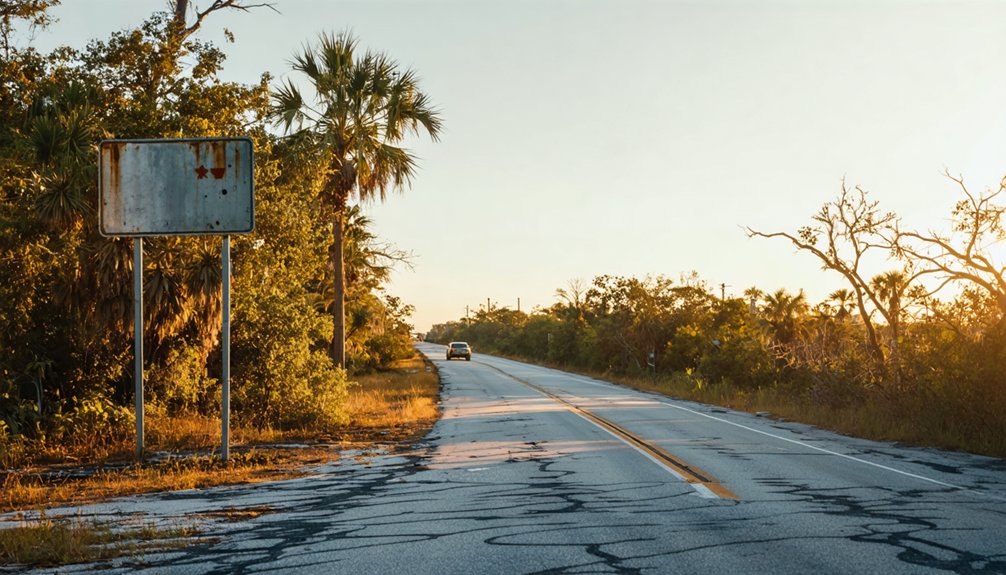
Reaching Rattlesnake, Tampa takes just 19 minutes from Downtown Tampa, making it an easy detour on any South Tampa road trip.
Follow the driving directions south along SR 92 toward the Gandy Bridge, keeping your eyes on the south side of the road as you approach Old Tampa Bay. This scenic route takes you through Hillsborough County‘s coastal landscape before dropping you off at the Tampa Bay park adjacent to the Marine Patrol Station.
Park your vehicle in the lot and you’ll already be standing on what was once Rattlesnake Township. The roads are 2WD-friendly year-round, traffic stays light, and nearby restaurants and stores make it convenient for families.
Downtown Tampa remains just a short drive back whenever you’re ready to leave.
Where To Park When You Visit Rattlesnake, Tampa
Parking at Rattlesnake, Tampa comes down to 1 straightforward option: pull into the Tampa Bay park lot sitting directly next to the Marine Patrol Station.
These parking tips keep your visit logistics smooth and stress-free:
- Park free in the Tampa Bay park lot — it’s open, accessible, and welcoming for 2WD vehicles anytime.
- Access the nature trail directly from the lot, putting you steps away from the hidden concrete and brick remnants scattered through the bushes.
- Grab supplies nearby before arriving, since no shops exist at the site itself.
You’re only 19 minutes from Downtown Tampa, making this an easy half-day escape.
Lock your car, hit the trail, and start uncovering what little remains of this forgotten rattlesnake township.
Nearby Stops Worth Adding to Your Rattlesnake, Tampa Visit
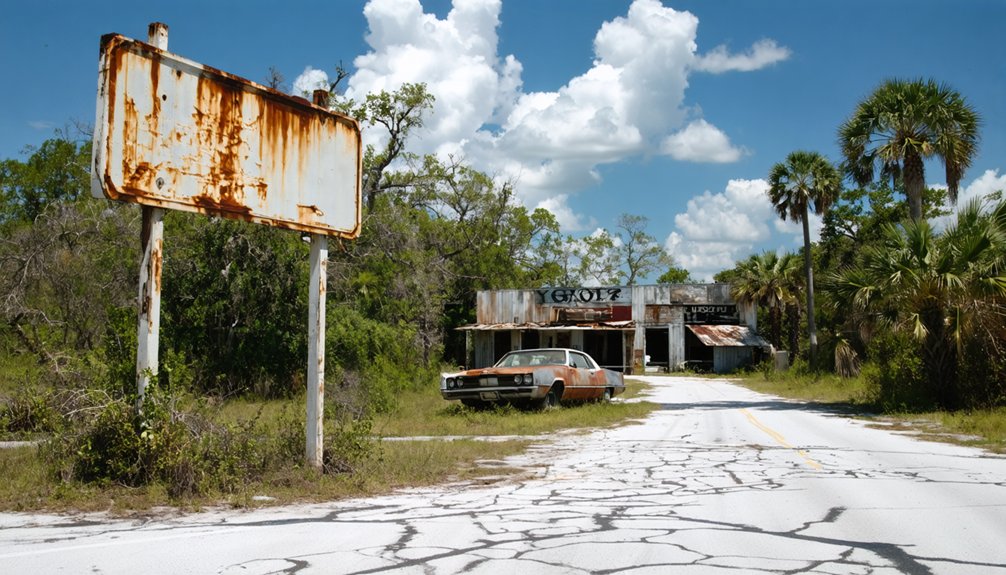
Once you’ve explored what’s left of Rattlesnake, Tampa, the surrounding area gives you plenty of reasons to keep the road trip rolling.
Head across the Gandy Bridge for waterfront views that stretch across Old Tampa Bay, or grab a meal at one of the local restaurants along Gandy Boulevard.
Downtown Tampa sits just 19 minutes away, offering museums, markets, and skyline views worth your time.
If you’re hooked on Rattlesnake legends and ghost town lore, the nearby nature trail at the Tampa Bay park lets you dig deeper into the site’s hidden remnants.
Rattlesnake Point also carries the township’s name, making it another stop that connects you to the area’s unusual past.
This corner of South Tampa rewards curious travelers who push beyond the obvious.
Best Time To Visit Rattlesnake, Tampa
Rattlesnake, Tampa welcomes visitors year-round, but you’ll get the most out of your trip by timing it right. Florida’s climate shapes your experience greatly, so plan smart.
Best visiting seasons for ghost town photography:
- October through December – Cooler temperatures and lower humidity make exploring the nature trail comfortable, and softer light creates ideal ghost town photography conditions.
- January through March – Peak dry season means minimal rain, clear skies, and manageable crowds, giving you freedom to explore the hidden remnants undisturbed.
- April through May – Wildflowers emerge along the trail, adding striking visual contrast to the concrete and brick ruins still scattered through the brush.
Avoid June through September if possible — intense heat, humidity, and frequent afternoon storms can cut your exploration short.
Frequently Asked Questions
Did Rattlesnake, Tampa Ever Appear in National Newspapers or Magazines?
There’s no confirmed record of Rattlesnake, Tampa receiving national media coverage, but its historical significance—a rattlesnake cannery and unique township—would’ve certainly captured any adventurous journalist’s attention back in its fascinating 1937–1954 heyday.
How Many Rattlesnakes Did George K. End Keep at One Time?
Like Pandora’s box, the exact rattlesnake population George K. End kept remains a mystery — the knowledge base doesn’t reveal that specific number, so you’ll need to dig deeper into historical records to uncover that fascinating detail.
Was Rattlesnake Meat Considered a Delicacy During the 1930S?
You’d find rattlesnake cuisine held fascinating historical significance in the 1930s! George K. End’s cannery made it an exotic novelty, drawing curious tourists enthusiastic to taste something adventurous and unconventional, reflecting an era that celebrated bold, untamed American frontier spirit.
Are There Any Surviving Cans of Rattlesnake, Tampa’s Canned Meat?
You’d need a miracle to find surviving cans! They’re fundamentally ghost artifacts now, but local lore keeps their canned history alive. Dig into Tampa’s collections or museums — you might uncover this rare, rattling piece of history!
Did Any Other Towns Attempt to Copy Rattlesnake, Tampa’s Business Model?
You won’t find any confirmed Rattlesnake imitators or ghost town replicas that successfully copied Rattlesnake, Tampa’s unique business model. It truly stood alone as the world’s only rattlesnake cannery, making it an irreplaceable piece of American history.
References
- https://www.ghosttowns.com/states/fl/rattlesnake.html
- https://en.wikipedia.org/wiki/Rattlesnake_(Tampa)
- https://www.florida-backroads-travel.com/rattlesnake-florida.html
- https://www.youtube.com/watch?v=pjRdqRH_rHw
- https://www.trulia.com/n/fl/tampa/rattlesnake/153564/
- https://www.tampabay.com/opinion/2021/06/19/a-tampa-bay-parable-of-nature-biting-back-column/
- http://d21c.com/OU812/rattlesnake.html/rattlesnakeflhistory.html
- http://wikimapia.org/13917005/Rattlesnake-Point